

Broadcasting
NEXIM Flags Off support for Film Production


The Nigerian Export Import Bank (Nexim) has flagged-off of its support for film production in Nigeria to help grow capacity in the entertainment industry.
Black Ivory Communication is the first beneficiary of the $200 million fund pledged by President Goodluck Jonathan in 2011 to support the Nigerian entertainment industry.
The fund named NEXIM Creative Arts and Entertainment Facility is to be used by Black Ivory to finance a film titled ‘Doctor Bello’.
Roberts Orya, managing director/chief executive officer, NEXIM said the partnership signified the flag-off of NEXIM’s support for film production which was promised in 2011 by the Federal Government.
According to him, the fund has been opened for access to anybody interested in investing in the Nigerian entertainment industry.
“The Nigerian creative arts and entertainment industry has done creditably well in the socio-economic development of the nation. The industry has, by recent estimates, created over one million jobs directly and indirectly, and generated a minimum of $500million in revenue annually. The industry is also widely adjudged as the most prolific in the world, producing over 2,500 films yearly in the past three years,” he said.
He added that the movie, ‘Dr Bello’ is a compelling story line that promises a good return on investment for the bank and the producers.
Tony Abulu, CEO of Black Ivory Communication said ‘Dr. Bello’ is set to take the movie industry to the next level.
“With what we are witnessing today, I can assure you that Nollywood is about to fly. We cannot continue to depend on our oil revenue. We have to begin to make products ourselves and we have to begin to package it for the international market, and those stories must be of international standard,” Abulu said.
Starring great names in Nollywood and Hollywood including Isaiah Washington, Vivica A. Fox, Jimmy Jean-Louis, Bern Cohen, Genevieve Nnaji, Victor Browne, Stephanie Okereke, Desmond Elliot, Andrea Leigh, Zack Orji and many others, ‘Doctor Bello” promises to be a blockbuster.
According to Abulu, “Nigeria cannot continue to depend on oil revenue to survive. I am producing this movie to prove to the whole world that with the recognition that Nollywood is receiving even with poorly funded movies, the industry is capable of boosting the economy and at the same time, carve a better image for the country”.
Dr Bello which is scheduled for release in summer 2012, would indeed, become a global film as it is expected to touch everyone.
The storyline according to Abulu, who lost his mother-in-law to cancer, is on the dreaded disease and his decision to educate the people concerning the dreadful disease was based on his involvement in the business of propagating African culture and values.
“It is a global film, so, I picked a topic that will interest and affect the whole world,” he said.


Broadcasting
NASENI Trains 50 Women in Kano on Renewable Energy Technologies Under She-Powers Initiative

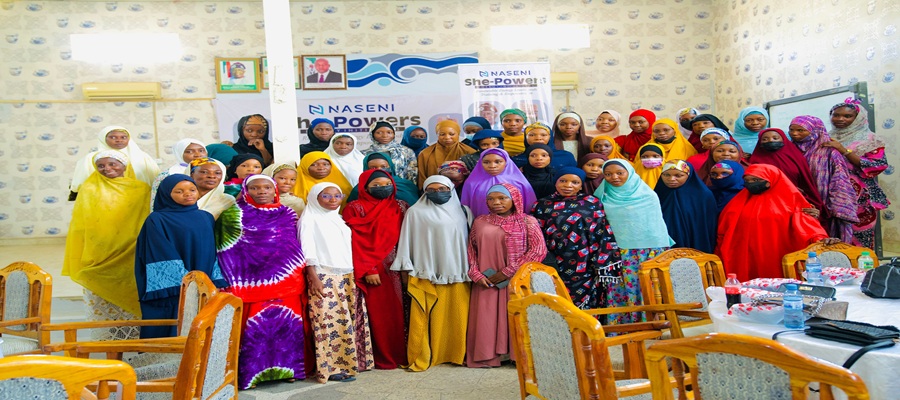
The National Agency for Science and Engineering Infrastructure (NASENI), under the leadership of its Executive Vice Chairman/CEO, Khalil Suleiman Halilu, has trained 50 women in Kano State on inverter and battery technologies through its She-Powers Energy Initiative.

The three-day programme, held at the Technology Incubation Centre, Farm Centre, Kano which ended yesterday, was designed to equip participants with practical renewable energy skills, promote women-led enterprises, and enhance sustainable livelihoods.
The initiative forms part of NASENI’s broader commitment to empowering women, creating economic opportunities, and expanding participation in Nigeria’s growing clean energy sector. It also aligns with the Renewed Hope Agenda of President Bola Ahmed Tinubu by supporting job creation, entrepreneurship, and inclusive economic development.
Through targeted interventions such as the She-Powers Energy Initiative, NASENI continues to demonstrate its commitment to leveraging technology and innovation to improve lives and drive sustainable development across the country.
Photos: Participants at the She-Powers Energy Initiative training organised by the National Agency for Science and Engineering Infrastructure (NASENI) held at the the Technology Incubation Centre, Farm Centre, Kano yesterday.
MultiChoice Nigeria has launched a month-long promotional campaign tagged “Open Time”, offering eligible DStv subscribers access to higher viewing packages at no additional cost.

The promotion, which runs from June 1 to June 30, 2026, is aimed at rewarding existing customers, reconnecting subscribers and attracting new users across Nigeria.
Under the initiative, active subscribers on selected lower-tier packages, including Compact and Compact+, will automatically be upgraded to higher viewing tiers, with some customers gaining temporary access to Premium content during the promotional period.
According to the company, eligible subscribers will not be required to register or manually activate the offer, as upgrades will be applied automatically once subscription payments are confirmed.
In a statement announcing the campaign, MultiChoice said the initiative was designed to provide customers with access to a wider range of entertainment content and enhance viewing experiences.
“The Open Time initiative is a simple way for our customers to enjoy more of the stories they love and discover new content across genres, as long as their accounts remain active during the period,” the company stated.
The DStv Premium package, which currently costs N44,500 per month, offers access to more than 160 channels, including sports, movies, documentaries, children’s programming, news and lifestyle content.
MultiChoice said the offer applies to subscribers who maintain active accounts throughout the campaign period.
The company added that the promotion forms part of efforts to enhance customer value by providing broader access to entertainment content, including drama, sports, action and children’s programmes.
To participate, subscribers are required to make payments through approved channels such as the official DStv website, the MyDStv mobile application, USSD banking platforms and authorised payment agents.
The company clarified that all promotional upgrades would automatically expire at the end of June, after which subscribers would revert to their original subscription packages.
Industry analysts say the campaign comes amid increasing competition within Nigeria’s pay television and streaming market, where service providers are introducing incentives and value-added offerings to attract and retain customers.
MultiChoice said the initiative reflects its commitment to delivering quality entertainment and ensuring subscribers enjoy greater value from their subscriptions.

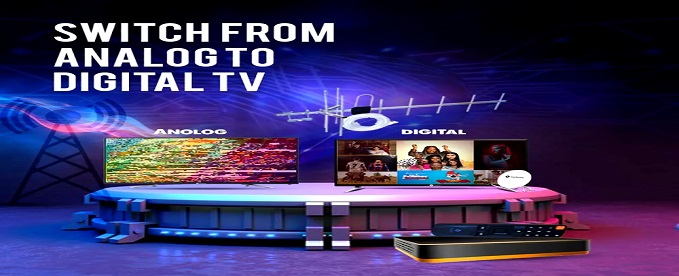
National Broadcasting Commission (NBC) has said that its planned Digital Switch-Over (DSO) project will create access to Nigeria’s N605.2 billion advertising market for broadcasters and content creators.

Speaking at a press conference, Charles Ebuebu, director-general, NBC, said the project is expected to officially launch nationwide on June 17, 2026, while analogue television broadcasting will completely end by December 31, 2028.
According to him, the switch from analogue to digital broadcasting will help government agencies deliver better television services across Nigeria in a way that is sustainable, reliable, and easier to regulate.
Ebuebu explained that digital broadcasting will allow broadcasters and content creators to earn more revenue because audience data can be measured more accurately.
He also said the project could benefit the economy through the release of valuable 700/800 MHz spectrum, which may generate more than $1 billion from future auctions.
The funds are expected to support digital infrastructure and expand broadband access in rural communities.
NBC added that Nigeria’s creative industry, which contributes about N5 trillion to GDP and supports more than 4.2 million jobs, could benefit from improved content distribution and export opportunities across West Africa using NigComSat-1R.
For consumers, NBC said the FreeTV service will not require monthly subscription payments. Households will only need a small satellite dish and an open-standard DVB-S2 decoder, estimated to cost between N15,000 and N25,000.
Broadcasters were encouraged to join the FreeTV platform and take advantage of an 18-month free carriage period.
However, the Commission noted that there is still an ongoing legal dispute involving local manufacturers over set-top boxes, although officials said this will not stop the national rollout.
On satellite expansion plans, Jane Egerton-Idehen, managing director and CEO, Nigerian Communications Satellite Limited, said NIGCOMSAT 2A is expected in 2028, while NIGCOMSAT 2B is planned for 2029.
She added that backup arrangements have already been made to ensure uninterrupted service and that migration to the new system will happen gradually across different regions to avoid nationwide disruptions.

NDPC, Meta Launch 2-Year M-SIDP after Regulatory Settlement

Report Faults Banks over N91.1 Trillion Sterilised at CBN

ALTON Seeks Enhanced Investment Reporting Framework in Telecoms Sector

NRS Accredits Afri Invoice as Access Point Provider to Drive Nigeria’s Mandatory e-invoicing

Payaza Secures ‘A’ Credit Ratings from Moody’s, Agusto, DataPro, Intelligence Africa

FG to Launch Nationwide Free Digital TV Platform June 17

CBN Extends PoS Geo-Fencing Enforcement Deadline to August 2026

MTN, Airtel, Glo Under Pressure as FG Demands Better Service Delivery

Jumia Nigeria Records Strong Q1 2026 Growth as Technology-Led Strategy Drives Market Expansion

Metro Digital, Nigerian Firm Accuses Multichoice Of Refusal to Obey Court Judgements




 Telecom1 day ago
Price of Data in Nigerian Mobile among Top Four Cheapest Globally – MTN CEO

 E-Financial1 day ago
BOI Wins Dual Honours @ EMEA Finance Awards for Sustainability and Social Impact Leadership

 E-Business1 day ago
NITDA Okays NiRA’s Annual, Business Report

 E-Financial1 day ago
CBN Imposes N100m Penalty on Dealing Bank Inadequate Processing of Forex Documents

 Telecom1 day ago
NAIFF Returns for 2026, Expands Focus on AI-Powered Storytelling in Africa

 General News23 hours ago
SSDC Warns Businesses against Cyber, Election-Related Risks

 General News1 day ago
Moniepoint DreamDevs Bootcamp Graduates Second Cohort to Strengthen Homegrown Talent Pipeline

 Telecom24 hours ago
FCCPC Refutes Airtime Market Takeover Claims