

Broadcasting
Vacant TV Spectrum Targeted for Affordable Rural Wi-Fi

Parts of the wireless spectrum that have been abandoned or left unused by television (TV) broadcasters as they increasingly move to digital transmission may provide a faster and cheaper way to beam the Internet to remote rural areas and roll out a new generation of ‘super Wi-Fi’ in cities.
Technology giants such as Microsoft and Google are pushing for governments around the world to open up this ‘white space’, hoping that it will boost innovation in Internet delivery, according to William Webb, the chief technology officer at one such start-up offering the necessary technology, Neul, in Cambridge, United Kingdom.
A recent example is a pilot initiative in Kenya that aims to boost Internet access in rural areas.
The Mawingu project ? named after the Swahili word for cloud ? is part of an initiative by Microsoft and a global telecommunications provider, Indigo Telecom, designed to provide affordable, high-speed wireless Internet access using former TV frequencies, old-fashioned antennas and solar-powered base stations.
Affordable rural coverage
Peter Henderson, Indigo Telecom’s chairman, told SciDev.Net that Kenya will be the first African country to benefit from the Wi-Fi initiative, which aims to deliver affordable coverage to its 30 million rural inhabitants.
“For example, a person will pay US$1.20 a week to access the Internet, thus allowing rural Kenyans to maximise their collective learning potential in a sustainable, socially responsible manner,” he says.
As part of the project, smart phones and computers with Microsoft programmes will also be donated by Microsoft and non-governmental to schools, hospitals and other social centers and Indigo Telecom will train and equip field personnel and organise workshops to help roll it out to the communities.
Shem Ochuodho, a Kenyan information and communications technology expert who is currently advising the South Sudanese government, said: “Reusing released frequencies as a national resource where justified is a commendable feat”.
But he says that the Kenyan government and regulatory authority the Communications Commission of Kenya, need to come up with a comprehensive plan to reassign unused frequencies.
If successful, Ochuodho explains, the project will benefit smartphone users including tourists who may want to access broadband in areas still not yet served by mobile broadband.
Webb said: “TV white space has been talked about for about a decade now. And there have been many people suggesting many different kinds of applications for it.”
The main uses suggested are extending rural internet access and setting up city-wide wireless networks — wireless signals sent through these frequency bands would go much further than existing wifi, potentially covering a whole city.
The concept of using this part of the spectrum has moved from discussion at US universities and think-tanks to big companies, which have been lobbying around the world for national regulators to open it up, he says.
Cheaper system
The key advantage is that the TV spectrum tends to be at lower frequencies than other existing available frequencies and these travel further than those used for conventional Wi-Fi or cellular mobile phone networks, meaning that fewer base stations are needed.
“That just helps with the economics,” Webb says. To provide Wi-Fi to rural areas requires a base station to send out signals and some kind of radio device in each home, he says.
“Using TV white space is not a paradigm shift; it just improves the economics a bit compared with other systems, [but] maybe that improvement is enough to tip the balance in a number of different areas,” Webb says.
Instead of the frequencies between 400 and 800 megahertz being reserved for TV broadcasters that pay a lot of money for exclusive use, companies are pushing for them to be unlicensed, he says. Examples of unlicensed frequencies are the WiFi and Bluetooth; they are free but you have to share them with other users.
TV white space is “the biggest game in town at the moment in the unlicensed area”, Webb says, and some companies believe this is where a lot of innovation could be unleashed.
Some governments, such as the United States, have already opened up their white space, with others, such as Canada, Singapore and the United Kingdom, considering doing so, he said.
“There’s a lot of interest in the Asia-Pacific region — Indonesia, Malaysia, Thailand — those kinds of countries have all agreed to trials,” Webb said.
Spread of ideas
Access to white space may follow what happened with mobile phone frequencies, he says, which started off in a few European countries and rapidly spread around the world as other regulators saw what was happening.
Webb estimated that, by 2016, the vast majority of countries will allow some form of access to white space frequencies to Internet providers.
White space may also benefit urban Internet users by offering an alternative to 3G and 4G mobile broadband networks.
Big Internet companies are likely to “be looking to see if they can have broadband systems for cities that can compete with or be an alternative to the 3G and 4G systems as to some degree Wi-Fi already is”, Webb says.
“If you can find a Wi-Fi signal in a coffee shop, you’ll tend to use that rather than 3G or 4G,” he says. White space may enable that Wi-Fi to be expanded to cover entire cities.
The main barrier to opening up white space is concern about interference with TV signals and, given that there is no immediate benefit to broadcasters, they are “naturally going to be very cautious and inclined to oppose”, he said.


International Air Transport Association (IATA) has identified Nigeria as one of the most expensive countries in the world for airline operations, citing high taxes, charges and operational costs that continue to weigh heavily on local carriers.

IATA’s Regional Vice President for Africa and the Middle East, Kamil Al-Awadhi, disclosed this during the association’s Annual General Meeting held in Rio de Janeiro.
Al-Awadhi said that although Nigeria’s Minister of Aviation and Aerospace Development, Festus Keyamo, had been pursuing reforms aimed at improving the aviation sector, airlines operating in the country still faced enormous cost pressures.
According to him, the high-cost operating environment has continued to affect the profitability and competitiveness of Nigerian airlines, making it difficult for the industry to realise its full potential.
He noted that excessive taxes, regulatory charges and other operating expenses remained major obstacles to airline growth across the region, with Nigeria ranking among the most challenging markets from a cost perspective.
Al-Awadhi urged member states of the Economic Community of West African States to adopt a proposed 25 per cent reduction in aviation taxes and charges to ease the burden on airlines and passengers.
According to him, lowering taxes and charges would reduce airfares, stimulate passenger traffic and strengthen the competitiveness of carriers operating within West Africa.
He stressed that a more supportive policy environment was critical to unlocking the economic benefits of aviation, including increased trade, tourism and regional integration.
Industry stakeholders have consistently advocated lower taxes and regulatory fees, arguing that the current cost structure makes air travel less affordable and limits the growth of the sector.
IATA’s latest remarks add to calls for governments in West Africa to implement policies that will promote a more sustainable and competitive aviation industry across the region.
Broadcasting
NASENI Trains 50 Women in Kano on Renewable Energy Technologies Under She-Powers Initiative

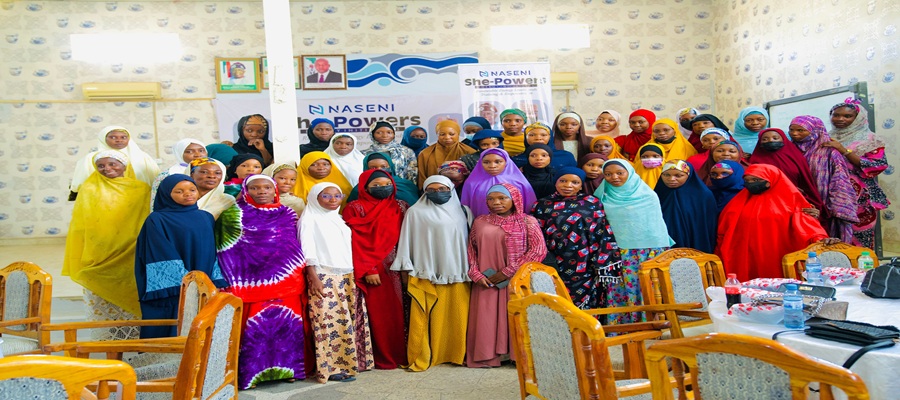
The National Agency for Science and Engineering Infrastructure (NASENI), under the leadership of its Executive Vice Chairman/CEO, Khalil Suleiman Halilu, has trained 50 women in Kano State on inverter and battery technologies through its She-Powers Energy Initiative.

The three-day programme, held at the Technology Incubation Centre, Farm Centre, Kano which ended yesterday, was designed to equip participants with practical renewable energy skills, promote women-led enterprises, and enhance sustainable livelihoods.
The initiative forms part of NASENI’s broader commitment to empowering women, creating economic opportunities, and expanding participation in Nigeria’s growing clean energy sector. It also aligns with the Renewed Hope Agenda of President Bola Ahmed Tinubu by supporting job creation, entrepreneurship, and inclusive economic development.
Through targeted interventions such as the She-Powers Energy Initiative, NASENI continues to demonstrate its commitment to leveraging technology and innovation to improve lives and drive sustainable development across the country.
Photos: Participants at the She-Powers Energy Initiative training organised by the National Agency for Science and Engineering Infrastructure (NASENI) held at the the Technology Incubation Centre, Farm Centre, Kano yesterday.

MultiChoice Nigeria has launched a month-long promotional campaign tagged “Open Time”, offering eligible DStv subscribers access to higher viewing packages at no additional cost.

The promotion, which runs from June 1 to June 30, 2026, is aimed at rewarding existing customers, reconnecting subscribers and attracting new users across Nigeria.
Under the initiative, active subscribers on selected lower-tier packages, including Compact and Compact+, will automatically be upgraded to higher viewing tiers, with some customers gaining temporary access to Premium content during the promotional period.
According to the company, eligible subscribers will not be required to register or manually activate the offer, as upgrades will be applied automatically once subscription payments are confirmed.
In a statement announcing the campaign, MultiChoice said the initiative was designed to provide customers with access to a wider range of entertainment content and enhance viewing experiences.
“The Open Time initiative is a simple way for our customers to enjoy more of the stories they love and discover new content across genres, as long as their accounts remain active during the period,” the company stated.
The DStv Premium package, which currently costs N44,500 per month, offers access to more than 160 channels, including sports, movies, documentaries, children’s programming, news and lifestyle content.
MultiChoice said the offer applies to subscribers who maintain active accounts throughout the campaign period.
The company added that the promotion forms part of efforts to enhance customer value by providing broader access to entertainment content, including drama, sports, action and children’s programmes.
To participate, subscribers are required to make payments through approved channels such as the official DStv website, the MyDStv mobile application, USSD banking platforms and authorised payment agents.
The company clarified that all promotional upgrades would automatically expire at the end of June, after which subscribers would revert to their original subscription packages.
Industry analysts say the campaign comes amid increasing competition within Nigeria’s pay television and streaming market, where service providers are introducing incentives and value-added offerings to attract and retain customers.
MultiChoice said the initiative reflects its commitment to delivering quality entertainment and ensuring subscribers enjoy greater value from their subscriptions.

CBN to Deploy AI in Fight Against Payment Fraud

NDPC, Meta Launch 2-Year M-SIDP after Regulatory Settlement

Report Faults Banks over N91.1 Trillion Sterilised at CBN

Telcos Fault Data of FDI Flow, Claim Investment of N1.86 Trillion on Service Expansion

NRS Accredits Afri Invoice as Access Point Provider to Drive Nigeria’s Mandatory e-invoicing

CBN Extends PoS Geo-Fencing Enforcement Deadline to August 2026

FG to Launch Nationwide Free Digital TV Platform June 17

MTN, Airtel, Glo Under Pressure as FG Demands Better Service Delivery

Jumia Nigeria Records Strong Q1 2026 Growth as Technology-Led Strategy Drives Market Expansion

Metro Digital, Nigerian Firm Accuses Multichoice Of Refusal to Obey Court Judgements




 Telecom2 days ago
Price of Data in Nigerian Mobile among Top Four Cheapest Globally – MTN CEO

 E-Financial2 days ago
BOI Wins Dual Honours @ EMEA Finance Awards for Sustainability and Social Impact Leadership

 E-Business2 days ago
NITDA Okays NiRA’s Annual, Business Report

 E-Financial2 days ago
CBN Imposes N100m Penalty on Dealing Bank Inadequate Processing of Forex Documents

 Telecom2 days ago
NAIFF Returns for 2026, Expands Focus on AI-Powered Storytelling in Africa

 General News1 day ago
SSDC Warns Businesses against Cyber, Election-Related Risks

 General News2 days ago
Moniepoint DreamDevs Bootcamp Graduates Second Cohort to Strengthen Homegrown Talent Pipeline

 Telecom1 day ago
FCCPC Refutes Airtime Market Takeover Claims