

E-Business
Visafone Introduces Unlimited Internet Access Plan, Slashes Tariff on Data Services

To help extend and encourage Internet usage in all segments of the Nigerian society, Visafone has slashed prices of its data services.
This marks a drive by Visafone to enable affordable access to mobile Internet in Nigeria, coupled with unlimited access plans that the company is introducing in keeping with the nation’s goal of a knowledge society.
This provides a whole new world of Internet access and experience for both existing and new subscribers with high speed broadband internet services via CDMA 1x and 3G EVDO on the Visafone-pioneered EVDO Rev A network.
Mr. R. Balachandran, MD/CEO of Visafone said that this is yet another example of customer and pocket friendly pricing from Visafone. He said “given the superb experience in terms of access, surfing and download speeds that Visafone data subscribers enjoy, this creates irresistible value for data devotees across the spectrum – be they corporate users, traveling businessmen, students, dedicated downloaders or casual browsers and email enthusiasts.”
With the price slash, subscribers can get a 3G USB modem plus 1 month 24/7 unlimited Internet access for N19, 500 and Internet modems for as low as N8, 000.
Other benefits that accrue to subscribers include a range of supplementary and value added services; like Visa Tones, Voice SMS, Share Ur Visa, easy payment via recharge cards and a dedicated 24/7 call centre for data subscribers.
The Internet service covers a wide range of products including; 1x, Mobile Office, Silver EVDO and gold EVDO. It also consists of four time bands, All Time Surfer, Day Surfer, Nite Surfer and Xpress.
It also has in its bouquet 1 day plan, 3 and 7 days plans tailored to meet the needs of subscribers in various categories.
With Visa Mobile Office, subscribers can manage their personal information- emails, calendars and contacts from a mobile device using EVDO or 1x as the service bearer. Coupled with some excellent and attractive CDMA smartphones, this is the businessman’s and manager’s productivity tool.
Visa 1x allows subscribers browse the internet anytime, anywhere within the Visafone coverage area with speeds of up to 153 kbps on shared basis, on the CDMA 1x technology. This provides an excellent level of experience for normal Internet and email use and reasonable downloads; and is especially useful for traveling managers and businessmen.
The silver EVDO and Gold EVDO packages give subscribers consistent and very high download speed up to 150 kbps and 300kbps respectively. For those wanting superfast access and looking at considerable downloads at high speed, this is the way to go.
Visafone is known for its programmes that reward its subscribers, apart from giving them value for money through attractive tariffs and excellent voice and data quality.


Nigerian banks are increasingly embracing artificial intelligence (AI) to improve customer service, strengthen fraud detection, and streamline operations.

Pic credit….gdprlocal.com
However, the same technology driving innovation could also expose the country’s financial system to unprecedented cyber risks, according to a recent warning from the International Monetary Fund (IMF).
The IMF has cautioned that advanced AI tools are rapidly enhancing the capabilities of cybercriminals, making it easier and faster to identify and exploit vulnerabilities in banking systems, payment infrastructure, and digital platforms.
For Nigeria, where digital banking transactions have surged in recent years and financial institutions are becoming more interconnected, the implications could be significant.
The warning comes at a time when Nigerian banks are investing heavily in digital transformation.
From AI-powered customer support systems to automated fraud monitoring tools and digital lending platforms, financial institutions are relying more than ever on technology to drive growth and improve efficiency.
Yet experts warn that this digital expansion is also widening the attack surface for cybercriminals.
The IMF noted that advanced AI models can dramatically reduce the time and expertise required to discover software vulnerabilities.
This means attackers can launch more sophisticated and coordinated cyberattacks against multiple institutions simultaneously.
For Nigeria’s banking sector, which depends on common payment rails, cloud infrastructure, telecommunications networks, and shared service providers, a major cyber incident could quickly spread across the financial ecosystem.
Nigeria’s financial sector has undergone a remarkable digital revolution over the past decade.
Data from the Central Bank of Nigeria (CBN) show that electronic payments now account for trillions of naira in monthly transactions, driven by mobile banking, instant payments, fintech innovation, and the growing adoption of digital channels.
The success of platforms such as the Nigeria Inter-Bank Settlement System (NIBSS) Instant Payments network has made banking more accessible and efficient.
However, it has also increased dependence on interconnected digital infrastructure.
According to the IMF, this interconnectedness creates systemic vulnerabilities.
A cyberattack targeting a critical service provider, cloud platform, telecommunications network, or payment gateway could disrupt services across multiple banks at the same time.
Unlike traditional bank robberies or isolated cyber incidents, AI-enabled attacks have the potential to trigger widespread operational disruptions, affecting payment processing, customer access to funds, and confidence in the banking system.
The IMF warns that extreme cyber incidents could evolve from operational challenges into broader financial stability concerns.
If multiple banks are simultaneously affected by a cyberattack, customers may experience service outages, delayed transactions, or restricted access to deposits.
Such disruptions could undermine public confidence and create liquidity pressures, especially if panic withdrawals or transaction bottlenecks occur.
The concern is not merely theoretical.
Over the past few years, Nigerian financial institutions have experienced increasing levels of cyber fraud, phishing attacks, identity theft, and ransomware threats.
Although regulators and banks have improved cybersecurity frameworks, AI-driven attacks could significantly raise the sophistication and scale of these threats.
The IMF believes that the growing concentration of technology services could further amplify the risks.
Many Nigerian banks rely on a relatively small number of software vendors, cloud providers, telecommunications operators, and payment infrastructure providers. A successful attack on one critical provider could have cascading effects across the entire banking system.
This concentration risk is becoming more pronounced as financial institutions increasingly adopt AI solutions from a limited number of global technology companies.
Despite the risks, AI is also emerging as one of the most powerful tools available to banks in defending against cyber threats.

A coalition of civil society organisations has warned that Nigerians’ personal information remains vulnerable to abuse despite existing data protection laws.

In a statement titled “Protected From the State, Not By It: Nigeria’s Data Protection Crisis Is a Crisis of Implementation,” the group said Nigeria developed one of Africa’s largest digital identity databases but failed to adequately protect the information it collects.
The coalition, comprising Media Rights Agenda (MRA), Paradigm Initiative (PIN), Digital Rights Lawyers Initiative (DRLI), Accountability Lab Nigeria, PROMAD Foundation, DigiCivic Initiative and others, noted that the National Identity Management Commission (NIMC) had enrolled more than 121 million Nigerians as of June 2025, while the country also operates under the Nigeria Data Protection Act (NDPA) 2023 and a dedicated Nigeria Data Protection Commission (NDPC).
However, the organisations argued that these safeguards failed to translate into meaningful protection for citizens.
According to the group, recent incidents involving alleged unauthorised access to sensitive government databases have exposed weaknesses in oversight and accountability mechanisms.
They cited reports surrounding the disclosure of voter registration information from the Independent National Electoral Commission (INEC) database and investigations that uncovered the online sale of sensitive identity records, including National Identification Numbers (NINs), for as little as ₦100.
“When the regulator’s own data is not safe, no citizen’s data is. A government that cannot protect its citizens’ data should, at minimum, be cautious about how aggressively it collects and deploys it. Nigeria has done the opposite. Under the NDPA, data controllers are required to undergo compliance audits filed with the NDPC, an obligation enforced against private entities even as public institutions, the largest holders of citizens’ data, face no comparable scrutiny,” the coalition stated.
The organisations also expressed concern about the expansion of state surveillance programmes, arguing that Nigeria lacked a comprehensive legal framework governing public surveillance systems.
They said existing laws did not clearly define the limits of surveillance, provide independent oversight, or require human rights impact assessments before such systems are deployed.
The coalition further criticised the continued use of provisions of the Cybercrimes Act against journalists, bloggers and social media users, despite a 2022 judgment by the ECOWAS Court of Justice declaring aspects of Section 24 of the law arbitrary and repressive.
According to the group, Nigeria’s data governance system currently places citizens in a vulnerable position where personal information is aggressively collected but inadequately protected.
“This is the asymmetry at the heart of the crisis: citizens are under-protected from data abuse and over-exposed to state monitoring and punishment,” the CSOs said.
They called on the Federal Government to strengthen enforcement of the Nigeria Data Protection Act, ensure public institutions are subjected to the same compliance requirements as private organisations, and publish the findings of investigations into alleged breaches involving government databases.
The coalition also urged authorities to establish an independent oversight framework for surveillance systems, amend Section 24 of the Cybercrimes Act, in line with the ECOWAS Court ruling, and strengthen accountability mechanisms across public institutions handling citizens’ data.
It warned that public trust in digital governance would continue to erode unless citizens are assured that their personal data is protected from misuse, unauthorised access and unlawful surveillance.
E-Business
Firm Discovered a New Corporate Phishing Technique using a Popular AI Web Development Platform

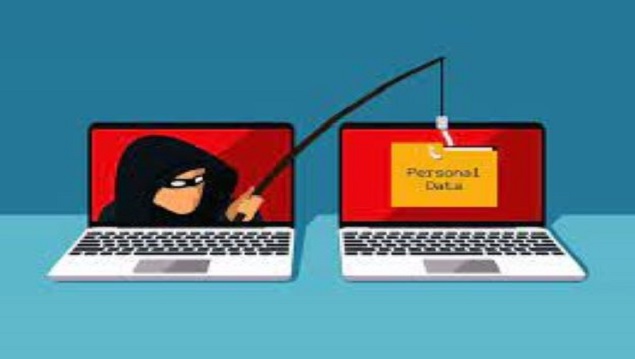
Kaspersky has discovered that attackers have begun exploiting another legitimate service for malicious purposes – this time it is Tencent EdgeOne Pages, a platform for creating and hosting web applications.

Attackers are misusing its capabilities to generate phishing emails targeting corporate users. Previously Kaspersky has described similar attacks leveraging Google services and web applications generated by Bubble, an AI-powered app builder, to hunt for corporate credentials.
Employees across multiple industries including the industrial sector, sales, and government are among the targets. The goal of the attack is to steal login credentials for corporate resources. Over the past 30 days, the company’s experts have detected more than 8,000 phishing emails using this tactic, including messages in English, Korean, and Russian.
The Tencent EdgeOne Pages service is positioned as a platform for quickly creating and deploying web applications using AI. Scammers misuse it to generate and publish phishing pages in minutes with virtually no web development skills.
Attackers host phishing pages on EdgeOne’s legitimate cloud infrastructure and use trusted domains. As a result, such sites appear to be established and secure to many protective solutions, complicating the detection of such attacks.
How the attack begins
The user receives an email from the alleged “corporate email support team”. The message states that the account login credentials will expire in 48 hours, and that failure to update them may result in problems receiving or sending emails.
To avoid restrictions, the user is prompted to click a link and enter relevant information. Phishing emails are not limited to this narrative, and could deliver any corporate message, such as a message from the HR department or a notification of a received document that should be downloaded.
Clicking the link in the email opens a page with a form for entering the victim’s name, email address, and password. It is a simple design, with virtually no additional elements.
After the user enters their login and password, the data is transferred to a server controlled by the attackers.
“We are seeing a continuation of the trend in which attackers use AI and no-code platforms as part of their phishing infrastructure. We’ve previously observed a similar scheme using the Bubble platform, and here we have yet another example.
“While the communication used in these phishing attacks is typical and has been used before multiple times, the attack technique itself significantly lowers the barrier to entry for attackers and accelerates the creation of phishing resources.
“Previously this required at least basic web development skills, but now an infrastructure for fraudulent emails can be created in minutes,” comments Roman Dedenok, Anti-Spam Expert at Kaspersky.

KidsCook Showdown 2.0 Set to Empower Public School Pupils with Culinary, Life Skills

CBN Orders Banks, Fintechs to Host Payment Data Locally

PalmPay Joins Industry Leaders @ Digital Pay Expo 2026

UK Bans TikTok, Instagram, Facebook for Under-16s in Landmark Crackdown

Analysts Warn of Growing “Crowded Trade” in Foreign Exchange Markets

CBN Extends PoS Geo-Fencing Enforcement Deadline to August 2026

NCC Drafts New Rules for Virtual Mobile Operators

TD Africa, HPE Drive Conversations on the Future of Intelligent Networking

London Strengthens Global Investment Ties with Africa @ First Ever London-Africa Business Summit

Easybuy Partners WAWUAfrica to Upskill 10 Million Youths and Women, Boosting Nigeria’s Economic and Financial Inclusion




 General News1 day ago
₦5m up for Grabs as 10 Startups Clash at the Gathering on 100 Pitchathon Aba

 E-Business1 day ago
CSOs Raise Alarm over Nigeria’s Data Protection Crisis

 E-Financial1 day ago
CBN to Expand eNaira for Salaries, Pensions and Welfare Payments

 E-Financial1 day ago
CBN to Bar HoldCos from Influencing Banks’ Lending Decisions

 Telecom1 day ago
NITDA Reveals Why AI Could Be Nigeria’s Biggest Wealth Creator, Not Oil

 General News1 day ago
CBN Moves to Stop Banks From Using Customers’ Money for Fintech Subsidiaries

 General News1 day ago
IMF Urges FG to Introduce Fuel, Telecom Taxes

 Telecom1 day ago
NASENI Unveils Ambitious Plan to Produce 600 Million Diagnostic Kits Annually