

General News
Computer Forensics is about Crime Prevention- Olayiwola

Dr. Peter Olayiwola, chairman, Board of Computer Forensics Institute Nigeria (CFIN) is an ICT personality with expertise in e-Accounting, Electronic Auditing, Forensic Accounting, Computer Forensics. He has majors in Public Finance Management and Administrative Management. Olayiwola is renowned consultant to local and international organizations including the World Bank, Federal Ministry of Health and several state governments on ICT, Finance Management and other fields. He spoke to emeka okafor on a variety of issues.
Challenge of ICT
Just like in any part of the world, the evolution and introduction of information technology and even telecommunication facilities throughout the world have contributed immensely to the higher quality of life of citizens.
At the same time, they have posed some challenges to the society. For instance, if you are a user of the internet particularly email powered and supported by Yahoo in Nigeria , you would have noticed the frequency by which fake letters asking you to renew the information for your ATM card fly into your box saying that if you don’t provide the information within the next 24 hours your ATM card will be suspended whereas those pieces of information are meant to dupe the unsuspecting public.
They are fake organizations whose target is to dupe members of the society. We have situations whereby people send not only through the email but also text messages. You know before when you want to send a message to somebody you would have to go to the Post Office to mail a letter but nowadays because of technology our phones have become the Post Office because not only do you speak through your phone, you can send photograph and letters inform of text messages to people and you can communicate with them and transact businesses on your telephone. The fraudsters also have taken advantage of this in various forms. So all these technologies have posed challenges to us particularly those of us who are traditionally information technology-based.
Certain things have evolved from these problems. Initially we were talking about electronic auditing but now things have gone out of control and that is why today we talk about computer forensics.
Computer Forensics
Computer forensics is what Computer Forensics Institute Nigeria (CFIN) is all about. It is not a field that was developed by us in Nigeria but a field that has existed since mid late 90s in America and U.K. It actually started in the U.S. When you talk about forensics, you are talking about being able to unravel a crime that has been committed may be for years past. We have medical forensics whereby somebody has been killed and you want to fix together who killed the person even when the case file has been closed and all of a sudden small evidence comes up may be the design or texture of the clothing or some evidence is confirmed now, you can just go and arrest the person. It is the same methodology we use to conduct computer forensics, we are talking about crime that has been committed using the computer or the internet or any network for that matter.
One of the frauds ever committed involving millions of stolen ATM credit card identities was by some people who took their laptops and sat in a shopping mall in the U.S and as people were charging and buying things on credit using either ATMs or credit cards and as this was going through the internet, the people sitting in the mall were capturing all the information. So once they captured everything – the serial numbers and so on, they went throughout the world buying things and using all the stolen information. However, it was computer forensics experts who were later engaged to capture these people. So computer forensics is not a field that started in Nigeria, of course in this age we already have bodies in the U.S and U.K and therefore since 2001 I have been advocating for bringing the body of knowledge in computer forensics to Nigeria. In those years I have been advocating it to the younger generation particularly to National Association of Computer Science Students (NACOSS) to the extent that today we have some members in the customs, and scholars now who are doing their masters degree and writing their thesis in computer forensics.
Establishing Computer Forensics Institute
Few years ago we embarked on the journey to establish an institute in Nigeria that can bring together people who are interested in the field and also to create this field in Nigeria whereby we can save Nigeria from what used to be a hopeless situation where somebody could go and register a company’s website fraudulently and the real company cannot do anything about it.
So very soon those kinds of people can be tracked down. That is already happening in America, U.K Europe and other countries of the world. Even Saudi Arabia is developing computer forensics as we talk now. Having said that, let me now say it is our contribution to develop battalions of computer forensics experts who are ready to go to war to stop the menace of computer, internet and any networking fraud in Nigeria and also to save Nigeria millions of naira that is being spent every year training people abroad. When you compare the syllabus of CFIN with those of the foreign bodies you will find out that the syllabus of CFIN is richer in content and we offer more courses. Those courses offered by those computer forensics institutes abroad don’t take into consideration the type of problem we have in Nigeria. For example computer forensics is for every body – lawyers, security experts, bank inspectors, external auditors, accountants and for any other person who is interested in the field as a hobby.
The federal government gave the approval for CFIN to commence operation in December 2008 but we opened our doors to the public this January. So you can see that within the period of less than two quarters we have done so much. We had our first boot camp in March and based on the recommendation of the participants who came from various agencies – law firms, security outfits, private sector, accounting firms and so on, we are now conducting online training programme. We are ready for Nigeria. We are providing residential training and online training because we have a target of producing nothing less than between 5,000 to 10,000 computer forensics experts for Nigeria within the next three years and that is our goal.
Using Knowledge of Computer Forensics Proactively
This is a very good question. I just mentioned to you that we are trying to develop battalions of computer forensics experts. Our job is not to be reactive. As a matter of fact our job is to prevent crime. If you look at our aims and objectives, we are supposed to be advising federal, states and local governments and the private sector particularly the financial sector about on how to protect themselves against malicious attack. We are talking about somebody sitting in a corner trying to steal information from your client, t with the aim to collect money fraudulently from your account or customer’s account thereby throwing the bank into a problem. Somebody can also steal your identity and before you know what is happening he will use the identity of your ATM card to withdraw all your money. So we are trying to train members who can have gainful employment in various organizations in Nigeria like the banks, insurance companies, in fact any company that has information data. Our members should be able to provide the technical know how to safeguard the corporate data asset of the organization so that the company can retain the confidence of its customers. So we are providing training that is proactive and one that is meant for the detection and deterring of attacks. It is deterring because computer forensics uses enough evidence to prosecute and put an offender behind the bars. It is going to deter and tell somebody that people are watching you and if you are not careful somebody can put you behind the bars. And that will also scare some people .We will keep on dong more research so that as these people are getting wiser, we are also getting steps ahead of them. It is just like virus and anti-virus, they are the virus and we, the anti-virus. We must be able to wipe them off and prevent them from existing at all.
IT Regulation in Nigeria
It is not IT regulation in Nigeria that is the problem, it is the Evidence Act. The Act is almost a century old and therefore there is a need to have a serious look at it and I believe there are enough stakeholders who are interested in having a look at the Act and CFIN is part of them.
Research and Development Department
They research into new and emerging areas of nuisance. For instance many people may not know that in digital forensics, somebody can put somebody’s head on another person’s head and use it to blackmail somebody, but we will be able to put to bed all forms of digital blackmail. There are so many areas we are going to be involved in this country.
Creating Awareness
During the first quarter we had a focus and decided we must have a boot camp bringing together lawyers and other professionals to the training programme. We said we must have online training programme in our second quarter and we achieved it. We have been granting interviews to the press and sending out press releases. Remember we have not received any subvention from any organization. We are result oriented organization and we want to show result. We want people to see that we mean business and that we mean good for Nigeria. What we do I believe will speak for us in as much as we partner with the media.
Level of Internet Penetration in Nigeria
Nobody can tell you he is satisfied with the level of internet access in the country. Somebody came from the U.S and he was upset Nigeria is still crawling in that area. He said nobody pays for internet services in the U.S that you only have your laptop and you just start browsing. I think the federal government is doing something about it. They are already providing the backbone facilities to most of the federal government agencies. Nigeria is supposed to be one of the advanced countries of the world based on our ability, intelligence and we have been supporting some of the developed nations of the world. We have some Nigerians who are working in some of the best places for the American government .So Nigeria is not a backward country in anyway. There is no reason for the lack of basic infrastructure we need in Nigeria. We really need to look in that direction. Nigeria will be a village if we cannot move with the rest of the world even if it has the best capital city. So far I am not satisfied with the level of internet penetration in Nigeria and the facilities available.
Challenges
First and foremost is assembling computer forensics hands in Nigeria. Fortunately for us, a lot of Nigerians abroad have indicated their interest in coming home or working with us online. It has been a great discovery that there are many Nigerians looking forward to be part of CFIN on the basis of the level of fraud going on in Nigeria.
Preference of Forensics Experts Abroad to Nigerian Counterparts
Can you tell me how many we have in Nigeria? You see what has happened is that we have pockets of people who have studied may be ethical hacking. If you look at our syllabus, all these things scattered all over the place that people say they go to study are just one of our levels. Ethical hacking is just one aspect made up about five courses and somebody who read it will now begin to pride himself as having read computer forensics. The person does not know much. So we don’t have many computer forensics experts here in Nigeria. The few we have are either trained by EFCC, ICPC or some banks. Computer forensics has to do with the ability to prepare evidence for litigation.


Security Skills Development Company (SSDC) has released its 2026 Security Outlook, highlighting four major security challenges expected to shape Nigeria’s business and operating environment as the country moves closer to the 2027 general election.

The report, developed from a nationwide survey and expert contributions at the recently concluded Security Thought Leadership Roundtable, identifies internal security threats, protection of national assets, cyber risks and election-related instability as the most significant concerns facing organisations and institutions in the coming year.
According to SSDC, findings from the survey and stakeholder discussions reveal growing concern over the increasing complexity of security challenges and their potential impact on business continuity, economic stability and public confidence.
A substantial number of respondents identified internal threats within organisations as an emerging risk, pointing to the need for stronger corporate governance, workforce integrity measures and structured risk management systems.
Security experts at the roundtable noted that weaknesses in critical public infrastructure and national assets could have far-reaching consequences for the economy and national development if not adequately addressed.
The report also highlights cybercrime as a persistent and evolving threat to both public and private sector institutions.
Participants stressed the importance of strengthening cyber resilience through proactive monitoring, investment in technology-driven safeguards and improved security awareness.
Another key concern raised in the outlook is what SSDC described as the “2027 Election Shadow.” Many respondents expressed concerns about the possibility of heightened political tension as the election season approaches, warning that uncertainty and security disruptions could affect business operations, investment decisions and overall economic confidence.
Speaking on the report’s findings, Mike Igbodipe, managing director, SSDC, called for a more strategic approach to security management across both public and private sectors.
He said organisations must move beyond reactive security measures and integrate security considerations into their broader strategic planning and decision-making processes. He also advocated the development of a gold-standard, locally certified training programme for security professionals tailored to Nigeria’s unique security environment.
SSDC, a security training and consulting firm focused on advancing professional standards in Nigeria’s security sector and strengthening industrial resilience through capacity building and strategic expertise, said the Security Outlook forms part of its ongoing thought leadership initiative aimed at promoting informed dialogue on national security, institutional resilience and risk management.
The company reaffirmed its commitment to supporting stakeholders through research, training and strategic advisory services designed to improve preparedness and response to emerging security challenges.
General News
Moniepoint DreamDevs Bootcamp Graduates Second Cohort to Strengthen Homegrown Talent Pipeline


Moniepoint Inc., Africa’s leading digital financial services provider, has officially graduated the second cohort of its flagship DreamDevs Bootcamp, marking a significant milestone in the company’s ongoing effort to build world-class engineering talent from the ground up.

The graduation was celebrated at a Demo Day event held in Lagos, themed “Training Done! Demo Up!”, where participants presented capstone projects built to real-world engineering standards.
The graduation comes at a crucial time for Africa’s tech ecosystem. Although Nigeria’s tech talent is growing, it isn’t sufficient, especially at the mid-to-senior engineering level, where demand far exceeds supply. By 2030, the global shortage of software developers could reach 85 million, leading to economic losses of $5.5 trillion. For a continent developing its digital infrastructure, this is critical. Moniepoint’s DreamDevs Bootcamp is a strategic response to these challenges.
The nine-week curriculum, created by Moniepoint’s Engineering Unit in partnership with Semicolon, covered Java Object-Oriented Programming, Data Structures and Algorithms, Software Testing, MySQL, Spring Boot APIs, System Design, Docker, Messaging Queues, Frontend UI, and Cloud Infrastructure. Participants received programme stipends and mentorship from experienced Moniepoint software engineers, gaining valuable exposure to the production environment of one of Africa’s fastest-growing fintech firms.
During the Demo Day presentation, the participants paired into 9 teams were excited to showcase how they have deployed knowledge and skills gained during the course of the bootcamp into real and useful solutions in real estate, hospital management, event management, food and agriculture.
Commenting, Felix Ike, Co-Founder and Chief Technology Officer of Moniepoint, said, “DreamDevs is a structural investment in Nigeria’s digital economy, not a recruitment exercise, not a pipeline built solely to serve Moniepoint’s hiring needs. That said, we are proud that some graduates from our first cohort are already active members of our engineering team, proof that when young African engineers are given the right training and the right environment, they can compete at the highest level”.
Felix added that “Engineering excellence is not a naturally occurring phenomenon. It is a curated and intentionally built process that requires the right systems, the right resources, and sufficient time to take hold. Building that process and making it accessible to the brightest young engineers on this continent is a responsibility we have chosen to own.
Africa’s digital economy is attracting significant global capital, yet the talent infrastructure required to sustain that growth remains underdeveloped. The DreamDevs Bootcamp and our other capacity-building initiatives across some of Nigeria’s public universities demonstrate Moniepoint’s commitment to this responsibility.
The initiative also aligns with Nigeria’s broader national agenda on technology skills development. Moniepoint serves as a key sponsor of the Federal Government’s 3 Million Technical Talent (3MTT) programme, which focuses on mass technical skills training across the country. While 3MTT addresses the scale challenge, DreamDevs provides depth, offering a specialised, end-to-end pathway from foundational training through to employment within Moniepoint’s complete development ecosystem.
As Nigerian fintechs deepen their infrastructure ambitions, the ability to grow engineering capacity that feeds these aspirations requires an urgent industry intervention, as Moniepoint is demonstrating to address Africa’s engineering talent challenge.
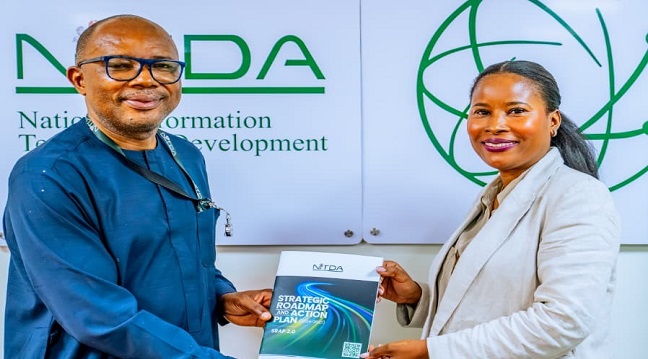
The National Information Technology Development Agency (NITDA) and Agence des Systèmes d’Information et du Numérique (ASIN), the Information Systems and Digital Agency of the Republic of Benin, have moved to strengthen bilateral cooperation on digital transformation, digital public infrastructure, and innovation-driven governance.

The commitment was reaffirmed during a courtesy visit by the Beninese delegation to NITDA’s corporate headquarters in Abuja, where discussions centred on deepening bilateral cooperation, sharing best practices, and advancing digital development across the region.
Speaking during the engagement, the Director General of NITDA, Kashifu Inuwa, represented by the Director of Stakeholder Management and Partnerships, Dr. Aristotle Onumo, said regional collaboration remains critical to advancing Africa’s digital economy and building resilient digital ecosystems capable of supporting sustainable growth.
He noted that NITDA is committed to driving Nigeria’s digital transformation through the development of policies, standards, and strategic frameworks designed to modernise governance and improve service delivery across the public sector.
According to him, the agency has developed several foundational frameworks, including the Enterprise Governance Framework, Digital Transformation Framework, and Software Quality Assurance Framework, to guide Ministries, Departments, and Agencies (MDAs) in their digital transformation journeys.
“Our goal is to move government institutions beyond basic digitalisation to full digital transformation, and ultimately, to build an intelligent, data-driven government powered by emerging technologies such as artificial intelligence,” he said.
Inuwa also disclosed that since 2018, NITDA has reviewed over ₦1.5 trillion worth of government IT projects to ensure compliance, technical alignment, and value for money.
He said the intervention has helped the Federal Government save more than ₦300 billion by eliminating duplication, promoting shared services, and improving the success rate of digital projects across ministries, departments, and agencies.
On digital public infrastructure, he revealed that Nigeria has transitioned from fragmented agency-to-agency data exchanges to a more integrated and citizen-centred digital ecosystem through the Nigerian Data Exchange (NGDX) platform.
He explained that the platform provides a federated and centralised framework for seamless data exchange among government institutions while preserving the autonomy of individual information systems.
According to him, the proposed e-Government and Digital Economy Bill will provide the legal backing needed to strengthen the platform and institutionalise digital collaboration across government.
The DG further highlighted NITDA’s Strategic Roadmap and Action Plan (SRAP 2.0) 2024–2027, which aligns with the Federal Government’s Renewed Hope Agenda and focuses on critical areas such as digital literacy, research and development, cybersecurity, innovation, inclusive access, and strategic partnerships.
Earlier, the Head of International Partnerships at ASIN, Tildy Erlong, said the delegation’s visit followed a recent Smart Africa workshop in Abuja and was aimed at strengthening institutional ties and learning from Nigeria’s digital transformation experience.
She described ASIN as the operational agency under Benin Republic’s digital ministry, responsible for implementing strategic digital development projects across the country in collaboration with key institutions, including the national identity agency, ANIP, and the cybersecurity agency, CENIN.
Erlong highlighted Benin’s achievements in digital public infrastructure, noting that about 98 per cent of the country’s population—approximately 13.6 million citizens—has been enrolled on its digital identity platform.
She added that more than 60 government agencies and service institutions are connected through Benin’s XROAD interoperability platform, enabling the delivery of over 250 digital services to citizens.
According to her, Benin is also prioritising digital inclusion, open-source systems, and the deployment of artificial intelligence to improve service delivery in sectors such as healthcare, education, and justice.

CBN to Deploy AI in Fight Against Payment Fraud

NDPC, Meta Launch 2-Year M-SIDP after Regulatory Settlement

Report Faults Banks over N91.1 Trillion Sterilised at CBN

Telcos Fault Data of FDI Flow, Claim Investment of N1.86 Trillion on Service Expansion

NRS Accredits Afri Invoice as Access Point Provider to Drive Nigeria’s Mandatory e-invoicing

CBN Extends PoS Geo-Fencing Enforcement Deadline to August 2026

FG to Launch Nationwide Free Digital TV Platform June 17

MTN, Airtel, Glo Under Pressure as FG Demands Better Service Delivery

Jumia Nigeria Records Strong Q1 2026 Growth as Technology-Led Strategy Drives Market Expansion

Metro Digital, Nigerian Firm Accuses Multichoice Of Refusal to Obey Court Judgements




 Telecom2 days ago
Price of Data in Nigerian Mobile among Top Four Cheapest Globally – MTN CEO

 E-Financial2 days ago
BOI Wins Dual Honours @ EMEA Finance Awards for Sustainability and Social Impact Leadership

 E-Business2 days ago
NITDA Okays NiRA’s Annual, Business Report

 E-Financial2 days ago
CBN Imposes N100m Penalty on Dealing Bank Inadequate Processing of Forex Documents

 Telecom2 days ago
NAIFF Returns for 2026, Expands Focus on AI-Powered Storytelling in Africa

 General News1 day ago
SSDC Warns Businesses against Cyber, Election-Related Risks

 General News2 days ago
Moniepoint DreamDevs Bootcamp Graduates Second Cohort to Strengthen Homegrown Talent Pipeline

 Telecom1 day ago
FCCPC Refutes Airtime Market Takeover Claims