

General News
ICT Promotes Transparency in Freight Forwarding – Nweke


Eugene Nweke, is the new national president of National Association of Government Approved Freight Forwarders (Nagaff). A product Nagaff Academy with an advance diploma in international freight forwarding, Nweke, started his freight forwarding career in 1989 with Greenlight Limited and has been a member of the association from its inception in 1999. The new Nagaff boss in this interview with nkechi david –iwuchukwu, talked about the freight forwarding industry and ICT.
Nagaff
Nagaff is a professional association that took its root from freight forwarding. It came as a child of necessity, to change the perception of the general public on the activities and practices (services) of a freight forwarder. Before now there was an old nomenclature referred to as clearing and forwarding, which some members of the public believe is synonymous to 419, there by discrediting the noble profession of freight forwarding which is a global profession.
As such Nagaff carried out a vision with a mission statement to usher in a sustainable freight forwarding practice in Nigeria by institutionalizing ethics, code of professional conduct and respect to rule of law. In addition, to give a direction to a better way of settling trade disputes through dialogue, consultation, and communication, as opposed to confrontation, antagonism, strike actions and so on.
To achieve, we needed a pro-active public advocacy and that has been our tradition. This is what we have been doing for the past 10 years and we will continue to intensify our public advocacy.
Area of Courier Services
Freight forwarding covers so many areas, that is why one of our books published asked a question: A freight forwarder, what does he do?
International Federation of Freight Forwarders Association (Fiata) adopted a definition for freight forwarding and logistics services as : services of any kind relating to the carriage performed by single mode or multi-modal transport means ( consolidation, storage, handling, packing or distribution) of goods, as well as ancillary and advisory services, in connection, including but not limited to customs and fiscal matters, declaring the goods for official purposes, procuring insurance of goods and correcting or procuring payment or documents relating to the goods. Freight forwarding services also includes logistical services with modern information and communication technology (ICT) in connection with the carriage, handling or storage of the goods referred to a de facto total supply chain management. These services can be tailored to meet the flexible application of the services provided. Therefore, a freight forwarder can be defined as the party who ensures that international traded goods move freely from point of origin to point of destination to arrive; (i) at the right place (ii) at the right time (iii) in good condition (iv) at the most economic cost. If you look at this definition, you now see that a freight forwarder is a logistician, which means he maintains a close cooperation with other actors within the maritime chain, including transporter, negotiating freight rate, comparing cost, moving cargo along different routes, observing different modes, designing logistic infrastructure that provide the best compromise between cost, speed and reliability. With this, you see that a freight forwarder is a logistic officer and one adhering to and ensuring statutory compliance. A freight forwarder therefore carries out an aspect that is gratifying in the facilitation of trade through consultancy and networking. In summary the freight forwarding family comprises the following; packaging and warehousing firms, custom licensed agents, courier companies, global logistics and air freight companies, cargo brokers and consolidators and multimodal transport companies.
Changing Roles of Freight Forwarding
The traditional freight forwarding functions are divided into (i) documentation (ii) planning and costing routes (iii) booking and coordinating freight, arranging and ancillary services such as; warehousing and packing, consolidation, paying charges and dues to carriers, ports, customs etc (iv) rendering advices to shippers and providing information to help them prepare quotation, these are the activities that makes a freight forwarder to be portrayed as agent to the shipper.
Scope in Terms of Spread
Nagaff is in three zones of the federation; South- East zone, comprising; Onne, Port Harcourt area 1, Airport, Calabar and Warri. Northern zone, which comprises; Kano, Abuja and Kaduna-Katsina. Finally, the Western zone, comprising; Murtala Mohammed airport, Apapa port, Tincan Island port, Seme, Idiroko, Ikorodu, KLT, Port Terminal Management Limited (PTML), and Federal Operation Unit (FOU).
Major Focus as New Nagaff President
From all that I have said, you can see that freight forwarding is a gamut of activities, therefore in sustaining our passion at ushering in freight forwarding practice in Nigeria, the area of training and retraining of members in accordance with the Council for Regulation of Freight Forwarding in Nigeria (CRFFN) act number 16, 2007, is a primary area of focus in this administration, because there is an urgent need for skill acquisition and capacity building. Secondly, I will look at the area of intensifying on public advocacy, because the old orders, practices and procedure are still living with us. Finally, I will also look out to advise government on the consequence of inimical trade policies where and when the need arises.
Challenges Faced
Administering an association like Nagaff, which is a non-profit making organization, yet committed to public advocacy, sustains itself through membership subscription. In this wise, the obligation of making members to be loyal and committed requires extra effort.
IT Impact on Service Delivery
Obviously, before now the World Trade Organisation (WTO) / World Custom Organisation (WCO), has been at the forefront of championing IT driven cargo clearance procedures and transactions, which culminated into simplification, harmonization of custom tariffs and clearance procedures with emphasis placed on elimination of cumbersome procedure and bottleneck in cargo clearance processes. Therefore, in pursuit of globalization and in compliance to IT driven trade transaction and facilitation the WTO is promoting a paperless shipping and trade environment. IT has also encouraged an “increased cargo through-puts “(influx of cargo) and enhanced “turn around time of vessel “(discharging time for ship).
ICT Growth
One important thing that has happened has to do with exchange of expertise between Nigeria and other nations, talking about globalization. And since Nigeria can not be isolated from the world, then obviously looking at our population, human resources and natural resources, Nigeria has between 1999 following the introduction of GSM and in compliance to Y2K (computerization), it is remarkable to note that Nigeria has been ICT compliance for over 20 years. Therefore, the growth of ICT in Nigeria is at a steady increase but there is still room for improvement, especially within our educational sector and some aspect of government dealings, because ICT has a place in promoting transparency.


Security Skills Development Company (SSDC) has released its 2026 Security Outlook, highlighting four major security challenges expected to shape Nigeria’s business and operating environment as the country moves closer to the 2027 general election.

The report, developed from a nationwide survey and expert contributions at the recently concluded Security Thought Leadership Roundtable, identifies internal security threats, protection of national assets, cyber risks and election-related instability as the most significant concerns facing organisations and institutions in the coming year.
According to SSDC, findings from the survey and stakeholder discussions reveal growing concern over the increasing complexity of security challenges and their potential impact on business continuity, economic stability and public confidence.
A substantial number of respondents identified internal threats within organisations as an emerging risk, pointing to the need for stronger corporate governance, workforce integrity measures and structured risk management systems.
Security experts at the roundtable noted that weaknesses in critical public infrastructure and national assets could have far-reaching consequences for the economy and national development if not adequately addressed.
The report also highlights cybercrime as a persistent and evolving threat to both public and private sector institutions.
Participants stressed the importance of strengthening cyber resilience through proactive monitoring, investment in technology-driven safeguards and improved security awareness.
Another key concern raised in the outlook is what SSDC described as the “2027 Election Shadow.” Many respondents expressed concerns about the possibility of heightened political tension as the election season approaches, warning that uncertainty and security disruptions could affect business operations, investment decisions and overall economic confidence.
Speaking on the report’s findings, Mike Igbodipe, managing director, SSDC, called for a more strategic approach to security management across both public and private sectors.
He said organisations must move beyond reactive security measures and integrate security considerations into their broader strategic planning and decision-making processes. He also advocated the development of a gold-standard, locally certified training programme for security professionals tailored to Nigeria’s unique security environment.
SSDC, a security training and consulting firm focused on advancing professional standards in Nigeria’s security sector and strengthening industrial resilience through capacity building and strategic expertise, said the Security Outlook forms part of its ongoing thought leadership initiative aimed at promoting informed dialogue on national security, institutional resilience and risk management.
The company reaffirmed its commitment to supporting stakeholders through research, training and strategic advisory services designed to improve preparedness and response to emerging security challenges.
General News
Moniepoint DreamDevs Bootcamp Graduates Second Cohort to Strengthen Homegrown Talent Pipeline


Moniepoint Inc., Africa’s leading digital financial services provider, has officially graduated the second cohort of its flagship DreamDevs Bootcamp, marking a significant milestone in the company’s ongoing effort to build world-class engineering talent from the ground up.

The graduation was celebrated at a Demo Day event held in Lagos, themed “Training Done! Demo Up!”, where participants presented capstone projects built to real-world engineering standards.
The graduation comes at a crucial time for Africa’s tech ecosystem. Although Nigeria’s tech talent is growing, it isn’t sufficient, especially at the mid-to-senior engineering level, where demand far exceeds supply. By 2030, the global shortage of software developers could reach 85 million, leading to economic losses of $5.5 trillion. For a continent developing its digital infrastructure, this is critical. Moniepoint’s DreamDevs Bootcamp is a strategic response to these challenges.
The nine-week curriculum, created by Moniepoint’s Engineering Unit in partnership with Semicolon, covered Java Object-Oriented Programming, Data Structures and Algorithms, Software Testing, MySQL, Spring Boot APIs, System Design, Docker, Messaging Queues, Frontend UI, and Cloud Infrastructure. Participants received programme stipends and mentorship from experienced Moniepoint software engineers, gaining valuable exposure to the production environment of one of Africa’s fastest-growing fintech firms.
During the Demo Day presentation, the participants paired into 9 teams were excited to showcase how they have deployed knowledge and skills gained during the course of the bootcamp into real and useful solutions in real estate, hospital management, event management, food and agriculture.
Commenting, Felix Ike, Co-Founder and Chief Technology Officer of Moniepoint, said, “DreamDevs is a structural investment in Nigeria’s digital economy, not a recruitment exercise, not a pipeline built solely to serve Moniepoint’s hiring needs. That said, we are proud that some graduates from our first cohort are already active members of our engineering team, proof that when young African engineers are given the right training and the right environment, they can compete at the highest level”.
Felix added that “Engineering excellence is not a naturally occurring phenomenon. It is a curated and intentionally built process that requires the right systems, the right resources, and sufficient time to take hold. Building that process and making it accessible to the brightest young engineers on this continent is a responsibility we have chosen to own.
Africa’s digital economy is attracting significant global capital, yet the talent infrastructure required to sustain that growth remains underdeveloped. The DreamDevs Bootcamp and our other capacity-building initiatives across some of Nigeria’s public universities demonstrate Moniepoint’s commitment to this responsibility.
The initiative also aligns with Nigeria’s broader national agenda on technology skills development. Moniepoint serves as a key sponsor of the Federal Government’s 3 Million Technical Talent (3MTT) programme, which focuses on mass technical skills training across the country. While 3MTT addresses the scale challenge, DreamDevs provides depth, offering a specialised, end-to-end pathway from foundational training through to employment within Moniepoint’s complete development ecosystem.
As Nigerian fintechs deepen their infrastructure ambitions, the ability to grow engineering capacity that feeds these aspirations requires an urgent industry intervention, as Moniepoint is demonstrating to address Africa’s engineering talent challenge.
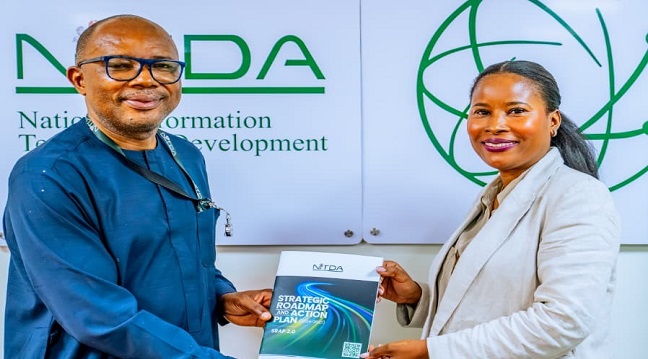
The National Information Technology Development Agency (NITDA) and Agence des Systèmes d’Information et du Numérique (ASIN), the Information Systems and Digital Agency of the Republic of Benin, have moved to strengthen bilateral cooperation on digital transformation, digital public infrastructure, and innovation-driven governance.

The commitment was reaffirmed during a courtesy visit by the Beninese delegation to NITDA’s corporate headquarters in Abuja, where discussions centred on deepening bilateral cooperation, sharing best practices, and advancing digital development across the region.
Speaking during the engagement, the Director General of NITDA, Kashifu Inuwa, represented by the Director of Stakeholder Management and Partnerships, Dr. Aristotle Onumo, said regional collaboration remains critical to advancing Africa’s digital economy and building resilient digital ecosystems capable of supporting sustainable growth.
He noted that NITDA is committed to driving Nigeria’s digital transformation through the development of policies, standards, and strategic frameworks designed to modernise governance and improve service delivery across the public sector.
According to him, the agency has developed several foundational frameworks, including the Enterprise Governance Framework, Digital Transformation Framework, and Software Quality Assurance Framework, to guide Ministries, Departments, and Agencies (MDAs) in their digital transformation journeys.
“Our goal is to move government institutions beyond basic digitalisation to full digital transformation, and ultimately, to build an intelligent, data-driven government powered by emerging technologies such as artificial intelligence,” he said.
Inuwa also disclosed that since 2018, NITDA has reviewed over ₦1.5 trillion worth of government IT projects to ensure compliance, technical alignment, and value for money.
He said the intervention has helped the Federal Government save more than ₦300 billion by eliminating duplication, promoting shared services, and improving the success rate of digital projects across ministries, departments, and agencies.
On digital public infrastructure, he revealed that Nigeria has transitioned from fragmented agency-to-agency data exchanges to a more integrated and citizen-centred digital ecosystem through the Nigerian Data Exchange (NGDX) platform.
He explained that the platform provides a federated and centralised framework for seamless data exchange among government institutions while preserving the autonomy of individual information systems.
According to him, the proposed e-Government and Digital Economy Bill will provide the legal backing needed to strengthen the platform and institutionalise digital collaboration across government.
The DG further highlighted NITDA’s Strategic Roadmap and Action Plan (SRAP 2.0) 2024–2027, which aligns with the Federal Government’s Renewed Hope Agenda and focuses on critical areas such as digital literacy, research and development, cybersecurity, innovation, inclusive access, and strategic partnerships.
Earlier, the Head of International Partnerships at ASIN, Tildy Erlong, said the delegation’s visit followed a recent Smart Africa workshop in Abuja and was aimed at strengthening institutional ties and learning from Nigeria’s digital transformation experience.
She described ASIN as the operational agency under Benin Republic’s digital ministry, responsible for implementing strategic digital development projects across the country in collaboration with key institutions, including the national identity agency, ANIP, and the cybersecurity agency, CENIN.
Erlong highlighted Benin’s achievements in digital public infrastructure, noting that about 98 per cent of the country’s population—approximately 13.6 million citizens—has been enrolled on its digital identity platform.
She added that more than 60 government agencies and service institutions are connected through Benin’s XROAD interoperability platform, enabling the delivery of over 250 digital services to citizens.
According to her, Benin is also prioritising digital inclusion, open-source systems, and the deployment of artificial intelligence to improve service delivery in sectors such as healthcare, education, and justice.

CBN to Deploy AI in Fight Against Payment Fraud

NDPC, Meta Launch 2-Year M-SIDP after Regulatory Settlement

Report Faults Banks over N91.1 Trillion Sterilised at CBN

Telcos Fault Data of FDI Flow, Claim Investment of N1.86 Trillion on Service Expansion

NRS Accredits Afri Invoice as Access Point Provider to Drive Nigeria’s Mandatory e-invoicing

CBN Extends PoS Geo-Fencing Enforcement Deadline to August 2026

FG to Launch Nationwide Free Digital TV Platform June 17

MTN, Airtel, Glo Under Pressure as FG Demands Better Service Delivery

Jumia Nigeria Records Strong Q1 2026 Growth as Technology-Led Strategy Drives Market Expansion

Metro Digital, Nigerian Firm Accuses Multichoice Of Refusal to Obey Court Judgements




 Telecom2 days ago
Price of Data in Nigerian Mobile among Top Four Cheapest Globally – MTN CEO

 E-Financial2 days ago
BOI Wins Dual Honours @ EMEA Finance Awards for Sustainability and Social Impact Leadership

 E-Financial2 days ago
CBN Imposes N100m Penalty on Dealing Bank Inadequate Processing of Forex Documents

 E-Business2 days ago
NITDA Okays NiRA’s Annual, Business Report

 Telecom2 days ago
NAIFF Returns for 2026, Expands Focus on AI-Powered Storytelling in Africa

 General News2 days ago
SSDC Warns Businesses against Cyber, Election-Related Risks

 Telecom2 days ago
FCCPC Refutes Airtime Market Takeover Claims

 General News2 days ago
Moniepoint DreamDevs Bootcamp Graduates Second Cohort to Strengthen Homegrown Talent Pipeline