

General News
Postal Bill Will Make the Industry More Viable -Oladepo


Siyanbola Oladapo, managing director of Bowill Errands Courier is a consummate professional with over years of experience spanning the courier, oil & gas, and the financial sectors. Oladapo, is also the secretary general, Association of Nigeria Courier Operators (Anco) has been in the vanguard for a robust courier sector capable of contributing to the country’s GDP. He spoke to peter ugwu on issues relating to the industry in Nigeria.
Threats to Courier operation
The threats are many. One, we are talking about non-professionals in the industry. The Courier Regulatory Department (CRD) headed by Dr. Simon Emeje has been trying his best to address that aspect.
And that is why you see people operating using another person’s license; and the public is not even asking them to provide such evidence while giving out contracts.
Even some of the genuine ones lack the capacity to compete in the sector. Apart form that, we usually operate with courier bikes; most of the states hiding under the security threats in the country and the nuisance of the okada riders, have placed ban on motorcycles. That tells on our business seriously.
For instance, in Lagos you have to meander through a lot of routes to deliver parcel. We have tried to discuss with the state government for them to appreciate the peculiarities of our business.
Multiple taxes are another challenge. We encounter harassments from Local Government officials. Thus, the weight of different taxes and levies we pay are forcing some companies out of business.
Although these officials are getting more enlightened in Lagos, but how about their counterparts in other parts of the country? And government has to look at the issue of inter-state taxes.
These things are hurting businesses. And FAAN has not been fare to us. Sometimes, they would want us to pay at every airport.
Also, the increased cost of petroleum products adds to the burdens. At the end of the day, the customers pay the costs.
Postal Service Commission Bill
I think members of the National Assembly need to understand the importance of this Bill to the nation.
If we have the bill come on stream, then we could be able to arrest the problems associated with employment, especially the unskilled young people.
The Bill will address the injustice done on the postal sector after the severance of the Post and telecommunications (P&T) by the government.
Because telecommunications is now under a commission; the growth as witnessed within the short period is so phenomenal and until we do the same thing for the post there will continue to be issues that affect the industry.
The Commission is very important in the sense that it will institute professionalism, and will position Nipost to occupy its rightful place.
In fact, more investors will be attracted to the sector and checkmate haphazard practices and irregularities.
For instance, in the telecom sector, no one can just rise up and do anything he wishes; is being manned by professional and the regulator is independent for now. The sector is not under all comers’ affairs arrangement.
So, if the postal aspect is messed up, the confidence will be eroded; there is no incentive.
People come to Nigeria because of the large market, however, we have to be independent to reap from such investment; the regulatory body should not remain under Nipost. If that is not done, we will go back to square one.
Bulkpost Centralization
We need to understand something; it was once decentralized and there were abuses.
So, when the new leadership came in they discovered the challenges and I think they meant well for the industry players.
Some of my colleagues might not want to believe the fact that centralizing it solved a lot of problem.
Under the previous arrangement, the internal problems that faced the management affected the process.
Decentralization would have been the best, but the present structure I think is part of monitoring procedure adopted in the system.
Even though they usually have more than they can bear, but it needs to increase the number of personnel.
And they could partner with courier companies who have enough spaces, and staff to carry out their sorting.
We have engaged the Postmasters General on this and we found out that they are trying to sanitize some areas of the business.
Capitalization
The fact is that, there are a lot of hypocrisies with the so called capitalization in the banking sector.
As a professional banker who spent more than 10 years in the industry, I can tell you that what they did then wasn’t the best.
The problem is not capitalization alone it has to do with the corporate governance, the ethics of the profession.
It is not enough getting a fresher, who probably left school yesterday and because he has ‘little change’ you make him the managing director of a bank.
There was a lot of deficiency with the manpower.
Bring deposit today, you are promoted; he takes the money from there and go to another bank and within two year he becomes a manager, they know how to attract funds but lack the necessary skills to utilize them.
More so, fixed assets are not capitalization in the real sense, but they calculate the buildings used by those banks as part of the process.
Coming to courier industry, we don’t need capitalization as it were; rather we need the industry to be categorized.
For instance Wema Bank is now saying I want to be regional, the same thing can be implemented in the courier industry.
And that is why we are clamouring for upgrading of CRD to a full Commission, so that they will have enough manpower to monitor such development.
Capitalization, actually gives room for those with the intellectual milieu to manage the sector, but we must be careful with that as well.
Bowill Errands’ Annual Lecture
The median edition started with the impact of the economic melt down on courier industry.
The second edition looked at the synergizing the sector and the last edition focused on the challenges and opportunities in fright business.
The reason was based on the fact that most operators channel their attention to capital market and on the impact of ICT.
This year the committee is trying to come up with a topic that will open the eyes of the industry players on the way forward. It has come to stay and a thing of pride for the industry.
Aviation Rows and courier Sector
It increases our cost of operation and when that happens, it is usually passed down to the customers.
They will start looking for other means to do their business.
And the charges here are not comparable to what is obtainable in developed countries and that is why when government took them up, there were fears.
But we must not fail to ponder on the charges of FAAN. What are the costs of aviation fuel in Nigeria?
So, no body can sincerely blame them.
How about the cost of hotels that there crews will stay? And you have to buy diesel, and other exorbitant exigencies.
They have to charge much.
So, government must consider these things to determine whether they are ripping off on Nigerians really or they were seeking for a means of survival in a harsh economic environment.
Nitel/Mtel
The lesson we must learn from the intrigues that surrounded the whole thing is sincerity which is important in governance.
How sincere were the people involved in the commercialization, privatization and the liquidation processes?
Until Obama put his feet on the ground and said no, the Republican were pushing for America to sell her biggest auto company, but now it is about the leading auto companies. They bailed it out.
The process was transparent. So, the case of Nigeria is that when there is no sincerity of purpose whatever project we embark on is bound to fail.
Bowill Errands
Bowill Errands is one of the best and well structured courier companies in Nigeria. From onset, it set out to function on the areas of haulage and logistics. We have been in operations for five years.
Although as the MD, I have been involved in courier sector for more than 12 years now. We are in our own building; I am not sure of any indigenous company operating its office in private property like this.
And we have been adding values to the sector since we started.
Bowill Errands has been organizing annual public lecture to highlight the challenges and opportunities in the sector; the very first indigenous courier firm to do that.
We have been doing that for the last three years and for the benefit of the industry.
Overview of Courier Industry
Courier business in Nigeria is supposed to be a vibrant one. It’s an industry capable of providing employment for lots of people; both skilled and unskilled labour.
It has a very wide market, but we have not been able to tap into it.
Presently, we have over two hundred companies in the country and we can still accommodate more, but people must be professional in their dealings.



Government of Guinea-Bissau has signed a Memorandum of Understanding (MoU) with Nigeria’s United Nigeria Airlines to establish AIR BISSAU, a national carrier, for the West African country, to boost its aviation industry and reduce its dependence on foreign airlines.

The agreement, signed in Bissau, the capital of Guinea-Bissau, was disclosed in a statement made available by the airline on Sunday.
The MoU was signed by Dr Florentino Pereira, minister of Transport, Telecommunications and Digital Economy, Guinea-Bissau and Prof Obiora Okonkwo, executive chairman of United Nigeria Airlines.
Recall that Nigeria currently has no national carrier despite repeated calls by industry stakeholders for its establishment to facilitate reciprocal flight rights to foreign destinations, particularly the United States.
Attempts to establish a national carrier through a partnership with Ethiopian Airlines also hit a brick wall following lawsuits by the Airline Operators of Nigeria, an association for which Okonkwo once served as spokesperson.
Other factors that contributed to the failure of the national carrier project included deep-seated political issues, allegations of fraud and a controversial ownership structure.
In the latest agreement between the Nigerian airline and Guinea-Bissau, which was made available to our correspondent, both parties will “explore a comprehensive cooperation framework aimed at establishing a fully operational national airline with Osvaldo Vieira International Airport in Bissau serving as the operational base and hub for the carrier’s initial routes.”
For decades, Guinea-Bissau has relied largely on regional carriers and charter services to connect its citizens and businesses to other countries.
A key component of the MoU is the creation of a joint venture company that will operate as Guinea-Bissau’s national airline.
Under the arrangement, United Nigeria Airlines will provide the majority of the financial investment, operational expertise, aircraft and management for the new carrier.
Extending beyond commercial operations, the Nigerian carrier is expected to “provide and operate an executive jet for the use of the President and Government of Guinea-Bissau.”
To facilitate the project, the government pledged to “facilitate the registration and licensing of the new national carrier in line with domestic laws and streamline authorisation processes through both the Civil Aviation Authority of Guinea-Bissau and the Civil Aviation Authority of Nigeria.”
Guinea-Bissau also agreed to designate AIR BISSAU as its official national carrier, granting it “full rights over all existing Bilateral Air Services Agreement entitlements.”
According to the MoU, the designation would give the airline “significant leverage in securing route rights and authorisations to regional and international destinations,” described as an important commercial and diplomatic asset.
The government further committed to ensuring that Osvaldo Vieira International Airport receives the infrastructure support required for the airline’s operations, including access provisions, ground support services and assistance with customs, immigration and security compliance.
Additionally, Guinea-Bissau pledged to invest in the establishment of the airline and create mechanisms that would protect and incentivise investment through the existing Investment Code and applicable tax frameworks.
As part of efforts to develop local aviation expertise, United Nigeria Airlines plans to train “qualified Guinean nationals including pilots, cabin crew, and technical maintenance personnel” and employ local staff wherever feasible in line with government employment policies.
The MoU makes it clear that operational control of the airline will remain with the Nigerian carrier.
“For the purposes of safety, reliability, and efficiency, the overall management, operational control, and general direction of the new airline will rest with the management team of United Nigeria Airlines,” the statement noted.
Both parties also agreed to provide full liability and hull insurance coverage for all flight operations, conduct annual independent safety and maintenance audits, and establish asset protection mechanisms for investors.
The agreement takes immediate effect and will remain valid for 18 months or until a substantive joint venture agreement is concluded.

The International Monetary Fund (IMF) has recommended introducing taxes on fuel products and telecommunications services in Nigeria.

According to the IMF, this is part of broader measures to increase government revenue and create fiscal space for development spending and social interventions.
The international financial organization argued that stronger revenue mobilisation had become increasingly important as Nigeria’s fiscal position remained under pressure despite recent reforms.
This comes as Nigerians are protesting against worsening standard of living made worse by widespread insurgency.
The recommendation was contained in the IMF’s 2026 Article IV Consultation report on Nigeria, where the Fund argued that additional tax measures would be needed over the medium term despite the recent overhaul of the country’s tax system.
“Further tax policy changes will likely be needed—such as increasing the VAT rate, extending VAT to fuel products, rationalising tax expenditures in particular VAT exemptions on extractive industries and some customs duties, and introducing telecom excises—to complement administrative gains,” the IMF said.
The institution, however, cautioned that the timing of any new taxes must take into account Nigeria’s rising poverty levels and worsening food insecurity.
“The timing of reforms must consider the poverty and food insecurity situation and ensure that the cash transfer system is in place and funded,” the Fund added.
A previous attempt by the Federal Government to impose a five per cent excise duty on telecom services met strong resistance from operators, subscribers and consumer advocacy groups before it was suspended and eventually scrapped.
Telecommunications firms had maintained that the industry was already weighed down by multiple taxes, rising energy costs, foreign exchange challenges and infrastructure constraints.
They warned that any additional levy would likely be transferred to consumers through higher call and data tariffs.
Similarly, proposals to tax fuel products have faced opposition from labour unions and private sector organisations amid concerns over the rising cost of living following the removal of petrol subsidies and increases in transport and food prices.
The IMF’s latest recommendation comes as the Fund projects that Nigeria will require stronger revenue mobilisation efforts to sustain planned increases in public spending and provide support for vulnerable households.
According to the report, revenue-enhancing tax policies could generate additional revenue equivalent to 3.9 per cent of Gross Domestic Product within three years of implementation.
The Fund identified a two-percentage-point increase in the Value Added Tax rate as the largest contributor, with a projected revenue gain of 0.8 per cent of GDP.
The report also projected that removing pioneer status incentives and revising free zone regulations would generate an additional 0.7 per cent of GDP.
Reforms to capital gains taxation and adjustments to personal income tax bands, allowances and rates were each estimated to contribute 0.6 per cent of GDP.
The IMF further estimated that a top-up tax on multinationals and large firms could raise 0.5 per cent of GDP, while rationalising investment allowances would contribute another 0.4 per cent.
Notably, the category labelled “others”, which includes telecom excise duties and measures such as a carbon tax on fuel, was projected to generate an additional 0.4 per cent of GDP in revenue.
Beyond new tax measures, the Fund said Nigeria could achieve even greater gains through improved tax administration.
It projected that administrative reforms would generate an additional 3.1 per cent of GDP through better compliance, stronger enforcement and efforts to reduce informality in the economy.
According to the report, measures such as fiscalisation, electronic invoicing and cross-validation of tax deductions could generate 1.5 per cent of GDP, while expanded tax identification registration and consolidation of taxpayer databases could contribute a further 1.6 per cent of GDP.
The IMF acknowledged that some of Nigeria’s recently enacted tax reforms would reduce government revenue in the short term because they were designed to support households and small businesses.
It estimated that revenue-reducing measures would lower revenues by 2.4 per cent of GDP.
Expanded VAT input credits, additional zero-rated items and broader exemptions on basic consumption goods were projected to account for 1.7 percentage points of the decline.
Lower corporate income tax obligations for smaller firms would reduce revenues by 0.4 per cent of GDP, while lower personal income tax rates and expanded exemptions for low-income earners would account for another 0.3 percentage-point reduction.
Overall, the IMF projected that the combined impact of revenue-enhancing measures, administrative reforms and revenue-reducing policies would result in a net increase in government revenue equivalent to 4.6 per cent of GDP over the medium term.Nigerian investment opportunities

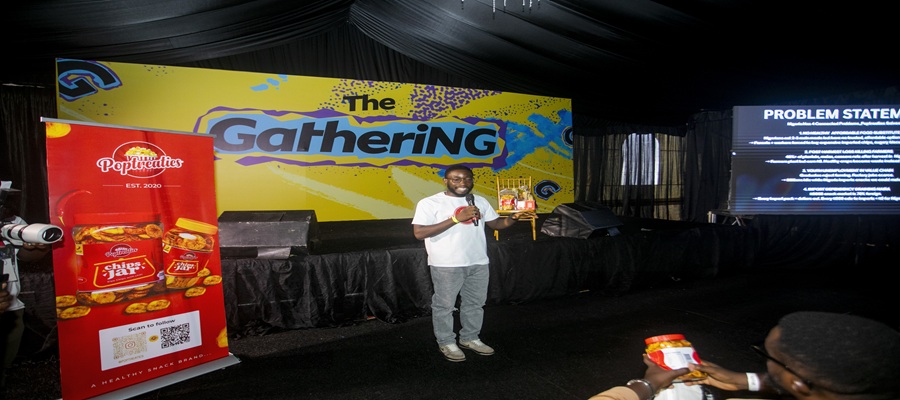
MTN Nigeria, through The Gathering on 100, has officially unveiled the next chapter of its youth cultural and creative movement in Aba, the home of entrepreneurship and innovation in Eastern Nigeria.

The initiative transformed the Prime Time Event Centre in Osisioma into a vibrant hub of innovation, culture, lifestyle, and entertainment.
As the second major activation of MTN’s ‘Live It 100’ campaign, this event underscores a bold commitment to encouraging young Nigerians to live life to the fullest of their potential, whether in business, tech, culture, or entertainment.
Central to this immersive experience is the highly anticipated Pitchathon, where 10 standout startups are vying for a total prize pool of ₦5 million.
The participating startups represent a cross-section of Aba’s burgeoning innovation ecosystem, tackling challenges ranging from logistics to artisanal tech.
Among them are Trashverse Recycling Technology Limited, a climate-first recycling solution founded by Charles Ikechukwu; SkillsCircle by Together, an ed-tech platform championed by Ijeoma Irene to empower young professionals in Nigeria; and Poptreaties, a healthy snack alternative founded by Ifeanyichukwu Dominion to curb junk food consumption.
These founders and their peers are showcasing solutions that blend local ingenuity with scalable technological frameworks, highlighting the immense potential of the region’s entrepreneurial spirit.
The pitchathon is judged by three esteemed figures in the African innovation ecosystem: Chiemela Anosike (Founder, Solaris GreenTech Hub), Dr. Chime Chimezie-Uche (Founder, Abia Startup Limited), and Justina Nwokedi (Digital Transformation Specialist).
This competition is designed to spotlight and empower early-stage founders in the city, providing them with a platform to validate their business ideas before investors, consumers, and industry stakeholders.
The prize structure offers ₦2.5 million to the winning startup, ₦1.5 million for the first runner-up, and ₦1 million for the third-place winner.
This Aba edition builds on the success of the Lagos edition, which took place from April 22 to 26 at the National Stadium, Surulere. There, eight startups received a collective ₦45 million in seed funding for solutions ranging from fintech to creative technology.
By bringing this platform to Aba, a city renowned for its industrial and entrepreneurial spirit, organizers aim to deepen access to opportunity and support the next generation of business leaders.
For these 10 startups, the Pitchathon is a vital opportunity to gain visibility, engage with potential partners, and accelerate their growth within a high-density environment of innovation.

AI-Powered Cyber Threats Put Nigerian Banks on Alert

Guinea-Bissau Taps United Nigeria Airlines to Establish AIR BISSAU, National Carrier

IMF Urges FG to Introduce Fuel, Telecom Taxes

CBN to Expand eNaira for Salaries, Pensions and Welfare Payments

CSOs Raise Alarm over Nigeria’s Data Protection Crisis

CBN Extends PoS Geo-Fencing Enforcement Deadline to August 2026

NCC Drafts New Rules for Virtual Mobile Operators

TD Africa, HPE Drive Conversations on the Future of Intelligent Networking

Easybuy Partners WAWUAfrica to Upskill 10 Million Youths and Women, Boosting Nigeria’s Economic and Financial Inclusion

Anthropic Raises $65 Bn to Expand AI Research, Innovation




 News3 days ago
UK, Nigeria Launch £15m Growth Programme to Accelerate Economic Transformation

 General News3 days ago
Haleon Introduces New Corporate Identity in Nigeria

 General News3 days ago
Elon Musk Makes History as the World’s First Trillionaire

 Telecom3 days ago
NITDA Unveils Ambitious Strategy to Turn Southwest into Nigeria’s Next Innovation Powerhouse

 General News17 hours ago
₦5m up for Grabs as 10 Startups Clash at the Gathering on 100 Pitchathon Aba
 E-Business17 hours ago
CSOs Raise Alarm over Nigeria’s Data Protection Crisis
 E-Financial17 hours ago
CBN to Expand eNaira for Salaries, Pensions and Welfare Payments

 E-Financial17 hours ago
CBN to Bar HoldCos from Influencing Banks’ Lending Decisions