

General News
Technology Can Check Kidnapping- Adoki

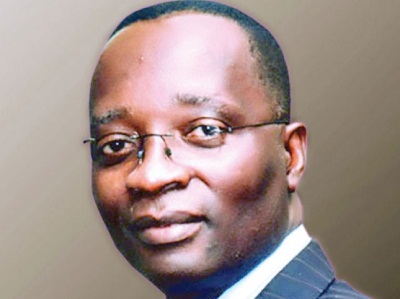
Kenneth Miebaka Adoki is the chief executive officer of Naira Net Technologies Limited, an intensive corporation, primarily established with the target of attaining Information and Communication Technology (ICT) growth in Nigeria. He has distinguished himself in pioneering cutting-edge solution in his over 30 years of experience in the ICT industry. Adoki spoke to chris alu in Abuja on issues in the Information and Communications Technologies.
Kidnappers and Criminals Tracking Solution
All these are global positioning equipment, once you attached it to your dress and cover it where nobody can see it; you will be located at any time on demand. It is integrated into a small data base and has command or rather a service centre where you can actually be reading location of the person at any point in time, if such a person is kidnapped you can easily locate him through that device, because it is always switched on, except if the kidnappers pull out his dressing and remove the device from him or switch it off, that is where you can not locate him, or else it is quite easy, provided the devices is on him you can track him anywhere the person is. It is an anti kidnapping technology that is very easy to carry about and is connected to the frequency network at all times, with that you can track down criminals as well. It works through the global position system (GPS) it can also be integrated into telephone networks like CDMA, or GSM technology, as well as cars and all sorts of technologies. The device is small and is pack like a SIM card, so once you are connected it start working.
These are all packages as one device to operate in GPS solution that is cheap and easy to maintain, it can be remotely controlled through the radio frequently identification technology that help to locate and dictate all the areas imputed into the device, it covers a wide range of areas. In fact the whole of Africa is connected through the waves.
It can also be used for vehicles and important places like retail shop outlets to curb theft. Each time you move, the frequency identification will read your movement and send text message to anybody that has your code number on request in his or her phone and it will help to locate you easily, it can also provide anti-robbery solutions for banks to locate or track movement of money especially the bullion van and alert the financial intelligence unit of any suspicious case as they move along with cash.
Biometrics Solutions and Automated Teller Machine Fraud
Bank customers using ATM require card and pin numbers to make withdrawals, they are now been hacked by fraudsters, but if we integrate the biometric solutions as retrofit, which is a small equipment attached to the ATM machine it will allow you access your account with pin number and finger print. It is an additional device to ATM users for their security. Just adding a small technology to the machine, you slot your card press the pin number and the only way you can withdraw money is to thumb your finger on the space provided, to enable it capture and identify the original ATM card user, if the finger print is different from the person that owns the card there is no way you can withdraw money. The technology solution was conceived because of the high rate of fraudsters hacking into personal data of cardholders. Fraud itself is a big industry in the world today because it has consumed more than $57 billion out of the economy of the world as at today, and has left a big gap in providing infrastructure and other relevant development of many countries. People use counterfeit or forge document, internet, and all sorts of dubious means to commit fraud, but with this retrofit on ATM machines such deals will be reduce to a barest minimum.
The image processing of the transaction and user verification time will be less then a second and the language support options is provided on the platform just like the same way you use the machine now, the only additional devices will be the finger print which the machine will ask you to do, the service will give automated system that is unmatched for users convenience. It is purely an additional security for ATM users, why we are doing this is because Naira Net wants to positioned itself as a total solution house for satisfying all kind of technology related needs of the people. We are a one stop shop that is bent on addressing all kinds of customers need, and we are striving to be a single vendor interface that would be providing end to end solution for business opportunities.
High Cost of IT Infrastructure
Government has really not subsidized ICT infrastructure because it is not cheap. ICT is an emerging solution that is taken the lead off today’s life be it development, transaction or communications. It is very expensive to run or even to study it. For instance India alone produces over one million IT knowledge workers in their country annually, while Nigeria produces less than 5,000 trained IT skilled workers in a year. So, there is a big gap for us to meet up with the challenge of trained manpower, and until we have a lot of capacity to begin to produce and trained workers in IT or ICT equipment it will continue to be expensive in Nigeria. In India, some of the trainees come up with solutions that march other techniques that are useful to them with the facilities on ground and which makes the equipment cheap. And they are growing in it. China has so many ICT parks that train their people at affordable cost, and most of the ICT parks in China are result of what we consume here in Nigeria such as, handsets, radios, and solar lamps among others. I don’t think we have any functional ICT park here in Nigeria, and that is the only way ICT cost can be driven down. We need to train our people, we need to develop capacity for it, we need to have functional parks, and we need to have the needed.
Until we get to the level where we would begin to have the facilities available, it would not be easy for us to use proper ICT equipment and the cost will continue to grow.
Most of these countries that use ICT equipment fully have stable power, these is what drives down some of the equipment downs.
Using R and D in ICT for Economic Advancement
Research and Development is not at the moment part of our initiative or plan for development in this country. Most of the R&D we have in the country today are not providing the needed know-how to enhance effective deployment for the country as at now. For instance, the universities are down for the past 2-3 months, how can lecturers or the students be involved in research?
Universities do not have the equipment or well equipped laboratories to carry out research, and they are rated very low in the world today. Organizations are not there to sponsor research and development, so how can we make good use of research and development, where we don’t have the facilities and companies to develop the research such research. This is because it involves quite a lot of money to carryout such project, it is not something that one will start and dump on the road. For us to achieve any meaningful development, we must be prepared for R&D, it is a prerequisite for development once we don’t do it we would not experience any meaningful development our economy.
The rapid changes that is taking place in other parts of the world from one point to another is as a result of the prolific nature of research and development, and the reasons we are not in R&D in any of the areas of production is because, the facilities are not there. The facts remains that, there must be new Innovation or product in the market that would attract people before they buy and how are we going to satisfied an average person with a new product we must embark on R & D.
Government Driving the Application of ICT
All countries have grown on the platform of government driving application of information and communications technology, for instance, Singapore ICT is grown on the platform of one man call Lee Wangyuu, Malaysian economy grow through a particular leader that needed change. In India, the person that drove their ICT was their leader, any country that wishes to grow in ICT must be the leader of that nation, and otherwise it will be done in an epileptic manner. Private or individuals cannot do it alone; we need a leader that have a mindset of driving ICT in this country for it to work effectively. In Dubai, the people driving ICT is the Amatuur family, they are like the prime minister of Dubai, in U.S apart from the government both the public and private sector are into agreement to sponsor or put in money for a particular project to make it successful. There is no way one can separate government from driving ICT in the country, the private enterprise can do it in bits, but it will be too expensive for end users, like in Nigeria most private entrepreneur wants quick return on their investment. How can they provide power, and other infrastructure required for development? It is the government that can do such a big project or enter into partnership with the private sector so that at the end the cost will not be too high and the facilities will be able to cover every nook and crannies of the country, and service will be rendered at low cost.
Naira Net Capacity in Service delivery
We are not doing all these alone; we have partners all over the world, such as Bevertec of Canada, which we are working with on establishing a National Internet Payment Gateway and financial process exchange through the Central Bank of Nigeria. We have Pentasoft Technologies in India for the establishment of education and training centers on ICT in Nigeria. We are also partnering with Euclid InfoTech, an Indian company to provide e-tender and e-procurement portals for publishing all government contracts and tenders, and we are also planning to upgrade the tender portal services for e-monitoring service.
We also partner with Infrasoft Technologies for secured anti-money laundering software solutions for banks which we have deployed it in UBA, Diamond Bank, Oceanic and Spring Banks and we would implement a core banking software solutions with the Banks very soon. We have Profiteer Corporation of Malaysia which we have signed an agreement with to provider advanced software technologies for revenue collections, debt recovery, legal and third party agency management for Nigeria. Also Amricon of Dubai for information and advance RFID ,smart technology that empowers government, financial institutions and business protection from fraud and document such as cheques, boarding passes, certificates cloning and counterfeiting and many others. We hope to offer all the services in Nigeria and indeed the entire African continent.
All the companies are professional that have expertise in various technological platform and they are qualified engineers in software technology, with management and research skills.


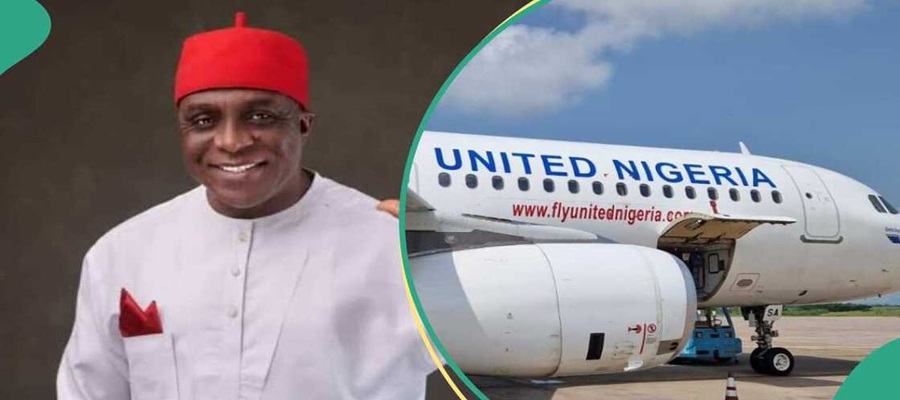
Government of Guinea-Bissau has signed a Memorandum of Understanding (MoU) with Nigeria’s United Nigeria Airlines to establish AIR BISSAU, a national carrier, for the West African country, to boost its aviation industry and reduce its dependence on foreign airlines.

The agreement, signed in Bissau, the capital of Guinea-Bissau, was disclosed in a statement made available by the airline on Sunday.
The MoU was signed by Dr Florentino Pereira, minister of Transport, Telecommunications and Digital Economy, Guinea-Bissau and Prof Obiora Okonkwo, executive chairman of United Nigeria Airlines.
Recall that Nigeria currently has no national carrier despite repeated calls by industry stakeholders for its establishment to facilitate reciprocal flight rights to foreign destinations, particularly the United States.
Attempts to establish a national carrier through a partnership with Ethiopian Airlines also hit a brick wall following lawsuits by the Airline Operators of Nigeria, an association for which Okonkwo once served as spokesperson.
Other factors that contributed to the failure of the national carrier project included deep-seated political issues, allegations of fraud and a controversial ownership structure.
In the latest agreement between the Nigerian airline and Guinea-Bissau, which was made available to our correspondent, both parties will “explore a comprehensive cooperation framework aimed at establishing a fully operational national airline with Osvaldo Vieira International Airport in Bissau serving as the operational base and hub for the carrier’s initial routes.”
For decades, Guinea-Bissau has relied largely on regional carriers and charter services to connect its citizens and businesses to other countries.
A key component of the MoU is the creation of a joint venture company that will operate as Guinea-Bissau’s national airline.
Under the arrangement, United Nigeria Airlines will provide the majority of the financial investment, operational expertise, aircraft and management for the new carrier.
Extending beyond commercial operations, the Nigerian carrier is expected to “provide and operate an executive jet for the use of the President and Government of Guinea-Bissau.”
To facilitate the project, the government pledged to “facilitate the registration and licensing of the new national carrier in line with domestic laws and streamline authorisation processes through both the Civil Aviation Authority of Guinea-Bissau and the Civil Aviation Authority of Nigeria.”
Guinea-Bissau also agreed to designate AIR BISSAU as its official national carrier, granting it “full rights over all existing Bilateral Air Services Agreement entitlements.”
According to the MoU, the designation would give the airline “significant leverage in securing route rights and authorisations to regional and international destinations,” described as an important commercial and diplomatic asset.
The government further committed to ensuring that Osvaldo Vieira International Airport receives the infrastructure support required for the airline’s operations, including access provisions, ground support services and assistance with customs, immigration and security compliance.
Additionally, Guinea-Bissau pledged to invest in the establishment of the airline and create mechanisms that would protect and incentivise investment through the existing Investment Code and applicable tax frameworks.
As part of efforts to develop local aviation expertise, United Nigeria Airlines plans to train “qualified Guinean nationals including pilots, cabin crew, and technical maintenance personnel” and employ local staff wherever feasible in line with government employment policies.
The MoU makes it clear that operational control of the airline will remain with the Nigerian carrier.
“For the purposes of safety, reliability, and efficiency, the overall management, operational control, and general direction of the new airline will rest with the management team of United Nigeria Airlines,” the statement noted.
Both parties also agreed to provide full liability and hull insurance coverage for all flight operations, conduct annual independent safety and maintenance audits, and establish asset protection mechanisms for investors.
The agreement takes immediate effect and will remain valid for 18 months or until a substantive joint venture agreement is concluded.
The International Monetary Fund (IMF) has recommended introducing taxes on fuel products and telecommunications services in Nigeria.

According to the IMF, this is part of broader measures to increase government revenue and create fiscal space for development spending and social interventions.
The international financial organization argued that stronger revenue mobilisation had become increasingly important as Nigeria’s fiscal position remained under pressure despite recent reforms.
This comes as Nigerians are protesting against worsening standard of living made worse by widespread insurgency.
The recommendation was contained in the IMF’s 2026 Article IV Consultation report on Nigeria, where the Fund argued that additional tax measures would be needed over the medium term despite the recent overhaul of the country’s tax system.
“Further tax policy changes will likely be needed—such as increasing the VAT rate, extending VAT to fuel products, rationalising tax expenditures in particular VAT exemptions on extractive industries and some customs duties, and introducing telecom excises—to complement administrative gains,” the IMF said.
The institution, however, cautioned that the timing of any new taxes must take into account Nigeria’s rising poverty levels and worsening food insecurity.
“The timing of reforms must consider the poverty and food insecurity situation and ensure that the cash transfer system is in place and funded,” the Fund added.
A previous attempt by the Federal Government to impose a five per cent excise duty on telecom services met strong resistance from operators, subscribers and consumer advocacy groups before it was suspended and eventually scrapped.
Telecommunications firms had maintained that the industry was already weighed down by multiple taxes, rising energy costs, foreign exchange challenges and infrastructure constraints.
They warned that any additional levy would likely be transferred to consumers through higher call and data tariffs.
Similarly, proposals to tax fuel products have faced opposition from labour unions and private sector organisations amid concerns over the rising cost of living following the removal of petrol subsidies and increases in transport and food prices.
The IMF’s latest recommendation comes as the Fund projects that Nigeria will require stronger revenue mobilisation efforts to sustain planned increases in public spending and provide support for vulnerable households.
According to the report, revenue-enhancing tax policies could generate additional revenue equivalent to 3.9 per cent of Gross Domestic Product within three years of implementation.
The Fund identified a two-percentage-point increase in the Value Added Tax rate as the largest contributor, with a projected revenue gain of 0.8 per cent of GDP.
The report also projected that removing pioneer status incentives and revising free zone regulations would generate an additional 0.7 per cent of GDP.
Reforms to capital gains taxation and adjustments to personal income tax bands, allowances and rates were each estimated to contribute 0.6 per cent of GDP.
The IMF further estimated that a top-up tax on multinationals and large firms could raise 0.5 per cent of GDP, while rationalising investment allowances would contribute another 0.4 per cent.
Notably, the category labelled “others”, which includes telecom excise duties and measures such as a carbon tax on fuel, was projected to generate an additional 0.4 per cent of GDP in revenue.
Beyond new tax measures, the Fund said Nigeria could achieve even greater gains through improved tax administration.
It projected that administrative reforms would generate an additional 3.1 per cent of GDP through better compliance, stronger enforcement and efforts to reduce informality in the economy.
According to the report, measures such as fiscalisation, electronic invoicing and cross-validation of tax deductions could generate 1.5 per cent of GDP, while expanded tax identification registration and consolidation of taxpayer databases could contribute a further 1.6 per cent of GDP.
The IMF acknowledged that some of Nigeria’s recently enacted tax reforms would reduce government revenue in the short term because they were designed to support households and small businesses.
It estimated that revenue-reducing measures would lower revenues by 2.4 per cent of GDP.
Expanded VAT input credits, additional zero-rated items and broader exemptions on basic consumption goods were projected to account for 1.7 percentage points of the decline.
Lower corporate income tax obligations for smaller firms would reduce revenues by 0.4 per cent of GDP, while lower personal income tax rates and expanded exemptions for low-income earners would account for another 0.3 percentage-point reduction.
Overall, the IMF projected that the combined impact of revenue-enhancing measures, administrative reforms and revenue-reducing policies would result in a net increase in government revenue equivalent to 4.6 per cent of GDP over the medium term.Nigerian investment opportunities

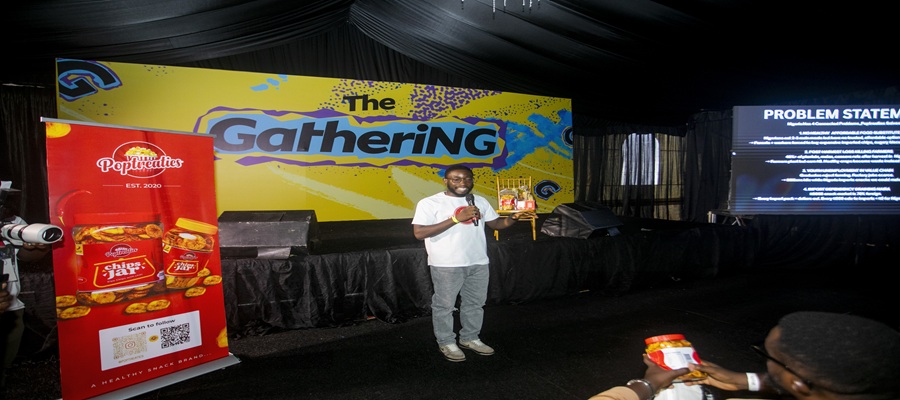
MTN Nigeria, through The Gathering on 100, has officially unveiled the next chapter of its youth cultural and creative movement in Aba, the home of entrepreneurship and innovation in Eastern Nigeria.

The initiative transformed the Prime Time Event Centre in Osisioma into a vibrant hub of innovation, culture, lifestyle, and entertainment.
As the second major activation of MTN’s ‘Live It 100’ campaign, this event underscores a bold commitment to encouraging young Nigerians to live life to the fullest of their potential, whether in business, tech, culture, or entertainment.
Central to this immersive experience is the highly anticipated Pitchathon, where 10 standout startups are vying for a total prize pool of ₦5 million.
The participating startups represent a cross-section of Aba’s burgeoning innovation ecosystem, tackling challenges ranging from logistics to artisanal tech.
Among them are Trashverse Recycling Technology Limited, a climate-first recycling solution founded by Charles Ikechukwu; SkillsCircle by Together, an ed-tech platform championed by Ijeoma Irene to empower young professionals in Nigeria; and Poptreaties, a healthy snack alternative founded by Ifeanyichukwu Dominion to curb junk food consumption.
These founders and their peers are showcasing solutions that blend local ingenuity with scalable technological frameworks, highlighting the immense potential of the region’s entrepreneurial spirit.
The pitchathon is judged by three esteemed figures in the African innovation ecosystem: Chiemela Anosike (Founder, Solaris GreenTech Hub), Dr. Chime Chimezie-Uche (Founder, Abia Startup Limited), and Justina Nwokedi (Digital Transformation Specialist).
This competition is designed to spotlight and empower early-stage founders in the city, providing them with a platform to validate their business ideas before investors, consumers, and industry stakeholders.
The prize structure offers ₦2.5 million to the winning startup, ₦1.5 million for the first runner-up, and ₦1 million for the third-place winner.
This Aba edition builds on the success of the Lagos edition, which took place from April 22 to 26 at the National Stadium, Surulere. There, eight startups received a collective ₦45 million in seed funding for solutions ranging from fintech to creative technology.
By bringing this platform to Aba, a city renowned for its industrial and entrepreneurial spirit, organizers aim to deepen access to opportunity and support the next generation of business leaders.
For these 10 startups, the Pitchathon is a vital opportunity to gain visibility, engage with potential partners, and accelerate their growth within a high-density environment of innovation.

AI-Powered Cyber Threats Put Nigerian Banks on Alert

Guinea-Bissau Taps United Nigeria Airlines to Establish AIR BISSAU, National Carrier

IMF Urges FG to Introduce Fuel, Telecom Taxes

CBN to Expand eNaira for Salaries, Pensions and Welfare Payments

CSOs Raise Alarm over Nigeria’s Data Protection Crisis

CBN Extends PoS Geo-Fencing Enforcement Deadline to August 2026

NCC Drafts New Rules for Virtual Mobile Operators

TD Africa, HPE Drive Conversations on the Future of Intelligent Networking

Easybuy Partners WAWUAfrica to Upskill 10 Million Youths and Women, Boosting Nigeria’s Economic and Financial Inclusion

London Strengthens Global Investment Ties with Africa @ First Ever London-Africa Business Summit




 News3 days ago
UK, Nigeria Launch £15m Growth Programme to Accelerate Economic Transformation

 General News3 days ago
Haleon Introduces New Corporate Identity in Nigeria

 General News3 days ago
Elon Musk Makes History as the World’s First Trillionaire

 Telecom3 days ago
NITDA Unveils Ambitious Strategy to Turn Southwest into Nigeria’s Next Innovation Powerhouse

 General News20 hours ago
₦5m up for Grabs as 10 Startups Clash at the Gathering on 100 Pitchathon Aba
 E-Business19 hours ago
CSOs Raise Alarm over Nigeria’s Data Protection Crisis
 E-Financial19 hours ago
CBN to Expand eNaira for Salaries, Pensions and Welfare Payments

 E-Financial19 hours ago
CBN to Bar HoldCos from Influencing Banks’ Lending Decisions