

News
Internet Activities in Nigeria: Ethics and Best Practice

The Internet is those set of networks or machines that uses the Transmission Control Protocol/Internet Protocol suite (TCP/IP), connected through gateways and sharing a common name and address (RFC 1244). The Internet with the capital letter ‘I’ should be carefully distinguished from the internet with small letter ‘i’. The later might not necessarily be built on a TCP/IP protocol and could be a multiple small networks in a campus network (internetwork of networks, shortened for internet)
The Internet was an improvement over the early 1970s ARPANET which had a lot of flaws. Two engineers in the U.S department of defense started working on this modern Internet. Surprisingly, they never knew that what they were working on is going to support the global business, education and totally replicates the entire activities of mankind into bits and bytes.
When the idea of the global network (Internet) that could stand even a nuclear war started germinating in the U.S DoD, people dismisses it as just science fiction. But now the Internet has come to stay. It has come to break every international boundary on earth. A mouse click you are in China, the other in Russia and the other Zanzibar that sort of thing. The Internet has made the world flat, flat in the sense that it has created a favourable environment for people to compete globally irrespective of their locations, race and technological advancement. Whether you are a Russian astronaut aloft in a spacecraft, a Bedouin tribesman in the desert with PDA/cell phone, or a Canadian work –at-home mother with her office in a spear bedroom, you will be able to connect with nearly anything or anybody anywhere. You will be able to participate in telephony, teleconferencing, telecommuting, teleshoping, telemedicine, tele-education, televoting and even telepsychotherapy not to mention a few. I am a practicing network engineer in Nigeria and belong to different networking fora online. A times when I make contributions on these fora, engineers from advance countries clap and even make references to my contributions. Often times, I make contributions on network securities that is even beyond the comprehension of some of these engineers born and practicing in the US. Thank god for the Internet.
For fifteen years and counting, Nigeria has been battling with positioning itself on the Internet. while the developed world have fully integrated into the Internet , from virtual Internet banking, online degree programs, online medical surgery to online home businesses; Nigeria is still lingering with epileptic, expensive and insecure Internet service. Most internet service providers in Nigeria had ran out of business relying on old Vsat technology, and living the meager Internet user in a misery. The sadder story is that the government is not truthfully helping matters.
Two realities stand out from the rest in Nigeria’s IT milieu. Firstly, more than 90 percent of Nigerians are computer illiterate. Secondly, the remaining percentage lacks the awareness to tap the resources on the Internet. Sadly, these percentages are not exclusive of the academic environment. I have met senior professor who cannot open an email address or print a document from the Internet. How then can they learn? what kinds of graduates are these educators going to produce , because a graduate with computer education is ten times more productive than a graduate without a computer education. The people in charge of our society are scared of the computer keyboard; they fear that computer will not let them be in charge. But this reality they most embrace, and it’s the path to changing our society.
I had a time in Onitsha , Asaba, lagos and Benin in southern Nigeria, and I had encountered hundreds of Internet fraudster between the ages 18-20yrs sending scam mails in hundreds of thousands. This is the lifestyle some Internet users in Nigeria have chosen for themselves. Not minding the fact that the western media is blowing this threat out of proportion, this is not good for confidence in e-commerce with Nigeria. For instance, the amount of credit card scam that is going on in China alone is more than that of the whole Africa. China and Russia is harboring some of the most dangerous criminal hackers in the world, they spent time developing criminal software that will enable them hack into your switches to steal money because of their poor economy, though the software developers in Moscow and St.Petersburg get higher payment paralleling those in the UK and the US. But a BBC reporter will be more interested in reporting a scam mail sent by a Yahoo Boy in Nigeria inviting an American business man to deposit some money in an account to help make away with some stolen wealth from a Nigerian government coffer. Foreign entrepreneurs that agree to such offers are also of doubtful characters.
I started working as a server administrator with an Internet café in a university town. I opted for the job because I needed a round the clock access to the Internet. While my co-workers were busy chatting in yahoo messenger looking for romance online, I was busy studying with free simulated online tutorials ranging from networking to e-commerce. After a while, I was making extra money from downloading free software repackaging them and selling them to my clients: collecting viruses, extracting there source codes and mailing them to a network security consultant in Bombay. And also making extra money from downloading and reselling e-books with free resale right. That extra money was seven times my monthly salary.
The activities of Nigerian based scammers (a.k.a yahoo boys) can be stratified based on the type of yahoo boy in question. There are three species of yahoo boys which I call:
Type A, Type B, and Type C
Type A
These types of scammers are moderately determined and given an alternate source of income will rather not engage in such criminal activities.
Type B
These types of scammers are also moderately determined and mostly scam for fun, having to do stuffs like that online fascinates them. They are mostly teenagers from well to do homes.
Type C
These scammers are the most dangerous types; they are criminally minded and have chosen to be bad people even before they had contact with the Internet. The Internet just enable they conduct a stay-at-home-theft and are mostly within the ages of 25-35yrs. These scammers can conveniently speak with more than five international English accents – as an Arab, Indian, Chinese that sort of thing.
70 percent of the scammers in Nigeria falls into the type A group. To them it is just business which they make a living out of. They use this means to send monies to their folks at home as such the some folks sometimes encourage them to sustain the returns. Type B and C are lavish spenders mostly hanging out in rather raucous parties spending on cute women. After expending their take for a couple of months, they go broke and return to their drawing boards (laptops) to restrategise.
Type A scammers being moderately determined average 8-10hrs on a daily basis preying for victims, while the more determine type C average 15-18hrs preying for victims online. The impact of the activities of this scammers on the local economy is minimal as most local entrepreneurs are computer illiterate and don’t agree with online transactions. In fact this has gone a long way in reducing local crime rate on the streets since the crimes now are transportable through the Internet to the advance world which is less risky for scammers.
Their attack methodology
These scammers execute their attacks in phases:
Phase one – Scouting and foot printing
In this stage, they go in search for online chat fora like Myspace, yahoo, facebook etc, romantic forum is a gold mine because they get people dying to get romance online. The age group of their target victims is very important to them. They aim at women between the ages of 35-45 and men within the ages of 45-55 that will be easily carried away by cute looking faces they don’t have courage to approach offline.



Payaza Africa, a payments infrastructure company, has earned strong credit ratings from four major rating agencies, reinforcing its growing reputation as a resilient and credible player in Africa’s financial services ecosystem.

The payment company recorded upgrades across the board, with DataPro raising its rating from A to AA-, Intelligence Africa assigning it an A- investment-grade rating, Agusto upgrading it from BBB to A-, and GCR, an affiliate of Moody’s, also moving it from BBB to A-.
A credit rating reflects a company’s financial strength and its ability to meet debt obligations, indicating how safe it is for lenders and investors to extend credit.
In a statement on Monday, the company described the achievement as a validation of its disciplined growth trajectory and operational resilience in a dynamic fintech landscape. It added that the upgrades position Payaza as a future-ready brand with increasing relevance not only within Africa but also in the global fintech space.
Commenting on the development, Seyi Ebenezer, the Chief Executive Officer of Payaza Africa, said the ratings reflect years of deliberate effort to build a sustainable and globally competitive institution.
“This milestone is a strong affirmation of the work we have done to build Payaza on a foundation of discipline, trust, and long-term value creation. Receiving these upgraded ratings sends a clear message that Payaza is not only growing, but growing with strength, structure, and sustainability,” he said.
Ebenezer noted that the recognition goes beyond financial performance, highlighting the company’s ability to execute strategically while maintaining strong risk management practices.
“For us, this is bigger than recognition. It reflects our commitment to building a world-class institution that can compete globally while continuing to serve businesses and consumers across the continent with excellence.
“Over time, our ratings journey has reflected more than strong financial performance. It speaks to a business built on disciplined execution, prudent management, and the ability to scale responsibly in a dynamic market. This has helped us stand out not only as an innovator in digital payments, but as a maturing financial institution with the operational depth to compete globally.
“These new ratings are expected to further strengthen Payaza’s standing with investors, regulators, partners, enterprise clients, and the wider financial community. In a sector where trust, resilience, and compliance are increasingly central to long-term success, independent ratings remain a powerful endorsement of a company’s ability to manage risk, meet obligations, and sustain growth,” Ebenezer said.
Payaza Africa provides payment infrastructure solutions focused on collections, payouts, embedded finance, and digital commerce enablement for businesses across Africa.
The company has also continued to expand its product ecosystem with solutions such as Payaza Checkout for payment collections and payouts, Chat and Pay by Payaza for WhatsApp-based transactions, Payaza Give for donations and digital contributions, and Shopaza, its e-commerce platform designed to help businesses sell and receive payments more efficiently.
News
London Strengthens Global Investment Ties with Africa @ First Ever London-Africa Business Summit

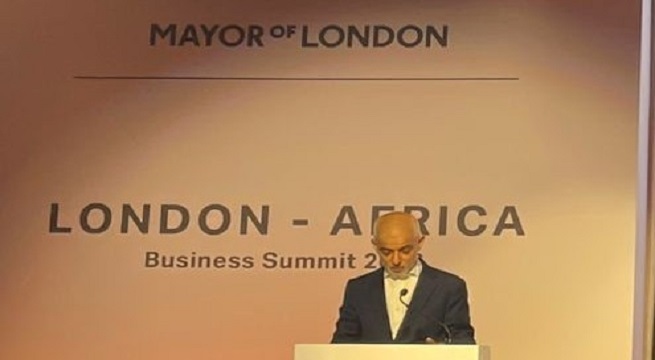
The Mayor of London, Sadiq Khan, has today hosted City Hall’s first ever London-Africa business summit, bringing together 200 business and political leaders from across the continent to strengthen trade and investment ties between London and Africa.

Held in the heart of the City of London, the summit included the Minister of Trade for Agribusiness and Industry in Ghana and representatives from SOAS, the Nigerian Exchange Group, Ventures 54 and London Africa Network to showcase London as the global city of choice for African companies looking to expand internationally and attract investment.
The Mayor announced the summit during his 2025 trade mission to Nigeria, Ghana and South Africa, where he led a delegation to promote London as a global destination for investment. Since the visit, African businesses have invested more than £30 million into London through foreign direct investment.
117 African organisations are listed on the London Stock Exchange, spanning sectors from telecoms and finance to energy and technology. Companies include telecoms giant Airtel Africa and energy supplier Seplat Energy. By comparison, fewer than 20 African organizations are listed on the New York Stock Exchange, underlining London’s deep economic and cultural links with the continent.
The summit builds on growing economic momentum between the UK and Africa. Total UK-Africa trade reached approximately £52 billion in 2025 despite continued global economic uncertainty, while UK exports to Africa increased to nearly £26.2 billion, reflecting rising demand for UK goods and services across African markets.
Africa is increasingly recognised as one of the world’s most important long-term growth regions, driven by rapid urbanisation, infrastructure investment, population growth and expanding consumer markets.
The UK remains among Africa’s top 10 supplying markets and continues to strengthen trade relationships through agreements covering 18 African countries. There are also huge community links between the UK and Africa. The UK has the second largest Nigerian diaspora population, second only to the US, with an estimated 215,000 Nigerians living here.
The Mayor’s London Growth Plan identified the need to attract more foreign direct investment to help grow London’s economy by £107 billion by 2035 and support the creation of 150,000 good jobs by 2028. London continues to lead as the top destination for African foreign direct investment in Europe and the US, ranking second globally outside Africa behind only Dubai.
The summit also highlighted major opportunities for collaboration across sectors, including financial services, digital technology, education, healthcare, energy transition, infrastructure and the creative industries, with London well positioned to deepen its role as a strategic trade and investment partner for African markets.
The Mayor of London, Sadiq Khan, said: “I am proud to host City Hall’s first ever London-Africa business Summit, bringing together investors, entrepreneurs and businesses to showcase London as the best city in the world for African companies to expand internationally and attract investment.
“With more African companies listed on the London Stock Exchange than any other exchange, it is one of the most globally important growth regions. I am delighted that my African trade mission last year has encouraged both inward investment and outward expansion, creating jobs and further strengthening the links between us. I look forward to more opportunities developing from this Summit as we continue to build a better, more prosperous London for everyone.”
Mr. Mark Smithson, Country Director, UK Department for Business and Trade, Nigeria, and Anglo West Africa said: “The London-Africa Business Forum has brought together ambition, capital and creativity, reinforcing London’s role as a global gateway for African enterprise.
“As we look to the next chapter, we are deepening partnerships that drive sustainable growth, shared prosperity and long-term opportunity across both regions. In Nigeria, we are working closely with key partners, businesses and investors to unlock investment, create jobs and deliver tangible economic outcomes.”
Soren Nikolajsen, Managing Director, Industry Engagement Defence and Trade at Natwest said: “London remains one of the world’s leading destinations for international investment, underpinned by its deep financial expertise and global connectivity. Bringing together investors from across Africa in this way is a valuable opportunity to strengthen relationships, showcase the breadth of opportunity here, and support long-term, mutually beneficial growth.”
Olukorede (K.O.) Adenowo, Chief Executive Officer, FirstBank UK, said: “FirstBank UK is proud to support the strengthening of the Africa–UK corridor, where growing demand for capital and expertise continues to drive cross-border opportunity. London remains a powerful gateway for African businesses seeking to scale internationally, while Africa offers compelling long-term investment potential.
“At FirstBank UK, we are focused on supporting cross-border trade and facilitating capital flows by connecting clients to global markets and structuring bankable opportunities. Through stronger collaboration, we can unlock greater investment and deliver sustainable growth across both regions.”
Dylan Martin, Chief Executive Officer of Teybridge Capital said: “Our expansion in London marks an important milestone for Teybridge Capital Europe and reflects the strength of our growth in the UK market. With over 60 per cent of our client base in the UK, this was a natural step in deepening our presence on the ground and investing in a high-performance, locally based team to support our next phase of growth.”

The Federal Government has received a major boost in its drive to strengthen teacher education and digital learning, as the Government of Japan, through the UNESCO International Institute for Capacity Building in Africa (IICBA), donated ICT equipment and learning materials to 15 teacher training institutions across Nigeria.

Speaking at the official handover ceremony held at the Federal Ministry of Education in Abuja, the Minister of State for Education, Prof. Suwaiba Said Ahmad, described the intervention as a significant contribution to the country’s efforts to improve teacher quality, digital literacy and inclusive education.
She said the donation forms part of a regional initiative launched in 2024 by UNESCO-IICBA, the Government of Japan and the African Union to strengthen teacher training and promote continuous access to safe, quality education for girls in West Africa.
According to the minister, the project, which covers Nigeria, Burkina Faso, Cameroon, Chad, Mali and Mauritania, aligns with the Federal Ministry of Education’s priorities under the Renewed Hope Agenda, particularly in the areas of equity, quality education, digital transformation and inclusion.
“Teachers remain the backbone of every education system. No education reform can succeed without well-trained, motivated and digitally empowered teachers,” Ahmad said, noting that the equipment would modernise teacher training institutions and improve access to digital learning resources.
The beneficiaries comprise 15 federal and state colleges of education spread across Nigeria’s six geo-political zones, including the Federal College of Education, Kontagora; Federal College of Education, Zaria; Federal College of Education (Technical), Gombe; Federal College of Education, Yola; Federal College of Education (Technical), Asaba; Federal College of Education (Special), Oyo.
Others are Federal College of Education (Technical), Umunze; College of Education, Zuba, FCT; Isaac Jasper Boro College of Education; Enugu State College of Education (Technical); Sa’adatu Rimi College of Education, Kano; Adamu Augie College of Education, Argungu; Shehu Shagari College of Education, Sokoto; Adamawa State College of Education, Hong and Taraba State College of Education, Zing.
The donated items include 65 laptop computers, 71 tablets, four desktop computers, five interactive smart boards, 19 all-in-one desktop computers, 14 projectors, 15 printers and 15 backup hard drives.
Ahmad said the facilities would enhance both pre-service and in-service teacher training by promoting innovation, digital competence and learner-centred teaching approaches, while preparing educators for the demands of a technology-driven world.
The event also featured a national consultation on school safety and infrastructure security, with participants discussing strategies for creating safer and more inclusive learning environments.
The minister stressed that safe schools remain critical to achieving quality education, particularly for girls and other vulnerable learners, adding that the ministry would continue to prioritise policies and programmes aimed at strengthening school security.
She further highlighted the ministry’s focus on Technical and Vocational Education and Training (TVET), Science, Technology, Engineering and Mathematics (STEM), girl-child education, quality assurance, data management and digital transformation as key pillars for improving educational outcomes nationwide.
Ahmad also disclosed plans to implement new interventions aimed at empowering female teachers and school leaders in crisis situations through mobile-based learning platforms, as well as programmes designed to integrate out-of-school children into formal education.
She commended UNESCO-IICBA, the Government of Japan, the African Union and other development partners for supporting teacher education in Nigeria and urged beneficiary institutions to utilise the equipment responsibly to improve learning outcomes and build a more resilient education system.
“The equipment will enhance digital literacy among our pre-service teachers and boost the attainment of education goals in Nigeria,” she said.
In their separate remarks, the Director of the UNESCO International Institute for Capacity Building in Africa (IICBA), Dr. Quentin Wodon, and the Chargé d’Affaires of the Embassy of Japan in Nigeria, Hitoshi Kozaki, reaffirmed their commitment to supporting efforts aimed at improving teacher education and expanding access to quality learning opportunities across Nigeria and the West African region.
They noted that the donation of ICT equipment to the beneficiary colleges of education reflects the shared commitment of UNESCO, the Government of Japan and their partners to strengthening the capacity of teacher training institutions, particularly in the area of digital learning.
According to them, equipping teachers with modern technological skills is critical to improving learning outcomes and ensuring that education systems are responsive to the demands of the 21st century.

CBN to Deploy AI in Fight Against Payment Fraud

NDPC, Meta Launch 2-Year M-SIDP after Regulatory Settlement

Report Faults Banks over N91.1 Trillion Sterilised at CBN

Telcos Fault Data of FDI Flow, Claim Investment of N1.86 Trillion on Service Expansion

NRS Accredits Afri Invoice as Access Point Provider to Drive Nigeria’s Mandatory e-invoicing

CBN Extends PoS Geo-Fencing Enforcement Deadline to August 2026

FG to Launch Nationwide Free Digital TV Platform June 17

MTN, Airtel, Glo Under Pressure as FG Demands Better Service Delivery

Jumia Nigeria Records Strong Q1 2026 Growth as Technology-Led Strategy Drives Market Expansion

Metro Digital, Nigerian Firm Accuses Multichoice Of Refusal to Obey Court Judgements




 Telecom2 days ago
Price of Data in Nigerian Mobile among Top Four Cheapest Globally – MTN CEO

 E-Financial2 days ago
BOI Wins Dual Honours @ EMEA Finance Awards for Sustainability and Social Impact Leadership

 E-Business2 days ago
NITDA Okays NiRA’s Annual, Business Report

 E-Financial2 days ago
CBN Imposes N100m Penalty on Dealing Bank Inadequate Processing of Forex Documents

 Telecom2 days ago
NAIFF Returns for 2026, Expands Focus on AI-Powered Storytelling in Africa

 General News1 day ago
SSDC Warns Businesses against Cyber, Election-Related Risks

 General News2 days ago
Moniepoint DreamDevs Bootcamp Graduates Second Cohort to Strengthen Homegrown Talent Pipeline

 Telecom1 day ago
FCCPC Refutes Airtime Market Takeover Claims