

News
You Don’t Need to be Professor to Edit Wikipedia — Olatunde Isaac

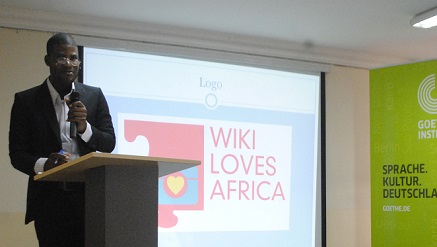
Wikipedia, the world largest encyclopedia was established on 15th January 2001 by Jimmy Wales with the vision to create a digital encyclopedia that is based on a model of openly editable content.
The founder, Jimmy Wales, says; the mission of Wikipedia is much more bigger than just creating a killer website. That is, it has a larger mission of affecting the world in a positive way.
The idea that people around the world would collaborate to build such an encyclopedia seemed unrealistic but today, Wikipedia has grown rapidly into one of the largest reference websites, attracting 374 million unique visitors monthly as of September 2015.
There are over 73,000 active contributors working on more than 38,000,000 articles in 290 languages including Yoruba, Hausa and Igbo language.
Wikipedia is written collaboratively by largely anonymous volunteers who write without pay. However, Nigeria-related topics are poorly represented on Wikipedia, and this could be attributed to low number of Wikipedia editors from Nigeria.
“You don’t need to be and ICT expert, software developer or a professor to write or edit articles on Wikipedia and you don’t need to own a laptop or desktop computer to write or edit articles on Wikipedia. With a mobile phone, you can create a huge number of articles. I tried it and it worked for me. I created over 500 articles with my blackberry phone”. Said Olatunde Isaac, manager of Wikipedia Education Program in Nigeria.
Olatunde Isaac is a known editor of Wikipedia from Nigeria who has been working relentlessly to ensure that Nigeria-related topics are widely covered on Wikipedia.
He is a Wikipedian per excellence and one of the notable Wikipedian from Africa. Since he joined Wikipedia in 2014, he has been coordinating Wikipedia programs in Nigeria.
He co-founded the Wikimedia Foundation’s affiliate in Nigeria and he is the Manager of Wikipedia Education Program in Nigeria.
As Manager of Wikipedia Education Program and advocate of open knowledge, he had organized several seminars and workshop to recruit volunteer editors from Nigeria.
In 2015, he served as member of Individual Engagement Grant Committee, a committee under the Wikimedia Foundation programs and event grants.
He is an outreach coordinator of the Wikipedia Library who established the Yoruba Language Wikipedia branch of the library on 12 January 2016.
Editors like Isaac is an asset to Nigeria and Wikipedia, an increasingly vital resource that millions of people across the world get accurate information.
Olatunde Isaac is a prolific writer of Nigeria-related articles on Wikipedia. Isaac is believed to have the highest number of articles by a Nigerian across all disciplines on Wikipedia.
He was born in Owo local government area of Ondo State southwestern Nigeria.
He attended State High School, Ibereko Badagry where he obtained the West Africa Secondary School Certificate before he proceeded to Adekunle Ajasin University, Ondo State where he received a Bachelor of science (Hons) degree in Biochemistry.


News
London Strengthens Global Investment Ties with Africa @ First Ever London-Africa Business Summit

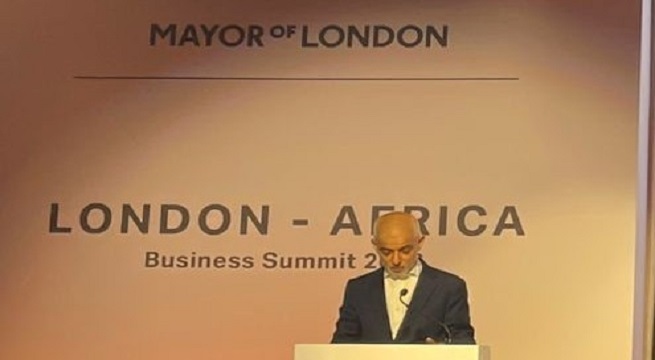
The Mayor of London, Sadiq Khan, has today hosted City Hall’s first ever London-Africa business summit, bringing together 200 business and political leaders from across the continent to strengthen trade and investment ties between London and Africa.

Held in the heart of the City of London, the summit included the Minister of Trade for Agribusiness and Industry in Ghana and representatives from SOAS, the Nigerian Exchange Group, Ventures 54 and London Africa Network to showcase London as the global city of choice for African companies looking to expand internationally and attract investment.
The Mayor announced the summit during his 2025 trade mission to Nigeria, Ghana and South Africa, where he led a delegation to promote London as a global destination for investment. Since the visit, African businesses have invested more than £30 million into London through foreign direct investment.
117 African organisations are listed on the London Stock Exchange, spanning sectors from telecoms and finance to energy and technology. Companies include telecoms giant Airtel Africa and energy supplier Seplat Energy. By comparison, fewer than 20 African organizations are listed on the New York Stock Exchange, underlining London’s deep economic and cultural links with the continent.
The summit builds on growing economic momentum between the UK and Africa. Total UK-Africa trade reached approximately £52 billion in 2025 despite continued global economic uncertainty, while UK exports to Africa increased to nearly £26.2 billion, reflecting rising demand for UK goods and services across African markets.
Africa is increasingly recognised as one of the world’s most important long-term growth regions, driven by rapid urbanisation, infrastructure investment, population growth and expanding consumer markets.
The UK remains among Africa’s top 10 supplying markets and continues to strengthen trade relationships through agreements covering 18 African countries. There are also huge community links between the UK and Africa. The UK has the second largest Nigerian diaspora population, second only to the US, with an estimated 215,000 Nigerians living here.
The Mayor’s London Growth Plan identified the need to attract more foreign direct investment to help grow London’s economy by £107 billion by 2035 and support the creation of 150,000 good jobs by 2028. London continues to lead as the top destination for African foreign direct investment in Europe and the US, ranking second globally outside Africa behind only Dubai.
The summit also highlighted major opportunities for collaboration across sectors, including financial services, digital technology, education, healthcare, energy transition, infrastructure and the creative industries, with London well positioned to deepen its role as a strategic trade and investment partner for African markets.
The Mayor of London, Sadiq Khan, said: “I am proud to host City Hall’s first ever London-Africa business Summit, bringing together investors, entrepreneurs and businesses to showcase London as the best city in the world for African companies to expand internationally and attract investment.
“With more African companies listed on the London Stock Exchange than any other exchange, it is one of the most globally important growth regions. I am delighted that my African trade mission last year has encouraged both inward investment and outward expansion, creating jobs and further strengthening the links between us. I look forward to more opportunities developing from this Summit as we continue to build a better, more prosperous London for everyone.”
Mr. Mark Smithson, Country Director, UK Department for Business and Trade, Nigeria, and Anglo West Africa said: “The London-Africa Business Forum has brought together ambition, capital and creativity, reinforcing London’s role as a global gateway for African enterprise.
“As we look to the next chapter, we are deepening partnerships that drive sustainable growth, shared prosperity and long-term opportunity across both regions. In Nigeria, we are working closely with key partners, businesses and investors to unlock investment, create jobs and deliver tangible economic outcomes.”
Soren Nikolajsen, Managing Director, Industry Engagement Defence and Trade at Natwest said: “London remains one of the world’s leading destinations for international investment, underpinned by its deep financial expertise and global connectivity. Bringing together investors from across Africa in this way is a valuable opportunity to strengthen relationships, showcase the breadth of opportunity here, and support long-term, mutually beneficial growth.”
Olukorede (K.O.) Adenowo, Chief Executive Officer, FirstBank UK, said: “FirstBank UK is proud to support the strengthening of the Africa–UK corridor, where growing demand for capital and expertise continues to drive cross-border opportunity. London remains a powerful gateway for African businesses seeking to scale internationally, while Africa offers compelling long-term investment potential.
“At FirstBank UK, we are focused on supporting cross-border trade and facilitating capital flows by connecting clients to global markets and structuring bankable opportunities. Through stronger collaboration, we can unlock greater investment and deliver sustainable growth across both regions.”
Dylan Martin, Chief Executive Officer of Teybridge Capital said: “Our expansion in London marks an important milestone for Teybridge Capital Europe and reflects the strength of our growth in the UK market. With over 60 per cent of our client base in the UK, this was a natural step in deepening our presence on the ground and investing in a high-performance, locally based team to support our next phase of growth.”
The Federal Government has received a major boost in its drive to strengthen teacher education and digital learning, as the Government of Japan, through the UNESCO International Institute for Capacity Building in Africa (IICBA), donated ICT equipment and learning materials to 15 teacher training institutions across Nigeria.

Speaking at the official handover ceremony held at the Federal Ministry of Education in Abuja, the Minister of State for Education, Prof. Suwaiba Said Ahmad, described the intervention as a significant contribution to the country’s efforts to improve teacher quality, digital literacy and inclusive education.
She said the donation forms part of a regional initiative launched in 2024 by UNESCO-IICBA, the Government of Japan and the African Union to strengthen teacher training and promote continuous access to safe, quality education for girls in West Africa.
According to the minister, the project, which covers Nigeria, Burkina Faso, Cameroon, Chad, Mali and Mauritania, aligns with the Federal Ministry of Education’s priorities under the Renewed Hope Agenda, particularly in the areas of equity, quality education, digital transformation and inclusion.
“Teachers remain the backbone of every education system. No education reform can succeed without well-trained, motivated and digitally empowered teachers,” Ahmad said, noting that the equipment would modernise teacher training institutions and improve access to digital learning resources.
The beneficiaries comprise 15 federal and state colleges of education spread across Nigeria’s six geo-political zones, including the Federal College of Education, Kontagora; Federal College of Education, Zaria; Federal College of Education (Technical), Gombe; Federal College of Education, Yola; Federal College of Education (Technical), Asaba; Federal College of Education (Special), Oyo.
Others are Federal College of Education (Technical), Umunze; College of Education, Zuba, FCT; Isaac Jasper Boro College of Education; Enugu State College of Education (Technical); Sa’adatu Rimi College of Education, Kano; Adamu Augie College of Education, Argungu; Shehu Shagari College of Education, Sokoto; Adamawa State College of Education, Hong and Taraba State College of Education, Zing.
The donated items include 65 laptop computers, 71 tablets, four desktop computers, five interactive smart boards, 19 all-in-one desktop computers, 14 projectors, 15 printers and 15 backup hard drives.
Ahmad said the facilities would enhance both pre-service and in-service teacher training by promoting innovation, digital competence and learner-centred teaching approaches, while preparing educators for the demands of a technology-driven world.
The event also featured a national consultation on school safety and infrastructure security, with participants discussing strategies for creating safer and more inclusive learning environments.
The minister stressed that safe schools remain critical to achieving quality education, particularly for girls and other vulnerable learners, adding that the ministry would continue to prioritise policies and programmes aimed at strengthening school security.
She further highlighted the ministry’s focus on Technical and Vocational Education and Training (TVET), Science, Technology, Engineering and Mathematics (STEM), girl-child education, quality assurance, data management and digital transformation as key pillars for improving educational outcomes nationwide.
Ahmad also disclosed plans to implement new interventions aimed at empowering female teachers and school leaders in crisis situations through mobile-based learning platforms, as well as programmes designed to integrate out-of-school children into formal education.
She commended UNESCO-IICBA, the Government of Japan, the African Union and other development partners for supporting teacher education in Nigeria and urged beneficiary institutions to utilise the equipment responsibly to improve learning outcomes and build a more resilient education system.
“The equipment will enhance digital literacy among our pre-service teachers and boost the attainment of education goals in Nigeria,” she said.
In their separate remarks, the Director of the UNESCO International Institute for Capacity Building in Africa (IICBA), Dr. Quentin Wodon, and the Chargé d’Affaires of the Embassy of Japan in Nigeria, Hitoshi Kozaki, reaffirmed their commitment to supporting efforts aimed at improving teacher education and expanding access to quality learning opportunities across Nigeria and the West African region.
They noted that the donation of ICT equipment to the beneficiary colleges of education reflects the shared commitment of UNESCO, the Government of Japan and their partners to strengthening the capacity of teacher training institutions, particularly in the area of digital learning.
According to them, equipping teachers with modern technological skills is critical to improving learning outcomes and ensuring that education systems are responsive to the demands of the 21st century.

African electric vehicle (EV) platform Spiro has raised $215 million in equity to scale electric mobility and energy infrastructure across the continent.

The funding is backed by institutional investors including Impact Fund Denmark and Equitane.
The investment will accelerate the expansion of Spiro’s battery-swapping network, industrial footprint and next-generation EV infrastructure across high-growth African markets, the company said.
This funding comes as economies in the region aim to reduce dependence on imported fuel, reinforce energy and industrial sovereignty, and modernise urban transport systems.
Driven by rising fuel costs, growing demand for affordable transportation and increasing policy support for clean energy, investors are backing scalable EV platforms poised to support Africa’s next phase of urban and industrial growth.
Building on support from long-standing institutional partners such as the Fund for Export Development in Africa, Spiro’s latest equity round draws capital from Europe and Africa, reflecting growing global confidence in scalable infrastructure-led business models in emerging markets.
With operations in seven African countries—Kenya, Rwanda, Uganda, Togo, Benin, Nigeria and Cameroon—and plans to expand local production and enter new markets such as the Democratic Republic of Congo and Ethiopia, Spiro is building one of Africa’s most advanced EV and battery-swapping ecosystems.
Its industrial footprint includes manufacturing plants in Kenya, Rwanda and Uganda, alongside a battery recycling facility in Nigeria.
“This past year marked a defining strategic milestone for Spiro. Across seven active markets, our deployment of 100,000 electric vehicles and 2,500 smart-swap stations has made sustainable mobility an affordable, everyday reality,” said Gagan Gupta, founder of Spiro and chairman of Equitane.
“Spiro has become a major driver of local industrialisation, value creation and manufacturing across African markets, providing 6,000 sustainable direct and indirect jobs. Supported by our global investors, we are entering our next growth chapter to deliver clean, cost-effective energy and transport alternatives to millions of riders across the continent.”
Lars Bo Bertram, CEO of Impact Fund Denmark, added: “We are investing in Spiro and bringing Danish pension capital into one of Africa’s most promising growth markets because we see potential for significant commercial growth in Spiro and electric mobility across Africa, as well as measurable climate impact. That is exactly the type of investment we want to make.”

SSDC Warns Businesses against Cyber, Election-Related Risks

FCCPC Refutes Airtime Market Takeover Claims

Reps Committee Recovers N521m Unremitted VAT from CBN

NITDA Okays NiRA’s Annual, Business Report

Price of Data in Nigerian Mobile among Top Four Cheapest Globally – MTN CEO

FG to Launch Nationwide Free Digital TV Platform June 17

CBN Extends PoS Geo-Fencing Enforcement Deadline to August 2026

Jumia Nigeria Records Strong Q1 2026 Growth as Technology-Led Strategy Drives Market Expansion

MTN, Airtel, Glo Under Pressure as FG Demands Better Service Delivery

Metro Digital, Nigerian Firm Accuses Multichoice Of Refusal to Obey Court Judgements




 Telecom2 days ago
TikTok Tax Scam Exposed: Two Arrested Over Alleged £153 Million Fraud Scheme

 E-Financial2 days ago
IFC, NGX Group Unveil Nigeria Gender Programme

 Telecom2 days ago
NITDA Backs NiRA’s Ambitious 2026 Plan to Drive Massive .ng Domain Adoption

 General News2 days ago
NITDA, Benin’s Digital Agency Strengthen Ties on Digital Transformation

 Telecom2 days ago
FG Targets Alleged N3tn Capital Flight, Opens Airtime Credit Market to Nigerian Fintechs

 Telecom2 days ago
MTN Dismisses Data Theft Claims, Blames Network Challenges on Fibre Cuts, Vandalism
 Telecom8 hours ago
Price of Data in Nigerian Mobile among Top Four Cheapest Globally – MTN CEO

 E-Financial8 hours ago
CBN Imposes N100m Penalty on Dealing Bank Inadequate Processing of Forex Documents