

/home/kenneth/web/nigeriacommunicationsweek.com.ng/public_html/wp-content/themes/zox-news/parts/post-single.php on line 153
">
Warning: Undefined array key 0 in /home/kenneth/web/nigeriacommunicationsweek.com.ng/public_html/wp-content/themes/zox-news/parts/post-single.php on line 153
Warning: Attempt to read property "cat_name" on null in /home/kenneth/web/nigeriacommunicationsweek.com.ng/public_html/wp-content/themes/zox-news/parts/post-single.php on line 153
DHL Provides Logistics For The Fashion Industry

DHL, the world’s leading logistics company, has returned to the runways in New York City for the eighth consecutive season as the official logistics provider for Mercedes-Benz Fashion Week.
As specialists in domestic and international shipping and logistics, DHL provides the fashion industry with perfect-fit solutions, ranging from timely express and reliable air and ocean freight services to complex supply chain and distribution management. DHL marshals its growing team of experts, with knowledge of customs and trade regulations, to help designers and apparel houses navigate the entire manufacturing chain with reduced risk and increased efficiency.
“DHL’s wide-range of transportation and logistics solutions give customers, ranging from boutique fashion houses to the largest apparel manufacturers, peace of mind when relying on our industry experts to offer the best airfreight, ocean freight, customs brokerage or a combination of our products and services to deliver their goods,” said Shawn Boyd, executive vice president of sales for DHL Global Forwarding.
The fashion industry, a $250 billion global business, relies heavily on flexible and intelligent logistics solutions that must be managed around the world. To ensure efficiency, DHL Global Forwarding has invested in several Fashion and Apparel Centers of Excellence in key Asia Pacific markets. These centers provide consultancy services, logistic solutions and best practice management to help DHL’s fashion & apparel customers better manage the flow of materials from manufacturing to retailing sites. In addition to enhancing operations in China and Hong Kong, DGF has launched a number of new products from Pakistan, Bangladesh, Sri Lanka and Vietnam that provide customers with enhanced cost choices and greater flexibility. The fashion & apparel sector requires the combination of services across DHL’s various divisions. The goal is to build a dedicated team to serve customers across this sector and to simplify doing business with DHL.
“The international fashion and textile industry represents one of the most important sectors for DHL, and we understand the need for highly reliable, rapid shipping services to and from cities all over the world,” said Michael Berger, vice president of sales for DHL Express. “Among the tailored services we offer to the fashion industry are sample room management, consolidation services, and international vendor management as well as express door-to-door delivery. It is these services, as well as our expertise in international shipping that has made DHL’s partnership with Mercedes-Benz Fashion Week a perfect fit since 2007.”
DHL Express provides designers and fashion houses with the largest and most experienced network in the international air express industry, spanning over 120,000 destinations in more than 220 countries and territories around the world. Since time and precision are critical factors for apparel industry customers, DHL enhanced its 747 service this year between the United States and Asia Pacific, adding 100 tons of additional capacity along this extremely important trade lane.
To accommodate increased volume during Mercedes-Benz Fashion Week, DHL Express has added extra routes in Manhattan’s fashion district. For critical last-minute deliveries, customers can utilize DHL’s helicopter service to transport shipments arriving at its international gateway at John F. Kennedy International Airport directly into lower Manhattan – a handy option for designers since collections sometimes arrive only a few hours before they hit the runway.
"Fashion is the definition of a fast moving industry where lead times, accuracy, availability and reliability are all of critical importance,” said Peter Levy, Senior Vice President and Managing Director of IMG Fashion Worldwide. "DHL has demonstrated unwavering support and commitment to the global fashion industry and we are pleased to continue our partnership."
The New York Mercedes-Benz Fashion Week in New York sponsorship is part of a global relationship DHL maintains as the Official Logistics Provider for IMG Fashion WeeksExternal Link / New Window around the world. DHL also sponsors fashion events in Milan, London, Mexico City, Berlin, Moscow, Mumbai, Toronto, Istanbul, Miami and Sydney.
As part of its worldwide Fashion Week sponsorship, DHL is also sharing its shipping, customs regulation and logistics knowledge with emerging designers. DHL and House of Fraser, the premium London-based department store group, mentored this year’s Fashion Fringe at Covent Garden finalistsExternal Link / New Window – Alice Palmer, Corrie Nielsen, and Jade Kang. The three, selected by world renowned designer John Galliano, will be showing their collections at London Fashion Week.


Warning: Undefined array key 0 in /home/kenneth/web/nigeriacommunicationsweek.com.ng/public_html/wp-content/themes/zox-news/parts/post-single.php on line 493
Warning: Attempt to read property "cat_ID" on null in /home/kenneth/web/nigeriacommunicationsweek.com.ng/public_html/wp-content/themes/zox-news/parts/post-single.php on line 493


Nigeria has launched FreeTV, a broadcasting platform, designed to provide households across the country with free access to digital broadcasting, improved picture quality, and a wide range of local and international content without subscription fees.

The announcement was made in a post on the official X handle of the Presidency, describing the initiative as part of President Bola Ahmed Tinubu’s Renewed Hope Agenda, which prioritises inclusion, expanded access to opportunities, job creation, support for local enterprise and the use of technology to improve daily life for citizens.
According to the statement, FreeTV forms part of Nigeria’s Digital Switch-Over (DSO) programme and is intended to ensure that no Nigerian is excluded as the country transitions fully from analogue to digital broadcasting.
The platform will offer access to more than 100 national, regional and state-owned channels, covering news, sports, films, music, children’s programming, educational content, as well as dedicated Yoruba, Hausa and Igbo language channels.
The Presidency noted that the service will be accessible through satellite, terrestrial transmission and a dedicated FreeTV mobile application, enabling coverage for users in urban centres, rural communities and previously underserved areas that were not fully captured in earlier DSO pilot phases.
It also clarified that Nigerians will not need to purchase new television sets to access the service. Existing televisions can work with compatible DVB-T2 or DVB-S2 decoders, while users with already compatible free-to-air devices may not require additional equipment.
Speaking ahead of the launch, Charles Ebuebu, director-general, National Broadcasting Commission (NBC), said the initiative reflects the administration’s broader digital inclusion strategy.
“FreeTV speaks directly to President Bola Ahmed Tinubu’s vision of Renewed Hope towards expanding access, creating opportunity and ensuring that every Nigerian, regardless of location or income, can benefit from the digital economy. With FreeTV, families across Nigeria can enjoy quality digital television without a monthly subscription, while our local content producers, technicians and young creatives gain new platforms and new jobs,” he said.
The statement added that the platform will also strengthen Nigeria’s creative and broadcast industry through regional production hubs in Lagos, Abuja, Port Harcourt, Enugu, Kano and Benin, creating employment opportunities for content creators, editors, camera operators, sound engineers and other media professionals.
The Presidency further disclosed that the final analogue switch-off remains scheduled for December 31, 2028, urging Nigerians to begin preparations by confirming decoder compatibility and downloading the FreeTV mobile application ahead of rollout.

Nigerian Postal Service (NIPOST) has reaffirmed its commitment to implementing a National Digital Postcode System to assign a unique digital address to every addressable building across the country.

Speaking at the unveiling of the Post Code Delineation Model Validation 2026 in Abuja, Tola Odeyemi, postmaster general and chief executive officer, NIPOST, said the initiative would establish a machine-readable standard location-address framework for buildings nationwide.
“Postcode is basically a framework used to have a machine-readable standard location address for every addressable building in Nigeria,” Odeyemi said.
She explained that the project would place Nigeria among the first countries in Africa to develop a postcode system down to the unit level, ensuring that each standing building is assigned a unique code.
According to her, the digital postcode system is expected to enhance service delivery, logistics operations, emergency response, and national planning by improving the identification of locations across the country.
Odeyemi noted that the diversity of Nigeria’s geography necessitated different approaches to address mapping and postcode allocation.
“Nigeria is a large country. We have all the way from the top of Nigeria, which is almost like the Sahel, to the Savannah, to the Middle Belt, to the tropical South and even to the riverine areas.
“The logic that will work for Jigawa is not the same logic that will work for Bayelsa because they have completely different geographical expressions, density of buildings, population distribution, and topography,” she said.
She said the postcode delineation process was designed to ensure that postcode boundaries align with existing administrative structures and do not overlap local government boundaries.
“Delineation has to make sure the postcode does not pass administrative boundaries, and it must not go across two local government areas,” Odeyemi stated.
The NIPOST boss further explained that the validation exercise involves testing aerially mapped polygons against actual settlement patterns and geographical realities in different parts of the country.
“To test the polygons we have drawn aerially, we must ensure they accurately reflect realities on the ground. For example, the density of buildings in Lagos, particularly in Mushin, is very different from the density of buildings in Abuja. We are making sure that density maps and topographical features are properly captured for each state in Nigeria,” she said.
She described the Post Code Delineation Model Validation exercise as a critical stage in the agency’s broader digital addressing initiative, which seeks to create a comprehensive and standardised postcode framework for the country.
Nigeria has long grappled with an inefficient addressing system, making it difficult to accurately identify locations for postal services, logistics, emergency response, and public planning.
NIPOST’s National Digital Postcode System is part of efforts to create a standardised and technology-driven addressing framework that assigns a unique code to every addressable building in the country.

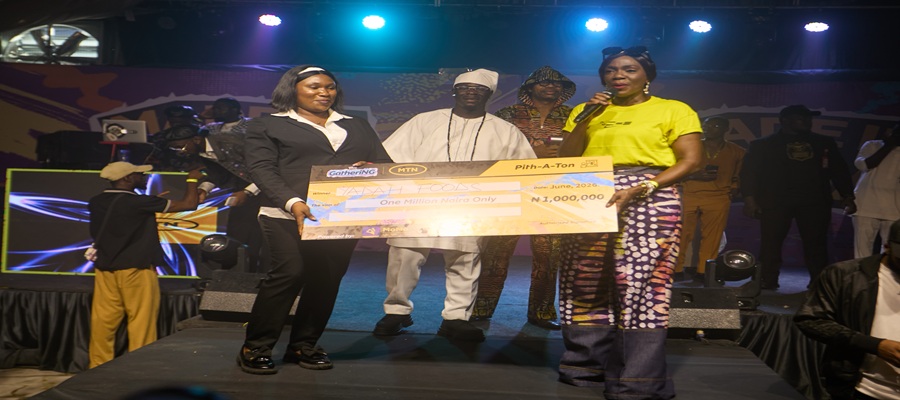
Nigeria’s fast-rising youth culture and innovation community, The Gathering on 100, is heading to Enugu, with registration now open for gamers, performers, DJs, creatives, and culture enthusiasts.

MTN
The Enugu edition will take place on June 19, 2026, at ICC Hall, Okpara Square, and will bring together a new audience for the platform’s signature blend of music, gaming, live performance, community engagement, and youth-driven entertainment.
The Gathering on 100 first gained national attention in Lagos, where it transformed the National Stadium, Surulere, into a continuous 100-hour ecosystem of activity from April 22–26, 2026.
The event combined culture, commerce, entrepreneurship, gaming, fashion, and live entertainment, attracting thousands of young participants and creating opportunities for emerging talent and businesses.
The movement most recently arrived in Aba, where thousands of young people gathered for a weekend of culture, commerce and entrepreneurship, reinforcing the platform’s growing appeal across different communities and audiences.
The move to Enugu is being framed by organisers as a deliberate expansion into one of Nigeria’s largest student and youth populations. Home to major institutions including the University of Nigeria, Nsukka (UNN), Enugu State University of Science and Technology (ESUT), the Institute of Management and Technology (IMT), Godfrey Okoye University and Coal City University, Enugu attracts thousands of young people from across the country each year, creating a vibrant community shaped by education, creativity, entertainment and entrepreneurship.
This concentration of young talent has helped fuel a growing ecosystem of creators, performers, gamers, digital entrepreneurs and small business owners.
In recent years, the city has hosted an increasing number of technology, entertainment and youth-focused events, reflecting the growing demand for platforms that bring together creativity, opportunity and community.
These dynamics make Enugu a natural next stop for The Gathering on 100, a platform built around showcasing talent, fostering connections and creating opportunities for young Nigerians.
Registration for the Enugu edition is now open through The Gathering’s official website, with participation available across multiple categories including gaming, rap battles, DJ competitions, dance, live performances and entrepreneurship.
A key highlight of the event will be the Pitchathon, where emerging founders and business owners will have the opportunity to present their ideas before a panel of judges for a chance to secure grant funding and support for business growth.
The gaming segment will feature competitive tournaments and interactive experiences designed for both casual and serious players, while rap battles and DJ showdowns will spotlight rising talent from Enugu and neighbouring states.
Attendees can also expect a large scale rave experience, live entertainment and community driven activities designed to bring together different corners of the region’s youth culture under one roof.
Beyond the entertainment, organisers say The Gathering on 100 is designed to create real opportunities for young people to connect, collaborate and gain visibility for their talents, ideas and businesses.
As the movement continues its expansion across Nigeria, the Enugu edition is expected to showcase the city’s unique blend of creativity, ambition and cultural influence while providing a platform for the next generation of innovators, performers and entrepreneurs.

Nigeria Launches FreeTV Nationwide

NIPOST Plans Digital Postcodes for Every Building in Nigeria

Enugu to Host The Gathering on 100 as MTN-Backed Youth Movement Expands Across Nigeria

Prof. Dzidonu Urges Universities to Produce Deep Thinkers for AI Age

FG Debunks Claims of Plans to Introduce Telecoms, Fuel Taxes

CBN Extends PoS Geo-Fencing Enforcement Deadline to August 2026

NCC Drafts New Rules for Virtual Mobile Operators

FG Targets Alleged N3tn Capital Flight, Opens Airtime Credit Market to Nigerian Fintechs

London Strengthens Global Investment Ties with Africa @ First Ever London-Africa Business Summit

Easybuy Partners WAWUAfrica to Upskill 10 Million Youths and Women, Boosting Nigeria’s Economic and Financial Inclusion




 Telecom2 days ago
MTN Foundation Commits N32Bn in Projects across Nigeria

 E-Financial3 days ago
CBN Orders Banks, Fintechs to Host Payment Data Locally

 E-Business3 days ago
Galaxy Backbone @ 20, Pledges Nationwide Connectivity, Data Sovereignty

 E-Financial3 days ago
Analysts Warn of Growing “Crowded Trade” in Foreign Exchange Markets

 E-Financial3 days ago
ACAMB Kicks-off 30th Anniversary Celebration With Tree Planting Initiative

 News3 days ago
PalmPay Joins Industry Leaders @ Digital Pay Expo 2026

 E-Financial2 days ago
IMF Warns of New Risks for Monetary Policy over $59Bn Crypto Inflows into Nigeria

 Telecom3 days ago
UK Bans TikTok, Instagram, Facebook for Under-16s in Landmark Crackdown