

/home/kenneth/web/nigeriacommunicationsweek.com.ng/public_html/wp-content/themes/zox-news/parts/post-single.php on line 153
">
Warning: Undefined array key 0 in /home/kenneth/web/nigeriacommunicationsweek.com.ng/public_html/wp-content/themes/zox-news/parts/post-single.php on line 153
Warning: Attempt to read property "cat_name" on null in /home/kenneth/web/nigeriacommunicationsweek.com.ng/public_html/wp-content/themes/zox-news/parts/post-single.php on line 153
Post Offices Provide Access to ICTs

The Universal Postal Union (UPU) and the International Telecommunication Union (ITU) will publish a book about how the postal sector’s use of information and communication technologies (ICTs) to reduce the digital gap and bring improvements to service, especially in rural areas.
The book will be launched during the UPU Strategic Conference in Nairobi in September 2010.
Edouard Dayan, director general of the UPU, made the announcement during the opening ceremony of a forum organized at the ITU’s Geneva headquarters to mark World Information Society Day.
The book will document the best case studies of Posts using ICTs to improve service and reduce the digital gap, especially in rural areas.
Over the past few years, several UPU projects in Asia and Africa have led to more post offices being equipped with ICTs and being better interconnected, often with the help of the ITU.
Dayan also reaffirmed the UPU’s commitment to global efforts to reduce the digital divide.
He recalled the postal sector’s important role in both electronic and physical communication. With a global network of 660,000 post offices and 5 million employees, the postal sector’s infrastructure is critical to the development of e-commerce.
By facilitating the delivery of goods ordered online by maintaining a close working relationship with Customs and transporters, the UPU contributes to the integration of the global supply chain.
The director general said the UPU helps to reduce the digital gap by managing an electronic network linking more than 140 of its member countries and providing state-of-the-art technologies to all countries, no matter their level of development.
The UPU network enables countries to exchange electronic data among each other and with other networks, and thus improve service.


Warning: Undefined array key 0 in /home/kenneth/web/nigeriacommunicationsweek.com.ng/public_html/wp-content/themes/zox-news/parts/post-single.php on line 493
Warning: Attempt to read property "cat_ID" on null in /home/kenneth/web/nigeriacommunicationsweek.com.ng/public_html/wp-content/themes/zox-news/parts/post-single.php on line 493


Telecom operators in Nigeria have compensated more than 75 million subscribers for poor network services, according to the Nigerian Communications Commission (NCC).

This represents one of the largest consumer redress exercises in Africa’s biggest mobile market.
Recall that the NCC on March 29, 2026, mandated that mobile network operators directly credit affected subscribers with airtime when network quality falls below established thresholds, compensating for dropped calls, failed SMS, and disrupted data connections.
Giving update, the NCC rising from its 109th board meeting recently, said that the credits are calculated based on customers’ average spending patterns in areas where service quality fell below regulatory benchmarks.
“The board noted substantial progress in the implementation of the commission’s directive, particularly the full compliance, which has resulted in compensation being offered to over 75 million affected subscribers,” the communiqué stated.
The NCC said it is still conducting independent validation to confirm that all eligible subscribers received their due compensation, while urging consumers to continue engaging with the regulator on service-related issues.
Nigeria currently has over 200 million mobile subscriptions.
The exercise addresses long-standing consumer complaints about dropped calls, slow data speeds, and inconsistent coverage.
The board also reviewed ongoing network expansion efforts, noting that operators have committed to deploying over 12,000 new sites, with more than 5,000 already completed.
It further highlighted investments in fibre infrastructure and concerns over persistent vandalism of telecom facilities.
The NCC reiterated its commitment to improving service quality through stricter enforcement, consumer protection, and infrastructure development in the sector.

The IMF on Tuesday warned of risks surrounding Nigeria’s plan to borrow up to $5 billion through a derivatives agreement with First Abu Dhabi Bank, saying such transactions are often opaque and complex.

Recall that the Senate in April gave its approval to the agreement, joining other Africa borrowers like Senegal and Angola who have tapped similar arrangements over the past year.
“Our view is that the transaction in these types of structures carry risks. Usually they are opaque so the terms are not always very transparent when we reviewed these instruments across countries,” Christian Ebeke, IMF resident representative in Nigeria, told reporters.
Ebeke said Nigeria could instead issue eurobonds to finance its deficits or other means to raise funding, including on concessional terms.
Nigeria intends to use proceeds from the total return swap, or TRS, to refinance expensive debt and pay for infrastructure.
In its latest Article IV review, the Fund praised Nigeria’s sweeping reforms, saying they had strengthened economic stability and investor confidence, but warned that the benefits had yet to reach millions of citizens and could be undermined by global shocks, including the Middle East conflict.
The reforms since 2023 under President Bola Tinubu – including fuel subsidy removal, tighter monetary policy and exchange rate liberalisation – had rebuilt buffers and improved macroeconomic management, the IMF said.
However, it cautioned that the reforms were also contributing to social strain, with poverty levels at 63% and millions facing food insecurity, underscoring a widening gap between macro gains and household realities.
The IMF said improved policy credibility and forex reforms had helped Nigeria regain access to international capital markets and attract portfolio inflows, while reducing risk premiums. The central bank says gross reserves are at $50 billion, the highest in 17 years.
But reliance on volatile foreign portfolio investment poses rollover risks, the IMF said, urging a shift towards more stable, long-term capital such as foreign direct investment.
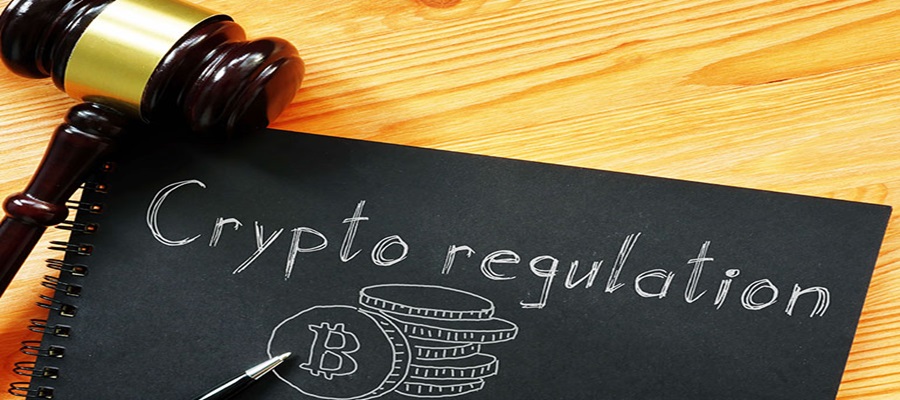
Senate has passed the Virtual Asset Service Providers Regulation Bill, 2026 for its second reading, marking a major legislative step toward establishing a comprehensive legal framework for the country’s cryptocurrency and digital asset sector.

Barau Jibrin, deputy Senate president, said the bill seeks to bring order, confidence and accountability to Nigeria’s growing virtual asset ecosystem without stifling innovation.
The move comes at a time when Nigeria remains one of the world’s largest markets for cryptocurrency adoption, with millions of young Nigerians using digital assets for investment, payments and business transactions.
If passed into law, the bill would require operators of cryptocurrency exchanges, blockchain-based investment platforms and other virtual asset service providers to obtain licences and comply with regulatory standards aimed at protecting consumers and the financial system.
Speaking on the intendment of the bill, Tahir Monguno, Senate Whip, who spoke on behalf of Barau, said the lack of regulation has created loopholes that allow fraud and financial crimes to flourish.
“Yet, while innovation has surged, regulation has lagged behind. This has created loopholes that allow misuse, fraud, and financial crimes to flourish; loopholes that expose honest citizens to loss and exploitation; and loopholes that threaten the stability of our financial system,” he said.
The deputy Senate president argued that establishing a legal framework would provide greater protection for Nigerians who participate in the digital economy and create a safer environment for investment.
Barau stressed that the bill was not intended to discourage innovation but to ensure that operators function under clear and transparent rules.
“The intent of this Bill is simple: to bring order, confidence, and accountability into the virtual asset ecosystem. It does not seek to stifle innovation or punish creativity. On the contrary, it aims to create a fair and predictable environment where innovation can thrive under clear rules and responsible oversight,” he said.
He added that the proposed law would strengthen Nigeria’s ability to combat money laundering, terrorism financing and other illicit financial activities linked to the digital asset sector.
“This bill will ensure that those who operate as virtual asset service providers are properly licensed, transparent, and compliant with laws designed to protect the public and the financial system,” he stated.
Barau also argued that a regulated virtual asset market could boost investor confidence, attract responsible investment into Nigeria’s fintech and blockchain industries and support the Federal Government’s economic diversification agenda.
According to him, countries such as Kenya, South Africa and Ghana are already developing legal frameworks for the regulation of virtual assets.
“With the passage of this Bill, we will provide the legal clarity and confidence that innovators, entrepreneurs, and investors have long awaited,” he said.
Contributing to the debate on the bill, lawmakers argued that the legislation could offer crypto users stronger safeguards against fraudulent schemes that have proliferated in recent years, while also giving legitimate operators the legal certainty needed to attract investment and expand their businesses.
The bill was subsequently referred to the relevant Senate committee for further legislative scrutiny and a report back to the chamber.

Telcos Compensate 75m Subscribers over Poor Network Quality – NCC

IMF Warns Nigeria of Risks in $5Bn Swap Deal with First Abu Dhabi Bank

Senate Moves to Regulate Crypto Sector, Seeks Investor Protection

Kaspersky Report Shows Early 2026 Witnessed an Increase in Cyberattacks on the Manufacturing Sector

Nigeria, Others Stuck on WiFi 4 As World Adopts WiFi 6, WiFi 7

CBN Extends PoS Geo-Fencing Enforcement Deadline to August 2026

FG to Launch Nationwide Free Digital TV Platform June 17

MTN, Airtel, Glo Under Pressure as FG Demands Better Service Delivery

Jumia Nigeria Records Strong Q1 2026 Growth as Technology-Led Strategy Drives Market Expansion

Metro Digital, Nigerian Firm Accuses Multichoice Of Refusal to Obey Court Judgements




 E-Financial2 days ago
BOI Wins Dual Honours @ EMEA Finance Awards for Sustainability and Social Impact Leadership

 E-Financial2 days ago
CBN Imposes N100m Penalty on Dealing Bank Inadequate Processing of Forex Documents

 Telecom2 days ago
Price of Data in Nigerian Mobile among Top Four Cheapest Globally – MTN CEO

 E-Business2 days ago
NITDA Okays NiRA’s Annual, Business Report

 Telecom2 days ago
NAIFF Returns for 2026, Expands Focus on AI-Powered Storytelling in Africa

 General News2 days ago
SSDC Warns Businesses against Cyber, Election-Related Risks

 Telecom2 days ago
FCCPC Refutes Airtime Market Takeover Claims

 General News2 days ago
Moniepoint DreamDevs Bootcamp Graduates Second Cohort to Strengthen Homegrown Talent Pipeline