

/home/kenneth/web/nigeriacommunicationsweek.com.ng/public_html/wp-content/themes/zox-news/parts/post-single.php on line 153
">
Warning: Undefined array key 0 in /home/kenneth/web/nigeriacommunicationsweek.com.ng/public_html/wp-content/themes/zox-news/parts/post-single.php on line 153
Warning: Attempt to read property "cat_name" on null in /home/kenneth/web/nigeriacommunicationsweek.com.ng/public_html/wp-content/themes/zox-news/parts/post-single.php on line 153
SDS Consolidates Trucking Services

Upbeat courier and logistics company, Standard Delivery Services Limited has acquired more delivery trucks and a van in readiness for this year’s yuletide.
Cyril Igwe, managing director and chief executive of the company said the country is making serious inroad into the logistics business as it tries to provide seamless haulage services to customers from the eastern part of the country with the purchase of the new trucks.
He said there’s dearth of professionals to handle the high volume of cargoes witnessed in the eastern part of the country and said his firm, known for its track record of fast and safe delivery is making its services available to customers who will have need to send items to their loved ones during the Christmas and New Year celebrations.
Igwe also assured that the company has well trained personnel that will ensure movement of clients’ consignment is done seamlessly even as he said that every customer is treated as an individual.
“We have told our drivers to be extra careful even as we try to make them understand the need for safety,” he said.
Anne Mary Ekwosimba, executive director of the company said the company’s diversification into cargo business is in response to the shift in the express business and said that courier business is slowing down while logistics is becoming the order of the day.
Igwe said the company is positioning to play a leading role in the supply chain business even as he disclosed that what the firm is putting on ground is to bring joy to its clients.
So far, the foremost logistics company handles consignments going to Bauchi, Jos, Gombe, Yola, Kaduna, and Kano in addition to cities it covers in the western part of the country. It also has three outlets in Lagos including the one at Alaba, Ijora and the newly opened Oshodi outlet, all in a bid to make services available to its customers.


Warning: Undefined array key 0 in /home/kenneth/web/nigeriacommunicationsweek.com.ng/public_html/wp-content/themes/zox-news/parts/post-single.php on line 493
Warning: Attempt to read property "cat_ID" on null in /home/kenneth/web/nigeriacommunicationsweek.com.ng/public_html/wp-content/themes/zox-news/parts/post-single.php on line 493


Nigerian banks are increasingly embracing artificial intelligence (AI) to improve customer service, strengthen fraud detection, and streamline operations.

Pic credit….gdprlocal.com
However, the same technology driving innovation could also expose the country’s financial system to unprecedented cyber risks, according to a recent warning from the International Monetary Fund (IMF).
The IMF has cautioned that advanced AI tools are rapidly enhancing the capabilities of cybercriminals, making it easier and faster to identify and exploit vulnerabilities in banking systems, payment infrastructure, and digital platforms.
For Nigeria, where digital banking transactions have surged in recent years and financial institutions are becoming more interconnected, the implications could be significant.
The warning comes at a time when Nigerian banks are investing heavily in digital transformation.
From AI-powered customer support systems to automated fraud monitoring tools and digital lending platforms, financial institutions are relying more than ever on technology to drive growth and improve efficiency.
Yet experts warn that this digital expansion is also widening the attack surface for cybercriminals.
The IMF noted that advanced AI models can dramatically reduce the time and expertise required to discover software vulnerabilities.
This means attackers can launch more sophisticated and coordinated cyberattacks against multiple institutions simultaneously.
For Nigeria’s banking sector, which depends on common payment rails, cloud infrastructure, telecommunications networks, and shared service providers, a major cyber incident could quickly spread across the financial ecosystem.
Nigeria’s financial sector has undergone a remarkable digital revolution over the past decade.
Data from the Central Bank of Nigeria (CBN) show that electronic payments now account for trillions of naira in monthly transactions, driven by mobile banking, instant payments, fintech innovation, and the growing adoption of digital channels.
The success of platforms such as the Nigeria Inter-Bank Settlement System (NIBSS) Instant Payments network has made banking more accessible and efficient.
However, it has also increased dependence on interconnected digital infrastructure.
According to the IMF, this interconnectedness creates systemic vulnerabilities.
A cyberattack targeting a critical service provider, cloud platform, telecommunications network, or payment gateway could disrupt services across multiple banks at the same time.
Unlike traditional bank robberies or isolated cyber incidents, AI-enabled attacks have the potential to trigger widespread operational disruptions, affecting payment processing, customer access to funds, and confidence in the banking system.
The IMF warns that extreme cyber incidents could evolve from operational challenges into broader financial stability concerns.
If multiple banks are simultaneously affected by a cyberattack, customers may experience service outages, delayed transactions, or restricted access to deposits.
Such disruptions could undermine public confidence and create liquidity pressures, especially if panic withdrawals or transaction bottlenecks occur.
The concern is not merely theoretical.
Over the past few years, Nigerian financial institutions have experienced increasing levels of cyber fraud, phishing attacks, identity theft, and ransomware threats.
Although regulators and banks have improved cybersecurity frameworks, AI-driven attacks could significantly raise the sophistication and scale of these threats.
The IMF believes that the growing concentration of technology services could further amplify the risks.
Many Nigerian banks rely on a relatively small number of software vendors, cloud providers, telecommunications operators, and payment infrastructure providers. A successful attack on one critical provider could have cascading effects across the entire banking system.
This concentration risk is becoming more pronounced as financial institutions increasingly adopt AI solutions from a limited number of global technology companies.
Despite the risks, AI is also emerging as one of the most powerful tools available to banks in defending against cyber threats.
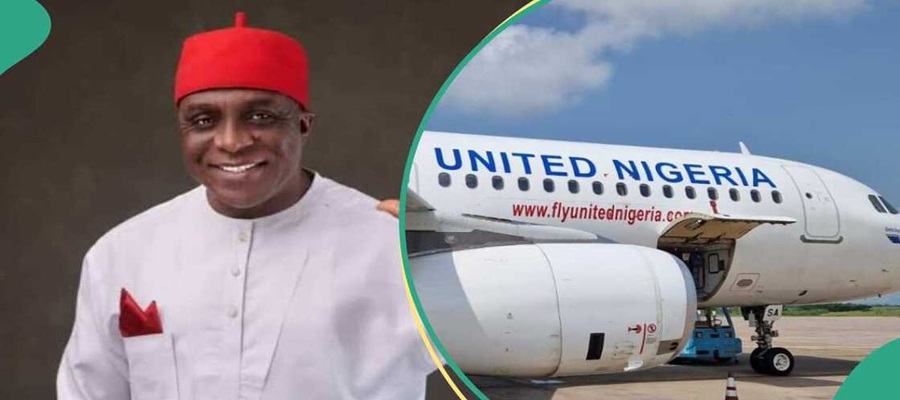
Government of Guinea-Bissau has signed a Memorandum of Understanding (MoU) with Nigeria’s United Nigeria Airlines to establish AIR BISSAU, a national carrier, for the West African country, to boost its aviation industry and reduce its dependence on foreign airlines.

The agreement, signed in Bissau, the capital of Guinea-Bissau, was disclosed in a statement made available by the airline on Sunday.
The MoU was signed by Dr Florentino Pereira, minister of Transport, Telecommunications and Digital Economy, Guinea-Bissau and Prof Obiora Okonkwo, executive chairman of United Nigeria Airlines.
Recall that Nigeria currently has no national carrier despite repeated calls by industry stakeholders for its establishment to facilitate reciprocal flight rights to foreign destinations, particularly the United States.
Attempts to establish a national carrier through a partnership with Ethiopian Airlines also hit a brick wall following lawsuits by the Airline Operators of Nigeria, an association for which Okonkwo once served as spokesperson.
Other factors that contributed to the failure of the national carrier project included deep-seated political issues, allegations of fraud and a controversial ownership structure.
In the latest agreement between the Nigerian airline and Guinea-Bissau, which was made available to our correspondent, both parties will “explore a comprehensive cooperation framework aimed at establishing a fully operational national airline with Osvaldo Vieira International Airport in Bissau serving as the operational base and hub for the carrier’s initial routes.”
For decades, Guinea-Bissau has relied largely on regional carriers and charter services to connect its citizens and businesses to other countries.
A key component of the MoU is the creation of a joint venture company that will operate as Guinea-Bissau’s national airline.
Under the arrangement, United Nigeria Airlines will provide the majority of the financial investment, operational expertise, aircraft and management for the new carrier.
Extending beyond commercial operations, the Nigerian carrier is expected to “provide and operate an executive jet for the use of the President and Government of Guinea-Bissau.”
To facilitate the project, the government pledged to “facilitate the registration and licensing of the new national carrier in line with domestic laws and streamline authorisation processes through both the Civil Aviation Authority of Guinea-Bissau and the Civil Aviation Authority of Nigeria.”
Guinea-Bissau also agreed to designate AIR BISSAU as its official national carrier, granting it “full rights over all existing Bilateral Air Services Agreement entitlements.”
According to the MoU, the designation would give the airline “significant leverage in securing route rights and authorisations to regional and international destinations,” described as an important commercial and diplomatic asset.
The government further committed to ensuring that Osvaldo Vieira International Airport receives the infrastructure support required for the airline’s operations, including access provisions, ground support services and assistance with customs, immigration and security compliance.
Additionally, Guinea-Bissau pledged to invest in the establishment of the airline and create mechanisms that would protect and incentivise investment through the existing Investment Code and applicable tax frameworks.
As part of efforts to develop local aviation expertise, United Nigeria Airlines plans to train “qualified Guinean nationals including pilots, cabin crew, and technical maintenance personnel” and employ local staff wherever feasible in line with government employment policies.
The MoU makes it clear that operational control of the airline will remain with the Nigerian carrier.
“For the purposes of safety, reliability, and efficiency, the overall management, operational control, and general direction of the new airline will rest with the management team of United Nigeria Airlines,” the statement noted.
Both parties also agreed to provide full liability and hull insurance coverage for all flight operations, conduct annual independent safety and maintenance audits, and establish asset protection mechanisms for investors.
The agreement takes immediate effect and will remain valid for 18 months or until a substantive joint venture agreement is concluded.
The International Monetary Fund (IMF) has recommended introducing taxes on fuel products and telecommunications services in Nigeria.

According to the IMF, this is part of broader measures to increase government revenue and create fiscal space for development spending and social interventions.
The international financial organization argued that stronger revenue mobilisation had become increasingly important as Nigeria’s fiscal position remained under pressure despite recent reforms.
This comes as Nigerians are protesting against worsening standard of living made worse by widespread insurgency.
The recommendation was contained in the IMF’s 2026 Article IV Consultation report on Nigeria, where the Fund argued that additional tax measures would be needed over the medium term despite the recent overhaul of the country’s tax system.
“Further tax policy changes will likely be needed—such as increasing the VAT rate, extending VAT to fuel products, rationalising tax expenditures in particular VAT exemptions on extractive industries and some customs duties, and introducing telecom excises—to complement administrative gains,” the IMF said.
The institution, however, cautioned that the timing of any new taxes must take into account Nigeria’s rising poverty levels and worsening food insecurity.
“The timing of reforms must consider the poverty and food insecurity situation and ensure that the cash transfer system is in place and funded,” the Fund added.
A previous attempt by the Federal Government to impose a five per cent excise duty on telecom services met strong resistance from operators, subscribers and consumer advocacy groups before it was suspended and eventually scrapped.
Telecommunications firms had maintained that the industry was already weighed down by multiple taxes, rising energy costs, foreign exchange challenges and infrastructure constraints.
They warned that any additional levy would likely be transferred to consumers through higher call and data tariffs.
Similarly, proposals to tax fuel products have faced opposition from labour unions and private sector organisations amid concerns over the rising cost of living following the removal of petrol subsidies and increases in transport and food prices.
The IMF’s latest recommendation comes as the Fund projects that Nigeria will require stronger revenue mobilisation efforts to sustain planned increases in public spending and provide support for vulnerable households.
According to the report, revenue-enhancing tax policies could generate additional revenue equivalent to 3.9 per cent of Gross Domestic Product within three years of implementation.
The Fund identified a two-percentage-point increase in the Value Added Tax rate as the largest contributor, with a projected revenue gain of 0.8 per cent of GDP.
The report also projected that removing pioneer status incentives and revising free zone regulations would generate an additional 0.7 per cent of GDP.
Reforms to capital gains taxation and adjustments to personal income tax bands, allowances and rates were each estimated to contribute 0.6 per cent of GDP.
The IMF further estimated that a top-up tax on multinationals and large firms could raise 0.5 per cent of GDP, while rationalising investment allowances would contribute another 0.4 per cent.
Notably, the category labelled “others”, which includes telecom excise duties and measures such as a carbon tax on fuel, was projected to generate an additional 0.4 per cent of GDP in revenue.
Beyond new tax measures, the Fund said Nigeria could achieve even greater gains through improved tax administration.
It projected that administrative reforms would generate an additional 3.1 per cent of GDP through better compliance, stronger enforcement and efforts to reduce informality in the economy.
According to the report, measures such as fiscalisation, electronic invoicing and cross-validation of tax deductions could generate 1.5 per cent of GDP, while expanded tax identification registration and consolidation of taxpayer databases could contribute a further 1.6 per cent of GDP.
The IMF acknowledged that some of Nigeria’s recently enacted tax reforms would reduce government revenue in the short term because they were designed to support households and small businesses.
It estimated that revenue-reducing measures would lower revenues by 2.4 per cent of GDP.
Expanded VAT input credits, additional zero-rated items and broader exemptions on basic consumption goods were projected to account for 1.7 percentage points of the decline.
Lower corporate income tax obligations for smaller firms would reduce revenues by 0.4 per cent of GDP, while lower personal income tax rates and expanded exemptions for low-income earners would account for another 0.3 percentage-point reduction.
Overall, the IMF projected that the combined impact of revenue-enhancing measures, administrative reforms and revenue-reducing policies would result in a net increase in government revenue equivalent to 4.6 per cent of GDP over the medium term.Nigerian investment opportunities

AI-Powered Cyber Threats Put Nigerian Banks on Alert

Guinea-Bissau Taps United Nigeria Airlines to Establish AIR BISSAU, National Carrier

IMF Urges FG to Introduce Fuel, Telecom Taxes

CBN to Expand eNaira for Salaries, Pensions and Welfare Payments

CSOs Raise Alarm over Nigeria’s Data Protection Crisis

CBN Extends PoS Geo-Fencing Enforcement Deadline to August 2026

NCC Drafts New Rules for Virtual Mobile Operators

TD Africa, HPE Drive Conversations on the Future of Intelligent Networking

London Strengthens Global Investment Ties with Africa @ First Ever London-Africa Business Summit

Easybuy Partners WAWUAfrica to Upskill 10 Million Youths and Women, Boosting Nigeria’s Economic and Financial Inclusion




 News3 days ago
UK, Nigeria Launch £15m Growth Programme to Accelerate Economic Transformation

 General News3 days ago
Haleon Introduces New Corporate Identity in Nigeria

 General News3 days ago
Elon Musk Makes History as the World’s First Trillionaire

 Telecom3 days ago
NITDA Unveils Ambitious Strategy to Turn Southwest into Nigeria’s Next Innovation Powerhouse

 General News21 hours ago
₦5m up for Grabs as 10 Startups Clash at the Gathering on 100 Pitchathon Aba
 E-Business21 hours ago
CSOs Raise Alarm over Nigeria’s Data Protection Crisis
 E-Financial21 hours ago
CBN to Expand eNaira for Salaries, Pensions and Welfare Payments

 E-Financial21 hours ago
CBN to Bar HoldCos from Influencing Banks’ Lending Decisions