

Telecom
Challenges of Last mile Infrastructure in Service Delivery


One of the major obstacles to Telecommunications service delivery in the country is absence of last mile infrastructure required to deliver services to consumers of these services at their respective homes and offices.
Last mile infrastructure is that transmission infrastructure telecommunications operators used to deliver services to potential subscribers at their domains. Basically, infrastructure required in this regard includes optic fibre and microwave.
The need for effective transmission infrastructure especially fibre optic which is seen as being reliable become necessary in view of developments in the industry, which is geared towards improving quality of service as well as reduces cost of services to operators and subscribers. For instance, operators have before now relied heavily on satellite communications for their bandwidth requirement as against undersea cable because of unreliability of Sat-3 which then was the only in its category, but, now there are several alternative especially in the undersea cable, where we have Glo 1 and MainOne cable and awaited West Africa Cable System (WACS). The coming of these two telecommunications infrastructure has to a great deal drive down cost of bandwidth. Nigeria CommunicationsWeek investigation revealed that one mega byte per second bandwidth sold for $800 now goes for as low as $300 which is more than 100% reduction. This reduction can only be enjoyed by subscribers of telecommunications services if the needed infrastructure to deliver services to end users are available, in this case last mile fibre optics. But it is not readily available. Nigeria CommunicationsWeek gathered that all undersea cable infrastructure lands at the shores of Lagos and need to extend to different operators’ network switches and to transport this infrastructure from Lagos Island to Mainland area of Lagos will cost an operator $600 per one mega byte if it is to lease fibre optic from another operator that has it.
More so, the absence of this facility forced them to largely adopt microwave and satellite technology, few years ago, over 80 percent of telephone access in the country was rendered through satellite technology. Experts have noted that quality of service delivered using microwave technology is often times affected by atmospheric condition, making the technology not suitable for reliable service delivery compared to fibre optic cable also known as terrestrial infrastructure. But today, this scenario is fast changing as operators are now deploying fibre optic transmission network to improve on their service quality. But more work is still needed in this regard.
A fibre optic cable is made from a glass cladding that (due to its lower refractive index) reflects ‘escaping’ light back into the core, resulting in the light being guided along the fibre.
Currently, the growth and potential earning accruable from telecommunications services in Nigeria economy is comparable to other markets in the world, and the current rate of network growth across the country is impressive.
Quite a number of global technology corporations are extending their operations to Nigeria with multiplier effect on the economy, and international trade between us and other countries of the world.
However, it is encouraging to note that despite the rapid growth of telecommunications in the country, there is still a great opportunity for further growth and even development, as Nigeria being the most populous country in Africa, has an estimated addressable telecommunications market of 100 million subscribers presently. In view of the country’s landscape, she remains major market for long distance network operators due to increasing demand for multi-service, such as voice, data, video as well as rural telephony access.
Experience has shown that in order for predominantly mobile operators to improve on their quality of service, as well as capture multi-service segment of the market, they must invest in fibre optic backbone.
Efforts in this regard
The absence of terrestrial infrastructure in the telecommunication industry is being felt in all service deliveries. For instance, in direct-to-home satellite television broadcasting, it is a common occurrence for service to be disrupted each time it rains, more so, the hope of offering broadband internet service cannot be realized without a fibre optic infrastructure, its absence is responsible for the narrow band services rendered by operators in the sector.
It is against this backdrop that telecommunications giant; Globacom initiated its fibre optic ring project across the country. So far, it has completed Abuja to Kano, Minna, Enugu, Owerri, Uyo among others even as works on the last link between Lagos and Benin has reached advance stage.
Nigeria Telecommunications Limited (Nitel) has fibre optic ring that is not being used probably because of the monopolistic tendencies of the moribund company, which resulted in the federal government parastatal’s refusal to lease out the infrastructure to GSM operators that requested for it during their early roll out plan.
This however led to them embarking on similar project. MTN in order to meet the growing high-capacity transport and connectivity needs of the industry has almost completed a world-class quality Metropolitan Area Fibre Networks in Ibadan, Kano, Warri, and Aba. When completed, it will support anticipated voice, data and video growth in these cities by providing superior transmission capacity, reliability, robustness and quality service. This is in addition to 3,885km of fibre optic backbone networks popularly referred to as ‘Blaze’ network. Blaze was implemented in four phases, namely: Phases 1 and 2 southern and eastern rings with a total of 2,422km. Phase 3, Northern ring with a total span of 1,116km, Phase 4 Niger Delta with a total span of 347km. MTN is leveraging on this infrastructure to provide connectivity of some commercial banks as well as Central Bank of Nigeria.
Zain is not left out in this effort to improve service through effective transmission infrastructure of fibre optic. The company having taken delivery of its first fibre optic project 4,000km from Nokia Siemans has awarded another contract to the same company for the expansion of its existing 4,000km nationwide fiber backbone network by a further 6,000km.
Zain Nigeria, explained that the aim of the project is to create wide capacity for Nigeria’s growing number of customers demanding high quality broadband services by deploying self owned fiber.
Zain awarded the original project in November 2007, but Nokia Siemens Networks speed up the project’s preliminary deadline of June 2009, and completed Phase 1 of the project by end February. This phase 2 of the project has been completed.
In essence, Nigeria will begin to witness emergence of an improved and unlimited telecom services, massive expansion of networks and benefits or their existing market goodwill, and a significant increase in the demand for multi-service.
The market will begin to offer bundled services, as costs come down. The competition between wireless and wired line services would begin to grow.
Impact
Gbenga Adebayo, chief executive officer, Communications Network support service, said that aside improved transmission of voice call, data and video occasion by the expansion of fibre optic by telcos, there will be emergence of wired services. He said wired line services offer multi-service at very affordable rate without compromise on quality. According to him, the fixed nature of the service of wired line, provide for a long tern relationship between operators of the service and their customer. He said that, market research has shown that in the urban areas, a large number of residential customers have a higher retention of their fixed lines with better quality than mobile services.
Deolu Ogunbanjo, president of National Association of Telecommunications subscribers of Nigeria (Natcomms) said that transmission of telecommunication services via microwave contributes to poor quality of service being experienced by subscribers of telecom services, and that with a shift to more effective transmission by fibre optic backbone, Nigeria subscribers will begin to witness unmatched service delivery especially in video, and data service.
It is a known fact that challenges for wired network operators in the country range from the difficulty in infrastructure deployment, right of way approval processes, and unwillingness of operators to co-share ducts among others. But as these are gradually being addressed through the growing of national fibre optic transmission backbone, Nigerians are expecting the emergence of wired line services as telecommunications development is moving to the next level of value added which ultimately required bandwidth.


British Prime Minister Sir Keir Starmer has announced plans to ban children under the age of 16 from accessing major social media platforms, describing the move as necessary to protect young people from online harm.

The proposed restrictions will apply to platforms including TikTok, Instagram, Facebook, Snapchat, YouTube and X.
Messaging services such as WhatsApp and Signal will not be affected by the measures.
In a recorded video message released on Monday, Starmer said the government was taking decisive action in response to growing concerns about the impact of social media on children’s wellbeing.
“It’s a big step for our country. Social media is making our children unhappy and unsafe, and as a parent, as much as a Prime Minister, I just can’t let that go on anymore,” he said.
The announcement follows a national consultation conducted between March and May, which received more than 116,000 responses on children’s use of technology.
According to the findings, more than 83 per cent of parents believed the risks associated with social media outweighed its benefits, while 90 per cent supported setting 16 as the minimum age for accessing social media platforms.
The British government said legislation would be introduced before Christmas, with the protections expected to come into force next spring.
Under the proposed framework, children under 16 will also be prevented from using livestreaming features and from communicating with strangers on affected platforms.
Starmer acknowledged that implementing age restrictions would be challenging but said the government had carefully reviewed available evidence and lessons from other countries before deciding to proceed.
“It’s not an easy thing to do. We haven’t rushed into it. We’ve looked carefully at the evidence and will continue adapting our approach as technology changes,” he said.
The Prime Minister also signalled a willingness to confront major technology firms that may oppose the policy.
“We will take them on, and we will win, because the need for action could not be any clearer,” he added.
The move comes amid increasing global efforts to regulate children’s access to social media.
Last year, Australia became the first country to enact legislation restricting access to major social media platforms for children under 16.
However, Australian authorities have reported enforcement challenges, with a recent study indicating that many children continued to maintain accounts despite the restrictions.
Alongside the proposed ban, the British government announced a £132.5 million “Every Child Can” programme aimed at expanding access to sports, arts and nature-based activities in schools and local communities as alternatives to excessive screen time.
The initiative follows recent calls by the government for technology companies, including Apple and Google, to strengthen safeguards preventing children from taking, sharing or viewing nude images online.
The government said the measures were designed to combat online exploitation, reduce children’s exposure to harmful content and improve online safety.
Meanwhile, social media companies in the United States continue to face legal challenges alleging that their platforms contributed to mental health problems among young users and failed to adequately protect children from online predators.
Supporters of stricter age-verification requirements argue that they are necessary to shield children from harmful online content, while critics have raised concerns over privacy, data protection and freedom of expression.
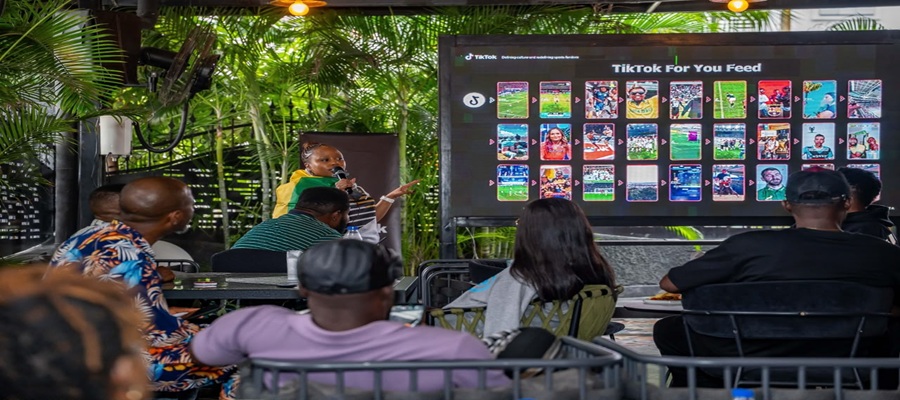
TikTok says football remains one of the strongest passions among its users in Nigeria, with 59 per cent of users on the platform following the sport.

TikTok
The social media platform disclosed this in a report highlighting the growing influence of football communities and sports content across Sub-Saharan Africa.
According to TikTok, 28 per cent of its users in Nigeria actively participate in football, underscoring the sport’s significance as a cultural touchpoint and a driver of engagement on the platform.
The report noted that football-related hashtags such as #football, #soccer, #SuperEagles and #NaijaFootball have become active hubs for fan reactions, commentary, highlights and match-day conversations.
TikTok said it had evolved into a leading platform for sports entertainment and football culture, bringing together fans, athletes, clubs and content creators through its #SportsOnTikTok initiative.
It revealed that more than 6.5 million videos had been created under the #SportsOnTikTok hashtag, reflecting growing interest in sports content ranging from match reactions and tactical analysis to creator-led storytelling.
“Football communities across Africa are increasingly using TikTok to celebrate their teams, share reactions, debate key moments and connect with global football audiences in authentic and engaging ways,” the report stated.
The platform also highlighted strong engagement during the 2025 Africa Cup of Nations (AFCON), noting that more than 1.2 million posts were created globally under the #AFCON2025 hashtag.
According to TikTok, 28.6 per cent of those posts originated from Sub-Saharan Africa, reinforcing the platform’s role as a major destination for football fans following tournaments in real time.
The report further showed that sports content on TikTok continues to influence audiences beyond the platform.
It stated that 85 per cent of sports fans globally use TikTok as a second-screen experience while watching sporting events, while 42 per cent are more likely to tune into live matches after viewing sports content on the platform.
Additionally, 90 per cent of fans reportedly take at least one action outside the platform after watching sports-related content, while 72 per cent enjoy viewing fan edits, reaction videos and other fan-generated sports content.
TikTok also highlighted the increasing participation of women in sports conversations on the platform.
According to the report, 64 per cent of women globally choose TikTok as their preferred destination for sports content, accounting for 46 per cent of all sports-related views on the platform during the first half of 2025.
The company said the findings reflected a new era of digital sports engagement in which football and other sporting experiences extend beyond the pitch through fan participation, content creation and online communities.
It added that TikTok was becoming a key destination for the next generation of football fandom, transforming passive viewership into active participation through shared experiences and real-time interactions.
Telecom
Nigeria Innovation Summit 2026 Set to Convene West Africa’s Brightest Minds to Shape the Future of Innovation

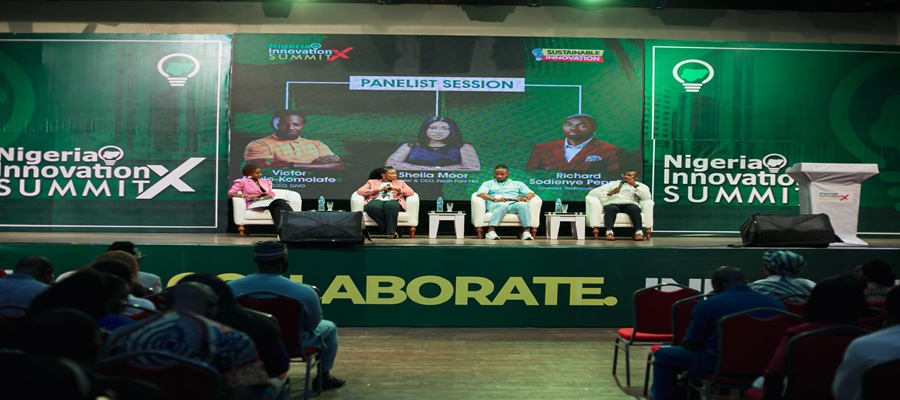
InnovationHub Africa, Africa’s foremost driver of technology and innovation, is proud to announce the Nigeria Innovation Summit (NIS) 11.0, the 11th edition of West Africa’s biggest and most celebrated innovation gathering, scheduled for October 6, 2026, at the Shell Hall, Muson Centre, Lagos.

Nigeria Innovation Summit 2026
The Summit promises to be the most ambitious, high-impact edition yet, bringing together Nigeria’s most brilliant minds, innovators, startups, trailblazing entrepreneurs, global thought leaders, and policy architects under one electrifying roof.
Disclosing the event’s agenda, Mr. Tony Ajah, the Programme Director of the Summit says, “The theme for this year’s event is ‘Innovating in the Age of AI’.” The theme confronts one of the defining questions of our time: how can Nigeria and Africa harness the power of AI to drive transformative innovation, accelerate economic growth, and compete boldly on the global stage?”
“We are living through the most consequential technological shift of our generation. AI is happening right now, reshaping industries, redefining careers, and rewriting the rules of competition. As AI reshapes every sector from agriculture to fintech, from healthcare to education, we are creating the most critical space for Nigeria’s innovators to get ahead of the curve,” Mr. Ajah says.
“NIS 11.0 is our clarion call to every Nigerian innovator and institution to get in the room, understand the wave, and ride it. We must not be spectators in the AI revolution but architects of it. So, this year’s event will go beyond inspiration to deliver actionable insights and measurable impact, empowering stakeholders to build resilient and future-ready systems,” he added.
NIS has established itself as a premier platform for advancing technology, entrepreneurship, and sustainable development, and continues to foster cross-sector collaboration and inspire solutions to pressing socio-economic challenges. It brings in experts within the Nigerian innovation ecosystem and around the world to connect, share ideas, and collaborate.
This year’s event will feature insightful discussions, Nigeria Innovation Experience talks (NiX Talks), innovative showcases of emerging technologies and their applications, workshops, fireside chats, startup pitches, and exhibitions. The Summit will climax with the 2026 Nigeria Innovation Awards.
Beyond discussions, the Summit is designed to catalyze strategic partnerships, investment opportunities, and policy directions that support innovation-led growth. Through previous editions, NIS has attracted over 15,000 delegates, 240 speakers and panellists, 100 tertiary institutions and research centres, 40 government ministries, attendees from 36 states, over 170 sponsors and partners, 42 countries, and over 97 innovation award recipients.
Participation in this event is open to local and international businesses, innovators, startups, MSMEs, public and private institutions, embassies/high commissions, investors, the academic community, and all the stakeholders in the innovation ecosystem. The event will also be live-streamed to a wider audience across Nigeria and beyond. Attendance is free and open to all registered delegates.
NIS 11.0 offers great opportunities through sponsorship, partnership, and exhibitions of innovative products, ideas, and services. For more inquiries and participation, please visit: https://innovationsummit.ng/

Galaxy Backbone @ 20, Pledges Nationwide Connectivity, Data Sovereignty

KidsCook Showdown 2.0 Set to Empower Public School Pupils with Culinary, Life Skills

CBN Orders Banks, Fintechs to Host Payment Data Locally

PalmPay Joins Industry Leaders @ Digital Pay Expo 2026

UK Bans TikTok, Instagram, Facebook for Under-16s in Landmark Crackdown

CBN Extends PoS Geo-Fencing Enforcement Deadline to August 2026

NCC Drafts New Rules for Virtual Mobile Operators

TD Africa, HPE Drive Conversations on the Future of Intelligent Networking

London Strengthens Global Investment Ties with Africa @ First Ever London-Africa Business Summit

Easybuy Partners WAWUAfrica to Upskill 10 Million Youths and Women, Boosting Nigeria’s Economic and Financial Inclusion




 General News1 day ago
₦5m up for Grabs as 10 Startups Clash at the Gathering on 100 Pitchathon Aba

 E-Business1 day ago
CSOs Raise Alarm over Nigeria’s Data Protection Crisis

 E-Financial1 day ago
CBN to Expand eNaira for Salaries, Pensions and Welfare Payments

 General News1 day ago
CBN Moves to Stop Banks From Using Customers’ Money for Fintech Subsidiaries

 E-Financial1 day ago
CBN to Bar HoldCos from Influencing Banks’ Lending Decisions

 Telecom1 day ago
NITDA Reveals Why AI Could Be Nigeria’s Biggest Wealth Creator, Not Oil

 E-Business22 hours ago
AI-Powered Cyber Threats Put Nigerian Banks on Alert

 Telecom1 day ago
NASENI Unveils Ambitious Plan to Produce 600 Million Diagnostic Kits Annually