

Telecom
50 Hearty Cheers to Telecom Consumer Parliament

It seems like yesterday when the Nigerian Communications Commission (NCC) begun the Telecom Consumer Parliament, Telecom, an alternative dispute resolution mechanism (ADR).
Like in all the previous editions, the 50th sitting of the Parliament in Abuja brought together the regulator, major telecoms operators in the country, consumers and consumers’ rights groups under one roof to chart a progressive course for the industry.
Issues pertaining, to Quality of Service, Consumer Rights Protection, Environmental Impact Assessment, Interconnection, Tariffs and Universal Service Provision were discussed at the meeting.
The 50th sitting is a toast to the Parliament which for the first time, consumers of telecommunications services and the providers agree that the alternative dispute resolution system set up in August 2003 by the NCC has worked.
Ernest Ndukwe, executive vice chairman, NCC said that the Commission has put in place special structures to ensure that the needs and desires of the consumer are taken care of.
“For us in the Commission, the consumer is the main object, the subject and the reason for our being; hence the place of the Consumer as the king is sacrosanct” he said
He also spared words for the operators which he said belong to a class of stakeholders in the business of telecom regulation.
He said that “Apart from obtaining their operational licenses, with certain obligations attached to them, the operators also expect certain obligations from government and the regulator. They expect a non partial regulator to protect their huge investments. They want the Commission to ensure that no other entity interferes with their network resources such as frequency spectrum or base stations”
In the Beginning
Many Nigerians believe that the great telecom revolution in Nigeria is the second independence for Nigeria, considering the ample opportunities it offers and the ability it offers for stress- free communication.
But memories are sometimes short and failing. So some Nigerians are quick to forget the dark years of telecommunications in the country characterized by poor services, long waiting period to get a phone line and general decay in infrastructure.
Today, cell phones ring in almost every pocket. Ownership cut across every age, class and boundaries, unlike the past when Nigerians were told phones were not for the poor.
And to attest to the burgeoning revolution, the world stood still and applauded Nigeria at the just ended Mobile World Congress (GSMA) held in Barcelona.
The revolution comes with its challenges, especially with the fragile relationship between consumers and the service providers.
Some of the issues which often get complained of by telecom consumers in Nigeria includes, false billing, arbitrary disconnection of service, poor service delivery, drop calls, non-chalant attitude towards genuine complaints, supply and installation of substandard equipment and devices, deceptive advertisement, credit depletion, inability to recharge, inability to check credit balance, network failure, sending/charging for multiple text massages in place of a single one
The problems are actually caused by power supply problems, network planning, system inadequacies, charging policy.
The increase in such complaints by the subscribers led to the intervention by the Nigerian Communications Commission (NCC) to create a parliament that brings together, stakeholders with the aim of strategising for better services.
The forum is called NCC Telecom Consumer Parliament. It stands on the tripod of the regulator, operators and consumers.
The Parliament
The parliament is the initiative of the Consumer Affairs Bureau (CAB) of Nigerian Communications Commission, established in September 2001, to inform, educate and protect the consumers of telecommunications services in Nigeria.
The Consumer Protection & Advocacy is one of the units of the CAB that is charged with the responsibility of responding to consumer complaints and enquiries.
It has worked and this is the general consensus of critics, consumers and operators.
It has been variously described, but it remains the only frontier that has brought the regulator, operators and subscribers on a round table.
The Parliament serves as a platform for consumer education, an alternative, inexpensive and quick dispute resolution.
It is serves an interactive forum, bridging the gap between operators and consumers in the industry, thereby building confidence and creating mutually beneficial relationship.
The ADR creates a forum for consumers to air their views and suggestions on how to make the industry forward.
It provides reliable feedback to the regulator for effective communications while educating telecom consumer on their rights and obligations for the overall healthy development of the industry.
More importantly it has institutionalized public accountability of both the operators and the regulator while eliciting stakeholders’ views, reactions, and inputs to policies and programmes.
It has also eradicated the perception of the consumers as the underdogs as was the case in the era of monopoly.
How It Works
The Parliament is held monthly at different geographical zones of Nigeria and every Nigerian is free to attend and contribute.
A session of the Parliament begins when the presenter introduces the representatives of the companies, NCC commissioners and management as well as legislators in attendance.
Then the EVC of the NCC is invited to make the opening remarks or give industry report, and after that the presenter spells out the rules of the proceedings including to accord courtesy to one another and that questions and answers be brief, clear and straight to the point.
During the question and answer time, five to 10 questions are taken and representatives of the concerned companies are invited to respond to queries/comments concerning them.
Where the responses provided the EVC intervenes.
At the end of some rounds of questions, the EVC is invited to respond to questions directed at the commission, signaling the end of the session.
The proceedings are recorded in both video and audio. The video is for broadcast in the national television station and in at least one other major TV station.
A report of the session is also prepared by the NCC and lists of all complaints that were brought before the commission are published in the newspapers every year for public accountability.
Achievements
It is easy to lose count of the achievements but a few stands out.
The Parliament was instrumental in bringing down the prices of SIM packs, cutting tarrifs, prices of recharges, extension of validity periojd.
It has also saved operators, consumers, and the regulator the costs, time and resources that would have otherwise gone into lengthy litigations.
The Parliament has presented Nigeria as people with ordered and civilized ways of handling issues.
Thumbs Up
The novel regulatory initiative has earned Nigeria, commendations from International Telecommunications Union (ITU) and ICT professionals and groups across the globe.
ITU is reportedly studying the Nigerian model and hope to replicate it in many countries.
At home, many believe that subscribers are getting the ease with the Consumer Parliament.
Lovithe Eze, a call center operator at Wuse Zone 6, Abuja said that "I have never attended the consumer parliament because I don’t have the time, but from what I have been watching on Television, the forum is important and it assists in telling the operators our problems"
“ I am very sure the consumer parliament has created challenges for operators, and we are seeing the results", said Husaini James, student, 23, who believes that the consumer parliament is a good interaction and should be encouraged.
According to him, sometimes, if you have a problem, even if you call a customer care centre, your problem is not attended to, but in the consumer parliament it is live and direct. "Several times they have no answer to give when customers quiz them at the parliament", he said.
Adeolu Ogunbanjo, president of the National Telecom Subscribers of Nigeria (Natcoms), said the NCC has achieved a lot through the monthly event, adding that a common achievement is the printing and selling of lower or cheaper denominations of recharge cards.
Mr Ogugua Chioke, chairman, GSM Consultative Forum, said the forum is unique and gives opportunities for both the operators and the consumers to interact. According to him, NCC deserves commendation on such excellent initiative and such parliament should be encouraged not only in the telecom sector but in the other sectors. "



Nigeria’s fast-rising youth culture and innovation community, The Gathering on 100, is heading to Enugu, with registration now open for gamers, performers, DJs, creatives, and culture enthusiasts.

MTN
The Enugu edition will take place on June 19, 2026, at ICC Hall, Okpara Square, and will bring together a new audience for the platform’s signature blend of music, gaming, live performance, community engagement, and youth-driven entertainment.
The Gathering on 100 first gained national attention in Lagos, where it transformed the National Stadium, Surulere, into a continuous 100-hour ecosystem of activity from April 22–26, 2026.
The event combined culture, commerce, entrepreneurship, gaming, fashion, and live entertainment, attracting thousands of young participants and creating opportunities for emerging talent and businesses.
The movement most recently arrived in Aba, where thousands of young people gathered for a weekend of culture, commerce and entrepreneurship, reinforcing the platform’s growing appeal across different communities and audiences.
The move to Enugu is being framed by organisers as a deliberate expansion into one of Nigeria’s largest student and youth populations. Home to major institutions including the University of Nigeria, Nsukka (UNN), Enugu State University of Science and Technology (ESUT), the Institute of Management and Technology (IMT), Godfrey Okoye University and Coal City University, Enugu attracts thousands of young people from across the country each year, creating a vibrant community shaped by education, creativity, entertainment and entrepreneurship.
This concentration of young talent has helped fuel a growing ecosystem of creators, performers, gamers, digital entrepreneurs and small business owners.
In recent years, the city has hosted an increasing number of technology, entertainment and youth-focused events, reflecting the growing demand for platforms that bring together creativity, opportunity and community.
These dynamics make Enugu a natural next stop for The Gathering on 100, a platform built around showcasing talent, fostering connections and creating opportunities for young Nigerians.
Registration for the Enugu edition is now open through The Gathering’s official website, with participation available across multiple categories including gaming, rap battles, DJ competitions, dance, live performances and entrepreneurship.
A key highlight of the event will be the Pitchathon, where emerging founders and business owners will have the opportunity to present their ideas before a panel of judges for a chance to secure grant funding and support for business growth.
The gaming segment will feature competitive tournaments and interactive experiences designed for both casual and serious players, while rap battles and DJ showdowns will spotlight rising talent from Enugu and neighbouring states.
Attendees can also expect a large scale rave experience, live entertainment and community driven activities designed to bring together different corners of the region’s youth culture under one roof.
Beyond the entertainment, organisers say The Gathering on 100 is designed to create real opportunities for young people to connect, collaborate and gain visibility for their talents, ideas and businesses.
As the movement continues its expansion across Nigeria, the Enugu edition is expected to showcase the city’s unique blend of creativity, ambition and cultural influence while providing a platform for the next generation of innovators, performers and entrepreneurs.
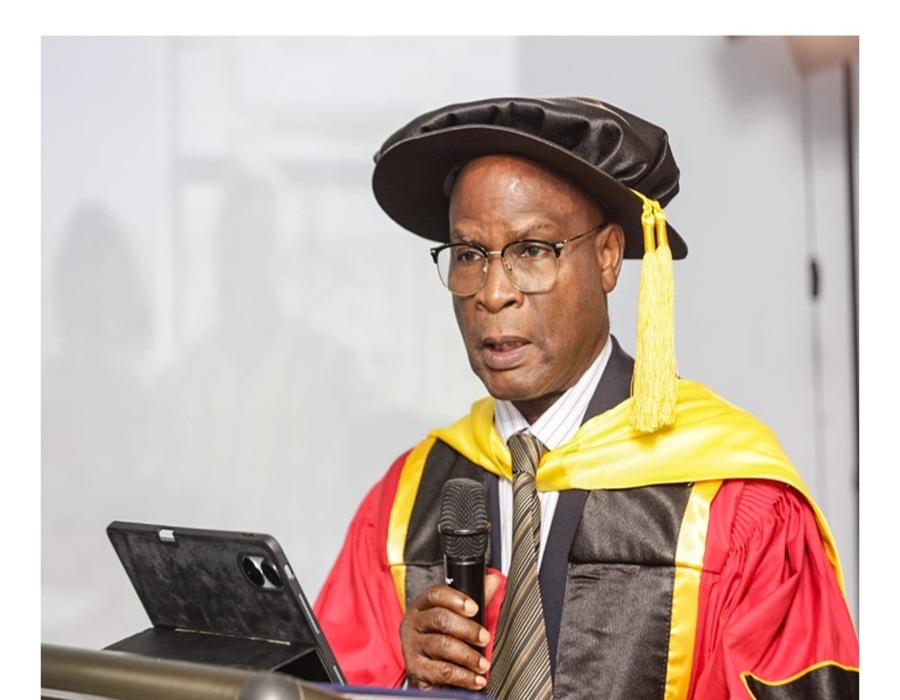
Professor Clement K. Dzidonu, President of Accra Institute of Technology (AIT), has said that the rapidly evolving world of artificial intelligence, automation, and digital transformation demands graduates who are capable of independent thinking, continuous learning, innovation, and responsible leadership.

Professor Clement K. Dzidonu, President of Accra Institute of Technology (AIT).
Professor Dzidonu noted that universities exist not merely to award degrees but to develop capable human beings who can think critically, solve problems creatively, adapt to changing circumstances, and contribute meaningfully to society.
He reiterated AIT’s commitment to producing graduates who are technically competent, ethically grounded, intellectually curious, and globally competitive.
The Accra Institute of Technology (AIT) has officially welcomed newly admitted students into its academic community at a colourful matriculation ceremony held on Saturday, June 13, 2026, at the university’s Knowledge City Campus-Kokomlemle in Accra.
Speaking on the theme, “Preparing the Sovereign Learner for a World of Opportunity, Possibility and Difference,” the President encouraged students to adopt the Opportunity–Possibility–Difference (OPD) Perspective by recognizing opportunities, exploring possibilities, and creating meaningful differences in their lives and communities. He urged them to see beyond examinations and certificates and focus on building capability, character, and courage.
The ceremony marked a significant milestone in the lives of the new students as they formally became members of the AIT scholarly community, joining a university renowned for excellence in technology-driven education, innovation, research, and professional development.
The matriculating class comprises students pursuing programmes in Engineering, Information Technology, Computer Science, Business Administration, Occupational Health and Safety Management, Project Management, and doctoral studies.
Addressing the matriculating class, the President of AIT, Professor Clement K. Dzidonu, congratulated the students on their admission and challenged them to embrace what he termed “The Age of the Sovereign Learner.” He emphasized that the rapidly evolving world of artificial intelligence, automation, and digital transformation demands graduates who are capable of independent thinking, continuous learning, innovation, and responsible leadership.
Professor Dzidonu further challenged the students to make the most of the opportunities available to them at AIT by attending lectures consistently, acting ethically, managing their time wisely, and committing themselves to lifelong learning.
He reminded them that success at the university would depend not only on the resources and support systems provided by AIT but also on their personal commitment to excellence and self-development.
On behalf of the newly admitted students, Mr. Samuel Peace Kamara delivered the matriculants’ acceptance speech, expressing gratitude to the university’s leadership, faculty, and staff for the warm reception extended to the new students.
He pledged, on behalf of his colleagues, that they would uphold the values of the university, work diligently in their studies, and strive to become responsible professionals capable of making meaningful contributions to society.
The ceremony concluded with a formal declaration admitting the students into membership of the university community and a call on them to embrace the opportunities before them, pursue excellence, and contribute positively to national and global development.

Federal government has dismissed reports suggesting it plans to introduce new taxes on telecommunications services and petroleum products, describing the claims as false and misleading.

The clarification was contained in a statement issued on Wednesday by the Federal Ministry of Finance and signed by Mrs Maryann Duke, Senior Special Assistant on Communications and Press Secretary to the Minister of Finance and Coordinating Minister of the Economy.
According to the ministry, reports linking the alleged taxes to recommendations contained in the International Monetary Fund (IMF) Article IV Consultation on Nigeria do not reflect the position of the government.
It explained that recommendations contained in IMF consultation reports are advisory in nature and do not constitute policy decisions or binding obligations on the Federal Government.
“The Federal Government is not considering the introduction of any new taxes on telecommunications services or petroleum products,” the statement said.
The ministry also clarified that existing tax arrangements relating to petroleum products remain unchanged.
It stated that the Value Added Tax (VAT) waiver on fuel remains in force and has not been removed.
According to the statement, any fuel surcharge can only be introduced through a ministerial order published in the Official Gazette, noting that no such action is currently under consideration.
The ministry added that the current policy framework has helped cushion the impact of fluctuations in global fuel prices on households and businesses across the country.
On telecommunications services, the government said the excise duty introduced before 2023 had already been repealed under the country’s new tax laws.
It stressed that the duty is no longer in effect.
The ministry urged Nigerians, businesses and media organisations to disregard reports suggesting that new taxes would be imposed on telecommunications services and petroleum products.
It reiterated that Nigeria’s tax reform agenda remains focused on improving revenue administration, promoting economic growth and attracting investments rather than increasing the tax burden on citizens.
The ministry further assured that any future tax policy changes would be communicated through official channels and implemented in accordance with due process and existing legal provisions.
It reaffirmed the government’s commitment to transparency and responsible economic management aimed at supporting sustainable growth and protecting the welfare of Nigerians.

Nigeria Launches FreeTV Nationwide

NIPOST Plans Digital Postcodes for Every Building in Nigeria

Enugu to Host The Gathering on 100 as MTN-Backed Youth Movement Expands Across Nigeria

Prof. Dzidonu Urges Universities to Produce Deep Thinkers for AI Age

FG Debunks Claims of Plans to Introduce Telecoms, Fuel Taxes

CBN Extends PoS Geo-Fencing Enforcement Deadline to August 2026

NCC Drafts New Rules for Virtual Mobile Operators

London Strengthens Global Investment Ties with Africa @ First Ever London-Africa Business Summit

FG Targets Alleged N3tn Capital Flight, Opens Airtime Credit Market to Nigerian Fintechs

Easybuy Partners WAWUAfrica to Upskill 10 Million Youths and Women, Boosting Nigeria’s Economic and Financial Inclusion




 Telecom2 days ago
MTN Foundation Commits N32Bn in Projects across Nigeria

 E-Financial3 days ago
CBN Orders Banks, Fintechs to Host Payment Data Locally

 E-Business3 days ago
Galaxy Backbone @ 20, Pledges Nationwide Connectivity, Data Sovereignty

 E-Financial3 days ago
Analysts Warn of Growing “Crowded Trade” in Foreign Exchange Markets

 News3 days ago
PalmPay Joins Industry Leaders @ Digital Pay Expo 2026

 E-Financial3 days ago
ACAMB Kicks-off 30th Anniversary Celebration With Tree Planting Initiative

 Telecom3 days ago
UK Bans TikTok, Instagram, Facebook for Under-16s in Landmark Crackdown

 Telecom3 days ago
Nigeria Innovation Summit 2026 Set to Convene West Africa’s Brightest Minds to Shape the Future of Innovation