

/home/kenneth/web/nigeriacommunicationsweek.com.ng/public_html/wp-content/themes/zox-news/parts/post-single.php on line 153
">
Warning: Undefined array key 0 in /home/kenneth/web/nigeriacommunicationsweek.com.ng/public_html/wp-content/themes/zox-news/parts/post-single.php on line 153
Warning: Attempt to read property "cat_name" on null in /home/kenneth/web/nigeriacommunicationsweek.com.ng/public_html/wp-content/themes/zox-news/parts/post-single.php on line 153
Union Express Covers 13 States

Union Express Limited is well represented in 13 state capitals from where they deliver to over 1,000 cities and towns in Nigeria.
The courier company is a Subsidiary of Union Registrars Limited, and a member of Union Bank Group Plc, one of the biggest financial organizations in Africa. Union Express Limited was incorporated on October 29, 2007, and is duly licensed by the Nigerian Postal Service to operate Courier Services locally and internationally with her Head Office in Lagos.
The creation of the company was a deliberate act by Union Registrars Limited. It is intended to be a solution to constant complaints from shareholders, about receiving their correspondences late. The company’s creation was also meant to satisfy the over increasing demands of the Securities and Exchange Commission (S.E.C.) on the timely and accurate delivery of company correspondences to Shareholders.
The courier company specializes in the delivery of Capital Market Documents and General Courier Services, for example; Annual General Meeting Reports, Extra-Ordinary General Meeting Notices, Public Offer Parcels, Share Certificates, Dividend Warrants and Rights Circulars.
Frank Oise, the company’s head of operations, said it gives a maximum of 24 hrs within Lagos and 48 hours outside Lagos for all deliveries and they always provide Proof of Deliveries (P. O. Ds.).
He named some of the company’s special benefits to customers to include;Free Pick-ups Services, Monthly Credit, Special Discount on Volume, Proof of Delivery, Insurance of shipment in transit and Speedy Customs Clearance.


Warning: Undefined array key 0 in /home/kenneth/web/nigeriacommunicationsweek.com.ng/public_html/wp-content/themes/zox-news/parts/post-single.php on line 493
Warning: Attempt to read property "cat_ID" on null in /home/kenneth/web/nigeriacommunicationsweek.com.ng/public_html/wp-content/themes/zox-news/parts/post-single.php on line 493


Nigerian Communications Commission (NCC) has commenced a comprehensive review of Mobile Termination Rates (MTR) eight years after the current rates were introduced, citing changing economic realities, technological advancements and shifts in telecommunications traffic patterns.

Mobile Termination Rates are regulated fees paid by one operator to another to complete calls across networks.
They influence competition, investment, and retail pricing.
The exercise, kicked off in Lagos at a mobile termination rate stakeholder forum on Tuesday, brought regulators, operators and industry participants into a structured process to reassess wholesale pricing rules that govern payments between networks for completing voice calls.
Speaking at a stakeholders’ engagement in Lagos, Mrs Omotayo Mohammed, head of Competition and Tariff at the NCC, said the review had become necessary because the existing rates no longer reflect prevailing operational and economic conditions in the telecommunications sector.
According to her, the current MTR stands at N3.90 per minute for generic operators and N4.70 per minute for new entrants, rates that have remained unchanged since 2018.
Mohammed noted that the telecommunications landscape has undergone significant changes over the years, driven by naira depreciation, rising inflation, escalating energy costs and evolving consumer behaviour.
“The foundation of wholesale interconnection affects every stakeholder in this room. Misaligned termination rates can enable dominant operators to foreclose smaller competitors, deter infrastructure investment and ultimately burden consumers through inflated retail prices,” she said.
She explained that the deployment of 5G networks, artificial intelligence (AI)-driven services and Internet of Things (IoT) applications has altered network usage patterns beyond what was envisaged in the 2018 cost model.
Mohammed further observed that over-the-top (OTT) platforms such as WhatsApp and Telegram now account for a significant share of voice and messaging traffic, reducing dependence on traditional interconnection services.
To drive the review process, the NCC has engaged KPMG as consultant for the study and stakeholder engagement exercise, which is expected to last four months.
The exercise will also examine issues relating to Unstructured Supplementary Service Data (USSD) services and application-to-person (A2P) short message service (SMS), both of which have become increasingly critical to Nigeria’s digital economy.
Mohammed stated that the review is being conducted in line with Sections 4, 96, 97 and 108 of the Nigerian Communications Act 2003, which empower the commission to promote investment, protect consumers and ensure fair competition.
She said the study would establish a cost-reflective MTR framework across different technology generations, operator categories and clearing house arrangements.
The review will also cover international termination rates (ITR) to tackle grey-route traffic concerns, develop a pricing framework for mobile virtual network operators (MVNOs) and assess the current asymmetric rate structure between established operators and new entrants.
“The consultancy adopts an evidence-based and consultative approach. Stakeholders will have opportunities to submit their views and validate assumptions before any determination is made,” Mohammed assured.
She added that the review is expected to enhance retail affordability, improve access to digital financial services and enable operators to recover costs in line with prevailing capital and operational expenditure realities.
According to her, transparent and cost-reflective rates will encourage infrastructure investment and boost investor confidence in Nigeria’s digital economy.
Mohammed also assured stakeholders that the NCC would make its methodology, key assumptions and cost model parameters available throughout the process to ensure transparency and accountability.
In her remarks, Mrs Nnenna Ukoha, director of Public Affairs at the NCC, noted that mobile termination rates remain central to pricing structures, competition, service quality and overall consumer experience.
“We are particularly encouraged by the rapt attention, intellectual rigour and keen interest demonstrated by participants throughout today’s session.
“This active engagement reflects not only the relevance of the issues discussed but also a shared commitment to the sustainable growth and development of Nigeria’s telecommunications sector,” Ukoha said.
She stressed that discussions at the forum highlighted both the challenges and opportunities associated with the MTR determination process and underscored the need for sustained stakeholder engagement.
Ukoha reiterated that the consultation window remains open and encouraged industry stakeholders to submit additional inputs, data and perspectives to support a balanced, forward-looking and sustainable outcome for the sector.
She reaffirmed the NCC’s commitment to collaboration and inclusive regulation aimed at building a resilient, competitive and future-ready telecommunications industry.

Stakeholders in Nigeria’s broadcasting industry have endorsed a hybrid digital broadcasting model that combines Digital Terrestrial Television (DTT), Direct-to-Home (DTH) satellite services, and digital application-based platforms for the country’s Digital Switch Over (DSO) programme,

The resolution was reached at a high-level stakeholder meeting convened by the National Broadcasting Commission (NBC) under the supervision of the Federal Ministry of Information and National Orientation at NICON Luxury Hotel, Abuja.
The meeting, chaired by Alhaji Mohammed Idris, minister of Information and National Orientation, brought together regulators, broadcasters, signal distributors, set-top box manufacturers, content producers, satellite operators, and industry associations to chart a sustainable path for Nigeria’s long-delayed digital migration project.
Addressing stakeholders during the closed-door engagement session, the minister described the meeting as a collaborative effort aimed at finding practical solutions to challenges facing the DSO project.
“This engagement is a family discussion aimed at finding practical solutions to ensure the success of the Digital Switch Over project. Government has no hidden agenda, and all decisions will be guided by national interest, stakeholder inclusion, and the long-term sustainability of the broadcasting industry,” he said.
The minister acknowledged concerns raised by industry players regarding stakeholder consultation and participation in previous phases of the project, noting that while broader engagement should ideally have commenced earlier, there remained an opportunity to build consensus and move forward together.
“While there may be differing views on implementation approaches, there is broad agreement that Nigeria must complete its digital migration journey. We must work collectively to achieve this national objective,” he stated.
Mr Charles Ebuebu, director general, NBC, described the stakeholder meeting as “iconic”, noting that it marked a turning point in Nigeria’s efforts to complete the digital migration.
He said the country had spent over a decade on the DSO journey, missing several deadlines, but expressed optimism that a clear implementation plan was now being developed.
Ebuebu said the commission, in collaboration with stakeholders, is working toward a sustainable model that ensures return on investment for industry players while delivering value to the nation.
He said that the outcome of the consultation process would produce a unified framework for implementation and communication going forward.
Mrs Jane Nkechi Egerton-Idehen, managing director, Nigerian Communications Satellite (NIGCOMSAT), said the DSO initiative forms part of broader federal interventions aimed at building a sustainable broadcasting ecosystem.
She explained that government investments had supported satellite coverage, national call centres, and regional production studios across the country.
According to her, the objective is to address gaps in content distribution and ensure that Nigerian broadcasting reflects the country’s linguistic and cultural diversity.
“We are not departing from the original plan. We are innovating on how it is implemented,” she said.
She also highlighted efforts to expand access to production facilities across geopolitical zones to support content creators and reduce dependence on major urban centres.
The meeting attracted 128 participants, including the Director-General of the NBC; Permanent Secretary of the Federal Ministry of Information and National Orientation, Dr. BRM Ukire; Director-General of the Nigerian Television Authority (NTA), Abdulhamid Dambos; Director-General of the Advertising Regulatory Council of Nigeria (ARCON), Dr Olalekan Fadolapo; Chairman of the Broadcasting Organisations of Nigeria (BON), Chief Tony Akiotu; Managing Director of NIGCOMSAT Ltd, Mrs Jane Nkechi Egerton-Idehen; and representatives of licensed broadcasters and other industry stakeholders.
During deliberations, stakeholders agreed that the DSO project remains both necessary and desirable for Nigeria, emphasising that the transition should prioritise national interest, industry sustainability, local content development, local manufacturing, and job creation.
Among the key resolutions reached was the affirmation that Digital Terrestrial Television (DTT) remains a critical component of the DSO framework and should not be discontinued. Participants also agreed on the need to reconstitute the DigiTeam implementation platform to provide a structured mechanism for consultation, collaboration, and industry participation.
Stakeholders further called for stronger engagement between regulators and industry players, with an agreement that stakeholder meetings would be held at least quarterly to ensure continuous alignment on implementation strategies.
The meeting also welcomed ongoing efforts by the NBC and ARCON to develop a sustainable business model aimed at improving audience measurement systems, strengthening advertising revenue generation, and enhancing the long-term viability of broadcasting organisations.
In addition, stakeholders were assured by NIGCOMSAT of the reliability of satellite infrastructure supporting the DSO platform.
The company disclosed that backup arrangements with alternative satellite operators were already in place to guarantee uninterrupted service and eliminate the need for subscriber dish realignment.
As part of the agreed next steps, the Federal Government, through the Ministry of Information and National Orientation, will reconstitute the DigiTeam stakeholder platform, while the NBC will continue consultations with set-top box manufacturers and other industry stakeholders to address concerns relating to existing investments and future participation in the digital broadcasting ecosystem.
The stakeholders expressed confidence that the renewed collaborative approach would accelerate Nigeria’s digital migration, improve broadcasting services, expand audience reach, attract investment, create jobs, and deliver greater value to Nigerian consumers.

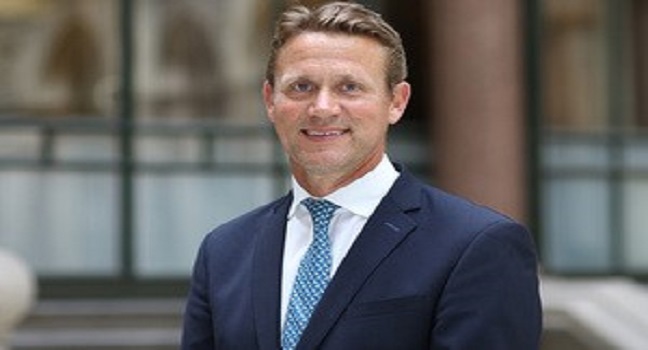
The UK Government has announced the appointment of Mr Peter Vowles as the next British High Commissioner to the Federal Republic of Nigeria.

Mr Vowles succeeds Dr Richard Montgomery CMG and is expected to take up his post in Abuja in September 2026. Dr Montgomery remains in post until that time.
Mr Vowles brings extensive diplomatic and development experience to the role, having served as His Majesty’s Ambassador to Zimbabwe from 2023 to 2026 and previously as Ambassador to Myanmar from 2021 to 2022.
He has held senior leadership positions across the FCDO and its predecessor department DFID, including as Transformation Director and Director for Asia, Caribbean and Overseas Territories.
Earlier in his career, Mr Vowles worked in international development across South Asia, Central Africa and East Africa, including postings in Bangladesh, India, the Democratic Republic of Congo and Kenya. He began his career in Zimbabwe, where he worked in education and development.
Peter Vowles said: “I am honoured to be appointed as British High Commissioner to Nigeria. Nigeria is a country of immense importance to the United Kingdom, and I look forward to working closely with Nigerian partners to strengthen our relationship across trade, development and security.”

NCC Begins Review Telecom Termination Rates after 8 Years

Stakeholders Endorse Hybrid Model for Nigeria’s Digital Switch

UK Appoints Peter Vowles as British High Commissioner to Nigeria

The Case for a Holistic AI-Led Approach to Cybersecurity in the Fintech Ecosystem

Airtel Africa Foundation Completes Year One Scholarship Disbursement for 100 Tech Scholars in Nigeria

CBN Extends PoS Geo-Fencing Enforcement Deadline to August 2026

NCC Drafts New Rules for Virtual Mobile Operators

TD Africa, HPE Drive Conversations on the Future of Intelligent Networking

London Strengthens Global Investment Ties with Africa @ First Ever London-Africa Business Summit

Easybuy Partners WAWUAfrica to Upskill 10 Million Youths and Women, Boosting Nigeria’s Economic and Financial Inclusion




 E-Business2 days ago
AI-Powered Cyber Threats Put Nigerian Banks on Alert

 E-Business2 days ago
CSOs Raise Alarm over Nigeria’s Data Protection Crisis

 General News2 days ago
₦5m up for Grabs as 10 Startups Clash at the Gathering on 100 Pitchathon Aba

 E-Financial2 days ago
CBN to Expand eNaira for Salaries, Pensions and Welfare Payments

 General News2 days ago
CBN Moves to Stop Banks From Using Customers’ Money for Fintech Subsidiaries

 E-Financial2 days ago
CBN to Bar HoldCos from Influencing Banks’ Lending Decisions

 Telecom2 days ago
NITDA Reveals Why AI Could Be Nigeria’s Biggest Wealth Creator, Not Oil

 Telecom2 days ago
NASENI Unveils Ambitious Plan to Produce 600 Million Diagnostic Kits Annually