

General News
Leo Stan @ 70: Blessed and Bruised by Country, Eyes Next Disruption

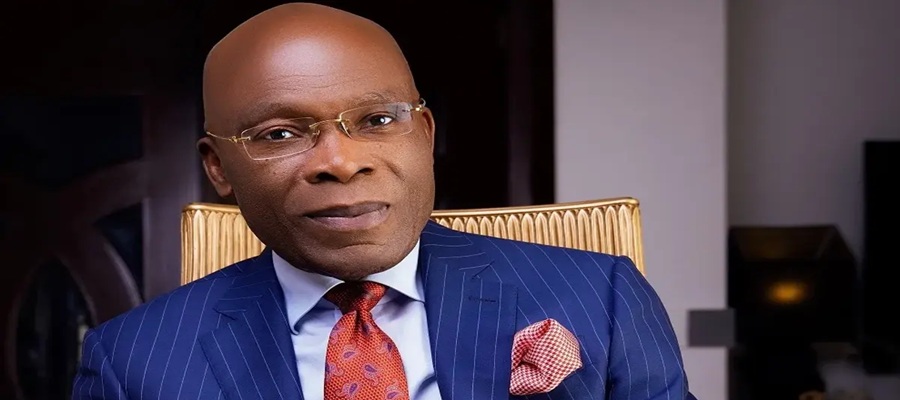
One a quiet Wednesday, February 22, 1956, in Ubomiri, Mbaitoli, Imo State, the family of Chief and Lolo Ebenezer Ekeh leaped for joy at the birth of Leonard Stanley Nnamdi Ekeh- their second son.

Leonard Stanley Nnamdi Ekeh
His birth was both cosmic, and disruptive as his journey down this 70 years on earth has proven.
Leonard Stanley Nnamdi Ekeh, popularly know as Leo Stan Ekeh or LSE is human by birth but profound, rare and has higher consciousness.
Imbued with deep intuition, intense creativity, and compassionate nature, Leo Stan possesses critical thinking ability.
He has relentless drive to succeed across multiple facets of life. This is a self-made construct driven by his deep spiritual and purposeful living, rather than just mere survival.
Despite the recurring and abrupt reversal of government policies, which leave companies including his hemorrhaging, Leo Stan has remained committed and actively participate in the development and nation-building of Nigeria.

Am one of the lucky people to have known him up close and personal for nearly 30 years.
He has endured lots of back biting and campaigns of calumny from competitors and even betrayals from least expected people.
But his tenacity makes him stand firm on his beliefs regardless of feelings, or circumstances.
He has stumbled in businesses, failed in some ventures; but he always get right up. At one point, he nearly lost his head selling international commodities.
LSE takes every loss with equanimity as a dogged fighter.
A serial entrepreneur and with eyes for great minds, Leo Stan does not just walk through life; he leaves a trail of light, lifting everyone around him with kindness and wisdom. And there are testimonials.
For me, he is a pillar of strength and a beacon of hope. My benefactor.
He is also a benefactor to many. He has a way of making associates feel vital, loved, and valued.
Today is his Platinum Birthday but his roads have not always been paved with gold.
His early life was as ordinary as it can be, LSE attended Holy Ghost College, Owerri for his secondary education.
During his early years, he wanted to own the biggest transport company in Nigeria.
He later went to India for his university education, where he received a Bachelor of Science degree in Economics from Punjab University.
Leo Stan believes that studying in India was a great turning point in his life because he found the economy of India a realistic economy”.
He later also earned an MSc in Risk Management from the University of Nottingham.
At 70, he attained his height by trust in God, determination and CAN DO attitude.
Today, his business opinions and advisory are welcome around the world.
Leo Stan once told me “I saw myself from the beginning even when my parents were alive as an orphan. It drives me.”
He has three brothers and two sisters, His mother was a dietitian, and his father was a nurse
“I come from a lineage of people who served God dedicatedly. I am a miracle child and I remember my mother had always predicted that I would be great. I have siblings but I live my life as if I am the only child of my parents” he said
He believes that technology makes life more exciting and helps improve the lives of people around Nigeria and indeed the world.
His solid prints in the business world is well documented. He has his hands in his hands in several businesses including ICT, e-commerce, broadcasting, oil and gas, media publishing and real estate.
Leo Stan is a man of many firsts: he pioneered a new world of digital economy at a time the country was deeply analogue both in the workplace and in schools.
The Nigerian media industry, from advertising to newspapers, owes him much gratitude for changing their operational processes and methodologies from mundane, medieval analogue to the robust and elegant digital platform.
Within 30 years, he has transformed a start-up that sprouted from a make-shift apartment that also doubled as his home into a digital conglomerate with incursions into oil and gas, entertainment and property.
Leo Stan started Zinox Technologies Limited in 2001 to manufacture computers.
He ensured that at launch Zinox Computers already had the WHQL certification, the first in sub-Saharan Africa, consolidated 5 years later with the attainment of the NIS ISO 2000: 9001 QMS Certification.
In October 2013, the company announced the production of its computer tablet line named Zipad
Task Systems, Technology Distributions Limited, Konga (Africa’s foremost truly composite e-commerce outpost combining offline-online mix in service delivery), Konga Radio, and TD Mobile, to name a few, complete the ensemble of businesses in his thriving conglomerate.
In all his companies, there is a growth pathway for every employee.
He deliberately creates a system that rewards every hardworking and dedicated employee.
From drivers sponsored to universities and returning to the conglomerate as degree holders to persons who joined the organisation as janitors working their way up the corporate ladder, he has brought his humanity to bear on people around him.
Making some lowly staff home-owners and sponsoring indigent students to universities at home and abroad comes to him as a routine.
Just a few days ago, ahead of his 70th birthday, he offered University scholarships to additional 1,000 Nigerian indigent wizkids to study Computer Science in Federal Universities. He is committing about N10 billion to the scholarship scheme.
This is so the country’s private and public sectors have a new generation of tech wizkids to support the economy’s growth.
Recall that his group has trained and retrained over 3000 Nigerians and donated tech centres to over 25 institutions nationwide just to mention a few.
The former alter boy and chorister in his local community Catholic Church at Ubomiri, now a multi-billionaire, has stayed humble.
He draws a distinct line between capitalism and welfarism.
Leo Stan is great man, a leader with unparalleled integrity and a heart of gold.
He has earned over 6o international and local awards over many years of incisive entrepreneurship, was equally singled out and honoured by former President Olusegun Obasanjo on the occasion of Nigeria’s Independence Anniversary on October 1, 2001 with an ICON OF HOPE award as a pride to modern Nigeria and as a model for Nigerian youths.
Again, President Obasanjo honoured him with another national award – the Order of the Federal Republic (OFR) in 2003.
A Fellow of the Nigeria Computer Society, the umbrella body of all computer associations in Nigeria, he was also awarded the pioneer ICT Personality of the Year by this professional body.
In November 2019, Ekeh was honoured by President Muhammadu Buhari with the National Productivity Order of Merit award for his sustained leadership in the area of Information and Communications Technology (ICT).
With over four Doctorate Degrees (Honorary) and fifteen fellowships from recognized institutions and as a former global advisor to Microsoft, as well as Forbes Best of Africa Leading Tech Icon Award his outstanding entrepreneurship.
Leo Stan is Ochiririozuo Ubomiri, Ebekuo Dike, Ideato and Iyi of Mbaitoli


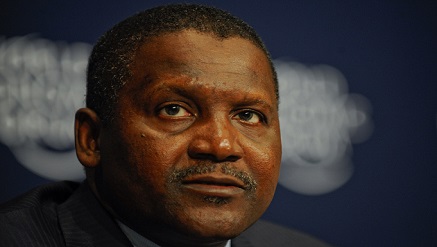
Aliko Dangote, Africa’s richest man, plans to dedicate one-third of his wealth to charity as part of his succession plan, Halima Dangote, his daughter, has revealed.

Aliko Dangote
Halima, a trustee of the Aliko Dangote Foundation, disclosed this in an interview with Bloomberg published on Tuesday, saying the billionaire had secured the support of his family to commit 33 per cent of his estate to philanthropy.
According to the Bloomberg Billionaires Index, Dangote’s net worth is estimated at $35.1 billion, meaning one-third of his current wealth would be worth about $11.7 billion if his fortune remains at that level.
Halima explained that her father views philanthropy as a key part of his legacy and has incorporated it into the family’s long-term succession plans.
She said Dangote had structured his estate to ensure that charitable giving continues across generations, particularly in areas such as healthcare and education.
“He sort of put all the structure in place whereby we focus a lot on health and education. He actually donated 25 per cent to the foundation. If you look at it, it is what we call in Sharia Code in Islam; it means he has donated 33 per cent of his whole inheritance to his foundation,” she said.
Halima added that Dangote believes giving back is central to the success of his businesses and the family’s values.
She said the billionaire asked her, her two sisters, and his mother to sign the agreement allowing 33 per cent of his inheritance to be dedicated to humanitarian causes.
The planned donation builds on Dangote’s longstanding philanthropic activities through the Aliko Dangote Foundation, which was established in 1994.
According to Halima, the foundation received an endowment of $1.25 billion about a decade ago and has since received an additional $700 million in funding.
She said about 70 per cent of the foundation’s spending goes to programmes in Nigeria, while 20 per cent supports projects across Africa, with the remaining funds directed to initiatives in other parts of the world.
The foundation’s interventions focus on healthcare, education, nutrition, and humanitarian support, including partnerships that contributed to the eradication of wild poliovirus in Africa.
Dangote’s planned charitable commitment adds to increasing global attention on billionaire philanthropy.
Although the proposed 33 per cent allocation is below the 50 per cent commitment associated with the Giving Pledge, it would rank among the largest philanthropic commitments announced by an African billionaire.
Earlier this year, Dangote was named among the world’s most influential philanthropists by TIME magazine’s inaugural TIME100 Philanthropy list, recognising the impact of the Aliko Dangote Foundation, which reportedly spends more than ₦50 billion annually on programmes across Africa.
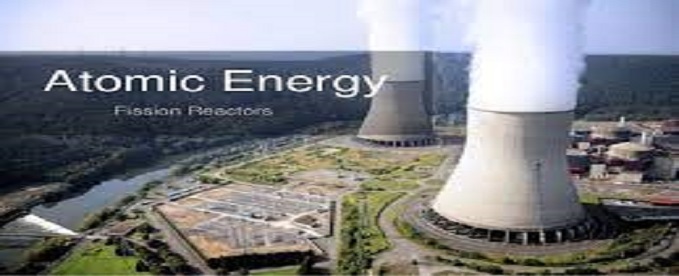
Nigeria Atomic Energy Commission (NAEC), has said that there are plans for Nigeria to begin to generate electricity from nuclear sources.

Mr Anthony Godwin Ekedegwa, chief executive, NAEC stated this when he recently visited Mr Umar Yusuf Girei, acting managing director, National Inland Waterways Authority (NIWA),in Abuja.
He was at NIWA’s office to solicit the support of NIWA in achieving the numerous advantages of using nuclear energy technology in the country.
According to him, the partnership of critical stakeholders in Nigeria will position the country well in developing and maintaining its nuclear power plant.
The NAEC chief said Nigeria intends to begin the generation of electricity from nuclear sources instead of fossil-based power plants and hydro-based power plants, stressing that for Nigeria to develop, there is a need for the country to diversify its energy needs.
In his remarks, Mr Girei assured NAEC of his agency’s readiness to collaborate on the advancement of a nuclear power plant in Nigeria.
He promised the full support of NAEC for the success of a nuclear power plant in the country, saying that as the organisation saddled with the responsibility of regulating and developing Nigeria Inland Waterways, his entity is strategically positioned to play a critical role in the federal government’s quest for sustainable energy through the new technology.

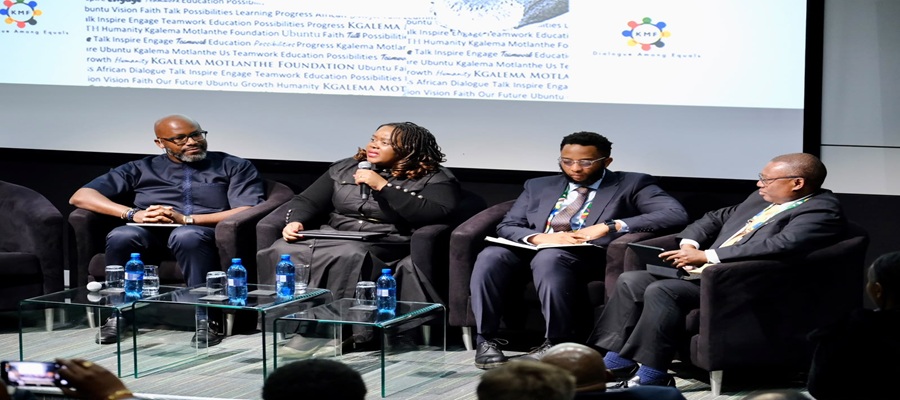
In a powerful call for continental solidarity, Ralph Mupita, Group CEO of MTN, has asserted that the future of the African continent depends on the dismantling of xenophobic barriers.

Speaking at the Kgalema Motlanthe Foundation (KMF) Winter Seminar, Mupita framed migration as a fundamental characteristic of the African identity, urging South Africa and other nations to embrace integration over exclusion.
He emphasised that the survival of African enterprises depends on a borderless approach to trade and talent. “The digital economy we’re fast moving to knows no borders.” Mupita declared, noting that the mindset of exclusion is an outdated relic that hinders the continent’s ability to compete globally.
He argued that for Africa to leverage the African Continental Free Trade Area (AfCFTA), the psychological barriers of xenophobia must be eradicated.
Providing a stark financial justification for this stance, Mupita highlighted MTN’s own operational reality as a blueprint for Pan-African success. “We earn about 80 to 82% of our earnings from outside South Africa,” he revealed, illustrating that the prosperity of South African-born entities is inextricably linked to their success across the rest of the continent. This figure underscores the interdependence of African economies and the danger of isolationist policies.
Mupita’s stance was strong advocating for unity: “The future of Africa will not be determined by the borders that separate us, but by the economic opportunities that connect us. Governments must set predictable policy and regulations.
Businesses will follow and allocate resources and capital. Together, we can build a continent where opportunity is more evenly shared and prosperity is more widely created.”
Analysts observing the seminar noted that Mupita’s remarks come at a critical juncture where economic volatility often fuels nationalist rhetoric. By tying the fight against xenophobia to the balance sheet, MTN is positioning Pan-Africanism beyond the moral imperative to its function as a business necessity. The CEO stressed that “Migration is part of who we are,” suggesting that the movement of people is the primary engine for the movement of capital and innovation.

Fact-Check: Elon Musk’s “Tesla Pi Phone” is Internet Rumor

Dangote Plans to Donate One-Third of Wealth to Charity as Legacy

NDPC Directs DCPMIs to Register with Agency or Face Legal Consequences

Malpass, Ex World Bank Chief Raises Alarm over Nigeria’s Secretive Debt Structures

How and Why Apps Deplete Data – ALTON

NRC, Ponzi Scheme Collapses Resulting Loss of Billions of Naira

EFCC Busts NIS Visa Overstay Racket, Uncovers N700m in an Account

Tokenization, Blockchain Technology will Transform Financial Institutions – IMF

From Scarcity to Scale: What Africa Can Learn from India’s Agricultural Transformation

BON Establishes Six Ad Hoc Committees to Modernize Broadcasting




 News3 days ago
See Verified 20 Countries Nigerian Passport Holders Can Travel Visa-Free

 E-Business3 days ago
Report Says Cybercriminals Deploy Malware to Hijack Crypto Wallets, Monitor Browsers Telegram

 Telecom3 days ago
NCC, REA Partner to Cut Telecom Costs with Renewable Energy

 Telecom3 days ago
Subscribers, Telcos Warn FCCPC over Airtime Lending Enforcement

 E-Business3 days ago
NPC Opens 131 Births, Deaths Registration Centres in Anambra

 General News3 days ago
AfDB, Nigeria Urge African Control of Mineral Resources

 News2 days ago
History as Lagos Becomes First Nigerian State to Launch Greenhouse Gas Registry

 E-Business2 days ago
UNN to Partner Firm on AI, Smart Mobility Innovation Centre