

Telecom
15 African Startups Using AI Selected for Google Accelerator Cohort 9


Google today announced the selection of 15 promising tech startups for its Google for Startups Accelerator: Africa Class 9 program. These innovative startups, hailing from Ghana, Ethiopia, Kenya, Nigeria, Rwanda, Senegal, and South Africa, are leveraging artificial intelligence (AI) to address significant challenges across diverse sectors, including fintech, agritech, healthtech, and professional services.

In an era where startups are at the forefront of solving critical challenges across Africa, these innovators often face significant hurdles to scale their operations, particularly in securing essential support, mentorship, and funding. Programs like the Google for Startups Accelerator: Africa play a crucial role in providing these opportunities, enabling tech founders and innovators to amplify their impact. By bringing together Google’s extensive resources, including cutting-edge AI technologies and a global network of experts, the program aims to equip these startups to not only thrive but also lead in addressing both local and global challenges in this AI era.
The selection follows a highly competitive application process that began in April 2025 , drawing nearly 1,500 applications from across the continent. This cohort underscores Google’s deep commitment to fostering Africa’s vibrant tech ecosystem and supporting startups in their growth journey.
“African startups are at the forefront of solving critical challenges across the continent, and their work with AI is truly transformative,” said Folarin Aiyegbusi, Head of Startup Ecosystem, Africa at Google. “This program reflects our belief that AI can be transformative when shaped by those who understand the context deeply. We are incredibly excited to support these founders who are building for impact and helping to shape an inclusive AI ecosystem across Africa.”
Over the next three months, the selected startups will participate in a hybrid accelerator program (June 23rd to August 22nd, 2025). Participants will receive dedicated technical mentorship from experienced Google engineers and industry experts , up to $350,000 in Google Cloud credits , and strategic support in AI implementation, product leadership, and business growth. They will also gain access to a global network of investors, partners, and collaborators, amplifying their reach and impact.
Since its inception in 2018, the Google for Startups Accelerator Africa program has supported 153 startups from 17 African countries. Collectively, these alumni have raised over $300 million in funding and created more than 3,500 jobs. Google has directly contributed $5 million through a combination of equity-free funding and product credits to support these founders.
The Google for Startups Accelerator: Africa Class 9 cohort includes:
AFRIKABAL (Rwanda): A blockchain and AI-powered platform helping farmers, buyers, and logistics firms trade crops securely and transparently.
Apexloads (Kenya): A logistics SaaS platform helping African freight brokers, forwarders, and transporters move cargo faster with verified partners.
E-doc Online (Nigeria): Simplifies compliance and credit checks by analyzing real-time banking data, enabling faster onboarding and smarter lending decisions.
GoNomad (Nigeria): Enables businesses to start and run global entities, and solopreneurs to professionally invoice and get paid globally like a local.
Midddleman (Nigeria): An intelligent sourcing and payment platform helping African businesses import and pay for goods from China faster, safer, and cheaper.
Myltura (Nigeria): An AI-powered digital health platform enabling remote care, test access, and seamless health data management in Africa.
Pastel (Nigeria): Offers Enterprise AI solutions, inc. AI based fraud detection and anti-money laundering solutions to financial institutions in Africa.
Rapid Human AI (South Africa): An end-to-end AI design-thinking platform that turns ideas into code in days, cutting development time by 80%.
Regulon (Ghana): An AI-powered compliance and onboarding platform designed to simplify regulatory processes for businesses across Africa and the EMEA region.
Scandium (Nigeria): An AI Quality Assurance suite that helps teams ship bug-free software faster with end-to-end test automation and test ops tooling.
Shamba Records (Kenya): An AI-powered platform that empowers 50,000+ African farmers with smart credit, market access, and climate-resilient, data-driven agriculture.
Smartel Agri Tech (Rwanda): Helps smallholder farmers in the Global South get ahead of crop pests and diseases early using AI-powered, solar-driven devices and SMS alerts.
TOLBI (Senegal): Leverages AI and satellite imagery to empower sustainable agriculture across Africa, providing precise crop yield forecasts.
YeneHealth (Ethiopia): An AI-driven digital health web, and mobile app streamlining access to affordable, reliable, quality medications & health care services.
Zerone Analytiqs (Ghana): A transformative two-pronged solution to the data scarcity in Africa, We are revolutionizing how data is sourced, analyzed, and utilized for decisions.
For further information and updates, visit the Google Africa Blog or follow @GoogleAfrica on social media.



Google has launched its Search Live feature globally to over 200 countries, including Nigeria, where AI Mode is available, enabling voice-and-camera conversations in users’ preferred languages.

Powered by the new multilingual Gemini 3.1 Flash Live model, it delivers natural, real-time interactions via the Google app on Android or iOS—tap the Live icon under the Search bar.
Ideal for hands-free help, users can speak queries for audio replies, follow-ups, or web links. Camera integration adds visual context, like troubleshooting a shelving unit, or pairs with Google Lens for real-world chats.
From the app or Lens, Nigerians can now explore, learn, or solve tasks instantly, boosting everyday productivity worldwide.

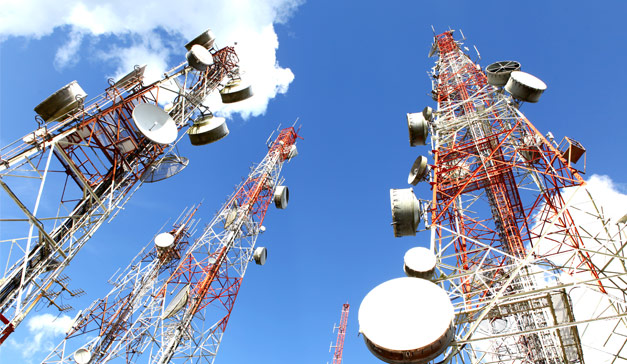
Clean and reliable power for telecom networks in Ethiopia, Liberia, and Sierra Leone will be expanded following a $45 million investment by the International Finance Corporation (IFC) in IPT PowerTech.

The investment targets countries where limited power supply continues to slow digital connectivity and broader economic participation, the institution stated earlier this week.
To enable this expansion, the IFC is providing a $45 million corporate financing package consisting of an A-loan of $27 million and $18 million in blended finance.
The blended portion is sourced from the Canada-IFC Blended Climate Finance Programme and the IDA20 Private Sector Window Blended Finance Facility.
The initiative marks the IFC’s first direct infrastructure engagement in Liberia in a decade and in Sierra Leone in six years.
It will help scale solar- and battery-based power systems that reduce reliance on diesel and support greener, more resilient telecom networks.
By improving the quality and stability of power to telecom towers, the initiative will strengthen mobile coverage and ensure that households, schools, health centres, and small businesses can depend on consistent digital services, said the IFC.
The funding supports the modernisation, operation, and maintenance of 2 235 telecom sites across the three nations. More than 90% of these are located in off-grid or weak-grid locations.
With new solar and battery systems powering these sites, mobile networks will experience fewer outages and improved service quality.
Optimising the energy mix is estimated to reduce power costs for operators by up to 30% in Liberia, 26% in Sierra Leone, and 52% in Ethiopia.
This transition is also expected to cut emissions by more than 10 624 tonnes of carbon dioxide annually. Furthermore, the partnership will promote gender inclusion by expanding opportunities for women in technical, operational, and leadership roles within the sector, says the IFC.
This agreement reflects a shared vision for a greener telecom industry and empowers the company to scale its innovative energy platforms, according to Nabil Haddad, CEO of IPT PowerTech Group.
Reliable and affordable power for telecom networks is a cornerstone of Africa’s digital transformation, said Nathalie Kouassi-Akon, IFC regional director for West Africa and the Gulf of Guinea.
Through this partnership, the institution is supporting a scalable, private sector-led solution that enables mobile operators to reach underserved and fragile communities more sustainably, added Kouassi-Akon.
The project advances the World Bank Group and African Development Bank’s Mission 300 initiative, which aims to provide electricity to 300 million Africans by 2030.

Expedier has unveiled “Expedier for Business,” an online pro-banking platform to simplify global payments, multi-currency transactions, and financial operations for expanding companies.

Kingsley Madu
The tool centralizes payments, invoicing, payroll, and treasury into one secure dashboard, tackling challenges like fragmented systems and poor visibility that hinder international scaling.
Kingsley Madu, Co-Founder and CEO of Expedier, said: “African businesses are increasingly global… Expedier for Business was built to simplify how companies manage money across borders while maintaining visibility, control, and compliance.”
Key features include customizable dashboards for payments, invoices, and workflows; support for USD, CAD, GBP, EUR, and more; virtual cards; automated payroll/invoicing; currency swaps; and real-time tracking.
Security measures cover two-factor authentication, KYC/KYB verification, and team access controls.
As cross-border trade and remote work boom in Africa, the platform aids firms dealing with international suppliers, teams, and customers. It is now available for organizations scaling globally.

NITDA Takes Over National Digital Architecture System

NDIC Insures 99 Percent of Bank Customers

FG Shifting Focus to “Meaningful Connectivity” to Drive Inclusion – Minister

CBN Bars Chronic Loan Defaulters from Accessing Loans

Google Rolls Out Search Live AI to 200+ Countries, Including Nigeria

Kaspersky Discovers New Phishing Campaign Exploiting Google Tasks Notifications to Steal Corporate Credentials

Spotify’s Loud & Clear Report Reveals Over ₦60Bn Revenue for Nigerian Artists in 2025

MTN Nigeria Posts Record N1.70 Trillion Pre‑Tax Profit, Declares N20 Dividend for 2025

China Threatens to Shut Nigeria’s Satellite Over $11.44m Unpaid Debt

Madonna University Taps Tech Guru Adote for Strategic Board Role




 Telecom2 days ago
US Jury Finds Meta, Google Liable in Landmark Social Media Addiction Case

 News2 days ago
EU Pumps €290m into Nigeria’s Digital, Health, Agri Sectors

 News2 days ago
Firm Shares Tips for Updating Your Digital Habits for an AI-driven World

 E-Business2 days ago
5 Wealth-Building Strategies for Nigerian Women-led Businesses

 Telecom2 days ago
Mobile Money Transactions Accounted for $2 trillion in 2025

 E-Business2 days ago
Nigeria, Finland Sign Cybersecurity Pact

 E-Financial2 days ago
MoneyMaster Enhances App, Rewards Users with Data and Airtime Bonuses

 E-Financial1 day ago
CBN Says Bank Customers Won’t Lose Deposits because of Recapitalisation