

E-Financial
$214Bn Missing, Institutions Silent: Is Accountability Dead in Nigeria?

By Blaise Udunze
Between 2010 and 2026, a staggering $214 billion, approximately N300 trillion in public funds, has been reported as missing, unaccounted for, diverted, unrecovered, irregularly spent, or trapped in non-transparent fiscal structures across Nigeria’s public institutions.

That figure is not speculative but a conservative estimate of unaccounted funds. It is drawn from audit reports, legislative probes, civil society litigation, executive directives, and investigative findings spanning more than a decade. If it is to go by the accurate figure, the true national loss is likely higher but difficult to quantify precisely due to data gaps, overlapping figures, and incomplete audits.
The challenge is that in many of the most prominent cases, prosecutions have stalled, hearings have dragged without resolution, investigations have gone cold, and no defining jail terms have etched accountability into Nigeria’s institutional memory. The irony is that the number is historic, the silence is louder. And the economic damage is cumulative.
The pattern stretches from the oil sector to social investment programmes, from the Nigeria Central Bank of Nigeria (CBN) interventions to ministry-level expenditures. In 2014, between $10.8 billion and $20 billion in unremitted oil revenues linked to the Nigerian National Petroleum Corporation triggered national outrage. Under the then CBN governor, Lamido Sanusi, who warned that persistent oil revenue leakages were making exchange rate stability “extremely difficult.” He cautioned that without full remittances, the alternative would be currency devaluation and financial instability. This concern spans the 2010 to 2013 oil revenue period. That warning proved prophetic.
This is because, years later, the lack of transparency in the oil industry did not disappear, but rather it festered like cancer. It further led to the elongated audit queries, which have continued to trail the Nigerian National Petroleum Company Limited, including unremitted revenues, questioned deductions, and management fee structures under the Petroleum Industry Act. With an extraordinary move aimed at blocking revenue leakages at source, President Bola Ahmed Tinubu has recently issued an Executive Order suspending certain deductions and directing direct remittance of taxes, royalties, and profit oil into the Federation Account, which involves the reassessment of NNPC’s 30 per cent management fee and 30 per cent frontier exploration deduction under the Petroleum Industry Act.
Such presidential intervention underscores the scale of concern, which means that Nigeria cannot afford a structural lack of transparency in its most strategic revenue sector. But oil is only one chapter.
The Central Bank of Nigeria has faced some of the most far-reaching audit alarms in recent years. In suit number FHC/ABJ/CS/250/2026, the Socio-Economic Rights and Accountability Project (SERAP) is asking the Federal High Court to compel the CBN to account for N3 trillion in allegedly missing or diverted public funds. The Auditor-General’s 2025 report cited failures to remit over N1.44 trillion in operating surplus to the Consolidated Revenue Fund, over N629 billion paid to “unknown beneficiaries” under the Anchor Borrowers’ Programme, and more than N784 billion in overdue, unrecovered intervention loans.
There were also N125 billion in questioned intervention expenditures, irregular contract variations exceeding N9 billion, and procurement gaps running into hundreds of billions. The Auditor-General repeatedly recommended recovery and remittance. No date has been fixed for the hearing. Meanwhile, Nigeria continues to borrow.
Elsewhere, the House of Representatives has launched a probe into over N30 billion recovered during investigations into the National Social Investment Programme Agency (NSIPA). The funds, reportedly frozen during investigation, have not been remitted back into the Treasury Single Account, stalling poverty-alleviation schemes like TraderMoni and FarmerMoni. Millions of vulnerable Nigerians remain exposed while lawmakers search for money already “recovered.” The irony is staggering as funds are found, but programmes remain frozen.
A top discovery recently that put the nation on red alert was made by the Senate committee, which claimed to have found N210 trillion in financial irregularities in NNPC accounts between 2017 and 2023, including unaccounted receivables and accrued expenses. A critical concern is that, as of early 2026, this has sparked commentary but no clear prosecutions.
Only recently, in the power sector, SERAP has urged the President to probe alleged missing or unaccounted N128 billion at the Federal Ministry of Power and the Nigerian Bulk Electricity Trading Plc. Of concern is that despite the enormous funds channeled in this sector, Nigeria’s chronic electricity instability persists, even as billions meant to stabilise the grid face audit scrutiny.
Across MDAs, audit reports between 2017 and 2022 flagged trillions in unsupported expenditures, unremitted taxes, unauthorized payments, and statutory liabilities never recovered. These sums are dizzying and are also alarming; N300 billion here, N149 billion there, N3.403 trillion across agencies, N30 trillion-plus Treasury discrepancies raised at the Senate level.
Individually, they shock. Collectively, they define a structural pattern. And patterns shape economies.
Nigeria operates with structural fiscal deficits and also lives with them routinely and comfortably. Expenditure persistently exceeds revenue. When public funds disappear, fail to be remitted, or are trapped outside constitutional channels, the deficit widens. The government must borrow to fill gaps created not only by low revenue, but by revenue leakage.
Debt servicing now consumes a disproportionate share of federal revenue. Borrowing meant for capital projects increasingly finances recurrent obligations. The country shifts from borrowing to build to borrowing to survive. Every missing naira compounds tomorrow’s liability.
The Treasury Single Account (TSA) was designed to plug such leakages. It consolidated government revenues under Section 80 of the Constitution into a unified framework. International financial institutions commended it as a landmark reform. Yet even today, the Minister of Finance, Wale Edun, has admitted that substantial government funds remain outside the TSA and outside the CBN’s consolidated visibility. Until August 1, 2024, he revealed, the federal government could not fully see its own balance sheet at the apex bank. That admission should alarm any serious economy.
Fiscal lack of transparency constrains planning. It undermines monetary coordination. It weakens debt sustainability projections. It distorts policy responses. And when systems are in flux, money vanishes more easily.
Changing or weakening the TSA in such an environment would be catastrophic. Transitions create windows of vulnerability. Old accounts close. New accounts open. Reconciliation’s lag. Ghost contractors reappear. Double payments slip through.
Albeit, the government must learn to tread with caution as Nigeria’s institutional bandwidth is already strained by simultaneous tax reforms, exchange-rate adjustments, subsidy removal, and fiscal restructuring. One truth that cannot be argued is that layering additional structural upheaval onto fragile systems risks revenue loss that the country cannot afford. Investors are watching.
Credit markets evaluate not just numbers but institutional consistency. A nation that abandons or weakens its most credible fiscal reform sends a destabilising signal. Stability lowers borrowing costs. Institutional drift raises them. But beyond markets lies the human cost.
N300 trillion represents roads not built, power plants not completed, irrigation systems not funded, schools not modernised, and hospitals not equipped. It represents jobs not created and industries not catalysed. It represents stalled productivity and deferred growth.
When intervention loans remain unrecovered, agricultural output suffers. When power sector funds are unaccounted for, electricity remains unstable. When social investment funds are frozen, poverty deepens.
Inflation then compounds the pain. Revenue gaps push borrowing. Borrowing pressures interest rates and by extension, liquidity misalignment fuels price instability. Citizens pay through higher food costs, transport fares, and rent. The poor pay first. The middle class erodes quietly.
Perhaps most corrosive is the trust deficit. When audit queries fade without visible accountability, tax morale weakens. Compliance declines. Cynicism hardens. A nation cannot modernise where trust in fiscal integrity is fragile.
Section 15(5) of the Constitution requires the abolition of corrupt practices. Financial Regulations mandate a surcharge and referral to anti-corruption agencies where public officers fail to account for funds. The Fiscal Responsibility Act empowers citizens to enforce compliance to ensure that government officials follow fiscal rules. But enforcement defines seriousness.
Nigeria’s problem is not a lack of audit findings. It is the distance between findings and finality.
Nations do not collapse overnight due to a lack of funds. They drift. Infrastructure decays incrementally. Debt rises gradually. Growth slows subtly. Confidence erodes quietly. Then one day, stagnation feels permanent. $214 billion (N300 trillion), sixteen years of recurring audit alarms. Few conclusive accountability outcomes are proportionate to the scale. Truly, the consequences have been less strong. For the same reason, the country witnessed President Tinubu nominating ex-NIA boss Ayodele Oke as ambassador despite a $43 million loot in an Ikoyi apartment.
See the research breakdown of some of the audit figures that reveal staggering sums as enumerated above:
– $10.8 billion and separately $20 billion in unaccounted oil revenues at the NNPC in 2014
– $1.1 billion controversial Malabu Oil and Gas oil deal in 2015
– $2.2 billion arms procurement irregularities in 2015
– N3.4 billion from IMF COVID-19 financing flagged in a 2020 audit.
– N149.36 billion, N37.2 billion, and multiple irregular MDA expenditures in 2020 alone.
– N300 billion cited in public audit concerns in 2017.
– N210 trillion in financial irregularities uncovered, N103 trillion in ‘accrued expenses’, and another N107 trillion in unaccounted ‘receivables’ (2017 -2023).
– N57 billion Ministry of Humanitarian Affairs – (2021)
– N3 trillion and N1.44 trillion flagged in 2022 audit issues involving the Central Bank of Nigeria.
– Nearly N630 billion under the Anchor Borrowers Programme is reportedly unrecovered.
– N784 billion in overdue intervention loans flagged.
– Over N3.403 trillion unaccounted for across federal MDAs between 2019 and 2021.
– Roughly 30 trillion+ in Treasury Single Account and Consolidated Revenue Fund discrepancies raised at the Senate level.
– N500 billion in unremitted oil revenues between 2019 and 2024.
– N80 billion tied to alleged fictitious contracts in the Accountant-General’s office.
– N69.9 billion in uncollected statutory tax liabilities.
– Billions more in unauthorized or undocumented expenditures across ministries.
The institutions differ. The years differ. The audit language differs. The pattern does not.
Nigeria’s economic future will not be determined solely by how much oil it produces, how many reforms it announces, or how many executive orders it signs. It will be determined by whether every naira earned enters the Federation Account transparently, whether every intervention loan is tracked and recovered, whether every surplus is remitted constitutionally, and whether every diversion carries consequences. Revenue generation matters. Revenue protection is destiny. Because when government funds go missing, nations do not stand still. They move backwards.
Blaise, a journalist and PR professional, writes from Lagos and can be reached via: [email protected]


Federal Capital Territory Internal Revenue Service (FCT-IRS) has launched Taxporta, a new digital tax management platform to simplify tax administration and enhance compliance.

Mr Michael Ango, executive chairman FCT- IRS, at a stakeholders’ engagement with MDAs at the National Assembly Library Trust Fund Complex, Abuja, on the implementation of Nigeria’s 2025 tax reforms to ensure voluntary compliance, reiterated the commitment of the Service to make filing of taxes easier for all taxpayers, Ministries, Department and Agencies (MDAs).
Ango described the new portal as an upgrade of the agency’s existing digital infrastructure to provide taxpayers with faster, safer and more efficient services.
He said the initiative is an end-to-end self-service platform through which taxpayers can register, file returns, calculate taxes, and generate receipts without third-party assistance.
He added that Taxporta is also designed to enable taxpayers complete virtually all tax-related transactions without visiting FCT-IRS offices.
“All the allowances provided under the law have been imputed into the system. Essentially, you are only going to have to put in your income, all of the rest of the work, things like tax clearance, payments of taxes, and all will be done on the portal,” Ango said.
He expressed confidence that the new platform would strengthen revenue collection and help the Service exceed its annual revenue targets, which is to generate the maximum tax.
On enforcement, he assured that the Service would continue to prioritize voluntary compliance over sanctions.
He further explained that collaboration with MDAs for revenue generation is key for the FCT-IRS, which occupies a unique position as both a Federal Government agency and an agency of the Federal Capital Territory Administration.
He said the stakeholder engagement was organized to ensure a seamless transition from the previous platform to the upgraded system while strengthening partnerships with government institutions, adding improved tax compliance would support the ongoing transformation of Abuja through increased funding for infrastructure and public services.
Ango stated that the FCT, as an institution, was funded, apart from the IGR, by one percent of the allocation to the federal government, with Value Added Tax and service accounting for the bulk of its revenue.
In his remarks, Executive Secretary of the National Assembly Library Trust Fund, Hon. Henry Nwauna, described the engagement as a strategic initiative aimed at strengthening collaboration between government institutions and tax authorities.

Galaxy Backbone (GBB) has engaged banks, fintech firms and other technology stakeholders in fresh discussions on strengthening digital trust, regulatory compliance and secure digital infrastructure in Nigeria’s financial sector.

The engagement took place during the organisation’s second-quarter webinar, which brought together Chief Information Officers (CIOs) and industry leaders to examine strategies for building resilient digital infrastructure as financial services become increasingly technology-driven.
The webinar, themed “Building Digital Trust in Nigeria’s Financial Sector: Navigating Regulatory Compliance and Infrastructure Performance,” comes amid the Central Bank of Nigeria’s (CBN) directive requiring banks, fintech companies, mobile money operators and other payment service providers to store payment transaction data generated within the country on local servers.
The CBN had said the policy is aimed at strengthening regulatory oversight, improving transparency, reducing concentration risks and ensuring that critical payment data remains within Nigeria’s jurisdiction.
Opening the webinar, GBB’s Executive Director, Finance, Ibrahim Sani, said the rapid transformation of the country’s financial services industry had made trusted digital infrastructure indispensable to the delivery of secure, reliable and future-ready financial services.
He noted that Galaxy Backbone already provides digital infrastructure supporting both public and private sector organisations, including several financial institutions that rely on its secure connectivity, cloud computing and data centre services.
According to him, “Galaxy Backbone continues to provide the digital backbone that supports both public and private sector institutions. We remain well positioned to support the industry’s compliance journey by delivering resilient infrastructure that meets evolving regulatory and business requirements.”
Also speaking, the Executive Director, Digital Exploration and Technical Services, Olumbe Akinkugbe, stressed that compliance with CBN directives and other regulatory frameworks was essential to strengthening transparency, accountability, consumer confidence and the security of financial data in an increasingly digital economy.
He maintained that regulatory compliance had become a key pillar in safeguarding Nigeria’s financial ecosystem as digital transactions continue to expand.
The webinar also featured a presentation by GBB’s Head of Automation and Integration, Thomas Oghenebhumhe, who showcased the organisation’s sovereign cloud platform and highlighted the importance of secure cloud adoption across the financial services industry.
He explained that resilient cloud infrastructure enables financial institutions to innovate more rapidly, improve operational efficiency, safeguard sensitive information and comply with evolving regulatory standards.
His presentation was followed by an interactive session during which participants sought practical insights on cloud migration, data sovereignty and regulatory compliance.
Head of Data Centre Operations, Samuel Olusola Oyeleke, later highlighted Galaxy Backbone’s globally certified Tier III and Tier IV data centre infrastructure, describing it as resilient enough to guarantee uninterrupted digital services, disaster recovery and business continuity for mission-critical financial operations.
Closing the webinar, Executive Director, Customer Centricity and Marketing, Olusegun Olulade, said building digital trust required sustained collaboration among regulators, technology providers and financial institutions.
“As Nigeria’s financial ecosystem becomes increasingly digital, organisations must invest in infrastructure that not only meets regulatory requirements but also guarantees resilience, security, business continuity and customer confidence,” he said.
Olulade reaffirmed Galaxy Backbone’s commitment to supporting the financial services industry with secure, resilient and globally aligned digital infrastructure that enables institutions to innovate with confidence while maintaining compliance with changing regulatory standards.
The organisation said its Uptime-certified data centres, Payment Card Industry Data Security Standard (PCI DSS) certification, sovereign cloud platform and nationwide fibre-optic network provide trusted platforms for secure data hosting, payment security, regulatory compliance, business continuity and disaster recovery.
According to GBB, the infrastructure also supports Nigeria’s growing data sovereignty agenda by ensuring that critical financial data is securely hosted, readily accessible and remains within the country’s jurisdiction in line with regulatory expectations.
With more than two decades of delivering shared ICT infrastructure and digital services, Galaxy Backbone said it has continued to support digital transformation across both the public and private sectors through secure connectivity, cloud services, cybersecurity, managed ICT services and enterprise-grade data centre solutions.
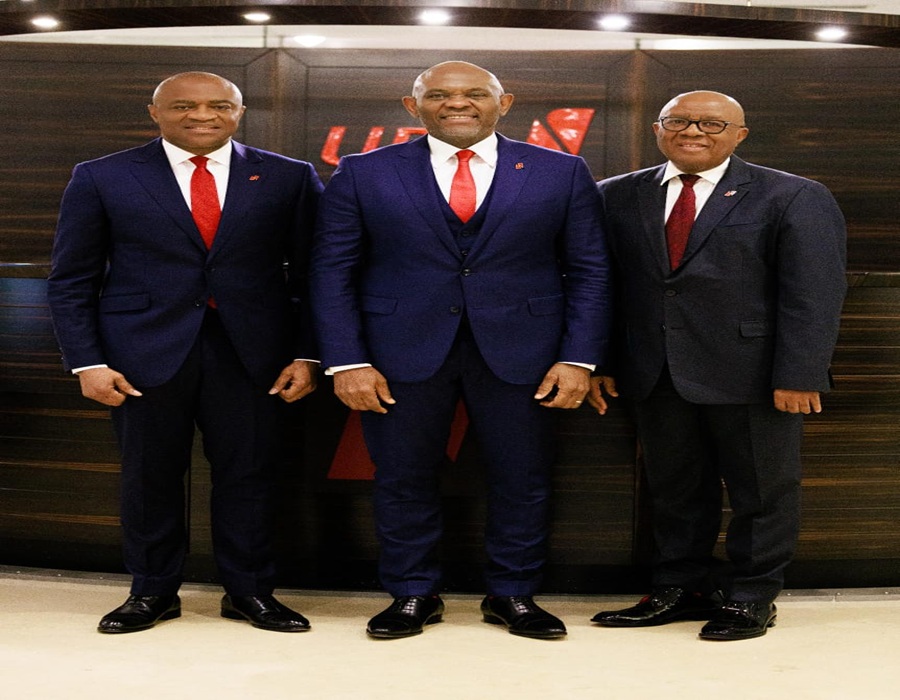
United Bank for Africa (UBA) Plc has announced that its Group Chairman, Mr Tony O. Elumelu, will retire from the Board of Directors on Aug. 21, 2026, upon completing the 12-year tenure limit for non-executive directors prescribed by the Central Bank of Nigeria (CBN).

The bank disclosed this in a statement issued following a meeting of its Board of Directors held on July 6.
According to the statement, the board accepted Elumelu’s retirement and elected Mr Emmanuel N. Nnorom, a Non-Executive Director of the bank, as his successor with effect from Aug. 21, 2026.
The board expressed appreciation to Elumelu for what it described as his visionary leadership and immense contributions to the growth and institutional development of the UBA Group.
It noted that under his leadership, UBA expanded into a leading pan-African financial institution with operations in 20 African countries and four global financial centres, serving more than 50 million customers.
The board described Elumelu’s tenure as a defining period in the bank’s history.
Nnorom, who will assume office as chairman upon Elumelu’s retirement, is a chartered accountant with more than 40 years of experience in banking, finance and auditing.
The statement said he brings extensive leadership experience and deep institutional knowledge of the bank to his new role.
Speaking on his retirement, Elumelu described serving UBA as one of the greatest privileges of his professional career.
“Serving United Bank for Africa has been one of the great privileges of my career.
“UBA has established a unique competitive position across Africa and globally, and I leave the Board with great confidence in UBA’s future.
“Emmanuel Nnorom is a leader of integrity, experience and sound judgement, and I am confident that the bank will continue to thrive under his leadership,” he said.
Responding to his appointment, Nnorom expressed gratitude to the board for the confidence reposed in him.
“I am honoured by the trust the Board has placed in me and deeply conscious of the legacy I inherit.
“I look forward to working with my colleagues on the Board, Management and our staff across all our markets to sustain UBA’s momentum and continue delivering long-term value to our shareholders, customers and stakeholders,” he said.
UBA operates in 20 African countries as well as the United Kingdom, the United States, France and the United Arab Emirates.
The bank provides retail, commercial and institutional banking services and serves more than 50 million customers globally, with a workforce of about 25,000 employees across its operations.

Court Declares ARCON’s N60Bn Fine against Facebook Nigeria Illegal

NIN Enrollment Hits over 136m as New ID Law Takes Effect

NRC, Ponzi Scheme Collapses Resulting Loss of Billions of Naira

Plateau PCC Collects Nigerians’ Data without Privacy Policy – FIJ

FG Suspends New Internet Regulations to Prevent Overlapping Rules

Mobile Internet Gender Gap Widest in Africa – GSMA

NASENI Moves to Digitize CCB’s 5m Assets Declaration and Operations

Nigeria Launches FreeTV Nationwide

CANAL+ Partners Samsung to Pre-Load DStv Stream on New Samsung TVs In Nigeria, Other African Countries

UK, Nigeria Launch £15m Growth Programme to Accelerate Economic Transformation




 E-Financial2 days ago
Tokenization, Blockchain Technology will Transform Financial Institutions – IMF

 General News2 days ago
NIS Deploys Advanced Surveillance Masts, other Critical Infrastructure to Boost Border Security

 Broadcasting2 days ago
Obi, NDC Presidential Candidate Faces N50Bn Defamation Claim over Alleged Podcast Remark

 E-Business2 days ago
Weebly Websites to Shut Down for Nigeria, 66 Other Countries from September

 General News1 day ago
IHS Nigeria, FCT-HSES Concludes Clean Cooking Energy Campaign “Project Breathe Clean Air” in Abuja

 Telecom2 days ago
No Plans for Fresh Tariff Hike – MTN

 E-Financial2 days ago
FG Denies N8 Trillion ‘Shadow Budget’, Says IMF Quoted out of Context

 News2 days ago
World Bank Sounds Alarm: Low Revenue, Not Debt, Is Nigeria’s Biggest Fiscal Threat