

News
$29.9Bn Loan: DMO Backs Presidency, Stresses Need for Infrastructure

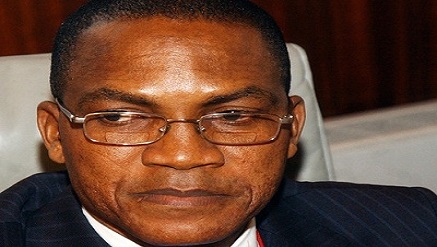
Dr. Abraham Nwankwo, director general of the Debt Management Office (DMO) on Tuesday provided clarifications on the proposed $29.9bn foreign loans request submitted to the National Assembly by President Muhammadu Buhari recently.
Although the Senate voted against the proposed loan at its sitting on Tuesday, the DG, while speaking on a Channels TV live programme, explained that the loans, which cover a period of three years, would help in addressing the biting infrastructure deficit in the country.
He stated, “When you are in this kind of economic situation, you have to decide where you want to start addressing the problem. You then come to the conclusion that the most critical point to start is to deal with infrastructure problem. If you deal with infrastructure problem, the cost of power will be lower, the cost of transportation will be lower, and the cost of most other services will be lower.”
According to him, one of the features of the proposed loan is the low concessionary nature of the interest rate, which starts 1.5%. This arrangement differs from previous loan arrangements (under previous administrations) with the Paris Club of creditors, which came with floating interest rates as high as 18 per cent.
He also explained that the facility will help revive infrastructure like railways which will smoothen movement of heavy goods across the country.
He believed tackling infrastructure deficit would force down costs of goods and services on the long run, explaining that the development will have a significant impact on the price level in the economy. “That impacts the economy by bringing down the general price level, (they call it the consumer price index, which is a classical measure of the price level and the rate of inflation.) When you do this, the Central Bank of Nigeria will set the monetary policy rate low, because all over the world, the central bank knows it has to put the monetary policy rate high enough to catch up with inflation rate, otherwise we will be talking of negative real rate of interest which destroys the economy. So the way to go about it is that you have adequate infrastructure, power road, transportation ICT. All these make the cost of production in the economy much lower and when this happens, the cost of goods and services will be lower and then inflation will start coming down. And if inflation comes down, the monetary policy rate will be lower and this will translate to a lower lending rate. That is the sequence,” Nwankwo explained.
The DG stated that the $30bn is actually for a three year-period and that it will run from 2016-2018 to be repaid in 20-30 years time. He said, with this arrangement, it will not be difficult for the country to repay.
According to him the DMO had advised the Federal Government that Nigeria can as from 2017 acquire loans to the tune of $22bn and that $30bn(for three years) is lower than what it advised the Federal Government to get.
Speaking on how the $30bn will be spent, Nwankwo stated that the sum of $10bn will be spent per annum for three years and will be targeted at building infrastructure in all states of the federation and the main focus will be on power generation, rail and road renovation and construction.



Global technology markets are entering a new phase of strain as surging memory chip prices intensify the ongoing semiconductor shortage. For Nigeria, the ripple effects could translate into a 15 – 20 per cent increase in phone price levels if supply pressures persist into the next quarter.

While attention has largely focused on advanced AI processors, the sharpest escalation is occurring in memory chips, specifically DRAM (Dynamic Random Access Memory) and NAND (Flash Memory), which are essential to smartphones, PCs, and vehicles.
According to Bloomberg data, spot prices for DRAM have surged more than 600 percent in recent months. NAND prices have also climbed as artificial intelligence infrastructure expands global storage demand.
This shift reflects a structural realignment rather than a short-term disruption.
Massive AI infrastructure investments led by hyperscalers such as Amazon have redirected fabrication capacity toward high-bandwidth memory (HBM), a critical component for AI accelerators. This shift has tightened supply for conventional memory used in consumer devices.
Market analysts now describe the situation as a memory “supercycle,” breaking the industry’s traditional boom-and-bust pattern. Historically, memory cycles lasted three to four years. According to Jian Shi Cortesi of GAM Investment Management, the current cycle has already exceeded previous ones “both in length and magnitude,” with little evidence of demand momentum softening.
Financial markets reflect the divide. A Bloomberg gauge of global consumer electronics makers has fallen roughly 10 per cent since late September, while a basket of memory manufacturers has surged about 160 per cent over the same period. Shares of SK Hynix, a key high-bandwidth memory supplier to Nvidia, have climbed more than 150 per cent.
By contrast, downstream manufacturers reliant on affordable memory supplies are under pressure. Nintendo has warned of margin compression linked to shortages. Qualcomm shares declined after signaling memory constraints that could limit phone production. PC makers such as Lenovo and Dell have also retreated from recent peaks amid concerns that rising chip costs could dampen demand.
The divergence underscores a widening gap between component producers and device assemblers.
Memory is central to modern smartphone performance. Higher DRAM and NAND capacities power AI-enabled features, high-resolution imaging, and multitasking capabilities. Rising memory costs, therefore, feed directly into the bill of materials.
Even in a moderate demand environment, a constrained memory supply can limit production volumes. Qualcomm’s recent indication that memory shortages may restrict handset output highlights the risk of scarcity extending beyond price increases into availability challenges.
Compounding the issue, a foundry such as TSMC is prioritising higher-margin AI-related contracts at advanced nodes. Combined with the reallocation of capacity toward high-bandwidth memory, this limits flexibility in supplying traditional mobile processors and storage components.
For Nigeria, the likely outcome is not immediate widespread stockouts, but gradual upward revisions in retail pricing.
Nigeria’s electronics market remains heavily import-dependent, with minimal semiconductor manufacturing capacity. Retailers are therefore exposed to global cost shifts and supply volatility.
Distributors in major commercial hubs such as Lagos’ Computer Village are closely monitoring global trends. Some are securing inventory ahead of anticipated adjustments, while others are maintaining leaner procurement cycles to manage uncertainty.
Duration risk remains a key concern. Fidelity International’s Vivian Pai recently observed that while markets may be pricing in normalization within one to two quarters, industry tightness could persist through the rest of the year. If that proves accurate, manufacturers will have limited room to absorb higher component costs without passing them through to consumers.
Mid-tier smartphones, especially those balancing affordability with competitive performance, are likely to face the greatest pressure. Manufacturers may respond by offering lower base storage variants, delaying feature upgrades, or raising prices incrementally across product lines.
Parallel imports could increase if global scarcity intensifies, potentially raising concerns about warranty coverage and after-sales support.
Globally, firms are attempting to mitigate exposure by locking in long-term supply contracts, raising product prices, or redesigning devices to use less memory. However, semiconductor fabrication is capital-intensive and slow to scale. New fabrication plants require years to build, and expanding high-bandwidth memory output involves complex processes that cannot be rapidly accelerated.
For Nigeria, the episode underscores the importance of strengthening digital resilience. While domestic chip fabrication remains unlikely in the near term, expanding local device assembly, promoting repair ecosystems, and supporting component recycling could help cushion future supply shocks.
If projections hold, Nigerian buyers may begin seeing incremental price adjustments within weeks. Mid-range Android devices are likely to record the most noticeable changes, while premium models, already positioned at higher price points, may see more measured increases.
As it stands, AI’s explosive growth is reshaping semiconductor allocation patterns, and memory, once viewed as a product with prices that rise and fall in cycles, is behaving like a sustained constraint.
The widening gap between stock market winners and losers reflects the magnitude of this transition. As AI infrastructure spending accelerates globally, consumer electronics markets, including Nigeria’s, must adjust to a new cost environment.
Whether the squeeze proves temporary or evolves into a prolonged recalibration will depend on how quickly semiconductor capacity expands. For now, the trajectory suggests continued upward pressure on global electronics pricing, and Nigeria’s phone price expectations may have to adjust accordingly.


African law enforcement agencies arrested 651 suspects and recovered over $4.3 million in a joint operation targeting investment fraud, mobile money scams, and fake loan applications.

As INTERPOL revealed on Wednesday, Operation Red Card 2.0 identified 1,247 victims between December 8 and January 30 while targeting cybercrime operations linked to over $45 million in financial losses.
Authorities across 16 countries also seized 2,341 devices and took down 1,442 malicious websites, domains, and servers during this joint action coordinated by the African Joint Operation against Cybercrime (AFJOC).
In Nigeria, police officers dismantled an investment fraud ring that was recruiting young people to run phishing, identity theft, and fake investment schemes, taking down over 1,000 fraudulent social media accounts in the process.
They also arrested six members of a Nigerian cybercrime gang that used stolen employee credentials to breach a major telecom provider.
Kenyan investigators also apprehended 27 suspects while investigating fraud networks that used social media and messaging platforms to lure victims into fake investment schemes.
In Côte d’Ivoire, 58 suspects were arrested as part of a crackdown on predatory mobile loan apps that targeted victims with hidden fees and abusive debt-collection practices.
“These organized cybercriminal syndicates inflict devastating financial and psychological harm on individuals, businesses and entire communities with their false promises,” said Neal Jetton, the head of INTERPOL’s Cybercrime Directorate.
“Operation Red Card highlights the importance of collaboration when combatting transnational cybercrime. I encourage all victims of cybercrime to reach out to law enforcement for help.”
One year ago, African law enforcement arrested another 306 suspects in the first stage of this INTERPOL-led operation targeting cross-border cybercriminal networks.
This is the latest INTERPOL operation targeting African cybercrime, with thousands of arrests and multiple multimillion-dollar operations disrupted or dismantled in recent years, following Operation Serengeti and Operation Africa Cyber Surge.

Lagos State Government has commenced the implementation of a 5% Withholding Tax (WHT) deduction on gaming winnings, in line with applicable Nigerian tax laws and regulatory directives governing the gaming industry.

The deduction applies to net winnings from licensed gaming platforms operating within Lagos State and is deducted at the point of payout. All licensed gaming operators in Lagos have been directed to comply immediately with the framework.
Under the new arrangement, 5% of qualifying gaming winnings will be automatically deducted before payment is made to players and remitted to the Lagos State Internal Revenue Service (LIRS) as the statutory tax authority.
According to the State Government, the measure forms part of Lagos’ broader drive to strengthen tax compliance, transparency, and accountability in the rapidly expanding gaming sector.
Players are required to provide their National Identification Number (NIN) in compliance with KYC (know your customer) rules, while all deductions and remittances will be handled by licensed operators in line with regulatory requirements.
Players will receive their winnings net of the statutory deduction, with proper records maintained for transparency. The WHT deducted also serves as a tax credit to the player.
All licensed gaming operators in Lagos State have now been formally directed to commence the deductions with immediate effect.

IXPN Positions as the Regional Internet Exchange Hub for West Africa

Pheelz Shares His Journey on Glo-Sponsored African Voices

AI-Driven Memory Chip Fuels Global Phone Price Surge

NITDA DG Reaffirms FG Commitment to Responsible and Inclusive AI

Menxtt NG Emerges as Nigeria’s Virtual IT Hub for Premium Devices, Solutions
Nigeria’s 9 Top FinTech Firms Valued at $10.6Bn in January 2026

Firm Detected a Fivefold Surge in QR Code Phishing Attacks in the Second Half of 2025

Kaspersky Launches OT Calculator to Align Cybersecurity Investments with Business Goals

CBN Upgrades Licences of Opay, Moniepoint, Kuda, Palmpay, Paga to National Status

NITDA, NBC Explore Strategic Collaboration on Digital Transformation, Media Regulation




 E-Financial3 days ago
Ecobank Nigeria Fully Repays $300m Eurobond Notes

 E-Financial2 days ago
ACAMB Educates Content Creator to Curb Misinformation on Bank Recapitalisation

 E-Financial3 days ago
Zenith Bank Warns Public Over Fake Jim Ovia Investment Videos

 Telecom2 days ago
Banks, Telcos Settle Four-Year Dispute over N300Bn USSD Debt

 General News2 days ago
PalmPay Unveils First Batch of Winners in #LoveWithPalmPay Campaign

 E-Business3 days ago
Chams Carves Out Subsidiary to Support Africa’s Digital Transformation

 E-Financial3 days ago
BoI Secures CBN’s Approval for Non-interest Banking Operation

 E-Financial2 days ago
FirstCap MD says Payment Security Remains Biggest Barrier to Bankable Gas and Power Projects