

News
BHM Group, ID Africa Bags Best PR Agency for Use of New Media


Nigerian media and public relations consultancy, BHM and its sister company, the digital communications and marketing agency, Info Digital Africa (ID Africa) have been named Best PR Agency Using New Media by the Nigerian Institute of Public Relations (NIPR) Lagos Chapter.
The award presentation took place at the annual Lagos PR Industry Gala and Awards (LaPRIGA) night, which held at Radisson Blu, Victoria Island, Lagos on Thursday December 20, 2018.
According to the Chairman, NIPR Lagos State Chapter, Olusegun McMedal, ‘The award is the highest recognition of excellence and proficiency in using new media to engage minds, build relationships and mould perception on a variety of communication projects that impacts the future.’
LaPRIGA is a high profile red bow-tie event, considered as the premier award that recognises excellence in public relations practice in Nigeria by individuals, corporate and public organisations to encourage professionalism and more investment in public relations practice.
Known for innovative public relations and creative communication campaigns, BHM Group has since inception consistently raised the bar, challenging the status quo in a bid to do things better and differently.
Receiving the award on behalf of BHM Group, Executive Director and Chief Operating Officer at ID Africa,, Femi Falodun said, ‘We view this award as a recognition of our team’s efforts at creatively deploying technology for marketing and communications, and we are delighted that the work we do for our clients is also being recognised by our colleagues in the Lagos Chapter of the Nigerian Institute of Public Relations (NIPR).’
In 2015, ID Africa launched the Nigerian Twitter Map, putting together some of the most popular topics that arise everyday on Nigerian Twitter and identifying some of the most prominent voices and notable influencers regularly found creating original content on Twitter.
Also, in November 2017, ID Africa in partnership with BHM and Plaqad trained over 70 journalists and bloggers at Social4Media Masterclass, a free digital training event facilitated by content and marketing experts such as Ali Baba, M.I Abaga, Frank Donga, Tosin Ajibade of Olorisupergal, Osagie Alonge of Pulse, Yemi Adamolekun of EIE Nigeria, Femi Falodun of ID Africa, Ized Uanikhehi of CNN Africa, and John Adewusi of Funny Africa.
Over the past few years ID Africa, has worked with some of Nigeria’s biggest consumer brands as social media, digital content and marketing consultants.



Entrepreneurs backed by the Tony Elumelu Foundation (TEF) have generated more than $4.2 billion in cumulative revenue since the organisation began its grant programme in 2015, according to Somachi Chris-Asoluka, chief executive officer of the foundation.

Chris-Asoluka, revealed this during a virtual media briefing, where she also stated that over $100 million has been distributed to nearly 24,000 young entrepreneurs across Africa.
She noted that the beneficiaries of the programme have gone on to create about 1.5 million jobs, both directly and indirectly, across various sectors of the continent’s economy.
The performance, she said, has strengthened the resolve of the foundation and its partners to scale up financial support for emerging businesses.
Chris-Asoluka emphasised that the foundation’s interventions are anchored on the conviction that entrepreneurship is central to reducing poverty and reshaping Africa’s economic future.
She explained that selected participants receive a $5,000 seed capital grant, in addition to structured business training and mentorship designed to help them either expand existing enterprises or establish new ones.
Highlighting operational challenges faced by entrepreneurs, she identified inadequate electricity supply as a major constraint.
According to her, many small businesses spend as much as 60 per cent of their earnings on alternative power solutions, including generators and inverters.
To mitigate this challenge, she disclosed that Tony Elumelu, TEF founder, alongside the foundation’s leadership, has been engaging governments across Africa on the urgent need to improve power infrastructure.
She further stated that investments by programme beneficiaries cut across critical sectors such as agriculture, artificial intelligence, manufacturing, and technology innovation.
Chris-Asoluka also announced that the foundation’s 2026 cohort of entrepreneurs will be formally unveiled by Elumelu in Abuja.


A new financial operations platform, Morney, has officially launched in Nigeria to help businesses face growing pressure to digitise their finance processes as the country’s shift towards electronic invoicing.

Developed by Morzoe Technologies Inc. and introduced locally through its partner, BuySimply Services Limited, the platform is designed to help organisations streamline and automate financial workflows.
Speaking at the launch, Head of Growth at BuySimply, ‘Mide Olubi, said many Nigerian organisations still depend on fragmented systems such as emails and spreadsheets to manage expenses, supplier invoices and payments.
According to him, this approach often results in inefficiencies, delayed processes, weak oversight and a higher risk of errors.
He noted that Nigeria’s increasing adoption of electronic invoicing and tax digitisation frameworks is accelerating the need for structured and transparent financial systems. Businesses, he said, must move away from manual processes and adopt platforms that provide clear visibility into financial operations.
Morney integrates payments, procurement, expenses and invoicing into a single system, enabling finance teams to automate approvals, monitor transactions in real time and maintain accurate records.
The platform also supports supplier onboarding and invoice processing, helping organisations better manage operational spending.
The company revealed that businesses across sectors such as FMCG, manufacturing, energy, banking and telecommunications are already adopting the solution to improve efficiency and strengthen financial control.
It added that the partnership with BuySimply reflects a broader trend of digital transformation, as organisations respond to evolving regulatory requirements and the demand for more efficient financial management systems.
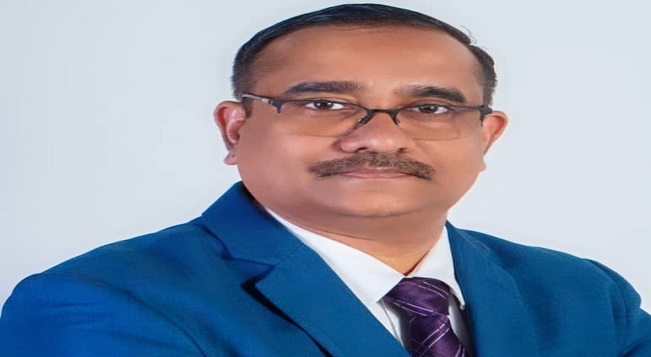
Dr Krishnan Ranganath (Krish) to Lead UniCloud Africa in Continental Digital Infrastructure Push
UniCloud Africa Limited, the premier pan-African cloud platform dedicated to advancing the continent’s digital sovereignty, has announced the appointment of Dr. Krishnan Ranganath as its Chief Executive Officer.

Dr. Krish, a seasoned industry leader known for building and scaling digital infrastructure while maintaining rigorous operational excellence, steps into the role as UniCloud Africa accelerates its mission to redefine the continent’s digital landscape.
The appointment coincides with the groundbreaking launch and immediate availability of UniCloud Africa’s enterprise-grade Sovereign Cloud and Artificial Intelligence (AI) infrastructure across six key markets: Nigeria, Ghana, South Africa, Zambia, Senegal, and Mozambique, even as it plans to launch in Kenya, Tanzania, DRC, Uganda, Ethiopia and Côte d’Ivoire as part of further continental expansion.
Operating under the mission of “One Cloud, One Africa,” UniCloud Africa provides governments and enterprises with a world-class, fully compliant sovereign cloud alternative to high-latency offshore providers,ensuring a robust, scalable foundation tailored to Africa’s unique environmental and economic needs.
“UniCloud sits at the epicentre of Africa’s cloud evolution. We are committed to deploying 100% sovereign infrastructure across the continent. My focus is on driving high-growth partnerships and scaling the next generation of resilient, sustainable cloud infrastructure to accelerate the evolution of the African digital ecosystem,” said Dr. Krish, CEO of UniCloud Africa Limited.
He disclosed that his focus at UniCloud Africa is on driving high-growth partnerships and scaling the next generation of resilient, sustainable cloud infrastructure, and will deploy GPUs in certain economies based on market potential and need.
While admitting that the challenges from AI integration to the green energy transition are immense, Dr Krish believes that the opportunities are greater. “I am eager to collaborate with our partners and customers to redefine the digital frontier and accelerate the evolution of the African digital ecosystem,” he added.
Ladi Okuneye, Co-founder and outgoing CEO (who remains as a director on the board) remarked: “As we enter this new chapter of growth, I am confident that Dr Krish’s extensive experience in the African digital landscape will add immense value. His technical depth and regional insight make him the ideal leader to drive UniCloud Africa forward.”
Before he was appointed CEO of UniCloud Africa, Dr. Krish was, until last month, the Regional Executive – West Africa at the Africa Data Centres (ADC).

Tech Firms Sack over 45,000 so Far in 2026

CBN Wins Central Bank of the Year Title @13th Global Awards

Jury Finds Elon Musk Liable for Misleading Twitter Investors

FG Taps Quest Merchant Bank for Advisory on 90,000km Fibre Project

TEF-Backed Entrepreneurs Generate $4.2Bn, Create 1.5m Jobs across Africa

Kaspersky Discovers New Phishing Campaign Exploiting Google Tasks Notifications to Steal Corporate Credentials

esentry 2025 Report Shows Healthcare, Financial Services and Telecoms as Staging Grounds for Increased Cyberattacks in Africa

AfDB, UNDP Launch $10Bn AI Initiative for Africa

MultiChoice Suspends Yearly DStv Price Hike as Canal+ Pushes Growth

MTN Nigeria Posts Record N1.70 Trillion Pre‑Tax Profit, Declares N20 Dividend for 2025




 News2 days ago
African Tech Start-ups to Receive $46m of Speedinvest Africa Fund

 Telecom2 days ago
Court Bans Kenyan Telcos from Recycling SIM Cards

 E-Financial2 days ago
Providus Bank Fully Meets CBN Capital Requirement, Sets Record Straight

 E-Financial2 days ago
UBA UK, BII Sign Letter of Intent to Slash Africa’s $80Bn Trade Finance Gap

 Telecom2 days ago
Binance Earn: Simple Way to Earn Rewards on Idle Crypto Holdings

 News2 days ago
UK, Nigeria Unveil Three-Year Plan to Combat Immigration Crime

 News2 days ago
U.S. Charges Three in $2.5 Billion Plot to Smuggle Nvidia AI Chips to China

 General News2 days ago
Court Jails ‘Colonel’, ‘Major’ of Global Money-Laundering Ring