

E-Business
75m Devices Now on Windows 10

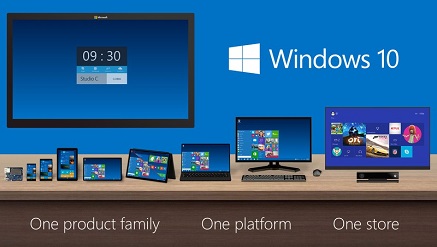
Microsoft said that Windows 10 has spread to more than 75 million devices since the new operating system was released less than a month ago.
Windows 10 is powering more than 90,000 different computer and tablet models, Yusuf Mehdi, Microsoft’s corporate vice president of marketing for Windows and devices, said in a series of tweets on Wednesday.
More than 75 million devices now run the software, with the number “growing every day,” he said.
Some 14 million people installed the Windows 10 operating system in the first 24 hours following its release on July 29 in what Microsoft touted as an “overwhelmingly positive” debut.
The stakes are high for Microsoft as it pushes out the new operating system for both traditional computers and mobile devices such as tablets and smartphones.
The company is hoping the new system can help it gain traction in the mobile sector, where it lags behind Google Android and Apple iOS, and in emerging technologies for computing.
Windows 10 is being offered as a free upgrade for most devices, making it possible to be available quickly on billions of devices.
It will allow for voice, pen and gesture input, and in some cases biometric identification for improved security.
Word of the spread of Windows 10 to devices in 192 countries came as market tracker International Data Corporation forecast that worldwide personal computer shipments will fall by 8.7 per cent this year and continue to slide through next year.
“Although the shortcomings of the PC business are obvious, a silver lining is that the industry has continued to refine the more mobile aspects of personal computers – contributing to higher growth in Convertible and Ultraslim Notebooks,” said IDC senior research analyst Jay Chou.
“The de-emphasis of touch on Windows 10 also paves the way for a more familiar experience and continuing unit growth on large-screen systems, particularly All-in-One PCs.”



The National Environmental Standards and Regulations Enforcement Agency (NESREA), in collaboration with the Africa Carbon Management Technology & Innovation (ACMTI) and the Clean Energy Ministerial Carbon Capture, Utilisation and Storage Initiative (CEM-CCUS), has launched a Carbon Capture, Utilisation and Storage (CCUS) Initiative Platform in Nigeria.

Speaking at the launch in Port Harcourt, Rivers State, Prof. Innocent Barikor, the Director-General of NESREA, described the project as a major milestone in Nigeria’s journey toward environmental sustainability, climate resilience, and industrial transformation.
Barikor explained that the CCUS solution provides an economically viable pathway for industrial decarbonisation by enabling the capture, storage, and utilisation of carbon in sectors such as beverage production, cement manufacturing, chemicals and fuels, enhanced oil recovery, and agriculture.
“We need to reduce carbon in the atmosphere to acceptable levels. Its utilisation offers opportunities to capture and store carbon and deploy it for industrial purposes. We are building a circular economy—turning environmental challenges into economic opportunities in line with regulatory provisions,” he said.
He noted that the CCUS Platform is a collaborative ecosystem designed to bring together key stakeholders, including government institutions, industry leaders, academia, technology developers, development partners, and investors.
Also speaking, the Vice-Chancellor of the University of Port Harcourt, Prof. Owunari Georgewill, commended NESREA for the initiative, describing it as a practical mechanism for coordination, innovation, and action toward Nigeria’s 2035 climate targets and broader energy transition goals.
He added that the university is well-positioned to host the CCUS initiative, noting that its Energy Technology Institute has developed credible expertise in energy transition-related fields critical to the success of CCUS in Nigeria.
On his part, the Coordinator of ACMTI and Facilitator of the Carbon Technology Innovation Platform (CTIP), Dr. Richard Victor Osu, said the vision is to position Nigeria as a regional leader in carbon management technologies while contributing meaningfully to Africa’s climate commitments and global decarbonisation efforts.
Osu explained that Port Harcourt was selected due to its potential as a CCUS hub, adding that the platform will focus on advancing research and innovation, building technical capacity, promoting public-private partnerships, attracting investment, and fostering collaboration with international research and technology partners.
Juho Lipponen of the CEM-CCUS Initiative assured that the organisation would support Nigeria in prioritising CCUS in clean energy discussions, strengthening carbon management deployment programmes, boosting partnerships, facilitating financing solutions, and promoting positive narratives around carbon utilisation.
The event attracted participants from the United States, France, Brazil, Canada, the United Arab Emirates, and the United Kingdom, who shared insights on the initiative.
Also in attendance were representatives of the National Oil Spill Detection and Response Agency (NOSDRA), the National Council on Climate Change (NCCC), the Nigeria Upstream Petroleum Regulatory Commission (NUPRC), the Rivers State Ministry of Environment, as well as private sector stakeholders and development partners.
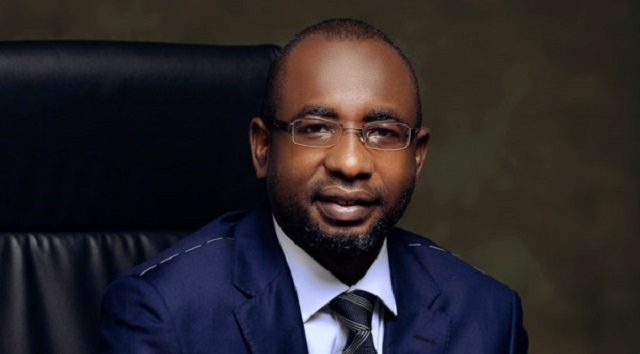
Kashifu Inuwa, the Director General of the National Information Technology Development Agency, has issued a decisive mandate for African nations to establish domestic cloud infrastructure and data sovereignty or risk permanent digital subservience.

Speaking during a high-level strategic session at the GITEX Africa 2026 summit in Morocco, Inuwa argued that the continent must move beyond being a passive consumer of foreign technology to becoming a primary architect of its own digital ecosystem.
He warned that the current state of continental fragmentation leaves Africa vulnerable to external disruptions and prevents the realization of a truly integrated digital economy.
Inuwa characterised the modern global landscape as an environment defined by high-velocity data processing and pervasive intelligent systems, noting that digital integration is now a non-negotiable prerequisite for national survival.
He grounded this technical reality in a striking analogy, describing the cloud as the fundamental life-support system of the modern world. “In today’s reality, digital is no longer optional; it is a way of life,” Inuwa stated. “And the cloud is the oxygen that sustains that life.
The question we must ask ourselves is: who controls that oxygen?”
The push for cloud sovereignty represents a move toward localised data residency and autonomous computational power. Inuwa stressed that without regional data centers and unified regulatory frameworks, African nations remain subject to the policy shifts and geopolitical priorities of overseas providers.
He advocated for a shift from fragmented, siloed efforts toward a federated regional approach that pools resources and expertise to build a robust, self-sustaining African cloud. This transition is essential for ensuring that the massive datasets generated by African users are utilized to train local artificial intelligence models and catalyse internal economic growth rather than being exported for external profit.
The NITDA boss expressed concern over Africa’s limited share of global digital infrastructure, noting that while the continent accounts for between 15 to 19 percent of the world’s population, it holds only about 0.6 percent of global data centre and computing capacity.
He described the imbalance as a structural disadvantage that exposes African countries to risks around data security, economic dependency, and limited participation in the global innovation ecosystem.
“This is not just a technology gap, it is a sovereignty gap,” Inuwa stated. “We are generating data, but we are not in control of how and where that data is stored, processed, or monetised.”
He warned that over reliance on foreign owned cloud platforms could have long term implications for national security, economic competitiveness, and policy autonomy, especially as data becomes a critical resource in the global economy.
Despite these challenges, Inuwa highlighted Africa’s immense potential, pointing to its youthful population, expanding internet penetration, and fast growing startup ecosystem as key drivers of digital growth.
He said the continent is uniquely positioned to leapfrog legacy systems and build modern, scalable infrastructure that can support innovation across sectors.
However, he stressed that achieving this vision would require coordinated action among African governments, private sector players, and regional institutions.
“There is no single country in Africa that can do this alone,” he said. “We must collaborate, integrate our efforts, and build shared infrastructure that benefits the entire continent.”
Central to his recommendation is the creation of a “cloud of clouds” a federated cloud ecosystem that connects multiple national and regional cloud platforms into a unified, interoperable network.
Such a system, he explained, would allow countries to maintain control over their data while benefiting from shared standards, scalability, and cross-border collaboration.
Inuwa pointed to Europe’s Gaia-X as a useful reference model, noting that while Africa’s context is different, the principle of building a trusted and interconnected cloud ecosystem remains relevant.
He emphasised that cloud sovereignty should not be misunderstood as protectionism or digital isolation, but rather as the capacity for self determination in the digital age.
“Sovereignty is about having the ability to make our own choices, to define our own standards, and to build systems that reflect our values and priorities,” he said.
Inuwa further noted that developing indigenous cloud capacity could unlock significant economic opportunities, including job creation, local innovation, improved digital services, and increased investor confidence.
It could also strengthen Africa’s position in emerging technologies such as artificial intelligence, big data analytics, and the Internet of Things, all of which depend heavily on robust cloud infrastructure.
The DG concluded by emphasising that the quest for digital sovereignty is not merely a technical objective but a strategic imperative for long-term stability. He asserted that for Africa to achieve meaningful autonomy in an increasingly digitised world, it must secure its own computational foundations.
By establishing indigenous control over data processing and storage, the continent can insulate its critical national infrastructure from external volatility while ensuring that its digital future is determined by its own policies and priorities. The message was clear: Africa must harmonise its infrastructure and localise its computational assets now or face an era of unprecedented digital marginalisation.
As global competition in the digital space intensifies, Africa’s ability to act collectively and strategically will determine whether it emerges as a major digital powerhouse or remains on the periphery of the digital revolution.
E-Business
As Nigerians Struggle to Save, Mutual Benefits Highlights Power of Structured Financial Planning


A growing number of Nigerians are struggling to build sustainable savings habits, leaving many without a financial safety net in times of need. Insights from the PiggyVest Savings Report 2025 reveal a concerning trend of declining savings culture among Nigerians. A significant segment of the population either does not prioritise saving or lacks the discipline to maintain consistent savings, with many unable to cater for emergencies or achieve meaningful financial satisfaction.

Mutual Benefits
Released in March 2026, the report which sampled over 20,000 respondents in rural and urban areas across all six geopolitical regions in Nigeria, highlights key gaps in financial behaviour. Highlighted issues revolve particularly around emergency preparedness and long-term financial planning, underscoring the urgent need for more structured and accessible savings solutions.
With rising living costs and economic pressures, many Nigerians are increasingly focused on meeting immediate needs, often at the expense of saving for the future. As a result, emergency funds remain inadequate or non-existent for a large proportion of households.
This reality has far-reaching implications, not only for individual financial stability but also for broader economic resilience. Without a financial buffer, unexpected events such as medical emergencies, job loss or business disruptions can quickly escalate into crises.
Financial experts note that the challenge is not just about earning more income, but about adopting disciplined and structured approaches to saving.
Unlike informal or ad-hoc savings methods, structured financial products combine consistency, growth and protection, ensuring that individuals are better equipped to navigate uncertainties.
This is where solutions like Mutual Benefits Assurance’s savings and investment offerings play a critical role.
A leading player in Nigeria’s insurance industry, Mutual Benefits’ savings and investment products are designed to help individuals and families build financial discipline while enjoying the added advantage of protection.
Products such as the Individual Savings and Protection Plan (ISPP), Children Education Plan (CEP) and Mutual Investment Plan (MIP) help customers build disciplined savings, earn competitive returns through compounded interest and benefit from life insurance coverage, providing an added layer of security. Similarly, the Personal Pension and Investment Plan (PPIP) provides financial support in the event of job loss, whether voluntary or involuntary, while also serving as a valuable tool to supplement retirement income. In the event of death, designated beneficiaries receive the entitled benefits.
By combining savings with protection, these solutions address two critical gaps identified in the report: lack of emergency funds and low financial confidence.
Structured savings plans not only encourage financial discipline but also provide reassurance that funds will be available when needed. In contrast to informal savings methods, they offer a more reliable pathway to achieving both short-term and long-term financial goals.
For many Nigerians, this represents a much-needed shift from reactive financial habits to proactive financial planning.
As Nigeria continues to navigate economic uncertainty, the importance of financial preparedness cannot be overstated. Encouraging a culture of saving supported by structured, accessible financial products will be key to improving financial well-being across the population.
Mutual Benefits remains committed to empowering Nigerians with solutions that promote financial security, resilience and peace of mind. By making savings simpler, more rewarding and more secure, the company continues to support individuals and businesses in building a more stable financial future.

FG to Gift Nigerians over 100 Free TV Channels from May 15

FG New Approves Biometric Passenger Verification System for Airports Security

STBMAN, NBC Bicker over Alleged Due Process Breaches

CBN Dismisses Polaris Bank Liquidation Claim

AfDB Okays $200m for Nigeria’s Digital Backbone, Others

Spotify’s Loud & Clear Report Reveals Over ₦60Bn Revenue for Nigerian Artists in 2025

Kuda MFB Increases Kuda for Her Business Grants to ₦10 Million

Why JustMarkets Is a Strong Choice for Gold Trading

Canal+ to Cut Jobs as Part Sweeping Restructuring

Nigeria tops global rankings for USDT, USDC ownership




 E-Financial3 days ago
How Sterling Bank Is Empowering 1m Women with ₦500Bn

 E-Financial3 days ago
See Key Changes in BVN Rule from May 1 by CBN

 E-Financial3 days ago
Paga Group Rejigs Leadership as Oviosu, Founder Becomes Group CEO

 Broadcasting3 days ago
INEC Warns Broadcasters against Misinformation ahead of 2027 Polls

 E-Financial3 days ago
Reputation: The Real Currency Powering Fintechs

 E-Business3 days ago
Jumia Expands Nationwide Footprint, Deepens Reach Across Underserved Nigerian Cities

 News3 days ago
Google, UpSkill Universe Relaunch Hustle Academy to Bring Free AI Skills to Africans

 Telecom3 days ago
Meta Unveils Muse Spark: MSL’s Groundbreaking People-First AI Model