

News
Leo Stan Ekeh – the Iconic ICT Entrepreneur @ 65

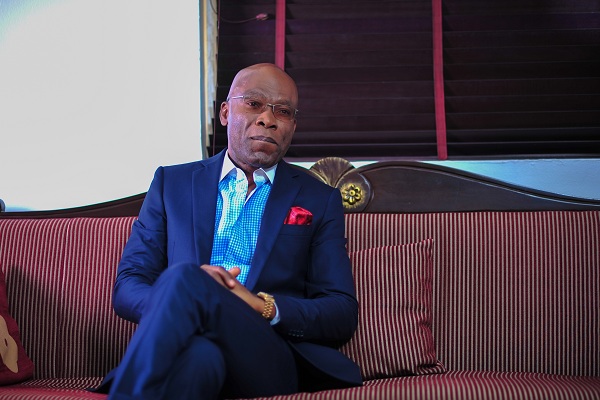
The man, Leo Stan Ekeh arguably Nigeria’s foremost tech guru and serial digital entrepreneur has championed many firsts in the Nigerian ICT sector.

Leo Stan Ekeh
Mr. Ekeh is the Chairman of Zinox Group, Sub-Saharan Africa’s biggest integrated technology conglomerate which includes viable concerns such as Zinox Technologies Limited, Task Systems Ltd., Technology Distributions Limited (TD Africa) and TD Mobile, among others, through which he deployed some of the biggest ICT projects on the continent.
Mr. Ekeh has also inspired several generations of budding entrepreneurs and startups, many of whom are currently disrupting the technology space in Nigeria and beyond.
On the Nigeria’s Independence anniversary on October 1st 2001, Ekeh enjoyed the rare privilege of being honoured as an Icon of Hope by former President, Chief Olusegun Obasanjo for his sustained pioneering efforts in the area of Information Technology and also as a pride to modern Nigeria.
His ground breaking strides in the Nigerian technology ecosystem recorded another major achievement in 2018 when he made a bold return to e-Commerce (a vertical he pioneered in Africa many years ago through BuyRight Africa Dotcom) with the addition of Konga after acquiring the company from previous majority investors, Naspers and AB Kinnevik.
Barely two years after its acquisition, Ekeh transformed the composite e-Commerce giant into Nigeria’s leading player, with the brand on the cusp of dominating Africa’s biggest market and making inroads into other neighbouring African markets.
Today, this Icon of ICT in Nigeria turned 65 years old, born on February 22, 1956 in Ubomiri Mbaitoli, Imo State to a middle-class family with three brothers and two sisters.
He attended Holy Ghost College, Owerri for his secondary education, after which he went to India for his university education, where he received a Bachelor of Science degree in economics from Punjab University.
Ekeh, however, believes that studying in India was a great turning point in his life, according to him, he found the Indian economy a realistic economy.”
In addition, he is a Global Advisor to Microsoft. He also holds a Post Graduate Degree in Risk Management from Nottingham University, England.
Ekeh equally holds several honorary doctorate degrees from highly respected universities for his enviable record of incisive entrepreneurship and pioneering efforts in the field of Information Technology.
Leo Stan as he is popularly known is a renowned digital democrat and philanthropist has also quietly touched so many lives through the Leo Stan Foundation – his personal foundation.
Among these are charitable works such as donation of N100m to Internally Displaced Persons (IDPs) in the North-East, donation of N50m to victims of the demolished Eke-Ukwu market in Imo State, scholarships to hundreds of indigent students across Nigeria to study both at home and abroad, as well as the set-up of a N1.5bn revolving loan scheme for disadvantaged students and entrepreneurs of Imo origin, among several others.
Furthermore, Ekeh has silently invested in education, provided Medicare to the needy and supported churches and other religious organizations through the Foundation.
During the lockdown occasioned by the COVID-19 pandemic, the Leo Stan Foundation leveraged on staff of the various companies in the Zinox Group to feed over 7000 families across Nigeria for two weeks. He has also regularly supported state governments in Imo, Lagos and other parts of the country through the donations of patrol vehicles to improve security, among other donations.
Indeed, the story of Ekeh’s legendary strides is one of many firsts amid a series of landmark achievements in his chosen field of Information and Communications Technology.
He pioneered Desktop Publishing and Computer Graphics in Nigeria in 1987 with his first Company – Task Systems Ltd.
In addition, Mr. Ekeh launched the first ICT support Company in Nigeria – ITEC Solutions Ltd.
More so, he pioneered the deployment of digital dispensing pumps for petrol and gas stations in Nigeria in partnership with Elf Oil (now Total Plc.) after he was cheated by an attendant at a fuel station.
He also pioneered ICT Distribution in West Africa with the launch of Technology Distributions Ltd. (today known as TD Africa) which has remained the biggest technology, lifestyle and cutting-edge solution distributors in the West African sub-region.
Furthermore, Ekeh holds the rare status of manufacturing the first internationally certified computer brand in Sub-Saharan Africa: Zinox Computers.
Equally, the biometric digital revolution in Nigeria can be attributed to Mr. Ekeh after he singlehandedly delivered to the Independent National Electoral Commission (INEC) data capturing machine for voters’ registration when foreign contractors could not deliver after months of promises.
Four years later, he again supervised the biggest single ICT digital rollout in Africa with INEC in 2010 valued back then at over $170m, as well as the largest single e-Library and Wireless Cloud rollout project on the continent through one of his companies – Zinox Technologies Ltd.
Today, Ekeh’s contributions and sterling work with INEC have gone a long way in giving Nigeria a credible database of voters and reduced post-election litigations by over 45 per cent.
Mr. Ekeh has also been involved with companies such as ICT Brokers, TD Plus, ICT Connect and, as earlier stated, the launch of Africa’s first ever e-commerce outfit, Buyright AFRICA Dotcom.
A major advocate of digital literacy for all, Ekeh holds the enviable record of donating cutting-edge and well-equipped digital centres to several secondary and tertiary institutions in Nigeria.
Significantly, Ekeh’s Zinox Group pioneered the unheralded but highly commendable practice of paternity leave in Nigeria to reduce stress on young male staff and enable them to support their spouses when they welcome a new baby.
The tech enthusiast is one of the foremost champions of gender equality in Nigeria. He has consistently advocated for and also empowered women and the girl child, whom he regularly addresses and challenges to aspire to greatness at various public events and fora.
His passion for gender equality can be seen at first hand in the Zinox Group where women, led by his wife, Mrs. Chioma Ekeh, occupy the first four executive management positions at TD Africa, the biggest company by revenue in the Group. Also, he had recently appointed another female as Managing Director of Zinox. The Group’s Human Resources Unit is also headed by a female.
Mr. Ekeh’s unerring zeal for productivity and excellence was recently rewarded by the current administration of President Muhammadu Buhari with the National Productivity Merit Award (NPOM) in November 2019.
A distinguished member of the Nigeria Economic Summit Group and Fellow of the Nigeria Computer Society, Ekeh is a recipient of one of the country’s highest National Honours – Order of The Federal Republic (OFR).
Applauded by professionals as a global digital giant and a man whose vision and performance shore up credibility for the indigenous capacities in the ICT sector, Leo Stan Ekeh’s unmatched interventions have seen him receive over 60 local and international awards. He has also served on a good number of Federal Government Committees, which includes the Presidential Committee for Job Creation, Nigeria Thinkers, ICT Roadmap, among many others.
He is happily married to Mrs. Ekeh, a Mathematician, Fellow of the Association of Chartered Certified Accountants (ACCA) and CEO of TD Africa.
The union is blessed with successful children.



EFCC


The African Development Bank Group last week approved an investment of €6.5 million in the Saviu II fund in order to support technology start-ups through their seed phase and first institutional fundraising, mainly in French-speaking Central and West Africa.

The Bank will invest €4.5 million as equity and €2 million as a first-loss hedging tranche on behalf of the European Commission, under the Boost Africa Programme.
This participation of the Bank Group will enable the Saviu II fund to give priority to companies with a strong technological or digital component.
Saviu II, the second investment vehicle of Saviu Partners, plans to invest between €500,000 and €3 million in about 20 technology or technology-oriented business-to-business start-ups in the seed phase or carrying out first institutional fundraising.
The Saviu II venture capital fund aims to make at least 60% of its commitments in the French-speaking countries of West and Central Africa: Côte d ‘Ivoire, Cameroon, Benin, Senegal, Togo, Burkina Faso and Mali.
The fund can also co-invest in promising technology companies in East Africa that have a strong team and business model, and whose strategy includes entering the market in French-speaking West African countries and establishing a strong presence there.
In addition, the fund will devote a dedicated envelope to pre-seed investments, focusing on minority equity investments, usually in co-investment with studios, incubators or other ecosystem partners.

Nigerian Government has signed a $1.3 billion Memorandum of Understanding (MoU) with Africa Finance Corporation (AFC) via the Solid Minerals Development Fund (SMDF) to fund an alumina refinery, national geoscience mapping, and a strategic investment vehicle for mining growth.

Special Assistant to the Minister of Solid Minerals Development, Segun Tomori, said the refinery will process one million tonnes of bauxite yearly using a modern Bayer process, powered by an on-site gas-fired cogeneration plant.
Minister Dele Alake called it a transformative milestone boosting GDP, aligning with reforms that improve investment climate, regulations, and licensing to attract private capital. He directed agencies to fast-track permits.
The 20-year project at 95% utilization eyes 19 million tonnes total output, $1.2 billion annual GDP addition, $25 billion economic impact, and $8 billion forex earnings, per feasibility studies.
SMDF Executive Secretary Fatima Shinkafi termed it the agency’s biggest funding deal, supporting value-addition policy.
The partnership extends to geoscience mapping for mineral data, de-risking exploration, and a joint vehicle for mining assets.
Permanent Secretary Engr. Farouk Yabo praised the reforms. Shinkafi signed for government; AFC’s Franklin Edochie for the corporation, witnessed by AFC CEO Samaila Zubairu.
Tomori positioned it as Nigeria’s largest private mining investment and FDI magnet.

MultiChoice to Discontinue Showmax Streaming Platform

GCR Affirms Afreximbank’s International Scale Ratings of A, A2

SmartCash Launches ‘No Be Cho Cho Cho’ Campaign to Boost Digital Banking in Nigeria

MTN Nigeria Non-Executive Director Mazen Mroue Quits to Focus on Group Role

Google Adds Yorùbá, Hausa to AI Search, Boosting Access for Millions of Nigerians

Dr. Cairo Ojougboh Foundation Bolsters Nigeria’s Education Drive with ₦2.7m Student Support

Kaspersky Brings more Transparency to Threat Detection with New Hunt Hub

NDPC Commits to Balancing Data Privacy, Protection Information

PwC Reveals AI Scaling Gap Slows Africa’s Digital Transformation

Firm Reviews the Evolution of Phishing Threats in 2025




 E-Financial2 days ago
NRS Targets N40trillion in Tax, Royalty Revenue in 2026

 E-Financial2 days ago
SEC Revokes Registration of Kensington Agro Trading Limited

 General News2 days ago
Purple Woman 3.0 Is Back, to Empower Women in Tech this IWD 2026

 News2 days ago
EFCC Arraigns Two FSDH Bank Officials Over $307k, €50k Fraud

 Telecom2 days ago
Konga Launches ‘Berekete Sales’ with Up to 50% Discounts Across Major Categories
 E-Business2 days ago
NDPC, 60 DPAs Collaborate on Enforcing Privacy Rights in the Use of Al

 General News2 days ago
NCDC Raises Alarm over Lassa Fever Ravaging 18 States in Nigeria

 E-Financial2 days ago
Nigeria’s Net Reserves Surge 50% to $34.8bn in 2025 – CBN Governor