

Telecom
NCC Sets Reserve Price for 5G Spectrum Auction @ $197.4m


Nigerian Communications Commission (NCC) has set the reserve price for sale of Fifth Generation (5G) auction at $197.4 million for mobile network operators (MNOs).

According the 5G auction draft Information Memorandum (IM) released by the commission, the telecom regulator plans to hold the auction in December.
NCC said it may offer two lots of 100 Megahertz (MHz) each in the 3.5 Gigahertz (GHz) band ranging from 3500 to 3600 MHz and 3700 to 3800 MHz for auction for the 5G network deployment in the country as it is empowered by Section 121 of the Nigerian Communications Act 2003.
In the 80-page Draft IM document on 3.5GHz Spectrum Auction uploaded by NCC, the Commission said that the Generic Reserve Price (GR) is the minimum price at which a Lot shall be sold.
NCC said this is the Reserve Price for one Lot of 100 MHz and has a value of $197,400,000.00 ($197.4m) or its equivalent in Naira at the prevailing Central Bank of Nigeria (CBN) rates at the time of the auction. It stressed that each lot of 1 X 100 MHz represents one eligibility point.
The IM defines the process for the licensing of Spectrum in the 3.5 GHz band by the NCC. The Commission explained that the assignment process will comprise an auction to be held in Abuja, which is expected to take place during the week commencing December 13, 2021 and will be an Ascending Clock Auction with exit bids. Mock Auction is expected to hold first, December 6.
According to NCC, “the spectrum lot won by each bidder will be assigned on a nationwide basis covering all the states of the federation and the Federal Capital Territory (FCT).”
However, NCC said the IM is for information purposes only. It is not intended to form the sole basis of an investment decision and should not be considered as a recommendation by the Commission to any stakeholder to participate in the auction.
It stressed that independent assessment of the potential value of the assignment of the 3.5 GHz spectrum should be made as deemed necessary.
The Commission noted that the IM may be subject to update, modification and amendment. NCC, which said the spectrum is offered by the Commission on a technology neutral basis for provision of communications service, disclosed that it intends to adhere to International standards for roll-out of services on the band.
The document reminded that NCC has a subsisting policy on “use-it or lose-it” with respect to the use of assigned Spectrum. It explained that where a winner does not hold a Unified Access Service Licence (UASL) which is the operational licence for the frequency spectrum slated for auction, it will be issued at an additional fee of N374, 600,000.00 or at the subsisting licence fee at the time of the auction
Federal Government on Wednesday September 9, 2021, approved the deployment of the 5G in Nigeria.
Prof. Isa Ali Ibrahim Pantami, minister of Communications and Digital Economy, announced the approval after the Federal Executive Council (FEC) meeting in Abuja.
Following the approval, the Minister directed the NCC to commence immediate implementation of the 5G plan for the country.
According to Pantami, the roll-out of the 5G will be carried out in phases beginning with major cities in the country “where there is need for high quality broadband.”
The approval came after the government had addressed concerns about the health implications of the 5G network, stressing that “5G is expected to facilitate several emerging technologies, generate innovative use cases, spur significant socio-economic growth and create jobs.”


British Prime Minister Sir Keir Starmer has announced plans to ban children under the age of 16 from accessing major social media platforms, describing the move as necessary to protect young people from online harm.

The proposed restrictions will apply to platforms including TikTok, Instagram, Facebook, Snapchat, YouTube and X.
Messaging services such as WhatsApp and Signal will not be affected by the measures.
In a recorded video message released on Monday, Starmer said the government was taking decisive action in response to growing concerns about the impact of social media on children’s wellbeing.
“It’s a big step for our country. Social media is making our children unhappy and unsafe, and as a parent, as much as a Prime Minister, I just can’t let that go on anymore,” he said.
The announcement follows a national consultation conducted between March and May, which received more than 116,000 responses on children’s use of technology.
According to the findings, more than 83 per cent of parents believed the risks associated with social media outweighed its benefits, while 90 per cent supported setting 16 as the minimum age for accessing social media platforms.
The British government said legislation would be introduced before Christmas, with the protections expected to come into force next spring.
Under the proposed framework, children under 16 will also be prevented from using livestreaming features and from communicating with strangers on affected platforms.
Starmer acknowledged that implementing age restrictions would be challenging but said the government had carefully reviewed available evidence and lessons from other countries before deciding to proceed.
“It’s not an easy thing to do. We haven’t rushed into it. We’ve looked carefully at the evidence and will continue adapting our approach as technology changes,” he said.
The Prime Minister also signalled a willingness to confront major technology firms that may oppose the policy.
“We will take them on, and we will win, because the need for action could not be any clearer,” he added.
The move comes amid increasing global efforts to regulate children’s access to social media.
Last year, Australia became the first country to enact legislation restricting access to major social media platforms for children under 16.
However, Australian authorities have reported enforcement challenges, with a recent study indicating that many children continued to maintain accounts despite the restrictions.
Alongside the proposed ban, the British government announced a £132.5 million “Every Child Can” programme aimed at expanding access to sports, arts and nature-based activities in schools and local communities as alternatives to excessive screen time.
The initiative follows recent calls by the government for technology companies, including Apple and Google, to strengthen safeguards preventing children from taking, sharing or viewing nude images online.
The government said the measures were designed to combat online exploitation, reduce children’s exposure to harmful content and improve online safety.
Meanwhile, social media companies in the United States continue to face legal challenges alleging that their platforms contributed to mental health problems among young users and failed to adequately protect children from online predators.
Supporters of stricter age-verification requirements argue that they are necessary to shield children from harmful online content, while critics have raised concerns over privacy, data protection and freedom of expression.
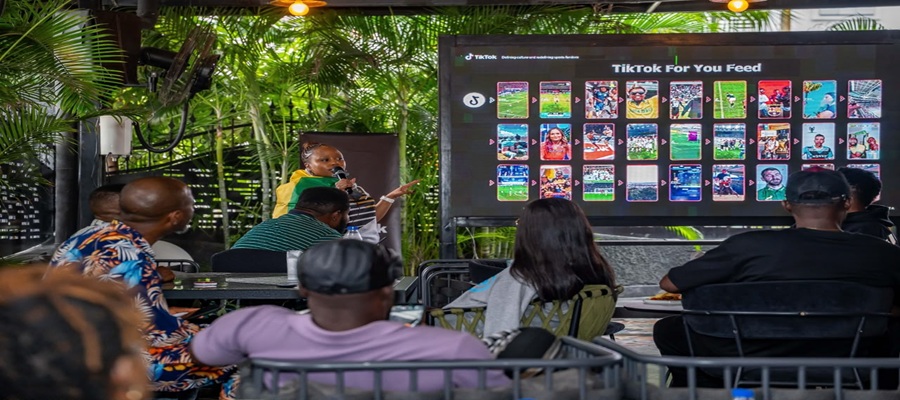
TikTok says football remains one of the strongest passions among its users in Nigeria, with 59 per cent of users on the platform following the sport.

TikTok
The social media platform disclosed this in a report highlighting the growing influence of football communities and sports content across Sub-Saharan Africa.
According to TikTok, 28 per cent of its users in Nigeria actively participate in football, underscoring the sport’s significance as a cultural touchpoint and a driver of engagement on the platform.
The report noted that football-related hashtags such as #football, #soccer, #SuperEagles and #NaijaFootball have become active hubs for fan reactions, commentary, highlights and match-day conversations.
TikTok said it had evolved into a leading platform for sports entertainment and football culture, bringing together fans, athletes, clubs and content creators through its #SportsOnTikTok initiative.
It revealed that more than 6.5 million videos had been created under the #SportsOnTikTok hashtag, reflecting growing interest in sports content ranging from match reactions and tactical analysis to creator-led storytelling.
“Football communities across Africa are increasingly using TikTok to celebrate their teams, share reactions, debate key moments and connect with global football audiences in authentic and engaging ways,” the report stated.
The platform also highlighted strong engagement during the 2025 Africa Cup of Nations (AFCON), noting that more than 1.2 million posts were created globally under the #AFCON2025 hashtag.
According to TikTok, 28.6 per cent of those posts originated from Sub-Saharan Africa, reinforcing the platform’s role as a major destination for football fans following tournaments in real time.
The report further showed that sports content on TikTok continues to influence audiences beyond the platform.
It stated that 85 per cent of sports fans globally use TikTok as a second-screen experience while watching sporting events, while 42 per cent are more likely to tune into live matches after viewing sports content on the platform.
Additionally, 90 per cent of fans reportedly take at least one action outside the platform after watching sports-related content, while 72 per cent enjoy viewing fan edits, reaction videos and other fan-generated sports content.
TikTok also highlighted the increasing participation of women in sports conversations on the platform.
According to the report, 64 per cent of women globally choose TikTok as their preferred destination for sports content, accounting for 46 per cent of all sports-related views on the platform during the first half of 2025.
The company said the findings reflected a new era of digital sports engagement in which football and other sporting experiences extend beyond the pitch through fan participation, content creation and online communities.
It added that TikTok was becoming a key destination for the next generation of football fandom, transforming passive viewership into active participation through shared experiences and real-time interactions.
Telecom
Nigeria Innovation Summit 2026 Set to Convene West Africa’s Brightest Minds to Shape the Future of Innovation

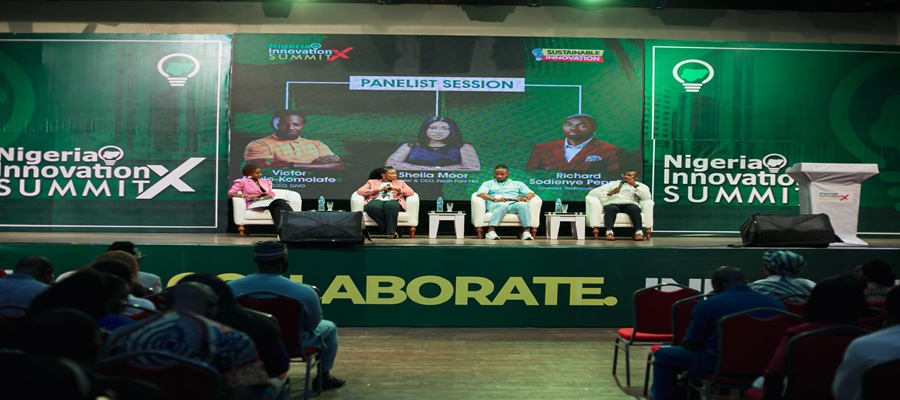
InnovationHub Africa, Africa’s foremost driver of technology and innovation, is proud to announce the Nigeria Innovation Summit (NIS) 11.0, the 11th edition of West Africa’s biggest and most celebrated innovation gathering, scheduled for October 6, 2026, at the Shell Hall, Muson Centre, Lagos.

Nigeria Innovation Summit 2026
The Summit promises to be the most ambitious, high-impact edition yet, bringing together Nigeria’s most brilliant minds, innovators, startups, trailblazing entrepreneurs, global thought leaders, and policy architects under one electrifying roof.
Disclosing the event’s agenda, Mr. Tony Ajah, the Programme Director of the Summit says, “The theme for this year’s event is ‘Innovating in the Age of AI’.” The theme confronts one of the defining questions of our time: how can Nigeria and Africa harness the power of AI to drive transformative innovation, accelerate economic growth, and compete boldly on the global stage?”
“We are living through the most consequential technological shift of our generation. AI is happening right now, reshaping industries, redefining careers, and rewriting the rules of competition. As AI reshapes every sector from agriculture to fintech, from healthcare to education, we are creating the most critical space for Nigeria’s innovators to get ahead of the curve,” Mr. Ajah says.
“NIS 11.0 is our clarion call to every Nigerian innovator and institution to get in the room, understand the wave, and ride it. We must not be spectators in the AI revolution but architects of it. So, this year’s event will go beyond inspiration to deliver actionable insights and measurable impact, empowering stakeholders to build resilient and future-ready systems,” he added.
NIS has established itself as a premier platform for advancing technology, entrepreneurship, and sustainable development, and continues to foster cross-sector collaboration and inspire solutions to pressing socio-economic challenges. It brings in experts within the Nigerian innovation ecosystem and around the world to connect, share ideas, and collaborate.
This year’s event will feature insightful discussions, Nigeria Innovation Experience talks (NiX Talks), innovative showcases of emerging technologies and their applications, workshops, fireside chats, startup pitches, and exhibitions. The Summit will climax with the 2026 Nigeria Innovation Awards.
Beyond discussions, the Summit is designed to catalyze strategic partnerships, investment opportunities, and policy directions that support innovation-led growth. Through previous editions, NIS has attracted over 15,000 delegates, 240 speakers and panellists, 100 tertiary institutions and research centres, 40 government ministries, attendees from 36 states, over 170 sponsors and partners, 42 countries, and over 97 innovation award recipients.
Participation in this event is open to local and international businesses, innovators, startups, MSMEs, public and private institutions, embassies/high commissions, investors, the academic community, and all the stakeholders in the innovation ecosystem. The event will also be live-streamed to a wider audience across Nigeria and beyond. Attendance is free and open to all registered delegates.
NIS 11.0 offers great opportunities through sponsorship, partnership, and exhibitions of innovative products, ideas, and services. For more inquiries and participation, please visit: https://innovationsummit.ng/

Galaxy Backbone @ 20, Pledges Nationwide Connectivity, Data Sovereignty

KidsCook Showdown 2.0 Set to Empower Public School Pupils with Culinary, Life Skills

CBN Orders Banks, Fintechs to Host Payment Data Locally

PalmPay Joins Industry Leaders @ Digital Pay Expo 2026

UK Bans TikTok, Instagram, Facebook for Under-16s in Landmark Crackdown

CBN Extends PoS Geo-Fencing Enforcement Deadline to August 2026

NCC Drafts New Rules for Virtual Mobile Operators

TD Africa, HPE Drive Conversations on the Future of Intelligent Networking

London Strengthens Global Investment Ties with Africa @ First Ever London-Africa Business Summit

Easybuy Partners WAWUAfrica to Upskill 10 Million Youths and Women, Boosting Nigeria’s Economic and Financial Inclusion




 E-Business2 days ago
CSOs Raise Alarm over Nigeria’s Data Protection Crisis

 E-Business1 day ago
AI-Powered Cyber Threats Put Nigerian Banks on Alert

 General News2 days ago
₦5m up for Grabs as 10 Startups Clash at the Gathering on 100 Pitchathon Aba

 E-Financial2 days ago
CBN to Expand eNaira for Salaries, Pensions and Welfare Payments

 General News2 days ago
CBN Moves to Stop Banks From Using Customers’ Money for Fintech Subsidiaries

 Telecom2 days ago
NITDA Reveals Why AI Could Be Nigeria’s Biggest Wealth Creator, Not Oil

 E-Financial2 days ago
CBN to Bar HoldCos from Influencing Banks’ Lending Decisions

 Telecom2 days ago
NASENI Unveils Ambitious Plan to Produce 600 Million Diagnostic Kits Annually