

Broadcasting
Bring On the CTO: Why Having a Chief Transformation Officer Makes Sense in a Post-COVID World


By Ricardo Vargas Executive Director, Brightline Initiative, PMI
The case for having a Chief Transformation Officer (CTO) has been building for years. Now, as companies undertake the difficult task of rebuilding in the wake of COVID-19, the CTO role is more important than ever.

Ricardo Vargas Executive Director _ Brightline Initiative, PMI
“Life will never be the same after COVID-19.”
You hear that a lot these days. But for many organizations, life will indeed be different in a post-COVID world. Whether they’re restructuring their supply chains, reframing their go-to-market strategies or reconsidering their office space needs, organizations rebuilding in the wake of COVID-19 will need to undergo significant transformation.
To aid in these efforts, it becomes relevant to think about formalizing the role of the Chief Transformation Officer.
The role of Chief Transformation Officer, or CTO, is tailor made for times like these. A CTO can take top management’s transformation vision and make sure it’s properly disseminated throughout the organization.
He or she can translate that vision into concrete goals. Even more important, the CTO can devise and deliver the master plan for achieving these goals—overseeing the multitude of projects that will be needed to turn the organization’s transformation strategies into reality in the post-COVID world.
A Constant State of Transformation
Even before the onset of COVID-19, however, the argument for formalizing the CTO role had been building. That’s because many organizations are already dealing with near constant transformations due to disruptive societal and technology changes. These include growing urbanization, climate change, massive demographic shifts and the revolution caused by advanced technologies like artificial intelligence, robotics and 5G.
There’s also the reality that transformations are costly, time-consuming and difficult. They tax the capabilities of even the most agile organizations. In fact, Forbes estimates that 70 percent of large-scale transformations fail to achieve their goals, resulting in a loss of approximately $900 billion in 2018 alone.
Transformations fail for a variety of reasons. Executives we spoke to as part of a 2020 Brightline study, titled Mastering Strategy Implementation in Transformative Times , cited such challenges as limited resources, insufficient technology, skill gaps among internal talent and a lack of processes for guiding strategy.
This same research—among 1,000+ C-level executives from around the world—also provides supporting evidence for the CTO role. Indeed, one of the key variables contributing to the success of a strategic transformation is strong leadership. Brightline’s years of experience in researching strategic implementation suggests that naming a CTO may be the best way of providing that leadership.
Using Standardized Processes
The CTO can serve as a catalyst for formalizing the processes used in transformation initiatives. That’s important because one of the other key variables behind a successful transformation is implementing and adhering to such standardized processes.
The CTO can bring the discipline needed to do so—helping organizations be more adaptable and allowing them to take full advantage of the technology and frameworks they already have.
Finally, having a CTO leads to greater accountability. Investing one person with the responsibility for overseeing a transformation eliminates any potential leadership gaps. It ensures that there will always be one person—the CTO—whose sole priority is the success of the transformation initiative.
Sometimes a black swan event can disrupt a trend that has been gaining momentum. In the case of the CTO role, however, the COVID-19 pandemic should accelerate that momentum. In the post-COVID world, we need to bring on more CTOs to manage the arduous task of re-building our organizations, our economies and our society.


Lebara Nigeria has announced the launch of Lebara Play, described as Africa’s first telecoms-owned micro-drama platform aimed at expanding opportunities for African storytellers and distributing local content to global audiences.

The company said the platform is designed to support creators by providing a new distribution channel for African narratives while making content accessible to both subscribers and non-subscribers worldwide.
Lebara Nigeria added that the platform will debut with an original production titled Imported Bahu, produced by Forever 7 and starring Osas Ighodaro.
The project is directed by Hamisha Daryani Ahuja, known for her work on Namaste Wahala, and is positioned as the first in a series of original content offerings.
According to the company, Lebara Play is built to serve both creators and audiences, with a focus on showcasing African stories to a global market and strengthening the continent’s growing digital entertainment ecosystem.
Speaking on the company’s vision at the launch, Teniola Stuffman, chief executive officer, Lebara Nigeria, said the organisation was focused on building a telecommunications ecosystem that combined innovation, connectivity, and customer-centric digital experiences.
Stuffman said, “This platform represents an important step in our vision of building a telecommunications brand that delivers more than connectivity. We are creating an ecosystem where technology, innovation, and entertainment come together to provide meaningful experiences for customers while unlocking new opportunities for creative talent and content development across Africa.”
Beyond entertainment, she said, industry stakeholders believed the initiative demonstrated how global telecommunications expertise could be adapted to local market realities.
“Drawing from decades of experience across multiple international markets, Lebara is expected to introduce additional innovative services aimed at enhancing convenience, engagement, and value for Nigerian consumers,” she said.
Stuffman added that the company’s strategy reflected growing recognition that today’s telecom customers demanded more than network access, pointing out that consumers increasingly seek brands that offer seamless digital experiences, personalised services, and access to content that enriches everyday life.
Stuffman stated that LebaraPlay also aligned with the company’s commitment to supporting Africa’s creative economy by creating new distribution channels for content creators, producers, and digital storytellers.
“Through a combination of original productions and strategic partnerships, the platform seeks to create opportunities for talent while delivering quality entertainment to audiences,” she said.
Hamisha Daryani, founder of Forever7 Entertainment, expressed excitement over the partnership with Lebara Nigeria and the premiere of her latest micro-drama series on the LebaraPlay platform.
She stated that Lebara’s customer-centric vision aligns closely with the values of Forever7 Entertainment, making the collaboration a natural fit for both organisations.
Daryani revealed that the new microdrama featured a star-studded cast drawn from both Bollywood and Nollywood, in a compelling romantic story designed specifically for mobile audiences.
According to her, the production is developed with mobile-first consumers in mind, delivering premium entertainment in short, engaging formats at an affordable cost.
“Microdrama, which typically consists of short episodes of about three minutes, is redefining how audiences consume entertainment. It offers a convenient, immersive, and affordable viewing experience for people who increasingly access content through their mobile devices,” she said.
She added that the platform was created to support seamless creative expression while providing new opportunities for content creators across the continent.
Daryani further explained that the microdrama format has already achieved significant success in Asia and the Americas and is now gaining traction across Africa.
She said the initiative would create opportunities for emerging creatives through knowledge sharing, skills development, content curation, and industry collaboration, with the Nigerian rollout of the featured series expected to commence in July.
Broadcasting
CANAL+ Partners Samsung to Pre-Load DStv Stream on New Samsung TVs In Nigeria, Other African Countries

Following an expanded partnership between CANAL+ and Samsung Electronics, the DStv Stream app will now be pre-installed on new Samsung Smart TVs sold in Nigeria and 17 other African countries.

The agreement covers English and Portuguese-speaking African markets, including Nigeria, Kenya, Angola, Tanzania, Uganda, Zambia, Zimbabwe and South Africa. It marks the first pre-installation rollout of a MultiChoice Group streaming application on Samsung Smart TVs.
The development comes after the completion of the combination between CANAL+ and MultiChoice Group. It also extends an existing relationship between both companies that already spans 40 markets across Europe, French-speaking Africa, and Asia.
Through the integration, Samsung customers can now access DStv Stream directly from the television home screen. The app provides access to premium sports and entertainment content, including coverage of the FIFA World Cup 2026, English Premier League football, domestic and international rugby, and local and international television programming.
With the introduction of this connected television which kicked off on June 1, televisions can now connect to the internet, allowing users to stream content directly without requiring a separate decoder or satellite dish. The pre-installation of the app removes the need for users to search for and download it themselves, reducing friction and improving content discoverability.
The rollout is one of the first major distribution initiatives following the integration of CANAL+ and MultiChoice. The combined group has identified streaming growth and enhanced digital distribution as key priorities across Africa, where connected television adoption continues to increase.
David Mignot, CEO of CANAL+ Africa and CEO of MultiChoice Group, affirmed, “We are delighted to extend our longstanding partnership with Samsung across new English and Portuguese-speaking African countries. It marks a significant milestone in the synergies created by the combination of CANAL+ and MultiChoice Group.
“Mignot added, “As viewing habits continue to evolve rapidly across the continent, strengthening the accessibility and discoverability of our content offer on connected devices is key. By expanding the availability of our applications on Samsung Smart TVs across key African markets, we are making it even easier for millions of MultiChoice Group’s subscribers to seamlessly access the content that define the uniqueness of the CANAL+ and MultiChoice Group experience.”
This extended partnership is expected to strengthen Samsung’s position as a key distribution partner for streaming services globally while providing CANAL+ and MultiChoice with a broader route to market as competition intensifies among international and regional streaming platforms across Africa.
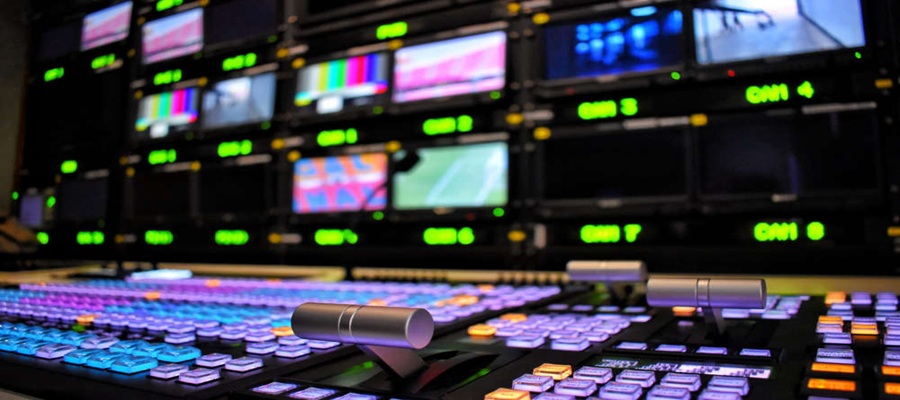
The Court of Appeal in Abuja has dismissed an appeal filed by the National Broadcasting Commission (NBC) challenging a Federal High Court judgment that restrained the commission from imposing fines on broadcast stations.

Delivering judgment, Justice Jane Esienanwan Inyang held that the appeal was fundamentally defective and therefore incompetent.
The appeal stemmed from a Jan. 17, 2024 judgment delivered by Justice Rita Ofili-Ajumogobia of the Federal High Court, Abuja, which barred the NBC from enforcing N5 million fines imposed on several broadcast stations in 2022.
The sanctions had been issued over allegations that the stations aired documentaries on banditry and insecurity considered by the commission to be capable of undermining national security.
The affected broadcasters included Multichoice Nigeria Limited, owners of DStv, TelCom Satellite Limited, Trust TV Network Limited and NTA StarTimes Limited.
The suit was instituted by Media Rights Agenda (MRA), which challenged the legality of the fines imposed by the commission.
In her ruling, Justice Inyang pointed to a discrepancy in the appeal documents, noting that the respondent before the Federal High Court was listed as the “National Broadcasting Commission,” while the notice of appeal identified the appellant as the “Nigerian Broadcasting Commission.”
According to the court, the inconsistency was substantial enough to deprive it of the jurisdiction required to entertain the appeal.
“The notice of appeal is the foundation of an appeal and a condition precedent to the exercise of appellate jurisdiction by this court,” the judge held.
Consequently, the appeal was struck out without consideration of the substantive issues raised by the commission.
The ruling represents another setback for the NBC in its efforts to defend its authority to sanction broadcast organisations through administrative fines.
In April 2026, the Court of Appeal similarly dismissed a separate appeal by the commission against another judgment that restricted its powers to impose fines on broadcasters.
Earlier, in May 2023, the Federal High Court in Abuja ruled that the NBC lacked the judicial authority to impose penalties on media organisations without recourse to the courts.
The controversy over the commission’s sanctioning powers dates back to March 2019 when the NBC imposed N500,000 fines on 45 broadcast stations for alleged violations of the Nigerian Broadcasting Code during the general elections.
At the time, the then Director-General of the commission, Is’haq Kawu, said the sanctions were imposed for ethical breaches and violations of broadcasting regulations.
Legal analysts say the latest judgment reinforces previous court decisions limiting the commission’s authority to impose fines on broadcasters without judicial intervention.

UBA Surprises Thousands of Customers with Over ₦400 Million Cash Bonus

Lebara Nigeria Becomes Member of GSMA Network

FG to Abolish JSS-SSS Separation Policy after 20m Pupils Drop Out

Vitel Wireless Warns Public, Says it Not Running any Investment Scheme

Army Says Terrorists Now Recruiting, Raising Funds Online

Mobile Internet Gender Gap Widest in Africa – GSMA

London Strengthens Global Investment Ties with Africa @ First Ever London-Africa Business Summit

FG Targets Alleged N3tn Capital Flight, Opens Airtime Credit Market to Nigerian Fintechs

Japan, UNESCO Boost Digital Learning in 15 CoEs with Donation of ICT Equipment

Good News for DStv Users: Watch over 160 Channels Without Paying Extra




 E-Business3 days ago
LG Showcases AI-Powered Smart Living Innovations @ Africa Technology Expo 2026

 Telecom3 days ago
OADC Reaffirms Abundant Capacity in Data Centres in Nigeria to Host Financial Data

 E-Financial3 days ago
UBA mobilises employees across Africa for environmental clean-up, wellness campaign

 General News3 days ago
LASTMA Launches 3367 Toll-Free Hotline for Emergency Response, Traffic Management

 E-Financial3 days ago
PalmPay Calls for Trust, Infrastructure and Responsible AI to Drive Payment Ecosystem Innovation

 E-Business3 days ago
Want a Business Loan Without Interest? SMEDAN Launches N500m Fund

 Telecom3 days ago
ALTON Backs NCC’s Local Smartphone Manufacturing Drive to Widen Digital Access

 E-Financial3 days ago
ngCERT Raises Alarm over Surge in Banks’ ATM Cyberattacks