

E-Financial
Wema Bank’s 5For5 Promo Heats Up As Artisan Emerges Winner in Third Draw


Wema Bank Plc, Nigeria’s leading financial institution, excited customers in Agege, Lagos, on Thursday, October 14, 2021, as it rewarded 2 raffle draw winners for the month of September. This was part of its ongoing customer reward campaign, the 5for5 Promo which commenced on July 1, 2021.

L-R: Divisional Head, Retail Business, Wema Bank Plc, Dotun Ifebogun; 5 for 5 promo one million naira winner, Alade Rafiu Aliu and Head, Retail Cluster, Ikeja 1, Wema Bank Plc, Olukayode Adebayo at the 5for5 promo cheque presentation in Lagos on Thursday, October 14, 2021.
The promo has seen over 200 customers win cash prizes ranging from 10,000 naira to the grand prize of one million naira by conducting transactions via the digital banking platform, ALAT, and Wema’s USSD code – *945#. In August and September 2021, customers in Osun state were the first to receive the 5for5 treatment where two lucky winners became millionaires.
In Lagos, an excited 44-year-old Alade Rafiu Aliu, was awarded the grand prize of a million Naira. The welder explained his shock at the news, “When I was contacted, I was very suspicious until I was informed to come to the bank the next day. I went to my bank branch in Agege and as I walked in, all the staff began congratulating me; that was when I realised it was actually true!”
He went on to express his gratitude to the bank, “I am grateful to Wema bank, staff at the Agege branch for taking pains to track me down and ensure that I got my prize money. Since I have been banking with them, I have not had issues.”
Another 100,000 naira winner, Olaniyi Elijah Olatunde, who has been a customer for over 20 years and is a pioneer ALAT customer, applauded the bank for the promo. He stated that, “The promo is a great thing. It’s something that is making people happy and giving them a chance to improve their lives. It is also a way of letting customers know that their loyalty is not going unnoticed.”
Speaking at the cheque presentation, Dotun Ifegbogun, divisional head, Retail Business, Wema Bank, stated, “We introduced this promo to reward loyal customers, encourage a healthy savings culture and renew relationships with old customers.

“And in the past three months we have done just that. The response across the country has been humbling.
“So far we have given over 200 customers an avenue to make a difference with their winnings. We are not only creating financial freedom but we are also providing financial literacy on how they can spend, save and invest their winnings wisely.”
Over 10 million naira has been won in the 5for5 promo – a nine-month-long campaign that will continue to reward customers till March 2022. Over 31.5 million naira will be awarded when the promo ends next year.


E-Financial
First Securities Brokers Empowers Nigerians to Trade in the Stock Market with the Launch of FirstInvest App

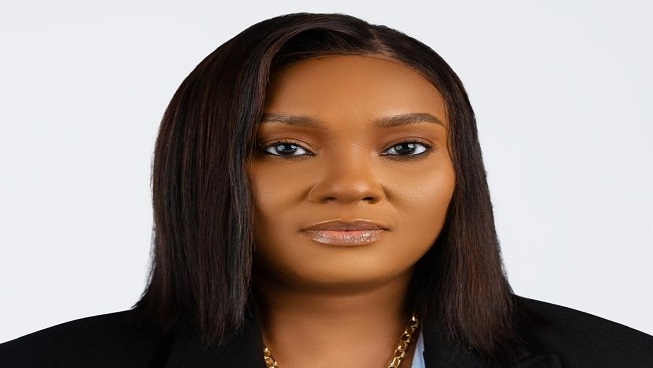
First Securities Brokers, one of Nigeria’s leading stockbroking firms and a subsidiary of FirstHoldCo Plc, is pleased to announce the official launch of the FirstInvest App, an innovative mobile investment platform designed to make stock market investing simpler, faster, and more accessible for Nigerians.

The FirstInvest App offers investors a seamless digital experience, enabling them to open and manage their investment accounts, monitor their portfolios, and trade equities listed on the Nigerian Exchange (NGX) directly from their mobile devices.
Designed with both new and experienced investors in mind, the platform combines convenience, security, and ease of use to help users make informed investment decisions anytime and anywhere.
As Nigeria continues to embrace digital financial services, the FirstInvest App reinforces First Securities Brokers’ commitment to driving financial inclusion and expanding access to wealth creation opportunities through technology.
Speaking on the launch, Fiona Ahmed Ahimie, Managing Director of First Securities Brokers, said: “The launch of the FirstInvest App represents another significant milestone in our digital transformation journey and our commitment to delivering innovative investment solutions to our clients.
“We understand that today’s investors value convenience, speed, and accessibility. FirstInvest has been developed to provide exactly that: a secure and intuitive platform that empowers individuals to participate confidently in the capital market from wherever they are.”
She added: “Our goal is to remove the traditional barriers associated with investing by placing the power of timely investment and decision making in the stock market directly in the hands of Nigerians. Whether you are taking your first investment step, actively managing your portfolio or just evaluating your investment, FirstInvest provides the tools and flexibility needed to support your financial aspirations.”
The app delivers a range of features designed to enhance your investing experience, including: Secure digital account opening and onboarding, Real-time access to investment portfolios, Buy and sell Nigerian equities with ease, User-friendly trading interface, Secure transaction processing, Convenient access to market information and investment opportunities.
The launch of FirstInvest aligns with First Securities Brokers’ broader strategy of leveraging technology to improve customer experience while supporting the growth of retail participation in Nigeria’s capital market.
First Securities Brokers remains committed to providing trusted investment advisory services, innovative financial solutions, and exceptional customer service, helping clients build and preserve wealth across generations. The FirstInvest App is now available for download on the Google Play Store and the Apple App Store.

The next currency crisis could accelerate the shift of the roughly $315 billion global stablecoin market into a digital-dollar alternative for citizens in emerging economies, notably in regions like sub-Saharan Africa and Latin America.

As local fiat currencies face devaluation and high inflation, citizens and businesses are increasingly utilizing smartphone-based stablecoins (such as USDT and USDC) as hedges and primary mediums of exchange.
According to the International Monetary Fund (IMF), the rapid adoption of dollar-linked digital assets—particularly in countries heavily affected by inflation like Nigeria—poses significant risks to monetary sovereignty.
With up to 95% of surveyed individuals in some African markets preferring to receive payments in stablecoins over local fiat, the rising volume of these decentralized, cross-border channels weakens domestic currency demand and dilutes the effectiveness of local monetary policy.
IMF observed in a report titled “Stablecoins in Nigeria: A Growing Cross-Border Channel” noted that the widespread use of stablecoins poses risks to monetary sovereignty, particularly as more individuals and businesses turn to digital dollar-linked assets for savings and transactions.
Nodding in agreement is Future Investment Initiative Institute (FII Institute), a non-profit organisation run by the Public Investment Fund, Saudi Arabia’s main sovereign wealth fund.
FII Institute said that central banks face structural challenges.
And according to the institute, when citizens move savings out of national banks and into private digital wallets, conventional capital controls lose their grip.
Institutions like the Bank for International Settlements warn that interest-bearing stablecoins compete directly with domestic-currency deposits, complicating financial oversight and making smartphone-based transfers incredibly difficult for authorities to monitor.
In Nigeria, Naira depreciation has pushed users toward dollar-stablecoins, according to report by Gino Matos in cryptoslate.com.
A stablecoin is a type of cryptocurrency designed to maintain a steady value by pegging its price to a reserve asset, such as a fiat currency (e.g., the U.S. dollar) or a commodity (e.g., gold).
They act as a bridge between traditional money and the digital asset world, providing the speed of crypto without the extreme price swings of assets like Bitcoin.
Federal government has reopened three federal government of Nigeria (FGN) bond issues valued at N1.2 trillion for subscription as part of efforts to raise long-term funds from the domestic debt market.

The Debt Management Office (DMO), which announced the offer on Tuesday, said the three reopened bond issues are each valued at N400 billion.
According to the DMO, the first offer is the January 2035 FGN Bond, a 10-year reopening, carrying an interest rate of 22.60 per cent per annum.
The second is the May 2028 FGN Bond, a 15-year reopening, with a coupon rate of 15.45 per cent per annum, while the third is the June 2037 FGN Bond, a 20-year reopening, also valued at N400 billion.
The office said the bond auction is scheduled for July 20, while successful subscriptions will be settled on July 22.
It explained that the bonds are offered at N1,000 per unit, with a minimum subscription of N50 million and additional investments in multiples of N1,000.
For the reopened bonds, the DMO said successful bidders would pay a price based on the yield-to-maturity that clears the auction, in addition to any accrued interest on the instruments.
Interest on the bonds will be paid every six months, while the principal will be repaid in full on the respective maturity dates.
The DMO reaffirmed that FGN bonds are backed by the full faith and credit of the Federal Government and constitute obligations chargeable on the general assets of the federation.
It added that the bonds qualify as trustee investment securities under the Trustee Investment Act and enjoy tax exemptions for eligible investors, including pension funds, under the Company Income Tax Act and Personal Income Tax Act.
The bonds are listed on the Nigerian Exchange (NGX) and FMDQ Securities Exchange and also qualify as liquid assets for banks in computing their liquidity ratios.
FGN bonds are long-term debt instruments through which investors lend money to the Federal Government in exchange for periodic interest payments and repayment of the principal at maturity.

NBC Scraps Annual Digital Access Fee on DSO

Surge in Fibre Cuts Hobbles Service Provisioning

Why Bandits, Kidnappers are Hard to Trace despite NIN-SIM Linkage – FG

First Securities Brokers Empowers Nigerians to Trade in the Stock Market with the Launch of FirstInvest App

Quest Merchant Bank Hosts Great Place to Work® Nigeria Study Mission

NRC, Ponzi Scheme Collapses Resulting Loss of Billions of Naira
Nigeria Launches FreeTV Nationwide

NASENI Moves to Digitize CCB’s 5m Assets Declaration and Operations

Lebara Nigeria Launches Lebara Play, Africa’s First Telecom-Owned Micro-Drama Platform

CANAL+ Partners Samsung to Pre-Load DStv Stream on New Samsung TVs In Nigeria, Other African Countries




 Telecom3 days ago
MTN Nigeria Slashes Cost of Broadband Internet Router, Unwraps New Data Bundles for Low-Budget Users

 E-Financial3 days ago
Nigerians Accumulate $59Bn in Cryptocurrency Assets —FDC

 E-Financial3 days ago
Flutterwave Partners Xoom on Transfers into Nigeria

 General News3 days ago
Nearpays, Nigerian Fintech Becomes First African Startup to Win UN’s AI for Good Innovation Factory

 News3 days ago
DataPro Upgrades Dangote Cement’s Credit Rating to AA+

 Telecom3 days ago
Nokia’s 14 Years of Mobile-Phone Supremacy Ended in an Afternoon

 E-Business3 days ago
Tinubu Orders NIMC to Enrol Every Nigerian by End of this Year – DG

 General News3 days ago
Fintech Brands Should Communicate Right in a VUCA Economy