

Telecom
NCC Overhauls Regulatory Instruments, Management Tools for Operational Efficiency

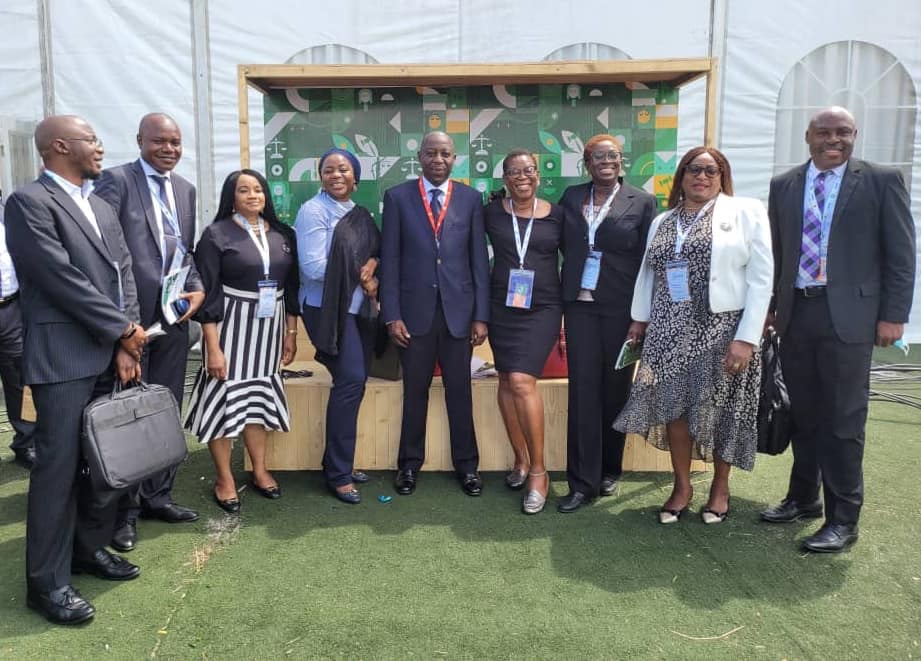
The Nigerian Communications Commission (NCC) said it is adjusting regulatory instruments and management tools to ensure regulations are fit for future imperatives of a robust telecoms sector.

L-R: Quassim Odunmbaku, Special Assistant, ECSM’s office, NCC; Abulaziz Adamu, Assistant Director, Commission Secretariat, NCC; Helen Obi, Head, Telecoms Law and Regulations, NCC; Hafsat Lawal, Head, Consumer Policy Development and Monitoring, NCC: Barr. Adeleke Adewolu, Executive Commissioner, Stakeholder Management (ECSM), NCC; Yetunde Akinloye, Director, Policy, Competition and Economic Analysis, NCC; Afure Iloka, Special Assistant (Legal) to the Executive Vice Chairman, NCC; June Nwachukwu, Assistant Director, Legal Services, NCC; and Ibe Ngwoke, Principal Manager, Commission Secretariat, NCC.
Adeleke Adewolu, executive commissioner, Stakeholder Management (ECSM), NCC,stated this when he spoke at a panel session at the 2021 Annual General Conference of the Nigerian Bar Association held in Port Harcourt. The general theme of the Conference is, ‘Taking the Lead’.
Adewolu, who made the declaration in a panel discussion focused on Government Regulation of Innovation and Technology, said, “In specific terms, we are taking action in the following areas: We are adjusting regulatory instruments and management tools to ensure regulations are fit for the future.
“An example is our ongoing review of the Telephone Subscriber Registration Regulations to strengthen the framework for digital identity; and the review of the Spectrum Trading Guidelines to ensure more efficient use of spectrum.”
Also, the ECSM said NCC is laying institutional foundations to enable co-operation with other regulatory institutions and international organisations such as the International Telecommunications Union (ITU).
The Commission, according to Adewolu, is also developing and adapting governance frameworks to enable the development of agile and future-proof regulation; and equally adapting regulatory enforcement activities to the “new normal”. He said this is to ensure alignment with the rapid technological changes and innovations that are emerging at a high speed and with sophistication.
On censorship, particularly tackling illegal and harmful content on over-the-top (OTT) platforms, Adeleke said NCC had to opt for “a middle ground that promotes safe use of digital service platforms without necessarily stifling the exercise of the citizen’s right to free expression as guaranteed in the Nigerian Constitution.”
He explained that on technology platforms, censorship manifests in three scenarios, namely, restriction of person-to-person communications; restriction of Internet access generally; or restriction of access to specific content, which governments find objectionable.
This, he said, was pursuant to constitutional provisions such as those in Section 39(3) of the Nigerian 1999 Constitution, as amended, which approves “any law that is reasonably justifiable in a democratic society to prevent the disclosure of information received in confidence, maintaining the authority and independence of courts or regulating telephony, wireless broadcasting, television or the exhibition of cinematograph films.”
In particular, Adewolu declared that the third scenario is globally recognised as the ideal situation because one of the core responsibilities of government (as enshrined in Chapter 2 of the Nigerian Constitution) is to safeguard the lives and property of citizens.
Explicating further, Adewolu said that social media platforms allow instant communications without regard for impact or consequences. He insisted that self-regulation is possible, but “as we have experienced over and over again, an ill-considered post on social media can easily incite unrest and crises.”
He bemoaned the fact that leading social media platforms have demonstrated a rather unfortunate reluctance to moderate the use of their platforms for subversion and harm. “So, we cannot trust them to self-regulate,” he emphasised.
According to him, self-regulation has not been very effective, and interestingly, “the largest platforms are global platforms and many of them are protected by their home governments.”
For instance, “Sc.230 of US Communications Act provides immunity to firms like Facebook and Google from responsibility for content disseminated on their media, although they still apply fair usage and community rules which enables them to self-regulate. However, as we saw with the case of the former US President Donald Trump – people are often able to disseminate negative content for a while before they are cut off. Mr Trump had over 87 million followers he engaged directly with,” the ECSM stated.
Another example he cited happened just few days ago when CNN reported that Facebook deliberately failed to curb posts inciting violence in Ethiopia despite the fact that its own staff flagged such posts, and that Ethiopia is listed as a high-priority zone, which has been fighting a civil war for the past one year. As Adewolu recalled, the UN Secretary General recently called for the regulation of social media platforms, and even the CEO of Facebook has made similar calls in the past.
“So, we cannot wholly depend on self-regulation. And whilst we cannot prevent citizens from freely expressing themselves on these platforms, it would be irresponsible for any government to allow unbridled use of these mediated communication to cause chaos and imperil lives and property. Government must act to protect social cohesion and national security,” he counselled.


Telecom
Airtel Nigeria Launches Web Data Calculator to Give Customers Greater Visibility into Data Usage


Airtel Nigeria has launched the Airtel Web Data Calculator, a new digital tool designed to help customers estimate and better understand their internet data consumption based on real-life usage patterns.

The launch comes amid a broader industry effort to improve transparency around data consumption and strengthen customer confidence in mobile broadband services.
It also aligns with ongoing collaboration between telecommunications operators and the Nigerian Communications Commission (NCC) to address customer concerns about data depletion and improve quality of service across the sector.
Recent industry initiatives have included customer education campaigns, daily usage notifications, billing audits, customer engagement forums, and the development of new tools that provide greater visibility into how data is consumed.
Available through Airtel’s website, the calculator enables customers to estimate data usage across common digital activities such as video streaming, social media engagement, voice and video calls, and everyday web browsing. By translating online behaviour into understandable data estimates, the tool empowers customers to make more informed decisions about their data plans and digital habits.
Speaking on the launch, Oladokun Oye, Customer Experience Director, Airtel Nigeria, said the initiative reflects Airtel’s commitment to customer empowerment and service transparency.
“As Nigerians become increasingly dependent on digital services for work, education, entertainment and communication, it is important that customers have clear visibility into how their data is consumed. The Airtel Web Data Calculator was developed to help our customers understand their usage patterns better, make informed choices, and enjoy greater confidence in their digital experience,” he said.
Oye added that customer concerns around data depletion have remained a recurring topic across the telecommunications industry, making transparency a critical component of customer experience.
“We believe that trust grows when customers have access to clear information. This tool is another step in our ongoing efforts to simplify the customer experience, provide greater clarity around data consumption, and support informed decision-making,” he said.
The launch follows a period of intensified engagement between telecom operators, regulators and consumers on data usage awareness. The NCC has consistently emphasized that many instances of perceived rapid data depletion are linked to factors such as high-definition video streaming, automatic application updates, cloud synchronization, background app activity and evolving smartphone capabilities. The regulator has encouraged operators to improve customer education and develop tools that help subscribers better understand their consumption patterns.
Industry data underscores the importance of such initiatives. Nigeria recorded more than 13 million terabytes of internet consumption in 2025, reflecting the country’s accelerating digital transformation and growing dependence on mobile broadband services.
Commenting on the significance of the launch, Dinesh Balsingh, Chief Executive Officer, Airtel Nigeria, said the company remains focused on building a network and customer experience ecosystem anchored on trust, transparency and continuous improvement.
“The future of telecommunications will be defined not only by network investments but also by how effectively operators help customers understand and manage their digital lives. The Airtel Web Data Calculator represents a practical innovation that places more information and control directly in the hands of our customers.”
He noted that Airtel continues to invest heavily in network modernization, customer experience initiatives and digital tools that improve service quality while making telecommunications services easier to understand and use.
“We welcome the industry’s collective focus on transparency and commend the NCC’s continued collaboration with operators to strengthen consumer confidence. As data becomes increasingly central to everyday life, Airtel will continue to develop solutions that make connectivity more accessible, transparent and rewarding for every customer.”
The launch also builds on Airtel Nigeria’s recent customer engagement initiatives, including forums dedicated to helping subscribers better understand data usage, value optimization and service quality. These engagements have brought together customers, regulators and Airtel executives to foster greater awareness and dialogue around digital consumption.
The Airtel Web Data Calculator is now available to customers nationwide and can be accessed via Airtel Nigeria’s website.

The Board of the Nigerian Communications Commission (NCC) has commended telecommunications operators for ongoing investments aimed at improving network coverage, capacity and quality of service across the country.

NCC
This was contained in a communiqué issued at the end of the Commission’s 109th Board Meeting held on May 25 in Abuja.
According to the communiqué, Mobile Network Operators (MNOs) have planned the deployment of more than 12,000 additional coverage and capacity sites nationwide, with over 5,000 already completed, representing more than 40 per cent of the target.
The Board also noted that fibre connectivity had been extended to more than 700 sites to improve network resilience, backhaul capacity and service reliability.
It added that co-location and infrastructure sharing licensees had upgraded equipment across more than 2,000 Base Transceiver Stations (BTS) to support network expansion and compliance with quality-of-service obligations.
The Board reviewed the implementation of the Commission’s directive requiring operators to compensate subscribers affected by poor service quality in areas where prescribed standards were not met.
It noted that full compliance by operators had resulted in compensation being offered to more than 75 million affected subscribers.
The Board said efforts were ongoing to independently verify operators’ claims and ensure that all eligible subscribers received the compensation due to them.
However, it expressed concern that tower infrastructure providers had only partially complied with directives requiring the reinvestment of regulatory fines into infrastructure upgrades through escrow accounts.
On broadband development, the Board noted rising data consumption across the country but observed that growth remained constrained by infrastructure limitations, reliance on mobile internet and duplication of assets.
It welcomed the growth in Fibre-to-the-Home (FTTH) subscriptions, which rose from 84,141 in the fourth quarter of 2025 to 210,065 connections as of the first quarter of 2026.
According to the Board, expanding fixed broadband infrastructure will help reduce pressure on mobile networks, improve service quality and provide consumers with more connectivity options.
The Board also noted that the Commission was reviewing the telecommunications market structure to reflect current realities in both the wholesale and retail segments of the industry.
It reaffirmed that broader access to wholesale backbone fibre and expanded metropolitan fibre networks would help lower connectivity costs, improve network resilience and support the Federal Government’s digital transformation agenda.
The Board further identified infrastructure vandalism as a major challenge affecting industry growth despite ongoing efforts by security agencies to protect telecommunications facilities designated as Critical National Information Infrastructure (CNII).
It called for greater collaboration among stakeholders and disclosed that the Commission was exploring the feasibility of establishing a Communications Industry Security Trust Fund to strengthen infrastructure protection.
The Board also reviewed ongoing engagements with industry players on the development of a framework for zero-rating educational platforms and content to promote digital inclusion and improve educational outcomes.
In addition, the Board approved the appointment of Princess Oforitsenere Emiko, a Non-Executive Commissioner of the NCC, as Interim Chairman of the Governing Board of the Digital Bridge Institute (DBI).
It also approved the appointments of Engr. Abraham Oshadami, Executive Commissioner, Technical Services, and Ms. Rimini Makama, Executive Commissioner, Stakeholder Management, as interim members of the DBI Governing Board.
The Board reiterated the Commission’s commitment to fostering a sustainable and inclusive communications sector through improved quality of service, network resilience, consumer protection, transparency, fair competition and market discipline.

Stakeholders in Nigeria’s Information and Communications Technology (ICT) sector have expressed concerns over the inclusion of a foreign country code top-level domain (ccTLD) in a recent partnership under the Federal Government’s 3 Million Technical Talent (3MTT) programme.

The concerns followed the announcement by the Federal Ministry of Communications, Innovation and Digital Economy (FMCIDE) of a 10 million-dollar partnership with Hello.cv, a platform associated with Cape Verde’s “.cv” country code domain.
Under the agreement, 20,000 beneficiaries of the 3MTT programme will receive access to Hello.cv’s profile package, which includes a personal .cv domain, an artificial intelligence-powered job search agent and professional CV writing services.
Some industry stakeholders argue that the arrangement appears inconsistent with the Federal Government’s “Nigeria First Policy”, which encourages Ministries, Departments and Agencies (MDAs) to prioritise local products and services.
The policy, approved by the Federal Executive Council in May 2025, seeks to reduce dependence on foreign goods and services, strengthen domestic industries and create jobs.
Speaking on the development, Chief Executive Officer of DNS Africa Media and Communications, Dr. Adebunmi Akinbo, said the use of a foreign domain for Nigerian trainees raised questions about data protection and digital sovereignty.
According to him, the country’s indigenous domain, .ng, managed by the Nigeria Internet Registration Association, is capable of accommodating the beneficiaries and should have been prioritised.
“If branding is important to the company, there are alternatives such as integrating the service within the .ng ecosystem. The focus should remain on promoting Nigeria’s digital identity and protecting citizens’ data,” he said.
Akinbo also expressed concerns about the storage and management of data generated through the platform, noting that government agencies should ensure that local digital assets remain at the forefront of national digital development efforts.
Also commenting, Emmanuel Amos, Chief Executive Officer of Programos and Innovationbed-AI Academy, said government institutions needed to demonstrate consistency in implementing policies designed to strengthen local technology ecosystems.
According to him, Nigeria must develop the institutional commitment required to support indigenous technology solutions and maximise value from local innovation.
The stakeholders noted that while the training partnership itself was commendable, the inclusion of a foreign domain component had generated questions about compliance with the spirit of the Nigeria First Policy.
Ugonma Egwuatu, an ICT and data protection expert at ECAM Global Services, called for greater clarity regarding data governance arrangements under the partnership.
She said agencies responsible for data protection should be satisfied that adequate safeguards were in place for the personal information of programme beneficiaries.
“We are dealing with the data of about 20,000 individuals. There should be clear explanations regarding how the data will be managed, protected and utilised,” she said.
Egwuatu added that transparency regarding data handling processes and any third-party arrangements would help address concerns among stakeholders.
The partnership is part of ongoing efforts by the ministry to equip young Nigerians with digital skills and improve their access to employment opportunities in the global technology ecosystem.
As of the time of filing this report, the ministry had not publicly responded to the concerns raised by stakeholders regarding the domain component of the partnership.

Firm Discovered a New Corporate Phishing Technique using a Popular AI Web Development Platform

MSMEs Paucity of Funds Receives Boost as Senate Backs Bill Seeking to Unlock Cash for them

Airtel Nigeria Launches Web Data Calculator to Give Customers Greater Visibility into Data Usage

America Borrows Power, Nigeria Borrows Survival

NCC Board Reviews Telecom Sector, Notes Progress in Network Expansion, Consumer Compensation

CBN Extends PoS Geo-Fencing Enforcement Deadline to August 2026

FG to Launch Nationwide Free Digital TV Platform June 17

Jumia Nigeria Records Strong Q1 2026 Growth as Technology-Led Strategy Drives Market Expansion

NCC Drafts New Rules for Virtual Mobile Operators

FG to Balance Innovation with National Security with Stronger Drone Regulations




 E-Business3 days ago
Monnify Processed ₦25 Trillion Worth of Transactions in 2025, Stepping into the Spotlight

 Telecom3 days ago
QNET Breaks Silence After NSCDC Busts Alleged Human Trafficking Ring in Lagos

 E-Financial2 days ago
Report Faults Banks over N91.1 Trillion Sterilised at CBN

 E-Business2 days ago
NDPC, Meta Launch 2-Year M-SIDP after Regulatory Settlement

 E-Financial3 days ago
NRS Accredits Afri Invoice as Access Point Provider to Drive Nigeria’s Mandatory e-invoicing

 Telecom3 days ago
Telcos Fault Data of FDI Flow, Claim Investment of N1.86 Trillion on Service Expansion

 E-Financial2 days ago
CBN to Deploy AI in Fight Against Payment Fraud

 News3 days ago
Payaza Secures ‘A’ Credit Ratings from Moody’s, Agusto, DataPro, Intelligence Africa