

E-Business
LG Launches World’s First Rollable OLED TV in Nigeria

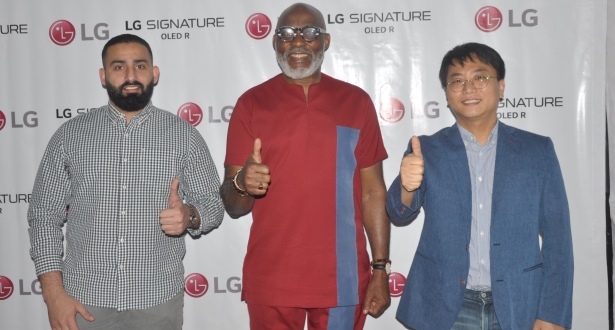
LG Electronics has officially launched the LG Signature OLED R, the world’s first rollable television, in Nigeria featuring an unprecedented design.

Each LG Signature OLED R rollable TV is custom built to order, meticulously assembled and finished with top quality craftsmanship by LG’s most experienced production professionals. The epitome of exclusivity, LG SIGNATURE OLED R has been lauded as a triumph in engineering and user-centric design.
The 65-inch flexible OLED display is created from one sheet of glass and features self-lit pixels and independent dimming control. The unique TV features a number of different viewing formats — Full, View, Line View, and Zero View — where the display adjusts its size accordingly.
According to Mr. Choong Bae Seok, General Manager Home Entertainment, TV Division, LG Electronics, West Africa Operations, “Users of the LG Signature OLED R may manage other home equipment remotely via line view, which allows the television to be partially unrolled, by selecting features and settings such as clock, frame, mood, music, and home dashboard”.
“The OLED display vanishes completely in zero view, allowing users to enjoy music and other audio material through the 4.2-channel, 100w front-firing Dolby Atmos audio system.
“The R in the name indicates that the TV is not only rollable, but also revolutionary in the home entertainment arena, revolutionizing the interaction between a TV that can be hidden from view at the push of a button and the surrounding environment”, he explained.
“This is a true luxury product that reimagines what television can be” Choong said. “This unique TV delivers a differentiated user experience and a new way of thinking about space while once again confirming LG’s leadership in the premium TV market.”
According to him, the LG Signature OLED R is a work of art that will appeal to people who demand the best and understand the true value of game-changing innovation.
“This TV is not only an incredible feat of engineering and user-centric design, but it is also a work of art that will upgrade any space and compliment any lifestyle. From the brushed aluminium casing to the stylish and modern wool speaker cover by Kvadrat of Denmark, LG Signature OLED R was specially designed.
“With a liquid smooth 65-inch flexible OLED display that leverages self-lighting,pixel technology, LG Signature OLED R boasts an individual dimming control to produce supreme picture quality.
“Moreover, the new TV represents LG’s unrivaled ability to innovate and create new possibilities that directly contribute to consumer benefits beyond the advanced hardware”, Mr. Seok asserted.
Mr. Mohamed Fouani, Managing Director, Fouani Nigeria Limited, during the event, also reaffirmed the company’s commitment to work with LG Electronics as its sole distributor in Nigeria to make available the futuristic TV and other LG products in Nigeria.
“We are happy that the much anticipated LG Signature OLED R is now available in Nigeria. We believe our customers deserve the best of LG products and so we look forward to having everyone at our showroom to check out the world’s first rollable television and other products that can help them live a smarter and more convenient lifestyle”, he excitingly said.
Artificial intelligence powered
The Signature OLED R uses Artificial Intelligence (AI) and a deep learning system to optimize image and sound quality according to the environment and content being showcased.
With Natural Language Processing (NLP), the TV can understand complex questions. For example, users can ask for the name of an actor, the films they have starred in, the background music and more.
Follow-up inquiries will also be recognized by the television as part of the same context, eliminating the need for repeating.
Eye-safe certified
LG Signature OLED R employs an OLED panel certified by Swiss-based Societe Generale de Surveillance (SGS) for producing less air pollutants, reducing the use of hazardous substances and being easier to recycle.
The TV employs the world’s first Eyesafe-certified TV panels that meet the low blue light emission requirement of US-based Eyesafe and has also been rated favorably by TÜV Rheinland and Underwriters Laboratories.
Specifications
In terms of specifications, the LG Signature OLED TV comes with a 120Hz 4K OLED display, with a 3840 x 2160 resolution. The display supports 4K Cinematic HDR technology and a 4K up-scaler. The television set also supports smart assistants like Alexa, Google Assistant and also has LG ThinQ AI.
In terms of connectivity, the television set comes with 4 HDMI ports, 3 USB ports, Wi-Fi 802.11ac and Bluetooth 5.0. The screen offers infinite contrast, resulting in perfects blacks on the display. The ultra-thin LG Signature OLED R screen rolls neatly into its own sound system.
Also on display at the launch were the rest of the LG Signature line, an elegant collection of cutting-edge appliances. Exhibited next to each other, each Signature product certainly catches your eye, but together they also leave a lasting impression.
Their sleek, high-quality finishes, combined with cutting-edge technology, create a visually integrated home system that meets the demands of today’s lifestyle. The OLED R, on the other hand, is the collection’s apex, with its potential to elevate any space.


Nigeria’s data protection industry has grown into a N16.3 billion ecosystem within three years of formal regulation, according to the Nigeria Data Protection Commission (NDPC).

Olufemi Ibitayo, head of Finance Management and Control, NDPC, announced the milestone at the Regional Data Governance Exchange in Nairobi, Kenya, where he represented Dr Vincent Olatunji, national commissioner and chief executive officer, NDPC.
Presenting Nigeria’s progress, Ibitayo said the country’s strong regulatory framework and the establishment of an independent data protection authority have strengthened confidence in the digital economy and enhanced Nigeria’s reputation as a destination for foreign investment.
The Regional Data Governance Exchange, organised by the Data Governance in Africa Initiative and hosted by the Office of the Data Protection Commissioner in Nairobi, brought together African data protection authorities to strengthen institutional capacity, deepen collaboration and promote peer learning on data governance. Photo: NDPC
He said the Commission’s “Compliance First, Not Punishment” approach encourages organisations to meet their obligations through dialogue and voluntary compliance, while ensuring effective regulatory oversight.
Ibitayo added that the NDPC is developing regulatory technology solutions, a regulatory sandbox and a data privacy innovation laboratory to further strengthen Nigeria’s data governance ecosystem and support future growth.
United Nations Commission on International Trade Law (UNCITRAL)
The ongoing UNCITRAL session has brought together delegates from Nigeria, Australia, China, Ghana, France, the United States and other member states to develop harmonised legal frameworks aimed at facilitating secure, trusted and efficient cross-border digital commerce. Photo: NDPC
Meanwhile, Olatunji reaffirmed Nigeria’s commitment to global data governance during a meeting with Nigeria’s Permanent Representative to the United Nations, Ambassador Jimoh Ibrahim.
He made the remark on the sidelines of the ongoing United Nations Commission on International Trade Law (UNCITRAL), where Nigeria is participating alongside delegates from several member states to advance harmonised legal frameworks for secure and trusted cross-border digital commerce.
The NDPC boss highlighted the Commission’s achievements since its establishment, noting that strategic institutional reforms have positioned Nigeria as a leading voice in the global data protection ecosystem.
He said the country’s data protection framework has continued to earn international recognition, adding that the Commission remains committed to promoting trusted data governance as a driver of digital transformation, economic growth, innovation and sustainable development in line with the Renewed Hope Agenda of President Bola Ahmed Tinubu.
During the meeting, Ambassador Ibrahim commended the Commission’s progress since the enactment of the Nigeria Data Protection Act 2023 and called for the establishment of a comprehensive national data bank to support evidence-based policymaking, research and national development.
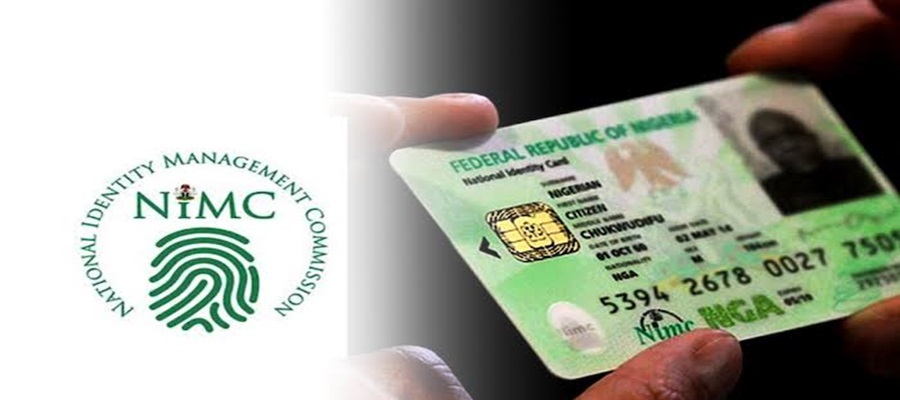
National Identity Management Commission (NIMC) has said thet more than 136 million Nigerians and legal residents have been enrolled in the National Identity Database (NIDB).

In a statement on Tuesday, Kayode Adegoke, head of corporate communications, NIMC, said Abisoye Coker-Odusote, chief executive officer (CEO) of the commission, announced the milestone during a courtesy visit to the ministry of budget and economic planning.
In April 2025, NIMC said over 117.36 million Nigerians had been enrolled as of February 28, 2025.
The visit was part of the commission’s ongoing stakeholder engagements with ministries, departments and agencies (MDAs) on the implementation of the NIMC Act 2026.
Presenting the new Act, Coker-Odusote said the legislation repeals and replaces the 2007 NIMC Act, modernising Nigeria’s digital identity ecosystem by positioning the national identification number (NIN) as the country’s foundational identity under the “one person, one identity” policy.
She said the law also establishes NIMC as the root certificate authority for the national digital infrastructure and introduces stronger data protection and cybersecurity measures, as well as digital credentials.
“The Federal Government remains committed to enrolling and issuing NINs to all Nigerians and legal residents within the shortest possible time,” Coker-Odusote said.
She added that NIMC is ready to collaborate with the ministry of budget and economic planning to leverage the NIN for economic planning and national development initiatives.
Speaking during the visit, Abubakar Atiku Bagudu, the minister of budget and economic planning, reaffirmed the federal government’s commitment to the implementation of the NIMC Act 2026.
Bagudu described the legislation as “a transformative milestone” that would strengthen Nigeria’s digital identity ecosystem and accelerate national planning and development.
He commended the NIMC director-general and the commission’s leadership for their efforts in securing the passage of the legislation, noting that it provides “a solid legal foundation for a trusted, secure, and inclusive national identity management system”.
The minister, however, said the true measure of the Act’s success would lie in its implementation and the benefits it delivers to Nigerians.
“The true measure of the Act’s success will lie in its effective implementation and the tangible benefits delivered to citizens,” he said.
Bagudu also called for stronger collaboration across the federal, state and local governments to build public confidence in the national identity system and eliminate the duplication of identity databases across government institutions.
He said the NIN should serve as Nigeria’s single, universally accepted identity standard, supporting efficient service delivery and good governance.
On June 26, President Bola Tinubu signed the NIMC Act 2026 into law, repealing the commission’s 2007 establishing Act.
At the time, Olubunmi Tunji-Ojo, minister of interior, said the legislation would strengthen Nigeria’s legal framework for digital identity management, cybersecurity and secure digital authentication, while reinforcing the NIN as the country’s foundational identity credential under the “one person, one identity” principle.

Plateau State Public Complaints Commission (PCC), an agency of the state established to investigate complaints of abuse of office, administrative injustice and other forms of official misconduct is allegedly collecting personal information from members of the public through its website with no privacy policy.

According to investigation by Foundation for Investigative Journalism (FIJ), PCC is falling short of a key transparency requirement under Nigeria’s data protection laws.
FIJ found on Tuesday that PCC collects personal information from members of the public through its website despite providing no privacy policy explaining how that information is collected, processed, stored or protected.
The commission serves as the state’s ombudsman, receiving complaints free of charge against public institutions and private organisations on issues including wrongful dismissal, victimisation and administrative negligence.
Yet, while its online complaint portal requests personal information such as names, phone numbers, email addresses, subject lines and complaint details, visitors are given no privacy notice explaining what becomes of that information after it is submitted.
The omission means visitors are not told why their information is being collected, how long it will be retained, the legal basis for processing it or the rights available to them as data subjects.
WHAT IS THE POSITION OF THE LAW?
The guidelines issued by the National Information Technology Development Agency (NITDA) are explicit: every government website is required to have a privacy policy.
Section 10.4 (i, ii) of the NITDA guidelines mandates all government websites to exercise diligence when collecting personal details or information about visitors on their websites.
The requirement is intended to ensure transparency and accountability in the handling of personal information, allowing visitors to understand why their data is collected, how it will be used and the safeguards in place to protect it.
Similarly, the Nigeria Data Protection Act (NDPA) 2023 requires data controllers to provide privacy notices to individuals before, or at the point of, collecting their personal information.
Such notices are expected to disclose, among other things, the purpose for collecting the data, the legal basis for processing it, the period for which it will be retained and the rights available to data subjects.
Section 27 of the NDPA states:
(1) Before a data controller collects personal data directly from a data subject, the data controller shall inform the data subject of the – (a) identity, residence or place of business of, and means of communication with the data controller and its representatives, where necessary;
(b) specific lawful basis of processing under section 25(1) or 30(1) of this Act, and the purposes of the processing for which the personal data are intended;
(c) recipients or categories of recipients of the personal data, if any;
(d) existence of the rights of the data subject under Part VI;
(e) retention period for the personal data;
(f) right to lodge a complaint with the Commission in accordance with section 46 (1) of this Act; and
(g) existence of automated decision-making, including profiling, the significance and envisaged consequences of such processing for the data subject, and the right to object to and challenge such processing.
Without a privacy policy, visitors have no way of knowing the commission’s data-handling practices or the safeguards, if any, in place to protect the personal information they submit through the website.
At press time, the Plateau State Public Complaints Commission’s website had no privacy policy.

CAC to Sanction Companies with Incomplete Business Letters From August 1

BVN Enrollments Hit 69.55m- NIBSS

CBN Warns against Rejection of N100 Banknotes

Data Protection Industry Hits N16.3Bn in 3 Years- NDPC

NCC Seeks Cost-Based Pricing Framework for Ducts

NASENI Moves to Digitize CCB’s 5m Assets Declaration and Operations

Mobile Internet Gender Gap Widest in Africa – GSMA

Nigeria Launches FreeTV Nationwide

CANAL+ Partners Samsung to Pre-Load DStv Stream on New Samsung TVs In Nigeria, Other African Countries

CredibleVoteNG Opens Free Access to all Polling Units in Nigeria after INEC Demanded N1.Bn for Register




 News1 day ago
NRC, Ponzi Scheme Collapses Resulting Loss of Billions of Naira

 General News2 days ago
IHS Nigeria, FCT-HSES Concludes Clean Cooking Energy Campaign “Project Breathe Clean Air” in Abuja

 E-Business2 days ago
Kaspersky Transforms Threat Intelligence Reporting into an Interactive Content Hub

 News2 days ago
Microsoft to Lay Off 4,800 Workers

 Telecom2 days ago
Airtel Africa Cuts Diesel Dependence by 9.1m Litres

 Broadcasting2 days ago
NELFUND Investigates 34 Universities Over Students’ Missing Tuition Refunds

 Telecom2 days ago
A New Blueprint – How Strategic Collaboration is Rewriting the Narrative on Youth Drug Abuse

 News2 days ago
Access Bank, Fifth Chukker and UNICEF Renew Commitment to Expanding Educational Opportunities for Nigeria’s Most Vulnerable Children