

E-Financial
FUTA Students Showcase Technology Prowess At Hackaholics 3.0

ALAT by Wema, Nigeria’s first digital bank recently announced the 2022 edition of its Hackathon programme tagged #Hackaholics 3.0 – Building The Future.

The acceleration, which is aimed at helping tech enthusiasts and innovators scale and gain entrance into the market, is targeted at young Nigerians who will put their coding, product curation, and pitching skills to work, by solving interesting problems.
With 3 pitch centres planned across the country, Hackaholics 3.0 will kick off at the Federal University of Technology, Akure in Ondo state between Tuesday the 15th and Thursday the 17th of February 2022.
The 3-day Bootcamp will see participants exposed to the creative, technical and business sides of innovation in specially curated sessions that seasoned innovators, venture capitalists and the ALAT by Wema team will lead.
In what promises to be a fun-filled and enlightening event, the FUTA edition of Hackaholics will witness side attractions such as musical performances. There will also be a raffle draw where students stand a chance to win various cash prizes and ALAT merch.
Hackaholics 3.0 is Wema Bank’s contribution to building the nation through tech, by developing and launching a community of techpreneurs made up of young people while also supporting youth enterprise.
The hackathon is aimed at solving some specific challenges across multiple sectors, focusing broadly on the limitless possibilities in the future of technology, like NFTs, Web 3.0, Metaverse, Blockchain, AR, VR, AI, IoT.
The tech pitch event will give young Nigerians the enabling environment in solving societal issues across Financial Inclusion, Health, Entertainment, lending, mSME, while they stand the chance to win a total prize of five million Naira.
Speaking on the initiative, Solomon Ayodele, the Head of Innovation, Wema Bank, said, “The tech space is filled with emerging technological advances that hold so many possibilities and we want to key into that by raising the next generation of tech giants who will use their creativity and talent to change the course of society. We truly believe our aspirations as an organisation align with the desires of a lot of young Nigerians in creating and implementing disruptive technology solutions. ”
The registration process for Hackathon 3.0 began on February 5, 2022, and has been extended to the 5th of March, 2022 because of the large number of entries received in the first few days of registration and requests from the public.
After FUTA, the ALAT innovation train will head to UNIBEN and UNILAG, where innovators, creative thinkers, developers, and coding experts will also connect and show off their skills while opening themselves up to a world of greater possibilities. 1st, 2nd and 3rd place winners at this 3rd edition will walk home with two million Naira, 1.5 million Naira, and one million Naira, respectively.


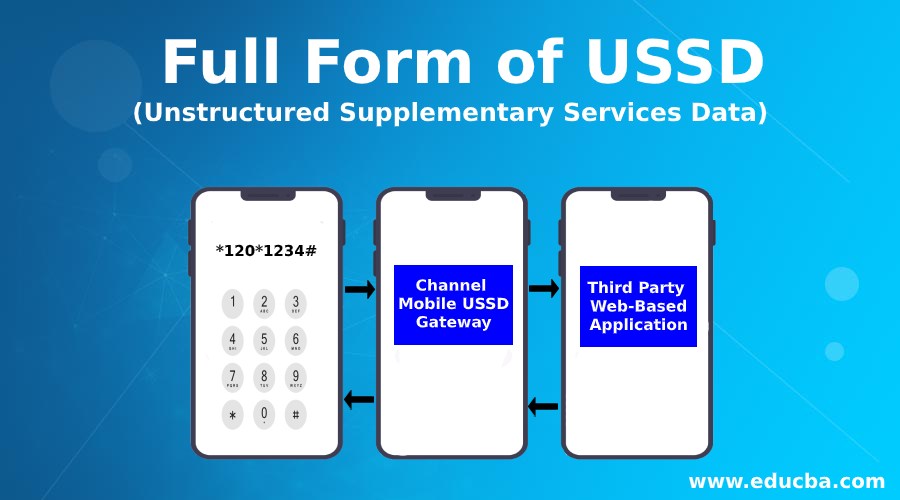
Nationwide Unstructured Supplementary Service Data (USSD) glitches are occurring because the Nigerian Communications Commission (NCC) and Central Bank of Nigeria (CBN) transitioned to an “End-User Billing” (EUB) framework.

USSD is a real-time messaging protocol that allows you to communicate directly with your mobile network provider’s computers. It operates without needing an internet connection and is typically triggered by dialing a code starting with \(\ast \) and ending with \(\#\) (e.g., $\ast$123\(\#\)).
Instead of deducting fees from bank accounts, the ₦6.98 per-session charge is now deducted directly from mobile airtime.
The disruptions, which have affected customers of several leading banks including First Bank of Nigeria, Access Bank, United Bank for Africa, First City Monument Bank and Stanbic IBTC Bank, have sparked confusion among retail customers, traders and Point of Sale operators who rely heavily on USSD banking for daily transactions.
Previously, banks deducted USSD charges directly from customers’ bank balances before settling telecom operators separately.
That framework has now been replaced with an End-User Billing system.
Under the new model, customers are charged N6.98 for every 120-second USSD session, with the fee deducted directly from mobile airtime.
This means customers with little or no airtime on their SIM cards may be unable to complete transfers, regardless of how much money they have in their bank accounts.
A Federal High Court in Abuja has affirmed the Central Bank of Nigeria’s (CBN) exclusive ownership of the “eNaira” digital currency platform and trademark.

eNaira
Justice James Omotosho, in a judgment delivered on Friday, restrained eNaira Payment Solutions Limited from presenting itself as the owner of the “eNaira” trademark.
The court also ordered the company to immediately adopt a new name that does not contain the word “Naira”.
The suit, marked FHC/ABJ/CS/113/2021, was dismissed, while the court awarded N10 million costs in favour of the CBN following its successful counterclaim.
Justice Omotosho held that although the company had been registered with the Corporate Affairs Commission (CAC) since 2004, its name was misleading because of its close association with Nigeria’s sovereign currency.
“The name chosen by the plaintiff on its incorporation is in the circumstances unregistrable due to the misleading nature of the name, which suggests government patronage,” the judge ruled.
The court further noted that the Trademark Registry had, through a letter dated Nov. 15, 2021, withdrawn approvals earlier granted to the company for applications related to the “eNaira” trademark under classes 36 and 42.
According to the judgment, the company was informed that “eNaira is a national intellectual property and constitutes a symbol and national asset of Nigeria.”
Justice Omotosho ruled that the plaintiff had no superior legal claim to the trademark and therefore could not seek injunctive relief against the CBN.
“A party that has no legal right cannot be entitled to an injunction. The purport of this is that, prima facie, the plaintiff has no valid trademark to the exclusive use of the eNaira trademark,” he held.
The judge also emphasised that under Section 852(2) of the Companies and Allied Matters Act, the CAC has powers to reject or direct changes to company names that suggest government affiliation.
“The ‘eNaira’ name is so closely linked to the legal tender of Nigeria, which is exclusively controlled by the CBN.
“An average person on the street is most likely to think that the plaintiff is an agent of the Federal Government or the CBN,” the court stated.
Justice Omotosho added that the company’s proposed activities involving digital currency operations created the impression that it had official authority to issue or manage a digital version of the naira.
“The proposed business of the plaintiff… no doubt creates the impression that the plaintiff has the authority of the Federal Government of Nigeria to issue and control a digital form of the Naira,” he said.
The judge warned that allowing a private entity to control the “eNaira” name could undermine public confidence and create confusion within the country’s financial system.
“Any digital currency with the name ‘eNaira’ will no doubt create the impression that it is an official digital form of the Naira.
“This would be disastrous for the Nigerian economy and will create skepticism among users, as it is not guaranteed by the Central Bank of Nigeria,” he added.
The court also observed that the CAC had lawfully directed the company to change its name within six weeks of its Dec. 9, 2021 directive, but the company failed to comply.
During proceedings, counsel to the plaintiff, Mr David Ityonyman, argued that the word “Naira” was not exclusive to Nigeria and should not be monopolised.
“Nothing stops India from having a Naira. Also, countries like the U.S. and Canada make use of dollars. None of them has laid claim to the name,” he submitted.
He further argued that the company had used the “Naira” branding internationally for more than two decades before the CBN launched the eNaira platform in 2021.
Central Bank of Nigeria (CBN) and commercial banks are reviewing the large number of transaction alerts sent to customers and the complaints about bank charges.

So called bank alert refers to real-time SMS or email notifications from your financial institution about transactions, balances, or security updates.
Olayemi Cardoso, governor, CBN, said this in Abuja after the 305th Monetary Policy Committee meeting.
He explained that many bank customers are confused because they receive too many debit alerts for a single transaction.
To address this, the CBN has created a quarterly meeting system involving its consumer protection team, commercial banks, and the top 10 microfinance banks. The goal is to resolve customer complaints faster and improve banking services.
Cardoso said one major issue being studied is how banks send multiple notifications for one transaction.African Politics Analysis
He said this often confuses customers and suggested that alerts should be simplified and combined so people can clearly understand what each debit is for.
He added that the issue is still being worked on and solutions will be proposed soon.
On the N50 stamp duty charge, the CBN governor explained that it is not a bank charge.
He said the charge comes from tax authorities, while banks only collect it and send it to the government.
He advised customers who notice wrong charges to first complain to their bank. If the issue is not resolved, they can escalate it to the CBN’s consumer protection department.
Cardoso also said the CBN has strengthened its monitoring system to ensure banks handle complaints properly, compensate customers when needed, and improve customer service.
The CBN is also reviewing how banks apply rules on charges and customer complaints, with the aim of improving transparency and reducing repeated issues in the banking system.

Court Orders FG to Reveal Identity of Local Contractors in $460m Abuja CCTV Project

NCAA Suspends Services to Air Peace, Others over Debts

Legend Internet Repays N10Bn Commercial Paper

FG Classifies Ebola Importation into Nigeria as High Risk

Transfers Fail as Banks Suffer USSD Glitches

MTN, VDT, Zoracom, Digital Realty Back 2026 Girls in ICT Campaign

Vitel Wireless Partners Fintechs to Expand Access to Services

FG Okays 112 as Toll-Free National Emergency Response Number

Opay Plans IPO in US, Targets $4Bn in Valuation

Elon Musk Launches XChat with Video Calling to Take on WhatsApp, Messenger




 Telecom2 days ago
NCC Drafts New Rules for Virtual Mobile Operators

 Telecom2 days ago
Airtel Africa Launches $110m Share Buyback Programme for Capital Efficiency

 Telecom2 days ago
MTN Nigeria Tops Gender Equality Rankings After Major Workplace Transformation, IFC Report Reveals
 General News2 days ago
WHO Says Ebola Risk Now at Highest Level

 News2 days ago
FG Unveils AI Public Services Platform

 E-Business2 days ago
LG Electronics Showcases Advanced HVAC Solutions at Mega Clima Nigeria 2026

 Telecom2 days ago
Australian Court Upholds Fine Against X Over Child Safety Compliance Failures

 Telecom2 days ago
Microsoft, Partners Launch ‘LINGUA Initiative’ to Save African Languages From Digital Extinction