

Telecom
National Stakeholders Summit: Ashcraft to Address Vandalisation of Critical Infrastructure

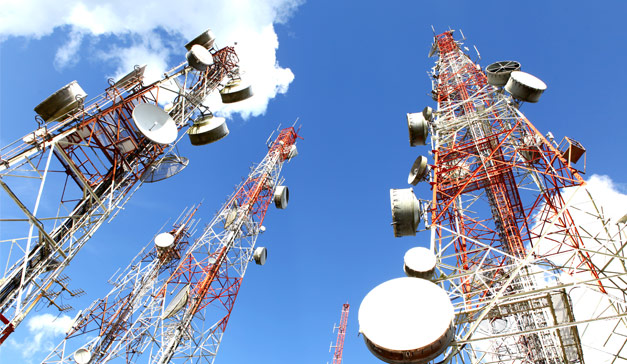
The Ashcraft Centre for Social Science Research has chosen February 28th and March 1, 2022 for its forthcoming National Stakeholders Summit to address vandalisation of critical infrastructure and business assets in Nigeria.

According to the Centre, the Summit will hold at Congress Hall, Transcorp Hilton, Abuja, with the theme: ‘Protecting Nigeria’s Critical Infrastructure, Monuments And Business Assets’.
At a pre-event conference held Tuesday in Abuja, Chief of Strategic Planning & Innovations and Head of Secretariat of the Centre, Chiakor Alfred (PhD), recalled that the last two decades have demonstrated clearly that the nature of threats to Nigeria’s security have changed significantly.
Among these bottlenecks, he highlighted structural challenges, such as the systematic vandalisation, degradation and destruction of Nigeria’s critical national infrastructures, monuments and business assets; terrorism, insurgency, cyber-‐crimes, banditry, kidnapping, piracy, oil bunkering, drug trafficking and other forms of organised crime, adding that these vices have created an entirely new security environment.
According to him, Nigeria now faces more security threats that have different characteristics from classic military conflict between states.
“The gross expansion of the contours that define security boundaries makes it imperative to recognize the eco-‐systemic dimensions of the threats that stare at us daily and in every form,” he noted.
Alfred said the rampancy and intensity of the vandalisation and destruction of Nigeria’s infrastructures and assets prompted the call to arms by His Excellency Muhammadu Buhari, GCFR – President of the Federal Republic of Nigeria to the Armed Forces, Intelligence and Security Establishment and all Nigerians to see it as a patriotic duty to ensure maximum vigilance and shared responsibility in the protection and security of these Assets and platforms at all points in their life-cycle.
In the light of this, he said the National Stakeholders Summit is therefore a Private/Public Sector Partnership that aims at galvanizing responsibility and synergy for the prioritization of the Multi Agency/ Joint Risk Management Efforts to ensure the security and resilience of Nigeria’s critical national assets, in line with the Risk Management Framework of the National Protection Policy and Strategy 2022 (CNAINPPS 2022), and also, the Critical National Infrastructure Bill under consideration at the National Assembly.
His words: “These projections of the Summit are consistent with the provisions of the National Protection Policy and Strategy 2022 (CNAINPPS 2022); the National Security Strategy Framework; and the Critical National Infrastructure Bill currently under consideration at the National Assembly; the re-engineering of appropriate legislations; and the strategic roadmap for harnessing expert knowledge and country wide technical support for deterrence, codified response strategy and recovery architecture to Nigeria’s critical assets.
“The Summit further aims to deepen advocacy; harness expert/operational knowledge and country wide technical support to enhance deterrence, threat mitigation and desired security outcomes; and sustain confidence building through robust interface with all Stakeholders including Nigeria’s National and State Houses of Assembly; the Armed Forces, Security and Intelligence Agencies; Statutory Regulators in the diverse Sectors of Nigeria’s productive economy; Investors/ Business Owners; Operators of the Infrastructures and Assets; Professional and Civil Society Organizations; the Traditional Institution, Socio Cultural and Pressure Groups, etc.
The centre believed that by building inter/multi sectoral synergy, the Summit shall engender Stakeholders and citizens with shared responsibilities towards achieving the institutionalization of the road map and priorities of the policy frameworks crafted to provide deterrence, security and resilience of Nigeria’s assets.
It is also the expectation of the Conveners that the derivatives from the Summit shall enhance knowledge leadership & management, regenerate confidence in securing Foreign Direct Investment into Nigeria’s productive Sectors as canvassed by His Excellency President Muhammadu Buhari, GCFR, at different international fora; and also boost capital growth and turnkey business startups and development.”
Alfred further stressed that the security of lives, infrastructures, monuments and assets is the collective responsibility of every citizen, whether private or public.
He noted that issues of security, destruction of lives and property know neither religion nor ethnicity.
The Centre called on the partnership and support of all stakeholders, both in the Public and Private Sectors, with diverse political, religious and professional orientations to put aside all prejudices to help forge a common front to confront the monster that is threatening the integrity of our corporate existence as a people and as a nation.
“It is time also to live the slogan that says “if you see something, say something. If you hear something, do something.
“It is incumbent on us all therefore to engage robustly on how to deter and mitigate these challenges in a systematic and coordinated manner.
“This way, we can be sure of preserving our collective heritage and the sanctity of our God endowed resources, human, technical and material.”


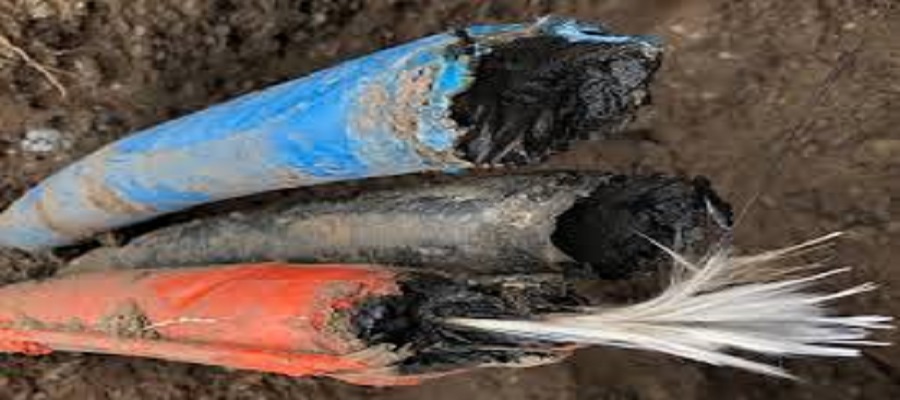
Association of Telecommunications Companies of Nigeria (ATCON) has warned that weak penalties under Nigeria’s Critical National Information Infrastructure (CNII) policy are undermining efforts to protect telecoms assets.

Tony Emoekpere, president, ATCON, made this known in an interview with the News Agency of Nigeria (NAN) in Lagos while calling for urgent legal reforms to strengthen enforcement.
Emoekpere said that although offenders are being apprehended and prosecuted, the current framework was failing to serve as a deterrent.
NAN reports that Nigeria’s Designation and Protection of Critical National Information Infrastructure (CNII) Order 2024, signed by President Bola Ahmed Tinubu, provides the country’s main legal framework for safeguarding critical Information and Communication Technology (ICT) infrastructure against vandalism, sabotage and theft.
The Order, anchored on the Cybercrimes (Prohibition, Prevention, etc.) Act 2015, classifies assets such as telecom towers, fibre-optic cables and data centres as critical national infrastructure requiring enhanced protection.
“People are being caught, but the offences are still treated as petty crimes.
“That limits the impact. CNII needs stronger legal backing such as an Act or executive order to give it more teeth,” the ATCON president said.
He said that the group was actively supporting the implementation of the CNII policy in collaboration with security agencies, stressing that telecom infrastructure remained critical to national security and economic growth.
The ATCON president also reaffirmed support for the Federal Government’s “Project Bridge,” aimed at expanding connectivity across the country, but identified right-of-way approvals across states as a major bottleneck.
According to him, because telcos have to engage multiple states, it is slowing things down but efforts are ongoing to address it.
On service quality, he said operators are struggling to keep pace with rising subscriber numbers and increasing data demand, despite recent tariff adjustments.
“The challenge is not that nothing is being done—investments are ongoing. But demand is growing even faster, and operators are constantly trying to catch up,” he said.
Emoekpere added that subscriber migration between networks and shifting usage patterns are placing additional pressure on certain operators, contributing to service fluctuations.
He, however, assured customers that efforts are ongoing to improve network performance.
“We value our subscribers, and everything is being done not just to maintain, but to improve service delivery,” he said.
The telecommunications sector has consistently identified infrastructure vandalism as a major challenge affecting service delivery and operational costs.
Industry stakeholders say the CNII Order is expected to strengthen the protection of telecom assets and improve quality of service for consumers, following years of rising attacks on infrastructure across the country.
Data from operators show that fibre-optic cable cuts remain one of the biggest threats to telecom operations.
However, in spite of the Order, Nigeria recorded 1,883 fibre cuts in the first quarter of 2026, while between January and August 2025, about 19,384 incidents were reported nationwide, averaging more than 2,400 monthly cases.
MTN Nigeria alone reported 9,218 fibre cuts in 2025, compared with 9,000 in 2024 and 6,000 in 2023, highlighting the increasing scale of the problem.
The sector has also faced widespread theft of generators, batteries and other power assets used to keep telecoms sites operational.
In 2025, criminals reportedly stole 656 critical power assets, including 152 generators and 504 batteries, while telecom operators lost an estimated ₦27 billion nationwide within a 12-month period due to infrastructure damage.
Industry reports further indicated that 577 network outages recorded in the first quarter of 2026 were directly linked to vandalism of telecoms infrastructure.
(NAN)


Airtel Africa has delivered a landmark financial performance for the 2026 fiscal year, characterized by record-breaking customer acquisitions, a massive leap in profitability, and a definitive shift toward a data-centric business model.

Driven by disciplined execution, and a robust digital strategy, the Group saw its Profit After Tax skyrocket to $813 million, up from $328 million in the previous year. This surge was underpinned by a 29.5 per cent increase in reported revenue to $6.4 billion, fueled largely by a 47.5 per cent growth explosion in the Nigerian market following strategic tariff adjustments.
Airtel Africa in its financial result for the year March 31, 2026, noted that the year was defined by a shift in how consumers interact with the network. Expectedly, data revenues have become the largest component of Group revenue, growing by 35.2 per cent in constant currency, which further lifted the firm’s performance. The customer base grew by 10.5 per cent to 183.5 million, the highest net additions in the company’s history.
On the network, smartphone penetration hit nearly 50 per cent, with 91 million users now utilizing high-speed data.
The mobile money ecosystem handled an annualised transaction value of over $215 billion in Q4’26. Customer engagement surged as the platform evolved into a primary financial hub for 54 million users.
Despite global inflationary pressures, Airtel’s cost-efficiency programmes pushed EBITDA margins to an all-time high of 50.3 per cent in the final quarter. This operational strength allowed the company to accelerate its infrastructure rollout, adding over 3,250 new sites and expanding its fiber network to nearly 82,000 km.
“This year delivered a very strong performance across both operating and financial metrics,” said Chief Executive Officer, Sunil Taldar, adding, “Adoption of new digital technologies and AI has been pivotal in unlocking growth opportunities and driving efficiencies, enhancing customer experience through site-level network optimization and streamlined onboarding.”
Airtel’s balance sheet has significantly de-leveraged, with leverage improving to 1.8x. This financial health has translated directly into shareholder value. The Board recommended a final dividend of 4.26 cents, bringing the full-year total to 7.1 cents, a 9.2 per cent increase.
While geopolitical developments have shifted the timeline, the company remains committed to an IPO for Airtel Money in the second half of 2026.
On future investment, the firm’s Capex guidance for FY’27 has been raised to $1.1 billion, focusing on 5G readiness, home broadband, and data centers.
While the outlook remains bullish, Taldar noted that rising energy costs due to geopolitical events may create near-term margin pressure. However, the Group intends to offset these through intensified cost-management and the continued scaling of its digital infrastructure.
Unity Bank Plc says it has disbursed over N500 million through its Shop Collateralised Facility (SHOCOF) to support small-scale traders and shop owners across Nigeria.

Unity Bank
The bank said the initiative was part of its efforts to promote Small and Medium Enterprises (SMEs) and strengthen support for operators in the informal sector.
In a statement, Unity Bank described SHOCOF as an innovative loan product designed to improve access to finance and drive financial inclusion among underserved business owners.
According to the bank, the facility was initially introduced as a targeted intervention for traders in Southeast Nigeria before expanding nationwide following strong acceptance and demand.
Under the initiative, eligible customers are allowed to use their shops as collateral to access credit, eliminating the stringent collateral requirements associated with conventional lending models.
The bank said the product leverages the commercial value and relative stability of fixed business locations to simplify access to financing for traders.
It added that the facility provides working capital support to enable beneficiaries restock goods, increase inventory turnover, improve cash flow, and respond more efficiently to market demands.
Speaking on the impact of the product, Group Head, Risk Management, Unity Bank, Mr Olusegun Oladipo, said the bank developed SHOCOF to address financing challenges faced by businesses in the informal sector.
“SHOCOF was created to address a critical gap within the small business ecosystem by providing access to credit through a structure that traders can satisfactorily meet without much ado.
“By recognising the value and stability embedded in their businesses, we have been able to support traders with the capital required to sustain and grow their operations,” he said.
Also speaking, Divisional Head, SME and Retail Banking, Unity Bank, Mrs Adenike Abimbola, said the expansion of the initiative nationwide reflected the bank’s commitment to providing practical financial solutions for small business owners.
“What started as a targeted intervention in the Southeast quickly gained momentum because the product directly addressed the realities of everyday traders,” she said.
The bank noted that more than 80 per cent of small businesses in Nigeria operate informally, with many relying on personal savings and informal borrowing due to limited access to bank credit.
It said SHOCOF was designed to bridge this financing gap by offering a lending model tailored to the operational realities of market traders and shop owners.
Unity Bank reaffirmed its commitment to supporting entrepreneurs through targeted financial products, including its Yanga account package developed for female entrepreneurs.
The bank said expanding access to capital for underserved business segments remains critical to boosting trade, strengthening local economies and driving sustainable economic growth.

CPN Begins Crackdown on Quack IT Professionals, Vows Tougher Action against Cybercrime

IMF Fears AI-Powered Cyberattack Could Spark Global Financial Crisis

ATCON Seeks Stiffer Penalities to Deter Infrastructure Attacks, Vandalism

FG Says It May Reject World Bank Loans over Delays

Joshua Ichor, Nigerian Innovator Bags Europe’s €60m Fellowship

Kaspersky Discovers Vulnerability in Qualcomm Snapdragon Chips that can Lead to Data Loss & Device Compromise

FG to Gift Nigerians over 100 Free TV Channels from May 15

MTN Suspends Data, Airtime Borrowing Service over New FCCPC Lending Rules

What Adekunle Gold’s Support Means for ‘The Gathering on 100

Bank Customers to Pay N1,500 for ATM Card Issuance, Replacement – CBN




 E-Financial3 days ago
FCMB Opens Applications for Zero-Interest Loans of Up to ₦10m for Women Entrepreneurs

 E-Business3 days ago
Kaspersky Identifies Ongoing Supply Chain Attack on Official Daemon Tools Website Distributing Backdoor Malware

 Telecom3 days ago
Vitel Wireless Partners Fintechs to Expand Access to Services

 Telecom3 days ago
Reps Claim NCC’s Weak Regulatory Oversight Responsible for Poor Telecom Services

 Telecom3 days ago
GSMA Africa Policy Group Chair Calls for Urgent Tax Reforms to Accelerate Digital Inclusion

 Telecom2 days ago
MTN, VDT, Zoracom, Digital Realty Back 2026 Girls in ICT Campaign

 News3 days ago
FG Bans Honorary Degree Holders from Using ‘Dr’ Title, Warns of Academic Fraud

 E-Financial3 days ago
Police Arrest Members of N713m Bank Fraud Syndicate, Chinese Suspect at Large