

General News
Bolt, Fixit45 Collaborate to Improve Access to Autocare Services


Fixit45, has partnered with leading ride-hailing platform, Bolt to provide its community of drivers with access to subscription-based plans that minimize potential mobility disruption and improves their chances of income optimization.

This is in light of the pivotal role played by the mobility industry in the general, and ride-hailing segment in accelerating economic growth as well as driving shared prosperity, coupled with the need to sustain these mobility efforts, auto tech platform.
This partnership is premised on Bolt’s dedication to redefining urban mobility by helping people move seamlessly and empowering partners to improve their earnings and Fixit45’s avowed commitment to building a seamless autocare & auto-repair, maintenance services, fleet management and so much more.
The subscription-based service plan for drivers on the Bolt platform guarantees unfettered access to quality auto services that include autocare, vehicle repair and maintenance from Fixit45’s service network across the country. Other benefits include access to repair financing, discounts on spare parts, unlimited diagnosis, periodic car wash and tire services.
Justus Obaoye, CEO and Co-Founder, Fixit45, noted that given the enabling power of mobility as a critical success factor in stimulating advancement and development for both urban and rural economies, it is imperative that concerted efforts are made towards mitigating disruptions in that space.
“As a platform that enhances mobility experiences, Fixit45 has collaboration in its DNA. As such, we are excited to partner with a market leader in the ride-hailing space in oiling the wheels of progress.
“This service plan ensures that drivers’ inactivity often occasioned by vehicle operational downtime is minimized while increased earnings, improved vehicle reliability, and quick service turnaround time are some of the perks that come with this partnership.
This partnership with Bolt is poised to keep the lights of the Nigerian economy on,” Obaoye said.
Speaking on the partnership, Femi Akin-Laguda, Country Manager at Bolt, said, “At Bolt, our promise to improve drivers’ experience has been central to our continued success in Nigeria.
“Our commitment is reflected in our constant effort to build new avenues that help make our drivers and fleet partners more profitable. This partnership will improve the access of our partners to cost-effective autocare, repair financing and so much more.”
He concluded by saying, “We do not select our partners or partnerships frivolously. Working with Fixit45 on this project will help our drivers keep their cars in great conditions and save them a lot of time and money in maintaining their vehicles leading to better experiences for all our customers, be they drivers or passengers.”
“With technology increasingly contributing to the development of mobility, strategic engagements like this will help make life easier and put both firms at the forefront of driving change.
“We are driven by our overarching purpose which is to facilitate the exchange of goods and services, thereby enabling value creation for all participants and this partnership bolsters our mandate. It is heart-warming to note that we are helping stakeholders see that we are not here to compete but here to facilitate and enable the fix that makes every car owner happy,” Abdulazeez Ogunjobi, co-founder/CTO, Fixit45.
Since it entered the Nigerian market, Bolt has focused on developing products that offer better and more affordable alternatives in the mobility segment whilst making giant contributions to Nigeria’s socio-economic growth. Fixit45 has been building the infrastructure for a robust automotive aftermarket industry.


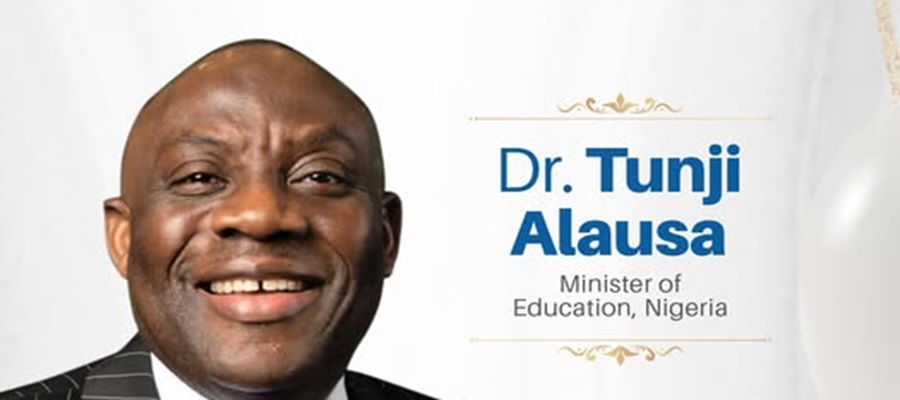
Federal government has announced plans to end the separation between Junior Secondary School (JSS) and Senior Secondary School (SSS) as part of efforts to improve school retention and reduce the high number of pupils dropping out before completing secondary education.

Tunji Alausa, minister of Education
Tunji Alausa, minister of Education, announced the proposal on Tuesday during the inauguration of the Ministerial Implementation and Monitoring Committee of the Universal Basic Education Commission (UBEC) in Abuja.
Alausa said the existing “disarticulation policy,” which requires junior and senior secondary schools to operate independently with separate principals, management structures and facilities, has failed to achieve its intended objectives and has instead worsened access to education.
According to him, the Federal Government will present a proposal to abolish the policy at the next meeting of the National Council on Education (NCE), the country’s highest education policymaking body.
“We have 20 million dropouts from primary school to JSS. Where are those students?” the minister queried.
“We also found we have 80,000 public primary schools and only about 15,000 junior secondary schools. That’s a one-to-eight ratio.”
He explained that the mismatch between the number of primary and junior secondary schools has created severe bottlenecks in the education system, leading to overcrowded classrooms at the junior secondary level while many senior secondary school facilities remain underutilised.
Alausa cited Kaduna and several northern states as examples where the policy has contributed to poor transition rates between basic and secondary education.
“This disarticulation policy has failed. We will phase it out. We can’t be creating positions because we want to create director-level appointments for people while we harm our education system. It’s about doing what is best for every Nigerian child,” he said.
The minister said the proposed reform forms part of broader efforts by the Tinubu administration to improve access to education, increase retention rates and enhance learning outcomes across the country.
He acknowledged previous shortcomings in tackling the out-of-school children crisis but expressed confidence that the current administration would reverse the trend.
“This government will not fail. We are fixing it,” Alausa declared.
At the ceremony, the minister also inaugurated the UBEC Ministerial Implementation and Monitoring Committee, chaired by Prof. Rashid Aderinoye, to supervise the execution of UBEC-funded Smart Schools, Bilingual Schools and Alternative Schools nationwide.
He said the committee had been tasked with ensuring that the projects are completed, handed over to state governments and opened for teaching and learning.
Although UBEC has invested in hundreds of Smart Schools and related educational projects across the country, Alausa lamented that many remain abandoned, unfinished or yet to admit pupils, describing the situation as an unacceptable waste of public resources.
He stressed that improving education requires more than constructing schools, insisting that completed facilities must become fully operational and accessible to learners.

Federal government has said that it plans to establish a National Skills Database as part of efforts to reduce unemployment, address the growing mismatch between available skills and industry needs, and strengthen workforce planning through data-driven policies.

The proposed database, to be developed under a Nigerian Skills Observatory, is expected to provide real-time information on the supply and demand of skills across sectors, enabling better job matching, improved policy formulation and targeted investments.
The plan was unveiled at the second National Skills and Industry Alignment Roundtable Series held in Abuja with the theme, “The Role of Data in Job Creation, Coordination and Linkages.”
Delivering the keynote address, Yemi Kale, group chief economist and managing director of Research and Trade Intelligence, Afreximbank, said Nigeria’s labour market challenge was no longer the absence of data but the inability to convert existing information into actionable intelligence.
“The challenge for us as a nation is not one of data accumulation. It is one of data integration and intelligence,” Kale said.
He explained that although vast amounts of information on education, employment, wages and skills development already exist across government agencies, educational institutions and the private sector, the data remains fragmented, making effective labour market planning difficult.
“Data tells you what exists. Intelligence tells you what is happening, what is likely to happen next and what actions should be taken,” he said.
Kale lamented that while Nigeria produces thousands of graduates annually, employers in critical sectors continue to struggle to recruit qualified workers, even as millions of Nigerians remain unemployed or underemployed.
“The problem is that employers are searching, workers are searching, policymakers are searching and investors are searching independently rather than collectively. Opportunities that should be visible remain hidden because the information needed to connect them is fragmented,” he said.
According to him, the disconnect has created structural inefficiencies that discourage investment, suppress productivity and prevent Nigeria from fully leveraging its youthful population.
He added that countries that successfully transformed their economies deliberately aligned education, skills development and workforce planning with the needs of industry.
Kale urged Nigeria to view its youthful population as an economic asset by ensuring young people acquire skills demanded by modern industries.
Speaking on the proposed National Skills Database, Rimam Nuhu, special assistant to the President on Workforce Development, said the platform would serve as the foundation of the Nigerian Skills Observatory.
“At the most foundational level, the Skills Observatory is to create a database on the demand and supply of skills,” Nuhu said.
He explained that the National Council on Skills, chaired by Vice President Kashim Shettima, would rely on data generated by the observatory to formulate evidence-based policies on workforce development.
“Skills development is an input for job creation. We have a market where there are a lot of skills mismatches. Understanding exactly where those shortages exist will help us plan better and improve workforce planning.
“Ultimately, that contributes to a more productive economy,” he added.
Nuhu acknowledged ongoing debates over whether Nigeria is facing an actual shortage of skilled workers or merely a mismatch between available skills and labour market demand, stressing that the database would provide the evidence needed to guide interventions.
Earlier, Akubo Adegbe, senior special assistant to the President on Coordination and Delivery, said the roundtable was convened to tackle the fragmentation of labour market information across government institutions and the private sector.
He noted that despite huge volumes of workforce data being generated daily, the lack of coordination often leaves policymakers without a comprehensive understanding of labour market realities.
“If our first Roundtable challenged us to better align skills with industry, this second Roundtable challenges us to better align information with action,” Adegbe said.
Also speaking, Massimo De Luca, head of Cooperation at the European Union Delegation to Nigeria and ECOWAS, said the EU would continue supporting Nigeria’s efforts to build a labour market capable of meeting investors’ needs.
“We have a shortage of skilled labour when it comes to big investment projects. On the other hand, we have a lot of untapped talent that is not adequately recognised.
“Those are realities that investors take into account,” De Luca said.
He commended the Office of the Vice President for leading reforms aimed at strengthening Nigeria’s skills development ecosystem.
The Federal Government’s plan comes amid persistent unemployment and skills mismatch in Nigeria, where many graduates remain jobless despite employers reporting shortages of qualified workers in critical sectors.
The National Skills Database will serve as the foundation of the proposed Nigerian Skills Observatory, an initiative designed to provide real-time labour market data to guide workforce planning, skills development and evidence-based job creation policies.


The average fare paid for domestic air travel in Nigeria rose by 20.8 per cent year-on-year to N157,552.19 in May 2026, according to the National Bureau of Statistics (NBS).

The figure represents an increase from the N130,361.85 recorded in May 2025, the bureau said in its latest Transport Fare Watch report.
The NBS said the average fare paid by air passengers for a specified domestic route (single journey) stood at N157,552.19 during the review period.
It stated that Kano recorded the highest average airfare at N184,139.29, followed by Lagos at N176,971.65.
According to the report, Gombe posted the lowest average airfare at N135,800.61, while Nasarawa recorded N138,999.14.
The bureau also reported increases across other modes of transportation.
It said the average fare paid by commuters for bus journeys within cities rose to N1,431.25 per trip in May 2026, representing a 38.63 per cent increase from N1,032.46 in the corresponding period of 2025.
Similarly, the average fare for intercity bus transportation increased to N9,699.55 per trip, up by 21.89 per cent from N7,957.41 recorded a year earlier.
The report further showed that the average fare for commercial motorcycle (Okada) transportation rose to N1,072.51 in May 2026, representing a 52.45 per cent year-on-year increase from N703.54.
For water transport, the NBS said the average fare paid by passengers on inland waterways stood at N2,276.48 during the month under review.
It noted that the figure reflected a 30.88 per cent increase compared with N1,739.32 recorded in May 2025.
The bureau attributed the data to its monthly Transport Fare Watch, which tracks changes in transportation costs across the country and provides insight into the movement of prices within the sector.

Lebara Nigeria Becomes Member of GSMA Network

FG to Abolish JSS-SSS Separation Policy after 20m Pupils Drop Out

Vitel Wireless Warns Public, Says it Not Running any Investment Scheme

Army Says Terrorists Now Recruiting, Raising Funds Online

FG Mulls National Skills Database to Tackle Unemployment

Mobile Internet Gender Gap Widest in Africa – GSMA

London Strengthens Global Investment Ties with Africa @ First Ever London-Africa Business Summit

FG Targets Alleged N3tn Capital Flight, Opens Airtime Credit Market to Nigerian Fintechs

Japan, UNESCO Boost Digital Learning in 15 CoEs with Donation of ICT Equipment

Good News for DStv Users: Watch over 160 Channels Without Paying Extra




 E-Business2 days ago
LG Showcases AI-Powered Smart Living Innovations @ Africa Technology Expo 2026

 E-Financial2 days ago
UBA mobilises employees across Africa for environmental clean-up, wellness campaign

 Telecom2 days ago
OADC Reaffirms Abundant Capacity in Data Centres in Nigeria to Host Financial Data

 General News2 days ago
LASTMA Launches 3367 Toll-Free Hotline for Emergency Response, Traffic Management

 E-Financial2 days ago
PalmPay Calls for Trust, Infrastructure and Responsible AI to Drive Payment Ecosystem Innovation

 Telecom2 days ago
ALTON Backs NCC’s Local Smartphone Manufacturing Drive to Widen Digital Access

 E-Business2 days ago
Want a Business Loan Without Interest? SMEDAN Launches N500m Fund

 E-Financial2 days ago
ngCERT Raises Alarm over Surge in Banks’ ATM Cyberattacks