

News
Buhari Waxes Worriedly over Current Tax Administration


President Muhammadu Buhari Tuesday expressed concern at the current tax system in the country characterised by fragmented administration, multiple and sometimes overlapping taxes.

Buhari in Abuja while declaring open the second National Tax Dialogue Week with the theme : ‘’Tax Harmonisation for Enhanced Revenue Generation”.
He said: ‘’In most tax-efficient nations, tax administrative processes and practices are harmonised within a single system.
‘’One key deliverable of this year’s tax dialogue is to promote synergy in tax administration among the different tiers of government.
‘’Harmonising taxpayer identification across the country is a good start; but we must do more to promote ease of doing business (including ease of tax compliance) in Nigeria.

‘’On our part, we have started by clarifying in the 2021 Finance Act that FIRS is the sole authority to administer tax for the Federal Government.
‘’This clarification became necessary in order to avoid taxpayers being burdened with multiple tax compliance obligations towards different agencies of the same government.
‘’Multiplicity of tax administration is as undesirable as multiplicity of taxes; it creates uncertainty and instability; and above all, it is inefficient,’’ the president said in a statement issued by Femi Adesina, his spokesman.
President Buhari told participants at the tax dialogue that there was an urgent need to maximise domestic revenue within the extant tax policy and laws in the face of dwindling revenues from commodities.
He, therefore, proposed improved tax revenue for the country which will not necessarily impose new tax rates on Nigerians.
On Nigeria’s tax-to-GDP ratio, the president said the country also needed to do more in securing a buoyant domestic revenue base of the country that bequeathed an enduring economic foundation, political stability and social harmony to the next generation.
He further spoke on the importance of the tax dialogue, which was instituted by the minister of finance, budget and national planning, and the executive chairman, Federal Inland Revenue Service (FIRS).
President Buhari said the most important testament to the success of the first edition of the dialogue was the fact that the FIRS achieved 100 per cent of its collection target in 2021 and surpassed N6 trillion revenue threshold for the very first time, assuring Nigerians that the present administration would continue ‘’to maintain prudent management of our collective resources.’’
In her remarks, Hajiya Zainab Ahmed, minister of finance, budget and national planning, said the main tax revenue objectives of the federal government included developing an “economy that does not lean too heavily on resource wealth.”
She said Nigeria’s economic history provided enough facts that resource wealth alone could not lead to sustainable development, self-sufficiency and sustainable.
Muhammad Nani, chairman FIRS, who thanked the president for his directive to government agencies to enable FIRS connect to their ICT systems, said this singular pronouncement softened the grounds for the Service to roll-out its system for seamless acquisition of data.
On the remittances of the service to the federation account, the FIRS Chairman announced that statistics from March, 2022, Federation Account Allocation Committee (FAAC) meeting showed that out of a total revenue of N803.072bn from all revenue agencies, tax revenue contributed by FIRS was N513.522bn (63.94 per cent) while non-tax revenue from all other agencies amounted to N289.55bn (36.06 per cent).
The chairman said the average tax or FIRS contribution to FAAC in 2021 was 59.45 per cent.
He, however, expressed surprise over the politicisation of tax revenue generation and called on the president to wade in and dissuade the political tax gladiators to sheathe their swords.
“Tax revenue is an inherently apolitical issue; it should be treated as such by all, irrespective of their political leaning, ‘’ he added.


National Population Commission (NPC) has commenced the nationwide digital registration of births and deaths under the Electronic Civil Registration and Vital Statistics (E-CRVS) system to strengthen legal identity management and improve demographic data.

Speaking at a press briefing in Lokoja on Tuesday, Mr Afolabi Yori, federal commissioner representing Kogi, said the initiative became operational nationwide on July 1, through the VitalReg platform.
Yori described the development as a landmark in Nigeria’s civil registration system, noting that it would modernise birth and death registration through a technology-driven platform that meets international standards.
He said the digital platform would improve service delivery, strengthen data integrity and ensure that every birth and death occurring in Nigeria was accurately documented and securely stored.
According to him, civil registration is more than an administrative process, as it provides reliable statistics that support public policy formulation, resource allocation and national development planning.
“Nigeria records an estimated five million births annually, yet millions of births and deaths remain unregistered.
“Birth registration coverage currently stands at about 57 per cent nationwide, while death registration remains below 20 per cent,” he said.
The commissioner said that the commission had established 4,011 functional registration centres across the country’s 774 local government areas and was working to expand the number to about 8,000.
He added that the commission was strengthening collaboration with stakeholders to improve the capacity of registration personnel and ensure prompt documentation of vital events through the VitalReg platform.
Yori said the platform would provide faster registration services, 24-hour online access, digital certificate issuance where applicable, and reduce paperwork, waiting time and unnecessary travel.
He disclosed that the platform was being operated under a Public-Private Partnership with Barnks-forte Technologies Ltd. as the commission’s technical partner to ensure system availability, cybersecurity and continuous technological improvement.
He called on parents, healthcare institutions, traditional and religious leaders, civil society organisations, development partners and the media to support the initiative by encouraging the prompt registration of births and deaths.
Earlier, Samuel Omonakpeme, director in Kogi, NPC State, described the commencement of the digital registration system as another milestone in efforts to strengthen Nigeria’s Civil Registration and Vital Statistics system.
Omonakpeme stated that the initiative aligns with the Federal Government’s digital transformation agenda and the Sustainable Development Goals, particularly Goal 16.9, which seeks to provide legal identity for all.
He appreciated the Federal Government, the leadership of the commission, UNICEF and other development partners for supporting the implementation of the initiative.
The state director also urged parents, guardians, health institutions, community leaders, religious organisations and the media to mobilise public support for the timely registration of all births and deaths.
The News Agency of Nigeria (NAN) reported that ICT personnel of the commission, led by Ehimoni Kolawole, conducted a live demonstration of the digital birth registration process using the VitalReg platform.
The demonstration showed that the registration process captures the biodata of both parents, while at least one parent must possess a valid National Identification Number (NIN) to complete the registration of a newborn.
Yola Electricity Distribution Company (YEDC) has alerted its customers to a fraudulent message circulating on social media, falsely claiming that electricity consumers can receive an additional 20 per cent bonus units when recharging their prepaid meters through unofficial channels.

In a statement issued by the company’s management on Monday, YEDC described the claim as false and urged customers to disregard the misleading information, stressing that it did not originate from the company.
According to the statement, YEDC does not offer bonus electricity units through individuals, agents, personal bank accounts, phone numbers, or social media contacts.
The company advised customers to purchase electricity tokens only through approved cashless payment platforms, including the YEDC Pay App, OPay, Interswitch, and other authorised vending channels, or to visit the nearest YEDC office for assistance.
YEDC also cautioned customers against sharing their meter details or personal information, or making payments to unauthorised persons claiming to represent the company.
The company further urged customers to rely exclusively on information disseminated through its official communication channels to avoid falling victim to fraud.
The management thanked customers for their continued cooperation and reaffirmed its commitment to serving them.
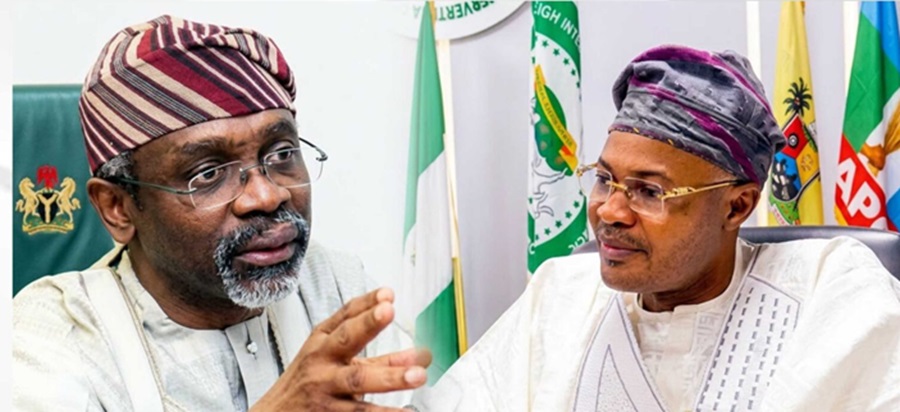
Central Bank of Nigeria (CBN) has disclosed that two foreign currency accounts opened in connection with the controversial Presidential Foreign Investment Promotion Council (PFIPC) have remained inactive since their creation, with no funds deposited and no transactions recorded.

The revelation emerged on Monday during the ongoing investigation by the House of Representatives Ad-hoc Committee probing the circumstances surrounding the establishment and operations of the council.
Lawmakers are investigating allegations that the PFIPC was created and operated without a valid legal framework and outside the established procedures required for government agencies and institutions.
Appearing before the committee, representatives of both the Central Bank of Nigeria and the Office of the Head of the Civil Service of the Federation (OHCSF) distanced their institutions from the establishment of the council.
The Office of the Head of the Civil Service of the Federation stated that it neither created the council nor possessed the constitutional authority to establish federal agencies.
Representing the office, officials explained that the OHCSF is only responsible for approving administrative structures of government agencies after all necessary requirements have been fulfilled.
According to the office, records showed that the council submitted a request on August 6, 2025, seeking approval for its organisational structure.
However, the application was not approved because the required supporting documents were not attached.
The committee heard that despite the rejection of the request, officials linked to the Presidential Economic Advisory Council (PEAC)/PFIPC later appeared during the 2025 manpower budget defence exercise and sought approval for staffing and recruitment arrangements.
The office disclosed that the council informed government officials that its activities were being carried out largely through personnel seconded or deployed from other institutions.
Lawmakers were told that the council requested approval for a total of 314 positions. The figure consisted of 14 existing officers and an additional 300 proposed positions.
The Office of the Head of the Civil Service further revealed that concerns later arose regarding documents presented by the council as evidence of its legal backing.
Officials told the committee that upon examination, the documents failed to display essential features expected of an enabling law or valid legal instrument establishing a government body.
Mrs. Didi Esther Walson-Jack, head of the Civil Service of the Federation, also rejected claims that her office deployed civil servants to work for the council.
She maintained that the office did not assign personnel to the body and did not provide office accommodation for its operations.
According to her, matters relating to the creation, supervision and oversight of government agencies fall under the responsibilities of other relevant institutions, including the Office of the Secretary to the Government of the Federation.
The Central Bank of Nigeria also provided details regarding accounts linked to the council.Nigerian current events
Hamisu Abdullahi, director at the apex bank, who represented the CBN Governor before the committee, explained that the bank opened two foreign currency accounts following a formal request from the Office of the Accountant-General of the Federation.
He told lawmakers that the request was received on July 30, 2025, and instructed the bank to create a United States dollar domiciliary account and a Pound Sterling domiciliary account.
Abdullahi stressed that the CBN only opens accounts for government agencies after receiving official authorisation from the Accountant-General’s office.
However, he disclosed that the accounts never became operational because the council failed to provide authorised signatories required for activation.
As a result, both accounts remained dormant from the day they were opened.
He informed the committee that neither account had received deposits nor processed withdrawals. The accounts also recorded no foreign exchange allocations, remittances, inflows or outflows.Governor election news
According to him, the balances in both accounts remain at zero.
The CBN official further stated that the council did not engage directly with the apex bank regarding the management or operation of the accounts after they were created.
Following the submissions, members of the committee demanded more information as part of efforts to determine the full scope of the council’s activities.
Hon. Abdulmalik Danga, chairman of the committee, directed the Central Bank to submit comprehensive records relating to both the Presidential Foreign Investment Promotion Council and the Presidential Economic Advisory Council.
The committee requested details covering the opening of the accounts, their operational history and any information connected to related banking activities.
Lawmakers also instructed the CBN to work with commercial banks to identify and provide records of any accounts linked to the entities under investigation.
However, the committee is expected to continue its hearings as more government agencies and officials appear before lawmakers to provide explanations on the controversial council and the circumstances surrounding its operations.

NPC Opens Nationwide Digital Birth, Death Registration Platform

FG Launches C.L.I.C.K.D., Consumer Credit Scheme for Tech Devices

Airtel Nigeria Expands Retail Footprint to Strengthen Customer Access Nationwide

Ovaloop Technologies Unveils Digital Tools to Formalize SMEs Operations Across Africa

Kaspersky Survey Highlights the Need for Smartphone Security

NRC, Ponzi Scheme Collapses Resulting Loss of Billions of Naira

NASENI Moves to Digitize CCB’s 5m Assets Declaration and Operations

Lebara Nigeria Launches Lebara Play, Africa’s First Telecom-Owned Micro-Drama Platform

CANAL+ Partners Samsung to Pre-Load DStv Stream on New Samsung TVs In Nigeria, Other African Countries

Tokenization, Blockchain Technology will Transform Financial Institutions – IMF




 News3 days ago
Adebutu, PDP Chieftain Accuses Nigerian Governors of Embezzling LG Allocations

 E-Financial3 days ago
Access Holdings Sells 7.44% Stake in Ghana Unit

 E-Financial3 days ago
NDIC Urges Youths to Shun Ponzi Schemes, Embrace Savings

 E-Business3 days ago
SERAP to Sue NASS over Bill Empowering NDPC to Regulate Social Media

 News3 days ago
NIMASA Unveils Accelerator Scheme to Drive Innovation, Sustainable Growth

 E-Financial3 days ago
NRS Issues July 31 Deadline for e-Invoicing Compliance

 News3 days ago
ICPC Secures Final Forfeiture of N941m Linked to IPPIS Fraud

 News3 days ago
eBusinessLife Advocates Greater Support for Girls in ICT as Students Showcase AI Innovations