

Broadcasting
John Asein, Copyright DG, Says Youths are Key in Intellectual Property Ecosystem


As Nigeria joined the world to mark Intellectual Property Day yesterday, Dr. John Asein, director general of Nigerian Copyright Commission (NCC) said that Youths are major drivers of Nigeria’s creative and innovation sectors.

The theme for this year’s World Intellectual Property Day is IP and Youth: Innovation for a Better Future.
According him, “this theme draws attention to the place of the youth population as major players in the intellectual property (IP) ecosystem and their strategic position in achieving a better future for humanity through innovation and creativity.
“Nigeria is fortunate to have a very talented, innovative and energetic youth population that has excelled in virtually all spheres of endeavours.
“With a demographic profile in which 50 per cent is below 19 years old and about 17 per cent is between 15 and 35, Nigeria has a strong and fast-growing youth population which, if properly harnessed, would guarantee the nation’s enduring strength and secured future. As we mark this year’s World IP Day, therefore, the Nigerian Copyright Commission (NCC) salutes the country’s youth as major drivers of its creative and innovation sectors”.

He said that most young persons are concerned about the happenings around them and are often driven by altruistic motives and a desire to bring about positive change to their environment.
“They strive to address unmet needs; they are able to survive extreme conditions, willing to face challenges and seize opportunities where the older population is constrained by their aversion for risks.
“Incidentally, as experience in this part of the world has shown, their entrepreneurial success could be in spite of social backgrounds, financial constraints, market barriers or low level of education.
“Innovation and creativity could be a panacea to the involvement of youth in social vices, help solve the rural-urban drift, encourage more youth to contribute to the development of their communities, thereby lifting many out of poverty and making them nation builders and agents of sustainable development.
“The success of the Nigerian youth has been phenomenal in the copyright sector. Whether it is BurnaBoy, Whizkid or Davido in the field of music or Njideka Akunyili Crosby or Toyin Ojih Odutola in the area of visual art, these creative young persons are leaving their marks on the international scene.
“A recent global report shows Nigeria amongst the top five African countries having the most developed startup ecosystem while Lagos was named as the number one startup city in Africa. The country also has the highest number of ranked cities in Africa. This again confirms the potentials that exist in all parts of the country, thanks to a vibrant, ingenious and resilient youth population.
“In order to help these young persons turn their raw talents to protected innovations and creativity, it is important that they understand the technology, the business and the legal framework, especially the benefits of the intellectual property system. They must imbibe a culture of respect for the rights of others, use the IP system as a catalyst for growth and enforce their rights against predators,” he said.
In furtherance of the initiatives introduced during the 2021 World IP Day celebration, the Commission has sustained its campaign to help SMEs use the IP system as a vehicle for taking their ideas to market. To this end, it will continue to encourage the youth population to establish innovation and creativity hubs in order to harness opportunities and leverage available mentoring and peer support facilities.
To promote the creation and sustainable use of IP in Nigerian Universities, the Nigerian Copyright Commission, in collaboration with the Association of Vice-Chancellors of Nigerian Universities (AVCNU), the National Universities Commission and the National Office of Technology Acquisition and Promotion, has developed a Model IP Policy for Nigerian Universities. The policy, which would later be adapted for other tertiary and research institutions, should guide institutions, students and researchers on the sustainable use of intellectual property.
Investing in the creative and innovative potentials of the youth creates a nexus between the latter and the larger society. It gives them a sense of belonging and renewed faith in our common future as a people.
This is important for societal harmony, patriotism and the building of a youth population that is not afraid to face its future. To this end, school curricula should be made to include activities that focus on creativity and innovation so that students at a very young age can discover their talents and realise their potentials.


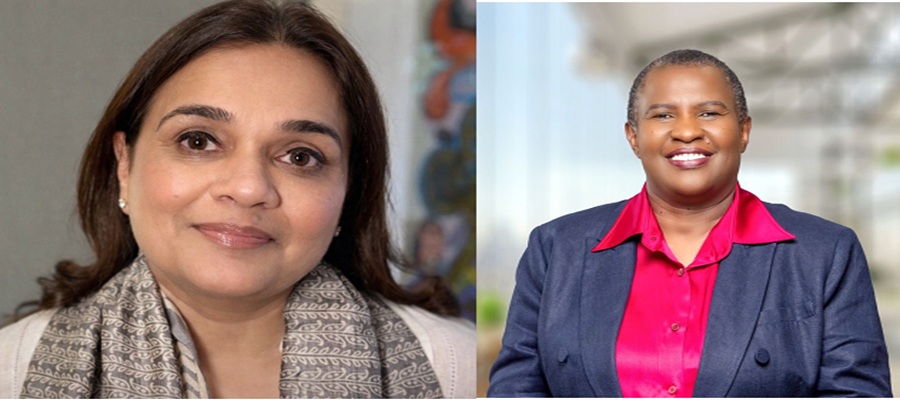



Broadcasting Organization of Nigeria (BON) has established six committees to help strengthen and modernize the country’s broadcasting industry.

The committees will focus on content creation, skills development, digital transformation, sustainability, policy and commercial opportunities
The initiative aims to support industry growth and improve collaboration between broadcasters, regulators and media experts
The official launch recently, was led by Tony Akiotu, president, BON and attended by media professionals, program directors, former journalists and heads of specialized media organizations.
The event brought together several prominent figures in Nigeria’s media industry, including veteran broadcaster and trainer Bimbo Oloyede, Tony Uyah of M4S TV, Kingsley Uranta of Channels Television, Ismael Sani of Platinum TV and Ibrahim Shehu of Trust TV.
Together, they are expected to help drive innovation and support the growth of Nigeria’s broadcasting sector.
According to Akiotu, the committees are intended both to help shape industry policy and to provide a forum for dialogue between BON and broadcasting experts.
Akiotu said the ad hoc committees were intended to strengthen BON’s work and ensure that the umbrella body for Nigeria’s broadcasters played a more direct and meaningful role in developing the country’s broadcasting sector.
The six committees reflect the sector’s main priorities. The first focuses on collaboration and innovation to promote content creation.
The second is dedicated to training and talent development, while the third focuses on industry sustainability by improving the sector’s long-term financial viability.
A fourth committee will focus on digital transformation and work with the National Broadcasting Commission (NBC) on regulatory issues.
The remaining two committees will oversee public policy advocacy and the development of sports and commercial rights to help broadcasters increase revenue and attract more investment. Together, the committees are expected to guide BON’s efforts to modernize and strengthen Nigeria’s broadcasting industry.
The committees, chaired by members of BON’s General Assembly and supported by the organization’s Secretariat, have an initial 12-month mandate that may be renewed if necessary.
They are required to submit a progress report within three months and implement approved recommendations within the following six months.
The arrangement is intended to ensure close oversight and the timely implementation of their work.
Akiotu also reminded committee members that Nigeria pioneered television broadcasting in Africa and urged them to carry out their work with greater effectiveness and efficiency.
Nigerian Education Loan Fund (NELFUND) says it is investigating about 34 tertiary institutions over allegations that they failed to refund students whose tuition fees were paid twice under the Federal Government’s student loan scheme.

The Managing Director of NELFUND, Mr Akintunde Sawyerr, disclosed this during an interview on Arise Television.
Sawyerr said the agency had deployed a five-member investigative team, including operatives of the Economic and Financial Crimes Commission (EFCC) and internal auditors, to examine the allegations.
According to him, the investigation was prompted by numerous complaints received from affected students.
“As of right now, there are 34 institutions that we are looking at closely with respect to this issue,” he said.
Sawyerr explained that the double payment issue arose because President Bola Tinubu directed that the student loan scheme commence in the middle of an academic session instead of at the beginning.
He said the decision compelled many students to pay their tuition fees to meet registration deadlines while awaiting approval of their loan applications.
“What happened is that a lot of schools got double payment; some from the students and some from us,” he said.
“The refund process is entirely out of our hands. It is the recipient of the double payments that is obliged to make refunds to the students.”
The NELFUND boss noted that many students had borrowed money from family members, friends and other sources to pay their tuition with the expectation of receiving refunds once the loans were disbursed.
He said while some institutions had promptly refunded affected students, others had failed to do so.
“Some have been very good at this. Others haven’t been so good at it,” Sawyerr said.
“I reserve judgement on the intentionality around it because, for some of them, they just didn’t have the process to make refunds.”
Sawyerr disclosed that NELFUND was exploring a tokenised payment system that would enable students to authorise tuition payments directly to their institutions, thereby reducing the likelihood of duplicate payments.
He said the agency deliberately chose not to disburse tuition loans directly to students to minimise the risk of fund diversion.
“Paying the funds to the students could really lead to the temptation for them to divert and do other things,” he said.
The managing director, however, acknowledged that NELFUND lacked the statutory powers to compel institutions to refund students or prosecute officials found culpable.
He added that many frustrated students had submitted complaints not only to NELFUND but also to anti-corruption agencies, including the EFCC and the Independent Corrupt Practices and Other Related Offences Commission (ICPC).
Sawyerr also expressed concern over increases in tuition fees by some institutions following the introduction of the student loan scheme.
He said NELFUND had declined to pay institutions that increased their tuition fees beyond acceptable levels.
“Some schools, because they get paid easily, started to put up their fees. We refused, point blank, to pay institutions who had hiked their fees beyond a certain level,” he said.
He reaffirmed the agency’s commitment to investigating every reported irregularity and strengthening the implementation of the student loan programme through continuous monitoring and internal reviews.

Police Busts Syndicate Who Allegedly Stole N3Bn from Financial Institution

MTN Accelerates Network Expansion to Meet Surging Telecom Demand

Court Remands Akujobi, Ex Access over alleged Theft of N294.5m

TeKnowledge, Equinix Partner to Advance Nigerian Digital Infrastructure

NSIB Faults Runway Identification, Reveals Cockpit Disagreement in Asaba Jet Incident

Nigeria Launches FreeTV Nationwide

NASENI Moves to Digitize CCB’s 5m Assets Declaration and Operations

NRC, Ponzi Scheme Collapses Resulting Loss of Billions of Naira

Lebara Nigeria Launches Lebara Play, Africa’s First Telecom-Owned Micro-Drama Platform

CANAL+ Partners Samsung to Pre-Load DStv Stream on New Samsung TVs In Nigeria, Other African Countries




 Telecom3 days ago
Fixed Wired Internet Market Lags as Mobile Gains Ground

 News3 days ago
Study Reveals How Moniepoint is Powering Nigeria’s $11Bn Food Service Sector

 Broadcasting3 days ago
BON Establishes Six Ad Hoc Committees to Modernize Broadcasting

 Telecom2 days ago
DStv, GOtv Owner MultiChoice Officially Joins Canal+ Group
 News2 days ago
Police Busts Syndicate Who Allegedly Stole N3Bn from Financial Institution

 E-Business3 days ago
New NIMC Act Strengthens Data Protection, Privacy – Director

 General News3 days ago
Court Adjourns Alleged Binance Tax Evasion Case over Settlement Talks

 E-Financial2 days ago
SEC Unveils Plans to Enforce Mandatory ESG Reporting for Large Firms Next Year