

Broadcasting
African Communications Industry is in Need of an Overhaul. Here’s How it Can be Done

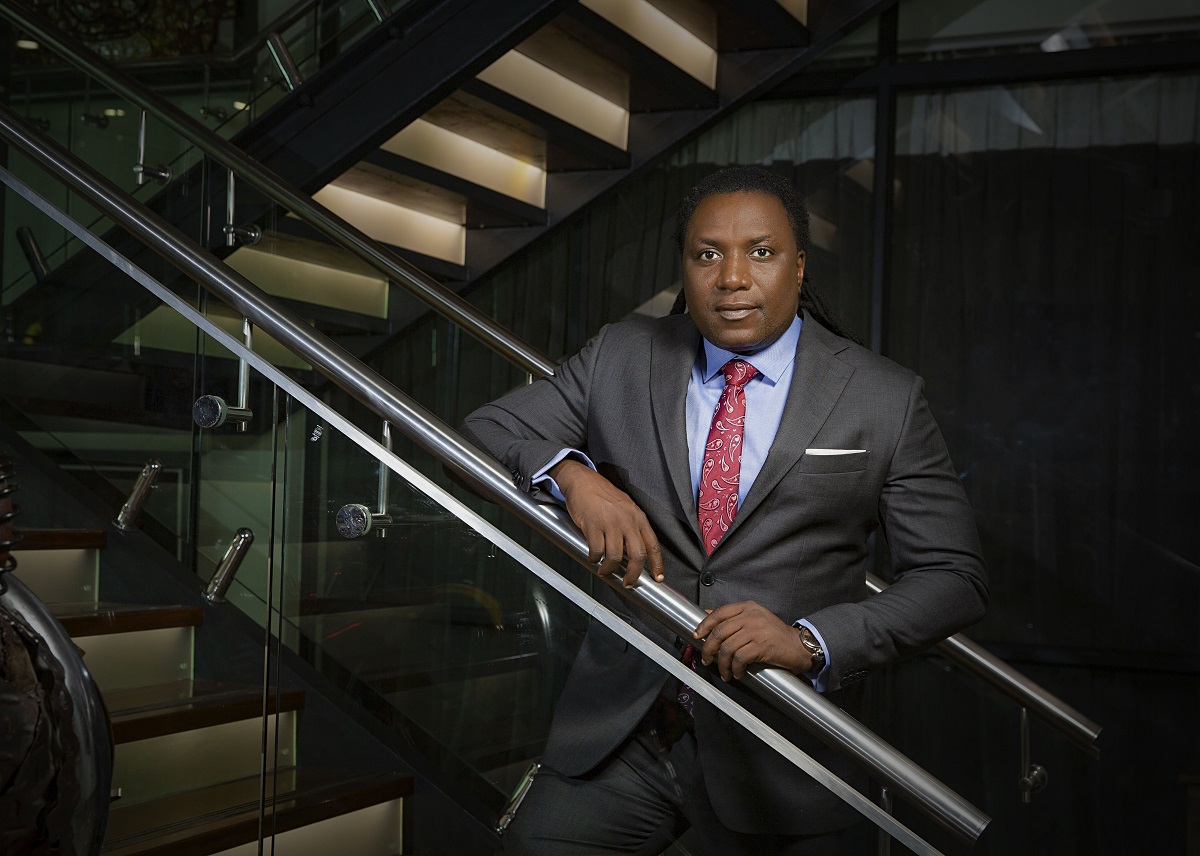
By Steve Babaeko
In the last decade, advertising has taken several unprecedented turns. The disruptions caused by digitalisation, technology, and unnatural incidents on the practice as we knew it, have been immense. Also, a drastic change in consumer habits over the years has been no less impactful on how advertising is practised globally.

We continue to witness how a constant shift in digital innovations prompts the biggest advertising companies around the world to scramble to adapt and adopt new strategies to reach consumers. The recent metaverse rave, for instance, currently presents advertisers with a chance to market to consumers as they interact and socialise in virtual spaces.
We also can’t ignore how the Covid-19 pandemic has added to the dynamics of our practice. Digital streaming reigned supreme as consumers stayed at home and became committed to watching more videos and other forms of media consumption, necessitating swift actions to meet them where they are most comfortable.
It should be clear by now that advertising has become more complex than ever before, as it is a common prediction that we are yet to see the last of these types of disruptions – digital or otherwise. These indicators are why it is a special time in the history of advertising to forge and introduce strategic adaptations that will keep us a step ahead and mitigate the impact of possible disruptions in the future.
An outstanding factor we must consider in developing workable strategies to confront peculiar challenges presented by these sweeping changes in our industry is how the consumer market continues to expand, especially in Africa.
Africa, with a potential market of 1.7 billion people, is one of the fastest-growing consumer markets in the world. Consumer expenditure on the continent has grown at a compound annual rate of 3.9 per cent since 2010 and reached $1.4 trillion in 2015. This figure, to echo McKinsey & Company, is projected to reach $2.1 trillion by 2025 and $2.5 trillion by 2030. The World Bank also projects that by 2030, the largest consumer markets in the world will include Nigeria, Egypt, and South Africa, while similar lucrative opportunities will arise in Algeria, Angola, Ethiopia, Ghana, Kenya, Morocco, Sudan, Tunisia, Tanzania, and other African countries.
Of this market size, the youth population in Africa makes a significant number. Young people account for 60% of the continent’s population according to UNESCO. By 2030, there are expected to be 350 million young people aged 15-24 on the continent.
Due to their nature, developing strategies to cater to this demographic is becoming a more challenging task with each passing year. Compared to a decade ago, the younger generation, with access to the latest technology tools and information at lightning speed, react and consume differently. Young consumers’ demand and affiliation for brands that show concern for their struggles mean that it has become even more pertinent to understand them, know their interests and wants, and continuously develop strategies that align with their needs.
As such, serving a community of consumers in a multi-channel world requires the adoption of smart digital tools, the adaptation of informed social insights and verifiable data, and a deeper understanding of psychology.
These rapidly changing market dynamics are why how we do advertising must evolve. Companies like Apple, Dunkin’, Tupperware, and Domino’s that have hitherto foreseen the necessity for the evolution of advertising have done so by either making new tweaks or by way of a total rebrand.
It is important to note, however, that in adopting new advertising tactics to meet consumer demands, companies must get it right.
The world will remember how, in its bid to revamp its service for consumers in 2013, Yahoo! came under public scrutiny and heavy criticism for failing miserably in its attempted rebrand with a shoddy switch up of its logo. The rebrand fail ultimately resulted in the company’s loss of hundreds of millions of dollars a year in advertising revenue.
For X3M Ideas, our understanding of the advertising industry’s current reality in relation to the young consumer base in Africa ignites our desire to proffer solutions that will satisfy brand and client demands as we move on to our next chapter.
After 10 years of being a one-stop-shop marketing communications company that’s 100% built on ideas and leveraging partnerships that, backed by sound strategy and unique thinking, seek to deliver the most effective results, we are adopting a new proposition named ‘Finding X’.
Our adoption of this unprecedented actionable framework aims to provide unique solutions to the constantly changing consumer demands and habits in the advertising landscape. By design, our new Finding X framework, categorised into an adaptable A, B, and C formula, will unearth transformative products and services necessary for providing existing and future clients with a competitive edge and also advance global advertising practice.
With Finding X, our goal of redefining the way advertising is practised and perceived in Nigeria and Africa remains. Only that this time, we will rev up our strategy of studying and understanding the consumer. We will further expand our reach through digital and interactive media, and measure the impact of every campaign for further improvement.
Strategically, the significance of the Finding X framework is what inspires a rebrand of our logo and website, with the X in the X3M emblem now more pronounced than ever.
So, what is our X? What unique brand values do we intend to communicate? And what is our modus operandi for the next decade? The answers lie therein.
The X in X3M represents many things. The unknown – the X-files; the hidden treasure – X marks; the spot and; the magic ingredient – the X factor. We can use it in all these ways. And Finding X is tantamount to finding gold; the gold of consumer engagement. The discovery tool will allow us to find the X for our existing and future clients in the representation of their brands, products or services and by such, give them an edge over their competitors. It is a logical step, backed by research and knowledge of human behaviour, to arrive at idea spaces unique to each brand.
This framework will also prove a distinctive blueprint for advertisers in and outside Africa to maximise the continent’s consumer market potential over the next decade.
In 2020, the COVID-19 pandemic caused the African ad market to contract by nearly a quarter according to market research data. Africa was also the smallest regional ad market worldwide within the period with a $5 billion investment after advertising spending on the continent shrunk by over 23 per cent from $6.52 billion a year earlier. Projections indicate positive but low growth rates on the continent in upcoming years, with the decline unlikely to change soon.
Understanding the fastly changing market dynamics in relation to consumer engagement and satisfaction and designing strategies tailored to meet their needs will offer a sustainable pathway to turn the tides in no distant time.
X3M Ideas’ Finding X framework and rebrand are borne out of the burning desire to provide brands, clients and advertisers with these necessary creative solutions. And our commitment to further innovations and collaborations to impact the world, while staying true to the values that set us apart, is solidly unshaken as we turn the book to our next chapter.


Association of Licensed Set-Top Box Manufacturers of Nigeria (STBMAN) has warned that the unilateral implementation transition from analogue to digital broadcasting, could trigger confusion, legal disputes, and disruptions capable of undermining the credibility of the 2027 general election.

STBMAN urged President Bola Ahmed Tinubu to urgently intervene and halt what it described as a unilateral implementation process, pending wider consultations with stakeholders in the broadcasting industry.
Sir Godfrey Ohuabunwa, chairman of the association in statement in Abuja, faulted the current implementation process by the National Broadcasting Commission’s (NBC).
STBMAN said that although it supports Nigeria’s digital migration programme, the approach currently being pursued by the NBC appeared rushed and inconsistent with the 2012 Digital Switchover (DSO) White Paper approved by the Federal Executive Council.
The association argued that the arrangement being presented as a Digital Switchover was merely the aggregation of channels on NigComSat platforms rather than a fully Digital Terrestrial Television (DTT) migration as originally envisioned under the national DSO framework.
According to the group, failure to carry critical stakeholders along could erode public confidence, weaken access to information, and create avoidable disruptions in the broadcasting sector at a politically sensitive period ahead of the 2027 elections.
It noted that millions of Nigerians still depend on free-to-air broadcasting for information dissemination, civic education, election coverage,e and public enlightenment.
The group stressed that any poorly coordinated migration process could result in signal disruptions, public confusion, and unequal access to information during the election season.
STBMAN also expressed concern that the NBC risked creating a conflict of interest by acting simultaneously as regulator and content aggregator, contrary to the spirit of the 2012 White Paper and global best practices guiding digital broadcasting migration.
The association, therefore, called for an urgent national stakeholders’ roundtable, an independent legal and technical review of the DSO process, review and update of the 2012 DSO White Paper, nationwide public sensitisation on the implications of digital migration, and measures to protect local broadcasting and public interest.
It maintained that it was not opposed to digital migration but insisted that the process must be transparent, inclusive, lawful, and technically sound.
The group warned that failure to properly manage the transition could weaken democratic communication structures, waste public resources, and negatively affect national cohesion and the credibility of the 2027 elections.
“Mr. President, Nigeria cannot afford confusion in its broadcasting system at a time the nation is preparing for another critical democratic transition. The time to act is now,” the statement added.
Association of Licensed Set-Top Box Manufacturers of Nigeria, represents domestic electronics manufacturers responsible for producing the decoder boxes needed for the country’s transition from analogue to digital broadcasting.

Federal government, yesterday, said that it will now launch the so-called FreeTV, with over 100 channels for news, sports, education, entertainment and children’s programming in multiple Nigerian languages on June 17.

National Broadcasting Commission (NBC) had initially scheduled for May 15 for the launch.
But the new date was announced by Mohammed Idris, minister of Information and National Orientation, on Wednesday during a facility tour of NIGCOMSAT, alongside Dr Charles Ebuebu, director general of the National Broadcasting Commission (NBC) and other stakeholders.
Idris said the long-awaited migration from analogue to digital broadcasting had finally become a reality after years of failed attempts and delays, describing the project as a major breakthrough for Nigeria’s broadcasting industry.
“I have been grappling with this idea of the DSO for many years. Moving our transmissions from analogue to digital has now happened and is ready to be commissioned by June 17,” the minister said.
He revealed that several channels had already been bundled onto the platform, adding that the digital transition would transform broadcasting, advertising and television consumption across Nigeria and Sub-Saharan Africa.
According to him, the new platform introduces scientific audience measurement tools capable of tracking viewership patterns in real time, thereby giving advertisers reliable data for targeted campaigns.
“Now science is at play. If you are viewing a station, we know who is watching what and how many people are watching. Advertisers can now take informed decisions about the kind of programming Nigerians want to watch across all demographics,” Idris stated.
The minister said the collaboration between NIGCOMSAT, NBC, the Ministry of Communications and the Ministry of Information had made the digital transition possible, while commending President Bola Tinubu for providing the necessary support and resources.
He described previous DSO efforts as limited and expensive due to encrypted set-top boxes but noted that the new system would be free and accessible to millions of Nigerians.
“In the past, the boxes were encrypted and costly. Now this is free. Government has taken off some of those costs on behalf of Nigerians,” he said.
Idris stressed that unlike earlier pilot phases restricted to a few cities, the new digital platform would have nationwide and regional reach through NIGCOMSAT’s satellite infrastructure.
“Everybody can now watch whatever he wants in real time and painlessly. Free TV everywhere for everybody”, he declared.
The minister also hinted that the platform would challenge the dominance of existing pay-TV operators by offering Nigerians wider viewing options at no cost.
“I don’t want to always use the word ‘substitute’, but this offers opportunities you didn’t get before. You no longer have that monopoly again. Competition is going to set in. Content will grow and viewership will grow,” he said.
He added that the platform would initially launch in standard definition, SD, before quickly transitioning to high definition, HD, bringing Nigerian broadcasting in line with global standards.
“Soon after the launch, we are moving to HD. Nigeria will now compete globally. What you watch here is what you get anywhere,” Idris said.
The minister further disclosed that the service was already available via mobile application and had successfully undergone testing ahead of the official unveiling.
Also speaking during the tour, managing director and chief executive officer of NIGCOMSAT, described the collaboration between NIGCOMSAT and NBC as a strategic partnership that has strengthened service delivery and raised operational standards within Nigeria’s digital broadcasting ecosystem.
According to her, ongoing investments and satellite expansion plans under the current administration will guarantee reliable and continuous service delivery.
“The work has only just started. The work has only just begun,” she said.
Among those who accompanied the Honourable Minister on the tour were Salihu Abdullahi Dembos, director-general, Nigerian Television Authority (NTA); Jibrin Baba Ndace, director-general, Voice of Nigeria (VON); Mohammed Bulama, director-general, Federal Radio Corporation of Nigeria (FRCN); and Lanre Issa-Onilu, director-general, National Orientation Agency (NOA), alongside other senior government officials and dignitaries.
Metro Digital Limited, a licenced Indigenous broadcasting organisation, has accused Multichoice, pay television company, of refusing to obey judgements emanating from Courts in Nigeria.

It said the latest of such judgements is the one that was delivered by Justice Chinelo Odili of Rivers State High Court on May 4, 2026 in Suit No. PHC/3943/FHR/2025.
Dr. Paul Osuji, operations manager of Metro Digital, at a press conference in Port Harcourt, Rivers State,
said the suit was filed by the organisation and two others against Multichoice and the Economic and Financial Crimes Commission (EFCC).
Osuji stated that Justice Odili has in the judgement described the arrest of a staff member of the company and the carting away of it’s properties and disruption of it’s broadcasting business by the EFCC over a civil dispute of copyrighy as unlawful and violations of the applicants’ rights.
The manager recalled that in October 2025, Multichoice instigated the EFCC to read their office in Port Harcourt, arrested a staff of the company and staff of another company, while the suit was still pending.
“On October 16, 2025, the premises of Metro Digital Limited, a licenced indigenous broadcasting organisation was raided by the Nigerian anti-graft agency, EFCC, instigated by Multichoice Nigeria, purportedly acting on a preservation order made by the Federal High Court sitting in Port Harcourt over the sub licensing of broadcasting content right.
“The preservation order came from a civil dispute already adjudicated by the Court of Appeal No. CA/CS/188/2021 – Multichoice Vs Metro Digital Limited and 20 others, which is a subject of a pending appeal -No. SC/CV/1248/2022 -Multichoice and 20 others before the Supreme Court.
“Instructively, while suit No. PHC/ 3943/ FHR/2025 was still pending, Metro Digital Limited filed an application to set aside the said preservation orders of the Federal High Court sitting in Port Harcourt and presided over by Hon. Justice A.T Mohammed.
“In his ruling delivered on December 10, 2025, set aside the preservation orders and it’s legal execution on Metro Digital Limited. The court also ordered EFCC to return unconditionally all the properties and records of Metro Digital Limited, illegally and unlawfully carted away during the raid but the agency has till today not obeyed those orders of the Court,” he said.
Metro Digital Limited is known for operating SLTV, a direct-to-home satellite television service launched to provide affordable, locally-owned alternatives to international pay TV

Court Orders FG to Reveal Identity of Local Contractors in $460m Abuja CCTV Project

NCAA Suspends Services to Air Peace, Others over Debts

Legend Internet Repays N10Bn Commercial Paper

FG Classifies Ebola Importation into Nigeria as High Risk

Transfers Fail as Banks Suffer USSD Glitches

MTN, VDT, Zoracom, Digital Realty Back 2026 Girls in ICT Campaign

Vitel Wireless Partners Fintechs to Expand Access to Services

FG Okays 112 as Toll-Free National Emergency Response Number

Opay Plans IPO in US, Targets $4Bn in Valuation

Elon Musk Launches XChat with Video Calling to Take on WhatsApp, Messenger




 Telecom3 days ago
NCC Drafts New Rules for Virtual Mobile Operators

 Telecom3 days ago
Airtel Africa Launches $110m Share Buyback Programme for Capital Efficiency
 General News3 days ago
WHO Says Ebola Risk Now at Highest Level

 E-Business3 days ago
LG Electronics Showcases Advanced HVAC Solutions at Mega Clima Nigeria 2026

 Telecom3 days ago
MTN Nigeria Tops Gender Equality Rankings After Major Workplace Transformation, IFC Report Reveals

 News3 days ago
FG Unveils AI Public Services Platform

 Telecom3 days ago
Microsoft, Partners Launch ‘LINGUA Initiative’ to Save African Languages From Digital Extinction

 Telecom3 days ago
Australian Court Upholds Fine Against X Over Child Safety Compliance Failures