

Telecom
Attackers Exploit Stolen Session Cookies to Bypass Multi Factor Authentication and Gain Access to Corporate Resources – Sophos Report Reveals


Sophos, a global leader in next-generation cybersecurity, today announced in the Sophos X-Ops report, “Cookie stealing: the new perimeter bypass,” that active adversaries are increasingly exploiting stolen session cookies to bypass Multi-Factor Authentication (MFA) and gain access to corporate resources.

In some cases, the cookie theft itself is a highly targeted attack, with adversaries scraping cookie data from compromised systems within a network and using legitimate executable to disguise the malicious activity.
Once the attackers obtain access to corporate web-based and cloud resources using the cookies, they can use them for further exploitation such as business email compromise, social engineering to gain additional system access, and even modification of data or source code repositories.

“Over the past year, we’ve seen attackers increasingly turn to cookie theft to work around the growing adoption of MFA. Attackers are turning to new and improved versions of information stealing malware like Raccoon Stealer to simplify the process of obtaining authentication cookies, also known as access tokens,” said Sean Gallagher, principal threat researcher, Sophos. “If attackers have session cookies, they can move freely around a network, impersonating legitimate users.”
Session, or authentication, cookies are a particular type of cookie stored by a web browser when a user logs into web resources. If attackers obtain them, then they can conduct a “pass-the-cookie” attack whereby they inject the access token into a new web session, tricking the browser into believing it is the authenticated user and nullifying the need for authentication.

Since a token is also created and stored on a web browser when using MFA, this same attack can be used to bypass this additional layer of authentication.

Compounding the issue is that many legitimate web-based applications have long-lasting cookies that rarely or never expire; other cookies only expire if the user specifically logs out of the service.
Thanks to the malware-as-a-service industry, it’s getting easier for entry-level attackers to get involved in credential theft. For example, all they need to do is buy a copy of an information-stealing Trojan like Raccoon Stealer to collect data like passwords and cookies in bulk and then sell them on criminal marketplaces, including Genesis.
Other criminals on the attack chain, such as ransomware operators, can then buy this data and sift through it to leverage anything they deem useful for their attacks.
Conversely, in two of the recent incidents that Sophos investigated, attackers took a more targeted approach. In one case, the attackers spent months inside a target’s network gathering cookies from the Microsoft Edge browser.
The initial compromise occurred via an exploit kit, and then the attackers used a combination of Cobalt Strike and Meterpreter activity to abuse a legitimate compiler tool to scrape access tokens. In another case, the attackers used a legitimate Microsoft Visual Studio component to drop a malicious payload that scraped cookie files for a week.

“While historically we’ve seen bulk cookie theft, attackers are now taking a targeted and precise approach to cookie stealing. Because so much of the workplace has become web-based, there really is no end to the types of malicious activity attackers can carry out with stolen session cookies. They can tamper with cloud infrastructures, compromise business email, and convince other employees to download malware or even rewrite code for products. The only limitation is their own creativity,” said Gallagher.
“Complicating matters is that there is no easy fix. For example, services can shorten the lifespan of cookies, but that means users must re-authenticate more often, and, as attackers turn to legitimate applications to scrape cookies, companies need to combine malware detection with behavioral analysis.”
To learn more about session cookie theft and how adversaries are exploiting the technique to carry out malicious activity, read the full report, “Cookie Stealing: the new perimeter bypass,” on Sophos.com.


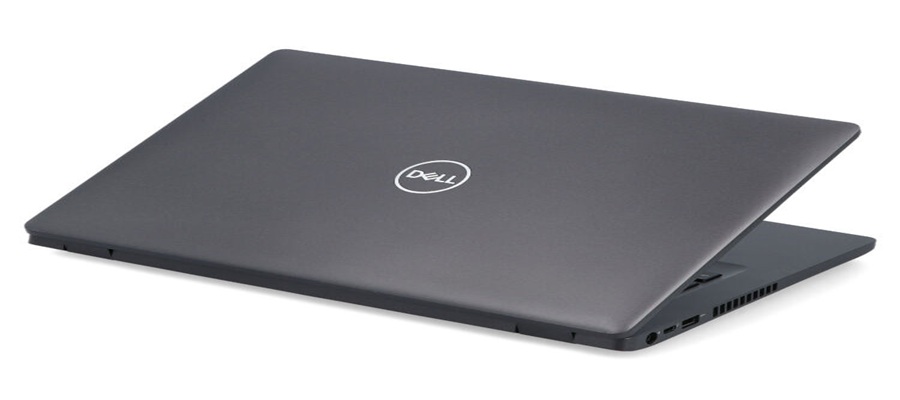
MENXTT TECH NG, a Lagos-based technology company, has launched an initiative to make quality Dell laptops more affordable for Nigerians through flexible payment plans and extended warranty support.

The company said the initiative was aimed at helping students, entrepreneurs, professionals and small businesses acquire reliable computing devices despite rising technology costs.
According to the company, customers can now purchase premium pre-owned Dell Latitude, Dell Precision and Dell Inspiron laptops at competitive prices, with selected models available under staggered payment arrangements.
The laptops, it said, are designed to meet the needs of users ranging from students and office workers to architects, engineers, software developers, graphic designers and video editors.
Speaking on the initiative, the Co-Founder of MENXTT TECH NG, Mr Anthony Emeka Nwosu, said access to quality technology should not be limited by financial constraints.
“A laptop is no longer a luxury; it is an essential tool for education, business and career development.
“Unfortunately, many people are forced to settle for unreliable devices because of the high cost of new laptops.
“At MENXTT TECH NG, we want to bridge that gap by providing durable Dell business laptops at affordable prices, backed by a full one-year warranty and flexible payment plans.
“We want every student, entrepreneur, freelancer and business owner to have access to technology that helps them succeed,” he said.
Nwosu explained that every laptop undergoes comprehensive testing before delivery and comes with a one-year warranty, an original charger, a complimentary laptop bag, Windows 11 operating system and Microsoft Office Suite pre-installed.
He added that the company, an authorised Bitdefender Antivirus reseller in Nigeria, also installs genuine Bitdefender security software on every system to protect customers against cyber threats.
According to him, customers requiring additional productivity tools can also have licensed Foxit PDF software installed on their devices.
Nwosu said the flexible payment option was introduced in response to prevailing economic realities, enabling customers to spread payments over an agreed period.
He noted that the arrangement would make it easier for students, startups and growing businesses to acquire quality computers without placing excessive pressure on their finances.
Beyond laptop sales, the company provides information technology consultancy, computer repairs, software licensing, cybersecurity solutions and digital transformation services to organisations across Nigeria.
He reaffirmed the company’s commitment to supporting Nigeria’s digital economy by making dependable computing devices and enterprise technology solutions more accessible to individuals and businesses.
According to him, the initiative reflects MENXTT TECH NG’s vision of combining affordability, quality products and professional after-sales support to help more Nigerians participate in the country’s expanding digital ecosystem. (NAN)

National Information Technology Development Agency (NITDA) has called for stronger collaboration among government, industry, academia and technology professionals to accelerate digital innovation and drive inclusive economic growth in Nigeria.

Dr. Aristotle Onumo, Director, Stakeholder Management and Partnerships, representing the Director General of NITDA, delivers a goodwill message at the 20th International Conference on Technology and Computing (RISE 2026) in Jos, reaffirming the Agency’s commitment to fostering digital innovation, strategic collaboration, and a technology-driven future for Nigeria.
The agency made the call at the 20th Nigeria Computer Society (NCS) International Conference 2026, held in Jos, Plateau State, where stakeholders examined strategies for leveraging emerging technologies to strengthen national development.
Speaking on behalf of the Director-General of NITDA, Mr Kashifu Inuwa, the agency’s Director of Stakeholders Management and Partnerships, Dr Aristotle Onumo, said Nigeria’s digital transformation would depend on sustained investment in innovation, digital skills, research and strategic partnerships.
According to him, collaboration across the public and private sectors is essential to translate emerging technologies into practical solutions capable of improving governance, creating jobs and enhancing the country’s global competitiveness.
Onumo said NITDA remained committed to implementing its Strategic Roadmap and Action Plan through initiatives that promote digital literacy, research and development, innovation ecosystems, cyber sovereignty and emerging technologies.
He added that the agency was expanding opportunities for innovators, entrepreneurs and startups through platforms designed to encourage collaboration, investment and technology-driven enterprise.
“We are transforming Digital Nigeria into the nation’s foremost innovation platform where policymakers, investors, startups, researchers and technology companies can collaborate to accelerate economic growth and digital transformation,” he said.
He urged innovators, startup founders and technology professionals to participate actively in the forthcoming Builders Summit by showcasing indigenous solutions capable of addressing Nigeria’s development challenges.
Declaring the conference open, the Governor of Plateau State, Mr Caleb Mutfwang, described digital technology as a critical driver of governance and economic development.
Mutfwang said his administration had adopted digital solutions to improve public service delivery, modernise government operations and enhance internally generated revenue.
He also identified technology as a key enabler for agricultural transformation, increased productivity and improved food security, urging participants to ensure that deliberations at the conference translate into practical outcomes for national development.
Earlier, the President of the Nigeria Computer Society (NCS), Prof. Muhammad Sirajo, said the conference was organised to strengthen collaboration among policymakers, researchers, regulators, technology professionals and industry leaders.
Sirajo said the conference, with the theme “Harnessing Digital Innovation and Emerging Technologies for Inclusive Growth and Economic Renaissance (RISE 2026),” focused on exploring how innovation could accelerate Nigeria’s socio-economic development.
He identified artificial intelligence, blockchain, cloud computing, cybersecurity and robotics as among the technologies shaping the future of economies across the world.
According to him, Nigeria’s youthful population and expanding digital ecosystem provide a strong foundation for building a globally competitive economy through sustained investment in digital infrastructure, innovation and skills development.
The conference attracted government officials, regulators, academics, development partners, technology professionals and private-sector stakeholders to deliberate on policies and innovations aimed at accelerating Nigeria’s digital transformation and inclusive economic renaissance.
Telecom
Hon. Minister Dr. Kingsley T. Udeh and ASUS To Unveil First of a Kind Flagship Store in West Africa

In a landmark moment for Nigeria’s technology retail sector, the Honourable Minister of Innovation, Science and Technology, Dr Kingsley Tochukwu Udeh SAN, will on Monday, August 3rd, commission a landmark ASUS Flagship Store in partnership with Nigeria’s leading e-commerce group Konga. The state-of-the-art facility is widely regarded as the first initiative of its kind in West Africa.

The commissioning will witness the visit of senior executives from the world-renowned technology brand to Nigeria, including EMEA General Manager, Mr. Aaron Tsai, alongside other. One of the purposes of their visit is to reinforce the strategic partnership with Konga and solidify the collaboration between both organisations, further demonstrating ASUS’ commitment to the Nigerian market.
The event is expected to also bring together key stakeholders from government, the technology industry, business community, and the media for what promises to be a defining moment in the evolution of technology retail in the region.
The development comes as Konga continues to accelerate its strategic partnerships with some of the world’s leading technology brands.
For years, Nigerian consumers have demanded more than just access to genuine technology products. They have increasingly sought immersive experiences, expert guidance, after-sales support, and greater confidence when making technology investments. The next chapter in this journey appears to address many of these expectations in a bold and innovative way.
The forthcoming announcement is expected to bring together global innovation in a manner that reflects the changing realities of today’s technology consumer. It also reinforces the growing confidence that leading international technology companies continue to place in Nigeria as one of Africa’s most strategic digital markets.
Industry analysts note that partnerships of this nature are becoming increasingly important as consumers place greater emphasis on authenticity, hands-on product experiences, technical support, and trusted purchase channels. Beyond selling devices, the future of technology retail lies in building complete customer experiences.
As anticipation builds for Monday, one thing is certain: the ASUS-Konga partnership promises to set new standards for tech retail in West Africa, elevating customer experience and reinforcing Nigeria’s digital transformation narrative.

SERAP Asks Tinubu to Probe Alleged N6.79Bn Missing Police Funds, Firearms

FCT Court Awards Ex-Customers N15m against Stanbic IBTC over Data Privacy Breach

CBN Exposes over 13,000 BVNs Tied to Fraud as Banks Tighten Security

Atte, Nigerian Develops AI Algorithm for Hair Transplants

Dare Tackles Onaiyekan over Criticism of Tinubu, Says Economic is Working

NRC, Ponzi Scheme Collapses Resulting Loss of Billions of Naira

EFCC Busts NIS Visa Overstay Racket, Uncovers N700m in an Account

From Scarcity to Scale: What Africa Can Learn from India’s Agricultural Transformation

Tokenization, Blockchain Technology will Transform Financial Institutions – IMF

BON Establishes Six Ad Hoc Committees to Modernize Broadcasting




 Broadcasting2 days ago
Davido Shares Past Suicidal Thoughts, Drops Oriadé Album

 E-Business2 days ago
How Temu Helped a Madagascan Vanilla Family Business Sell Direct to Consumers Across Europe

 General News2 days ago
MTN Nigeria Posts N707.5bn H1 Profit, Declares N26 Interim Dividend

 News2 days ago
Cisco Explores AI for Nigeria Farmers

 E-Business2 days ago
82% of Organizations Concerned about AI Risks Even as Adoption Accelerates – Survey Reveals

 General News2 days ago
Gavi Okays $500m for Vaccines, PHCs in Nigeria

 News2 days ago
AfCFTA Urges Africa to Stop Exporting Raw Materials

 E-Business2 days ago
FG Must Consider Data Security, Sovereignty in 3MTT Initiative – Stakeholders