

General News
Over 1000 Visitors Explore Latest Advancements in Healthcare Technologies at Medic West Africa 2022

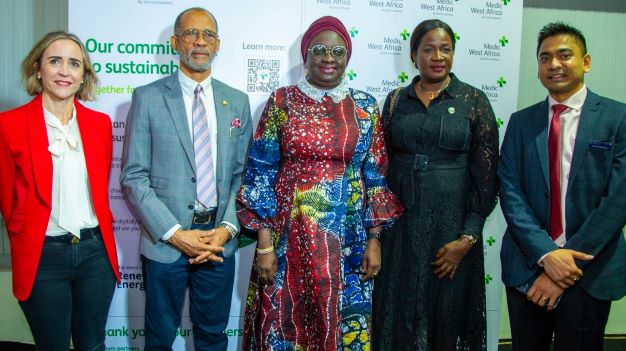
Medic West Africa Exhibition and Conference, organised by leading global exhibitions company, Informa Markets, recently concluded its 9th edition, amidst elation by exhibitors and visitors.

The three-day event, held at Landmark Center between 07th – 09th September, hosted over 150 exhibiting companies from 32 countries showcasing the latest healthcare equipment and solutions innovations.
The acclaimed event, the largest gathering of healthcare trade professionals in the region, provided not only an exceptional networking hub for manufacturers, distributors, procurement professionals, dealers, medical professionals, and regulators; but also a platform to drive the discourse on key challenges affecting our regional healthcare systems to unearth sustainable solutions.
The event was well-attended by key stakeholders including Her Excellency, Deputy Governor, Ogun State, Engr. (Mrs). Noimot Salako-Oyedele; the Honourable Commissioner for Health, Lagos State, Prof. Akin Abayomi; and the Honourable Commissioner for Health, Ogun State, Dr (Mrs) Tomi Coker; amongst other players in the healthcare industry.
Speaking on the need for Medic West Africa as a platform to bridge the technology and knowledge in Nigeria and West Africa, Her Excellency, Deputy Governor of Ogun State, Engr. (Mrs) Noimot Salako-Oyedele, stated: “I think it is very important that these technologies needed to upgrade our health industry and provide international-standard healthcare are brought to our doorstep.
“I welcome Medic West Africa as a platform for key stakeholders to explore what is needed for our facilities and learn more about the newest innovations in healthcare.
“Having had conversations with exhibitors present and receiving assurance from the manufacturers of their understanding of local context and needs, I am quite happy with what I have witnessed here at Medic West Africa”.
Medic West Africa’s Exhibition Manager, Mr Amogh Wadwalkar, expressed his satisfaction at its growth, continuity of legacy, and impact.
He said, “Ten years ago, Medic West Africa began as a platform to showcase the latest innovations in healthcare technology to industry players for the advancement of regional health infrastructures. Now, it has grown to not only be a peerless exhibition platform but also a place of discourse concerning topical issues challenging the healthcare industry.
“This year marks our 9th edition and continues our mission as the premier healthcare trade event and the largest gathering of healthcare trade professionals in the region. We have welcomed thousands of visitors during the past three days to not only explore the newest healthcare technologies but also to build relationships for the sustainable growth of the sector.
“By inviting and connecting all parties in the health ecosystem, we have facilitated a platform to unearth solutions for the greatest challenges affecting the industry and our communities”.
Among the technologies exhibited at the conference were state-of-the-art imaging & diagnostics, laboratory equipment, IT systems & solutions, healthcare infrastructure & assets, disposables & consumer goods, pharmaceuticals & supplements, and medical equipment & instruments, among many others.
The revolutionary High-V MRI platform by Siemens Healthineers, Magnetom Free.Star, was one of the highlights of the event, astounding visitors as they explored its disruptive and innovative features, including its DryCool technology. As a virtually helium-free scanner with an ultra-compact footprint and a weight of 3 tons, it harnesses the power of the very latest digitalization technologies to truly improve lives.
Solenne Singer, Informa Market’s Group Director for Healthcare, also conveyed the primary goal for Medic West Africa and its unique offerings for this edition, “Our role at Informa Markets is to bring together manufacturers to meet with local buyers to aid in the sourcing of health equipment and solutions for their facilities and the people of Nigeria.
We have expended a lot of effort so that the needs of exhibitors and visitors are fulfilled here at the event. This year, we unveiled a laboratory segment, Medlab, as the highlight of the show.
A distinguished exhibition showcasing innovative products across the medical laboratory industry, it sets the foundation for the introduction of quality diagnostics and care to Nigeria. For future editions, it will be a growing segment with the addition of a representative conference alongside the exhibition.”
As an annual gathering which hosts hundreds of leading healthcare companies and thousands of healthcare medical professionals, Medic West Africa retained its position as the best gateway to access the West African healthcare market.
This year, it continued to provide unmatched networking opportunities and connected various agents on the B2B spectrum. Through its exhibitions & conferences, Medic West Africa attracted regional healthcare professionals, policymakers, and service providers who value the power of knowledge-sharing, networking, and business for the end goal of transforming West African health infrastructures.



Nigeria Centre for Disease Control and Prevention (NCDC) has classified the risk of Ebola Virus Disease (EVD) importation into Nigeria as high amid the ongoing outbreaks in the Democratic Republic of Congo and Uganda, though the agency confirmed that no case linked to the regional outbreak has been detected in the country.

Dr Jide Idris, director-general of the NCDC, in a public health advisory released on Sunday, stated that the assessment followed the World Health Organization’s declaration of the outbreaks as a Public Health Emergency of International Concern (PHEIC).
According to Dr Idris, the high-risk classification was informed by increasing international travel and population movement, continued transmission in the affected countries, uncertainty surrounding the full scale of the outbreak, and the possibility of delayed detection because Ebola symptoms resemble other endemic diseases such as malaria and Lassa fever.
He, however, assured Nigerians that high-risk states, border communities, major transport hubs, and Points of Entry had already been identified as part of ongoing preparedness efforts.
Despite the risk, Dr Idris noted that the country possesses critical response capacities, including functional laboratories, trained rapid response teams, emergency operations centres, and existing viral haemorrhagic fever preparedness structures strengthened by previous successful responses to Ebola and similar outbreaks.
He also stated that the National Emergency Operations Centre had been placed on alert mode, while the National Incident Management System had also been activated to strengthen coordination, reporting, and rapid response mechanisms nationwide.
He explained that epidemiologists and rapid response teams had been placed on standby for possible deployment, while collaboration among state ministries of health, port health services, and other relevant agencies had been intensified.
According to him, surveillance activities have also been strengthened nationwide through enhanced monitoring of alerts, rumours, and unusual health events to support early detection and response.
Dr Idris said border communities and points of entry are under increased surveillance, while health workers across the country are undergoing refresher sensitisation on infection prevention and control measures, early identification of suspected cases, and proper triage procedures.
He further said that states had been advised to incorporate Ebola preparedness into their emergency response systems by designating isolation and treatment centres, assessing bed capacity, strengthening referral pathways, and ensuring the availability of logistics and essential medical supplies.
He also revealed that plans were ongoing to preposition critical response commodities such as personal protective equipment (PPEs), laboratory consumables, body bags, and emergency medical supplies in strategic locations across the country.
On laboratory readiness, Dr Idris said Nigeria currently maintains Ebola testing capacity in states with international points of entry and within the national public health laboratory network, with surge testing capability available if needed.
He said the agency has intensified public awareness campaigns and risk communication efforts aimed at combating misinformation and false claims circulating online about Ebola.
While urging Nigerians not to panic, Dr Idris advised members of the public to maintain proper hand hygiene, avoid direct contact with bodily fluids of sick persons, refrain from handling corpses of individuals who died from unexplained illnesses, and avoid bushmeat from unknown sources.
He advised travellers arriving from countries with confirmed Ebola cases to monitor their health for 21 days and immediately contact health authorities if symptoms develop.
He also urged healthcare workers to maintain a high index of suspicion for Ebola cases, strictly observe infection prevention protocols, use PPEs appropriately, and promptly report suspected cases through established channels.
World Health Organisation (WHO), yesterday, said that Ebola outbreak is “very high” but added that the global risk remains “low”.

So far, 82 cases and seven deaths have been confirmed in the Democratic Republic of Congo (DRC), but WHO, said, the real scale of the outbreak is likely far larger, with nearly 750 suspected cases and 177 suspected deaths reported
Tedros Adhanom Ghebreyesus, chief, WHO, said the situation was “deeply worrisome”.
He said there were now nearly 750 suspected cases in the DR Congo and 177 suspected deaths, as health workers scramble to track down contacts of everyone thought to be infected with the virus.
“The Ebola outbreak in the Democratic Republic of the Congo is spreading rapidly,” he told a press conference.
“So far, 82 cases have been confirmed in DRC, with seven confirmed deaths.
“But we know in people who travelled from DRC and one death.
Measures to address the epidemic in DRC are much larger.
There are now almost 750 suspected cases and 177 suspected deaths.”
He said the situation in Uganda was “stable”, with two cases confirmed in Uganda, including “intense contact tracing” and calling off the Martyrs’ Day commemorations, “appear to have been effective in preventing the further spread of the virus”, Tedros added.
While a US national who was working in the DRC has tested positive and been transferred to Germany for care, Tedros said another US national deemed to be a high-risk contact had been transferred to the Czech Republic.
Besides national staff already in the DRC, he said 22 international staff had been deployed to the field, “including some of our most experienced people”.
Tedros said that violence and insecurity were impeding the response to the outbreak in the DRC.
“We are now revising our risk assessment to very high at the national level, high at the regional level, and low at the global level.
“So far, 82 cases have been confirmed in DRC, with seven confirmed deaths.
“But we know the epidemic in DRC is much larger. There are now almost 750 suspected cases and 177 suspected deaths.
“The situation in Uganda is stable, with two cases confirmed in people who travelled from DRC, with one death.”
Tedros said that violence and insecurity were impeding the response to the outbreak.
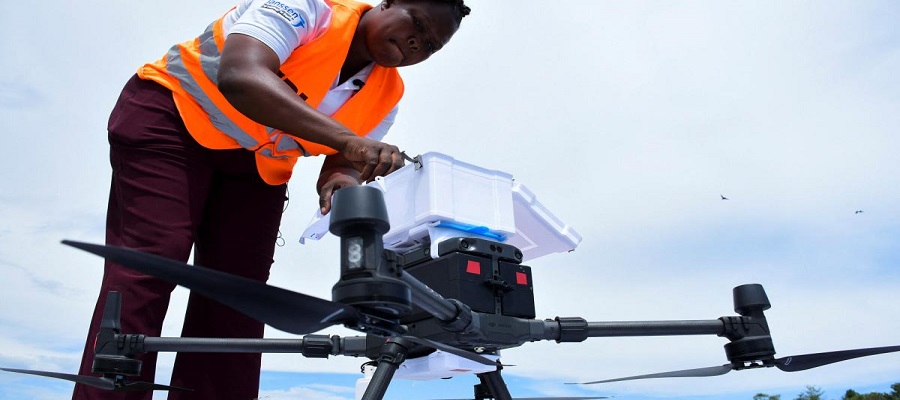
Nigerian Army has acquired additional drones and other advanced force multipliers to strengthen surveillance operations, improve target acquisition, and enhance precision strike and casualty evacuation capabilities.

Lt.-Gen. Waidi Shaibu, chief of Army Staff (COAS), said that the new drones will boost surveillance, precision strikes.
Shaibu, who disclosed this in a statement shared via the Nigerian Army’s official X handle, noted that the conference provided a platform for critical assessment of ongoing operations and the development of forward-looking strategies to address Nigeria’s evolving security challenges.
He said deliberations at the Nigerian Army Conference Centre, Asokoro, focused on sharpening operational responses, strengthening training frameworks and adapting to the demands of modern security warfare.
According to him, the resolutions reached are aimed at building a more agile, combat-ready, technologically driven and mission-oriented force capable of responding effectively to emerging threats.
A key highlight of the reforms is the Army’s increasing investment in modern warfare technology, including the acquisition of additional tactical drones and the reconfiguration of Army aviation assets for combat roles.
Shaibu explained that these developments have significantly enhanced intelligence gathering, precision targeting, operational mobility and casualty evacuation across various theatres of operation.
He also highlighted ongoing improvements in recruitment, advanced training, professional military education and leadership development, stressing that discipline, competence and meritocracy remain central to building a stronger institution.
Reaffirming his “soldier-first” philosophy, the COAS said troop welfare remains a top priority, stressing that “troop welfare remains non-negotiable; well-motivated soldiers operating in conducive environments are critical to mission success.”
He urged senior officers to ensure that resolutions from the conference are fully implemented in field operations, stressing that the true value of the gathering lies in measurable impact on the battlefield.
Describing the ongoing reforms, Shaibu said: “We are not just reforming the Army; we are building a lethal, technology-driven fighting force where only discipline, merit, and mission success matter.”
The Army Chief expressed appreciation to President Bola Ahmed Tinubu for his support, as well as the Minister of Defence, Minister of State for Defence, Chief of Defence Staff, service chiefs and intelligence agencies for their continued collaboration.
The conference ended with the presentation of commendation plaques to senior officers recognized for outstanding contributions to operational effectiveness.

Legend Internet Repays N10Bn Commercial Paper

FG Classifies Ebola Importation into Nigeria as High Risk

Transfers Fail as Banks Suffer USSD Glitches

NITDA Inaugurates Regulatory Sandbox Team to Drive Digital Innovation

Meet the 25 Media Professionals Chosen for MTN’s Elite Innovation Programme

MTN, VDT, Zoracom, Digital Realty Back 2026 Girls in ICT Campaign

Vitel Wireless Partners Fintechs to Expand Access to Services

FG Okays 112 as Toll-Free National Emergency Response Number

Opay Plans IPO in US, Targets $4Bn in Valuation

Elon Musk Launches XChat with Video Calling to Take on WhatsApp, Messenger




 Telecom2 days ago
NCC Drafts New Rules for Virtual Mobile Operators

 Telecom2 days ago
Airtel Africa Launches $110m Share Buyback Programme for Capital Efficiency

 Telecom2 days ago
MTN Nigeria Tops Gender Equality Rankings After Major Workplace Transformation, IFC Report Reveals

 News2 days ago
FG Unveils AI Public Services Platform

 E-Business2 days ago
LG Electronics Showcases Advanced HVAC Solutions at Mega Clima Nigeria 2026
 General News2 days ago
WHO Says Ebola Risk Now at Highest Level

 Telecom2 days ago
Australian Court Upholds Fine Against X Over Child Safety Compliance Failures

 Telecom2 days ago
Microsoft, Partners Launch ‘LINGUA Initiative’ to Save African Languages From Digital Extinction