

Telecom
NGSTQB Announces Agenda for First Software Testing Conference in Nigeria

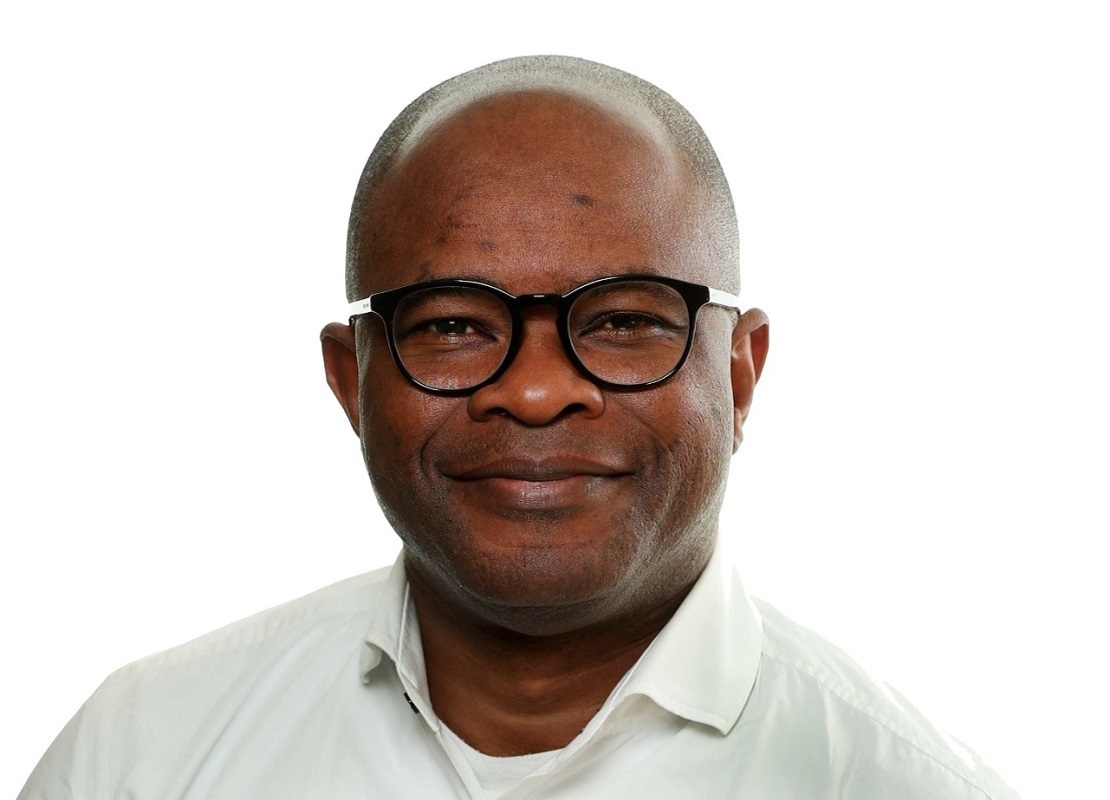
Nigerian Software Testing Qualification Board (NGSTQB) has disclosed plans to host the first Software Testing Conference in Nigeria dubbed ‘TestNigeria Conference 1.0’.

Boye Dare, President of NGSTQB
NGSTQB is a member of the International Software Testing Qualifications Board (ISTQB); the world’s leading organization for Certification of Professionals in Software Testing.
NGSTQB was officially registered as a Board with the Corporate Affairs Commission (CAC) in Nigeria on August 21, 2021, after formal approval from the office of the Attorney General of the Federation.
Mr. Boye Dare, the President of NGSTQB, said that TestNigeria Conference 1.0 is scheduled to hold on Tuesday November 22 and Wednesday November 23, 2022 at Lagos Oriential Hotel, Lekki road, Lagos under the theme: ‘Impact of Software Quality Assurance in the Nigerian Digital Economy’.
He said that TestNigeria Conference 1.0 will feature networking cocktail, keynote presentations, panel sessions and fireside chat including special sessions on Software Test Improvement in Organisations; Growing Software Testing Ecosystem in Nigeria’s Educational Sector, and Need for Certified Test Professionals in Organisations.
While reemphasizing the need for software testing, Mr. Dare said is it vital for Nigeria to be identified as a country with high-quality software.
In his words, “Testing is necessary because we all make mistakes. Some of those mistakes are unimportant, but some are expensive and dangerous.
“Software failures can be devastating to company value and reputation. For example, UK-based loan company Provident Financial lost 1.7 billion pounds (about 2.4 billion American dollars) of market value in 2017 after a bug in their newly developed scheduling software, such that barely half of their loan debts were collected when due. This bug cost the company 120 million pounds (170 million American dollars) in profit loss, and the fiasco is considered a record-breaking loss.
“In a recent report by Synopsys, Inc., in conjunction with Consortium for Information & Software Quality (CISQ), the cost of poor software quality in the US in 2020 was approximately $2.08 trillion.
“According to Nigeria’s Digital Economy strategy, Nigerians are highly innovative people, and a thriving digital economy will create employment opportunities for Nigeria’s teeming population and lift millions of Nigerians out of poverty”.
The NGSTQB President, therefore, said that achieving Nigeria’s Digital Economy strategy is the collective responsibility of all individuals and businesses.
“It is in view of the foregoing that the NGSTQB has conceived the TestNigeria Conference 1.0, the first Software Testing Conference in Nigeria that is wholly dedicated to all things software testing and quality assurance.
He added that an array of experts and authorities in the national and global fields of software testing have been lined up to speak at the event which will take place on November 22-23, 2022 in Lagos.
Participation:
Designed as a platform for software professionals to discuss how Nigerian IT ecosystem can start developing quality software that meets international standards and help achieve Nigeria’s Digital Economy Strategy, the conference is targeted at software developers, banks, government institutions, telcos, fintech companies, industry regulators and major users of sensitive software among others.
Interested participants should visit the website here or click https://www.ngstqb.ng/conference/ to see details.



Irvine Partners, the woman-led, African-born creative communications agency operating across Nigeria, has cemented its position as a disruptive force on the global stage following a landmark week of international industry recognition for its CEO and founder, Rachel Irvine.

Rachel-Irvine-CEO-Irvine-Partners
Irvine has been named to Campaign UK’s prestigious 40 over 40 list for 2026, while simultaneously earning a place on PRovoke Media’s Innovator 25 EMEA index – two of the communications industry’s most closely watched honours, secured in the same week. The achievement places her among the most influential and progressive communications leaders across Europe, the Middle East, and Africa.
For Nigeria – Africa’s largest economy and one of its most competitive and complex communications environments – the recognition speaks directly to something the local industry has long understood: that the strategic thinking, cultural intelligence and executional precision forged in African markets is not a regional advantage. It is a global one.
Irvine Partners brings this philosophy to some of the world’s most prominent digital and consumer brands in the Nigerian market, including TikTok, Spotify, Uber and Google – organisations that demand communications work of the highest international calibre, delivered with genuine local understanding.
An African agency rewriting the global narrative
Campaign UK’s 40 over 40 celebrates individual excellence, leadership and lasting impact within the British media and marketing landscape. PRovoke Media’s Innovator 25 spotlights those who are dismantling traditional PR structures, advancing data-led practice, and reshaping how the industry operates. To earn both in a single week is rare by any measure.
What underpins both honours is a story that begins not in London but in Africa – in the dynamic, high-stakes communications environments of markets like Nigeria, where agencies must be sharper, faster and more culturally precise than anywhere else in the world.
“These accolades are less about my own journey and far more about where Irvine Partners is going as a collective,” says Rachel Irvine. “For a long time, the global communications industry treated African agencies as local executors of global strategies. What we’ve proven over the past few years is that the technical craft, cultural capital, and data frameworks built within our agency are not just scalable for the continent; they are world-class.”
Built on the same ethos that works in Lagos
The recognition follows the agency’s strong performance at the IN2 SABRE Awards EMEA, where Irvine Partners took major wins for Unicorn School – its proprietary internal talent development programme – and for its advanced data analytics capability, alongside notable shortlists for global clients including Spotify and Uber.
Nigeria’s communications market is one of the most demanding in the world. Consumer audiences are sophisticated and discerning. The media environment is layered, fast-moving and deeply attuned to authenticity. Brands that succeed here do not do so through generic messaging – they do so through precision, cultural credibility and strategic consistency. These are precisely the competencies that Irvine Partners has built its international reputation on.
“The PR landscape has fundamentally shifted,” Irvine adds. “Clients no longer want siloed regional strategies; they want intelligent, culturally intuitive storytelling backed by bulletproof analytics that move the business needle. We built our foundations on that exact ethos in highly dynamic markets, and bringing that specific DNA to the UK and EMEA regions is why we are winning.”
The agency’s agile, borderless model – deliberately structured to move at the speed of modern brands rather than the pace of legacy networks- is one that Nigerian communications professionals will recognise as a natural evolution of how the best African agencies have always operated: lean, sharp and built for impact.
Underlying both honours is Irvine’s sustained commitment to talent development and cultural diversity across all of the agency’s wholly owned offices – a principle as central to its Lagos work as to any other market in its growing global footprint.

Mark Zuckerberg, Meta Chief Executive Officer, has announced a major leadership change at WhatsApp, confirming that Will Cathcart will step down as head of the messaging service after seven years in office.

Zuckerberg made the announcement in a post shared on Facebook on Monday, June 22, 2026, praising Cathcart’s contributions to the growth of the platform.
According to him, Cathcart played a key role in expanding WhatsApp’s global user base to over three billion people while promoting privacy-focused communication across its services.
“Will’s been one of Meta’s most important and effective leaders, helping to bring WhatsApp to over 3 billion people and championing privacy for our community,” Zuckerberg stated.
The Meta CEO also announced that Kunal Shal will take over leadership of WhatsApp.
He described Shal as a “builder” with strong international experience, adding that his leadership style aligns with Meta’s long-term vision for the messaging platform.
Meta said the transition is aimed at strengthening WhatsApp’s role in both personal and business communication globally, as the platform continues to expand its services across markets.
Industry observers say the leadership change marks a significant transition for WhatsApp, which has grown rapidly under Cathcart’s stewardship, particularly in areas of privacy, encryption, and enterprise messaging solutions.
However, Meta has not disclosed the exact timeline for the leadership handover or further structural changes within the messaging division.
The company reaffirmed its commitment to maintaining WhatsApp’s security standards and continued innovation under the new leadership.

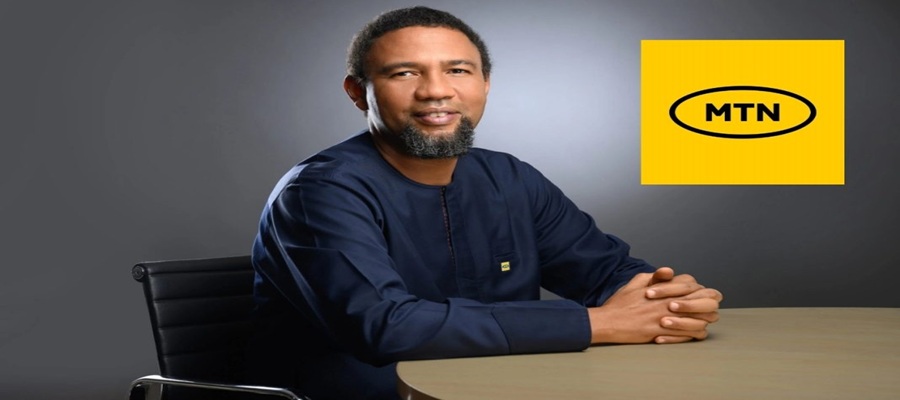
MTN Nigeria has raised the bar for corporate disclosure in Africa after publishing its 2025 sustainability report in full compliance with International Financial Reporting Standards S1 and S2.

Dr. Karl Toriola, CEO of MTN Nigeria,
The report, independently assured by Ernst & Young, marks the telecom operator’s seventh consecutive annual sustainability publication and third year as an early adopter of the global framework ahead of its mandatory implementation.
Dr. Karl Toriola, CEO of MTN Nigeria, said, “strong governance and ethical conduct are foundational to our sustainability strategy. We reinforced compliance through our Conduct Passport Framework and robust internal controls.”
He added that “in May 2025, we became the first telecommunications company in Nigeria to publicly present a sustainability report on the Nigerian Exchange Group platform, an important milestone in our commitment to IFRS S1 and S2- aligned disclosure and accountability.”
The company also secured Carbon Disclosure Project ratings of ‘B-’ for climate change and ‘C’ for water security.
Under the IFRS S2 framework, the telecoms operator disclosed climate-related risks linked to flooding, heat stress, regulatory changes and possible future taxes or charges on carbon emissions, following a climate scenario analysis completed in 2024.
The report also showed that MTN Nigeria now uses a digital reporting format – XBRL. This makes its sustainability and governance data easier for investors and ESG rating agencies to access and analyse through automated systems.
The Company also carried out assessments to understand how sustainability issues affect both its business operations and society at large, while measuring its overall economic, environmental and social impact from 2021 to 2024.
In addition, over one-third of MTN Nigeria’s biggest suppliers (based on spending) have committed to supporting the company’s net-zero emissions goals, although these commitments have not yet gone through an independent audit or verification process.

CredibleVoteNG Opens Free Access to all Polling Units in Nigeria after INEC Demanded N1.Bn for Register

NESREA Defends Plastic Waste Rules, Says Policy Targets Pollution

FG Engages Banks on RevOp, New Digital Platform for Revenue Generation

Kaspersky Discovered a Malware Campaign Targeting Steam Users Through Infected Wallpaper

Fiona Ahimie Launches LEADHER Mentorship Session to Inspire the Next Generation of Female Leaders

CBN Extends PoS Geo-Fencing Enforcement Deadline to August 2026

London Strengthens Global Investment Ties with Africa @ First Ever London-Africa Business Summit

FG Targets Alleged N3tn Capital Flight, Opens Airtime Credit Market to Nigerian Fintechs

Japan, UNESCO Boost Digital Learning in 15 CoEs with Donation of ICT Equipment

Mobile Internet Gender Gap Widest in Africa – GSMA




 Telecom1 day ago
MTN Nigeria Commits to Ethical Conduct with IFRS S1, S2 Compliance

 E-Financial1 day ago
FG Moves to End Double Taxation

 General News1 day ago
ALTON Backs CBN on Local Data Hosting Rule for Banks, Fintechs

 News1 day ago
BoI’s EIB-Backed Financing Accelerates Fidson’s Pharmaceutical Manufacturing Growth

 E-Business1 day ago
NDPC to Review Data Law to Address AI, Privacy Concerns

 Telecom1 day ago
NCC, CAC Move to Block Unapproved Ownership Changes in Telecom Sector

 E-Business1 day ago
Galaxy Backbone @ 20, Unveils New Identity

 General News1 day ago
Nwanegbo Bags Africa Digital Award in Applied Artificial Intelligence and Data Science