

E-Business
Best DR Plan Can be Invalidated by a Wrong Hand-Dijkstra

Marc Dijkstra, chief technology officer, Symantec in charge of the Emerging Region including Russia, the Middle East, Southern Mediterranean and Africa. He has an in-depth knowledge of the data management, storage and high availability landscape. Marc worked with Computer Work Station Sales as a support engineer before he moved to VERITAS UK as a Storage and Availability Presales specialist before joining Symantec in 2007. He spoke to emeka okafor.
Promoting Green IT
From Symantec perspective, being a software and infrastructure company and taking into cognizance that we are into storage and virtualization technology, promoting Green IT is something we are heavily into. We have a number of tools that help customers identify areas which they can actually save cooling and heating costs saving amount of storage that they use. As an example, we have one of our products that can identify when you are underutilizing your storage. One of the biggest problems you can have is underutilization of your storage. When you have all these and they are not being used you still pay electricity bill as you need to cool the systems. . We can identify the storage that is not in use and try to drive utilization up by mopping the underutilization storage to the storage element we can identify. So every thing Green IT, we have a number of tools also as a consulting firm that can identify how much power we can save by dragging up utilization process.
Optimizing Storage Resources Utilization
One of the things we looked at when we started the standardization initiative was that it is part of our bold strategies to identify within the storage management brief. One of the things we did was to identify where we could save customers Tier One storage cost by moving data from Tier One storage to the secondary storage having the same data. We do that in subtle space. We have a customer in Nigeria who is looking at ways to take their old data from Tier One old expensive disc and put it on a cheaper disc. He estimated that he could save approximately 80 per cent of his storage disc by moving the Tier One disc into the Tier Two disc at a much lower price than the Tier One disc. It means that the customer doesn’t need to buy a new storage system .He can buy the cheapest disc and a recycle forward will be able to take that data and put it on to shape.

Overview of Products
Symantec has a number of products. I have lost count but I think it has close to 200 products. Symantec is storage and availability company as well as a security company. We have a very bold range of products from the traditional security products, back up products, duplication, archiving, enterprise desktop management etc, but the joy of Symantec is that we are a heterogeneous company and we have a very broad range of applications on storage. According to IDC Report (late last quarter) Symantec is now the number one leader in the storage management space and we lead significantly over the other competitors. The product I work more is on high availability and storage management space.
Guidelines for a Successful Storage Strategy
Testing, testing, and testing. We did a Disaster Recovery Report in 2008 and one of the problems we had is that people are not testing the disaster recovery strategy enough. People will do DR test once a year but it is not effective. It’s really not effective to cover all the bases. Two tests once every six months is ideal. There is need to do for instance virus test to ascertain what will happen if virus hits the system and that is very important. Besides testing, DR is expensive especially if you are running critical operations like Telcos and mobile providers of the billing system. You cannot switch that system off otherwise you will be affecting the service of your consumers. So you have to balance how you are going to test your DR without affecting your customers, your bottom line, and your staff. I think the industry is thinking more along how to automate the testing without having disruption and Symantec has ways we actually allow you to automate DR tests without disrupting your actual application.
It is one key word when it comes to disaster recovery- the planning. Having a good disaster recovery plan and doing your risk analysis is most important in DR strategy because whatever happens we make sure that it works.
Best Practice for Disaster Recovery
It is firstly, the plan has to be in place. Be it internal plan or an outside consulting plan, the business has to have understanding of what the risk appetite is. What can they afford to do without and for how long? If it is a financial institution that is doing online trading, it can’t really be down. Government legislation in some cases will actually disallow that so your risk appetite has to be assessed before you can identify. So once your DR plan is actually in place and you have identified your risk appetite then you can identify the way you go. But remember how much you do it depends on cost as we have a sliding scale for various services I think the most important thing when talking about best practice is that once you identify the risk appetite you must identify plan and once your plan is in place it must be assessed. We have a very interesting statistics that in 2007 we found 55% of our respondents at the C level were involved in DR planning process. Last year we found that it dropped to 33%. So one question is that has DR become little focused or was it a defect in the organization that it just had to happen? It’s a question I have asked in Nigeria. The people I have spoken to in Nigeria are very more executive level discussions. The C level is involved in the DR strategy, DR process and DR planning. Either that in your office you will have a DR strategy committee to discuss the most important issues on DR strategy and not doing it once and leaving it because you need to continue with your testing on hourly basis and at the centre. One wrong man point can invalidate the whole outline
Focus of Symantec Products
It all depends. A lot of people even small to mediums are trying to locate their risks appetite, what they can do to keep their businesses up and running. From small to mediums if they lose their data could mean the end of the business. So you get to look at ways to do it. Small to mediums may not have DR strategy the way a financial house will have with gig net, internet. We play in all spaces, be it small to medium businesses, even to consumer.
IT Risk Management
IT risk management from Symantec perspective, we do certainly get involved in IT risks assessment in understanding the risk appetite with the customer. From my perspective, IT risk management understands the risk of the business either from internal or external, hacking, be it data loss, natural disaster or whatever it could be and und a committee in change control. Remember if you don’t have a change committee you are introducing risk into your environment.
Customers in Nigeria
I met with a number of executives from finance a couple of months back and the interesting thing to me was that although this knowledge is special but what made clear to me at the moment is that the CIOs are certainly coming down the line. Nigeria seeing what is going on in the Americas, India, MEA and Europe, there is legislation about keeping your data available, there’s legislation about holding data especially in the finance industry so it is in their minds. I wouldn’t say from my experience in dealing with the people. Email availability all the time is very important to people, I have a very lengthy discussion with CIOs about a month ago around the six points and it is very much in the full front of their minds.
New Products
What you will see coming down the line in the nearest future is looking at ways of mitigating the risks to the business. We mitigate risk by automating processes and by doing correct testing. What we will be looking at in our new product is that we will be looking at ways to go and test the environment and do risk analysis on the environment, weigh and identify the risks and report home the risk before problem happens. High availability cost ream technology will do the risks of the strategy and help check analysis and find out where issues are. It is one of the control processes you can look at multi- faceted, if one of the PCs fails its all about mitigation of risks
Energy Problem
One of the things Symantec is driving for is to reduce the amount of heating in the environment. One of the things talked about in the DR report as well as the stage of the data centre report just released is that the strategy of the CIO data center manager is still around consolidation, virtualization and automation. These are the three key areas in the 2007 report that came up again in 2008. By going the virtualization route, you are driving down the electricity needs. The Green IT makes this strong. So if we can tie Green IT with the strategy of the data center we are driving down the huge need of electricity. With our technology you use less service and storage so we are helping the customer drive down demand for electricity used to cool and power the data center. Virtualization is one of the strategies from Symantec through which demand for storage electricity is reduced. With the cost ream technology you don’t need as many services so you are driving down the cost of electricity again. There is electricity problem even in South Africa also. It is not just Africa that has electricity problem. There was a report in California running out of power. There’s a problem in Florida. Electricity is a global crisis so Symantec and IT industry have to look at innovative ways to drive down need for this power.


E-Business
Report Says Cybercriminals Deploy Malware to Hijack Crypto Wallets, Monitor Browsers Telegram

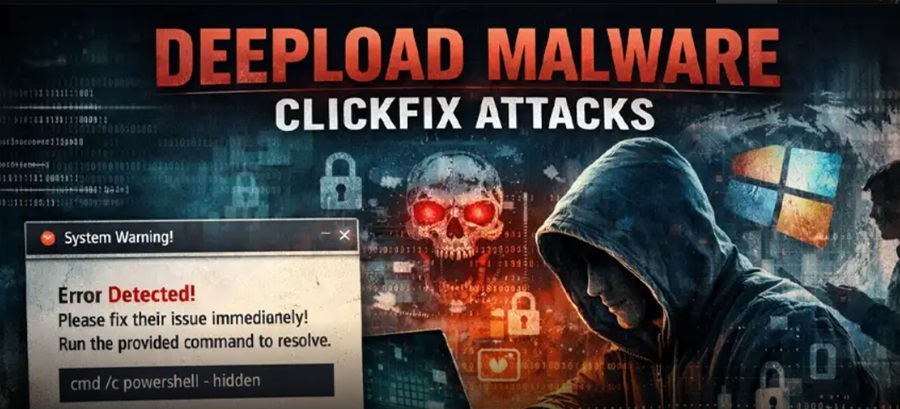
Cybersecurity researchers at Kaspersky have uncovered a sophisticated malware framework, dubbed OkoBot, that is targeting cryptocurrency users by stealing wallet recovery phrases, browser credentials and other sensitive information through a multi-stage attack campaign spanning more than 25 countries.

The researchers said the malware, active since April 2025, employs more than 20 malicious payloads and has evolved into an advanced cybercrime platform focused on compromising digital asset holders. According to Kaspersky’s Global Research and Analysis Team (GReAT), the campaign remains active and has already affected hundreds of users worldwide.
Kaspersky disclosed that one of the framework’s most dangerous components, known as SeedHunter, injects malicious code into legitimate cryptocurrency wallet applications, including Ledger Wallet, Ledger Live and Trezor Suite, before displaying fake recovery phrase prompts designed to trick victims into surrendering their seed phrases.
The security firm explained that once attackers obtain a victim’s recovery phrase, they gain complete control over the cryptocurrency wallet, enabling them to transfer digital assets with virtually no chance of recovery.
Commenting on the discovery, Dmitry Galov, security researcher at Kaspersky’s GReAT, said.
“This campaign has been running for more than a year and remains active. OkoBot is not just a single piece of malware but an extensible framework built primarily to compromise cryptocurrency users.”
Galov added that the malware is continuously maintained and enhanced, underscoring the attackers’ long-term focus on financial theft.
According to Kaspersky, victims are typically infected through ClickFix phishing attacks or malicious GitHub repositories masquerading as legitimate software downloads. In one instance, a fake Microsoft SQL Server Management Studio repository secretly installed a trojanized version of the Audacity audio editor embedded with malicious code.
Following the initial compromise, the attackers deploy a PowerShell downloader called TookPS,which establishes an encrypted SSH connection to attacker-controlled infrastructure.
The malware then harvests browser cookies, wallet files, stored credentials and system information before downloading additional malicious modules.
Among the additional payloads is OkoSpyware which monitors more than 100 applications, which includes cryptocurrency wallets and password managers—records user activity and captures keystrokes and video of application windows. Another module silently installs malicious browser extensions capable of stealing financial information and authentication tokens.
However, Kaspersky’s telemetry indicates that the largest concentrations of victims have been recorded in Brazil, Vietnam, Canada, Mexico and Türkiye, although the malware campaign has spread to users across more than 25 countries.
The cybersecurity firm advised cryptocurrency users never to enter wallet recovery phrases into prompts displayed by desktop applications or websites unless they have independently verified their authenticity.
Furthermore,It also urged users to download wallet software exclusively from official sources, enable multi-layered endpoint protection, and remain cautious of software offered through unofficial repositories or phishing websites.
Kaspersky noted that while hardware wallets themselves remain secure, attackers are increasingly exploiting the software that accompanies them, making user awareness a critical line of defence against evolving cryptocurrency-focused cyber threats.

Human Rights Writers Association of Nigeria (HURIWA) has opposed a bill seeking to compel major global social media companies to establish physical offices in Nigeria.

The rights advocacy group urged the National Assembly to discard the proposed legislation, warning that it could become a tool for censorship and undermine citizens’ constitutional right to freedom of expression, despite being presented as a measure to strengthen Nigeria’s digital economy and improve corporate accountability.
The position was contained in a presentation submitted yesterday by Emmanuel Onwubiko, national coordinator, HURIWA, to the chairman of the Senate Committee on ICT and Cyber Security.
The bill, sponsored by Senator Ned Munir Nwoko, has already passed second reading in the Senate and is before the committee for further legislative consideration.
HURIWA said it carefully reviewed the proposed legislation and concluded that compelling global technology companies to establish offices in Nigeria was unnecessary and potentially counterproductive.
The organisation argued that while the firms generate substantial revenue from Nigeria’s vast digital market, they already engage Nigerians through existing structures, including paying eligible content creators, working with local technology professionals and participating in legal proceedings whenever required.
According to the group, appointing local representatives where necessary would adequately address concerns about engagement with regulators and users without forcing the companies to maintain physical offices.
It also dismissed claims that mandatory country offices would significantly improve consumer complaint resolution, technology transfer or employment generation.
HURIWA maintained that the platforms already have effective feedback mechanisms for resolving users’ complaints and routinely appear before Nigerian courts through their representatives whenever litigation arises.
The group, however, said its greatest concern was the potential for the proposed law to be used as an instrument for restricting freedom of expression.
It argued that establishing local offices could expose global social media companies to pressure from government authorities to remove online content considered critical of those in power.
According to the rights group, the presence of social media companies in Nigeria could become an avenue for authorities to pressure them into abandoning internationally recognised digital rights standards in favour of politically motivated content moderation.
It recalled previous attempts to regulate social media in Nigeria that generated widespread concerns over possible restrictions on free speech, stressing that any legislation affecting the digital space must contain clear safeguards against abuse.
The organisation warned that the proposed law should never become “a backdoor mechanism for government surveillance, arbitrary content removal or political censorship.

Nigeria has emerged as one of Africa’s most regulated online gambling markets, even as illegal operators continue to dominate the continent, according to a new report by Gaming Compliance International (GCI).

The report, the first comprehensive assessment of online gambling across all 54 African countries, showed that Africa’s online gambling Gross Gaming Revenue (GGR) reached $23 billion in 2025.
However, only $5.2 billion (23 per cent) was generated by licensed operators, while $17.8 billion (77 per cent) remained in the unregulated market.
In West Africa, total online gambling revenue rose to $4.8 billion in 2025 from $4.3 billion in 2024. Of the 2025 figure, regulated operators accounted for $1.5 billion (31 per cent), while $3.3 billion (69 per cent) flowed to unlicensed platforms, highlighting the region’s persistent enforcement challenges.
Nigeria stood out as the region’s strongest performer, recording the lowest unregulated market share at 56 per cent, compared with the West African average of 69 per cent and the African average of 77 per cent.
The study also found that online gambling participation across Africa increased from 198 million people (13 per cent of the population) in 2024 to 215 million (14 per cent) in 2025.
Despite this growth, GCI estimated that illegal operators deprived African governments of about $3.55 billion in tax revenue in 2025. The number of unlicensed gambling platforms targeting African consumers also rose to 4,129, up from 3,644 in 2024.
Commenting on the findings, Matt Holt, chief executive officer, GCI, said the report provides regulators with the first continent-wide benchmark for strengthening oversight and consumer protection.
Ismail Vali, president, GCI, urged governments to develop competitive and well-regulated markets that encourage consumers to patronise licensed operators, boost public revenue and attract greater investment.
Online gambling in Nigeria is regulated by the Nation Lottery Regulatory Commission.

Lagos Chamber Opposes 21 Percent Pension Contribution, Warns of Job Losses

Subscribers, Telcos Warn FCCPC over Airtime Lending Enforcement

NCC, REA Partner to Cut Telecom Costs with Renewable Energy

Report Says Cybercriminals Deploy Malware to Hijack Crypto Wallets, Monitor Browsers Telegram

AfDB, Nigeria Urge African Control of Mineral Resources

NRC, Ponzi Scheme Collapses Resulting Loss of Billions of Naira

EFCC Busts NIS Visa Overstay Racket, Uncovers N700m in an Account

Tokenization, Blockchain Technology will Transform Financial Institutions – IMF

From Scarcity to Scale: What Africa Can Learn from India’s Agricultural Transformation

Spotify partners Afro Nation Portugal to expand African music experience




 Telecom2 days ago
GSMA Supports Abuja Declaration on Meaningful Connectivity for Africa, Joins Partners to Launch ATLAS Umoja

 Telecom2 days ago
MTN Nigeria Warns Customers Against Fake ‘One Month Free Data’ Promotion

 News2 days ago
Nigeria, Israel Strengthen Research, Technology Collaboration

 Telecom2 days ago
Airtel Secures Another 10-year Spectrum Renewal in Nigeria

 Broadcasting2 days ago
Glo Sponsored African Voices to Feature Netflix’s “The Polygamist” Stars

 E-Financial2 days ago
Moniepoint as a Key Driver in Expanding Financial Access for Businesses in Nigeria

 E-Business2 days ago
HURIWA, CLO Protests Bill Asking Social Media Firms’ to Open Shops Nigeria

 General News2 days ago
Anambra Govt Bans Graduation Ceremonies in Anambra Schools