

Broadcasting
Celebrating the World Food Day


By Juliet Ehimuan, Director, West Africa, Google
Food and what we consume has shaped human history, culture, diversity and aesthetics. It is necessary for our very survival. It brings families together. It defines cultures. In recognition of the influence food has in all of our lives, in 1979 on October 16 people in over 150 countries started a movement to celebrate World Food Day – to raise awareness of food security issues and strengthen solidarity in the fight against hunger.

This year due to the continuous global warming issues and the war in Ukraine, security of supply chains have been put under threat and the prices on food commodities have risen at an unprecedented rate (World Bank, 2022). We can see it through Search too: in the Middle East and in African countries people are particularly worried about the effects of the food crisis. In 2022 the search interest for terms in the food vertical like “cooking oil” (+122%) and “maize flour” (+100%) grew in Kenya and “oil prices” (+162%) in South Africa. While Egyptians were concerned about prices of tomatoes (+125%), milk (+82%) and coffee (+82%), users in the United Arab Emirates, hosting a large number of expats, searched for prices on cooking oil, onions and sugar in their home country.
The range of food-related concerns, addressed by the tech community – Google included – spans today from improvements across the whole agro ecosystem to choosing more sustainable dishes by consumers.
In July 2022 we commissioned research that studies how food companies can feed over 7 billion people while managing uncertainty and complexity of the modern world. It is clear that food and agriculture companies need solutions throughout the whole farm- to -table journey to help them make food production more efficient; adapt to shifting trends in consumer diets and how/where they buy their food; build in flexibility and resilience in an increasingly unpredictable world of weather events, trade restrictions, even wars and do all of this while reducing the environmental impact across the agri-food value chains. The food and agricultural companies that succeed are the ones that improve their business predictions and decision-making through connecting their internal data with external trend data.
As Gulf countries are disproportionately impacted by the adverse effects of climate change, Google started supporting the Saudi government to help them address environmental, water and agricultural challenges resulting from climate change and using artificial intelligence.
Embracing technological opportunities, startups from Africa such as OKO, provide insurance to smallholder farmers helping them to become more resilient in the face of weather vagaries, providing access to loans and even creating jobs for youngsters. Google invested in this and other start-ups in the region, working toward reaching the Sustainable Goal of the UN. Moreover, earlier this week Google Cloud announced its collaboration with Kenyan Twiga Foods, an e-commerce platform which connects farmers directly with vendors to bring high quality, locally harvested fresh produce to people every day—increasing accessibility to food items in Kenya. With the recently announced intent to establish new Google Cloud regions in South Africa, Qatar and Saudi Arabia, we hope to help more businesses build use cases for technology in food production in the future.
So whether you are an individual in UAE, a small farmer in Uganda or a large government institution in Saudi, it is your choice and opportunity to make a proportional impact – today!


MTN Group has begun rolling out MTN One TV, a new entertainment proposition designed to make digital video content more accessible, relevant, and flexible for customers across African markets.

Introduced in line with MTN’s Ambition 2030 strategy, MTN One TV brings together local storytelling, live channels, international programming, and market-specific viewing options tailored to how customers across the continent access and pay for digital entertainment.
The proposition is designed to give customers greater choice in how they watch content, with viewing models that may vary by market and can include free-to-view content, advertising-funded experiences, pay-as-you-watch access, and subscription offerings.
Depending on local availability, customers may also be able to pay through airtime, Mobile Money, and other locally supported payment methods, helping to reduce common barriers to streaming access.
Beyond enhancing customer experiences, MTN One TV creates new opportunities for African creators, broadcasters, advertisers, and ecosystem partners by helping connect content to wider audiences through MTN’s scale across connectivity, payments, and digital services.
By bringing together a broad mix of content experiences under a single proposition, MTN aims to support greater content discovery, broader audience reach, and sustainable growth across Africa’s digital entertainment ecosystem.
Anchored in MTN’s strategic platforms of Connectivity, Fintech, and Digital Infrastructure, MTN One TV forms part of the Group’s broader ambition to build digital experiences that create value for customers while enabling participation and growth across Africa’s digital economy.
“Entertainment is increasingly becoming an important gateway to digital participation,” said Selorm Adadevoh, MTN group chief commercial, strategy and transformation officer.
“Through MTN One TV, we are leveraging the scale of our connectivity, fintech, and digital capabilities to make relevant content more accessible while creating new opportunities for Africa’s creative and digital economies. This is aligned with our ambition to deliver digital solutions for Africa’s progress.”
MTN One TV is being introduced progressively across MTN markets through a phased rollout approach that reflects local market needs, existing services, and partnership opportunities.
Over time, MTN will bring together a combination of video capabilities, content partnerships, and customer experiences under the MTN One TV brand to create a more consistent and scalable entertainment proposition across its footprint.
Through MTN One TV, MTN continues to extend its role beyond connectivity by combining entertainment, payments, and digital services to deliver experiences tailored to the needs of African consumers.
The rollout supports MTN’s Ambition 2030 vision of leading digital solutions for Africa’s progress while expanding access to digital entertainment across the continent.

International Air Transport Association (IATA) has identified Nigeria as one of the most expensive countries in the world for airline operations, citing high taxes, charges and operational costs that continue to weigh heavily on local carriers.

IATA’s Regional Vice President for Africa and the Middle East, Kamil Al-Awadhi, disclosed this during the association’s Annual General Meeting held in Rio de Janeiro.
Al-Awadhi said that although Nigeria’s Minister of Aviation and Aerospace Development, Festus Keyamo, had been pursuing reforms aimed at improving the aviation sector, airlines operating in the country still faced enormous cost pressures.
According to him, the high-cost operating environment has continued to affect the profitability and competitiveness of Nigerian airlines, making it difficult for the industry to realise its full potential.
He noted that excessive taxes, regulatory charges and other operating expenses remained major obstacles to airline growth across the region, with Nigeria ranking among the most challenging markets from a cost perspective.
Al-Awadhi urged member states of the Economic Community of West African States to adopt a proposed 25 per cent reduction in aviation taxes and charges to ease the burden on airlines and passengers.
According to him, lowering taxes and charges would reduce airfares, stimulate passenger traffic and strengthen the competitiveness of carriers operating within West Africa.
He stressed that a more supportive policy environment was critical to unlocking the economic benefits of aviation, including increased trade, tourism and regional integration.
Industry stakeholders have consistently advocated lower taxes and regulatory fees, arguing that the current cost structure makes air travel less affordable and limits the growth of the sector.
IATA’s latest remarks add to calls for governments in West Africa to implement policies that will promote a more sustainable and competitive aviation industry across the region.
Broadcasting
NASENI Trains 50 Women in Kano on Renewable Energy Technologies Under She-Powers Initiative
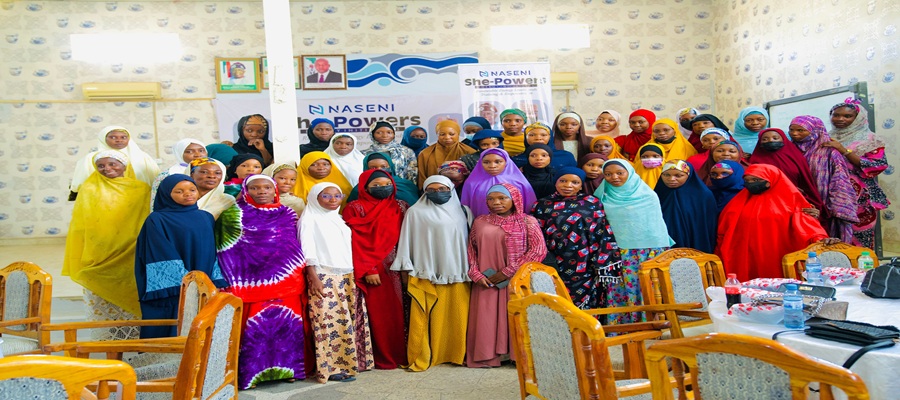
The National Agency for Science and Engineering Infrastructure (NASENI), under the leadership of its Executive Vice Chairman/CEO, Khalil Suleiman Halilu, has trained 50 women in Kano State on inverter and battery technologies through its She-Powers Energy Initiative.

The three-day programme, held at the Technology Incubation Centre, Farm Centre, Kano which ended yesterday, was designed to equip participants with practical renewable energy skills, promote women-led enterprises, and enhance sustainable livelihoods.
The initiative forms part of NASENI’s broader commitment to empowering women, creating economic opportunities, and expanding participation in Nigeria’s growing clean energy sector. It also aligns with the Renewed Hope Agenda of President Bola Ahmed Tinubu by supporting job creation, entrepreneurship, and inclusive economic development.
Through targeted interventions such as the She-Powers Energy Initiative, NASENI continues to demonstrate its commitment to leveraging technology and innovation to improve lives and drive sustainable development across the country.
Photos: Participants at the She-Powers Energy Initiative training organised by the National Agency for Science and Engineering Infrastructure (NASENI) held at the the Technology Incubation Centre, Farm Centre, Kano yesterday.

AI-Powered Cyber Threats Put Nigerian Banks on Alert

Guinea-Bissau Taps United Nigeria Airlines to Establish AIR BISSAU, National Carrier

IMF Urges FG to Introduce Fuel, Telecom Taxes

CBN to Expand eNaira for Salaries, Pensions and Welfare Payments

CSOs Raise Alarm over Nigeria’s Data Protection Crisis

CBN Extends PoS Geo-Fencing Enforcement Deadline to August 2026

NCC Drafts New Rules for Virtual Mobile Operators

TD Africa, HPE Drive Conversations on the Future of Intelligent Networking

Anthropic Raises $65 Bn to Expand AI Research, Innovation

Easybuy Partners WAWUAfrica to Upskill 10 Million Youths and Women, Boosting Nigeria’s Economic and Financial Inclusion




 News3 days ago
UK, Nigeria Launch £15m Growth Programme to Accelerate Economic Transformation

 General News3 days ago
Haleon Introduces New Corporate Identity in Nigeria

 General News3 days ago
Elon Musk Makes History as the World’s First Trillionaire

 Telecom3 days ago
NITDA Unveils Ambitious Strategy to Turn Southwest into Nigeria’s Next Innovation Powerhouse

 General News13 hours ago
₦5m up for Grabs as 10 Startups Clash at the Gathering on 100 Pitchathon Aba
 E-Financial13 hours ago
CBN to Expand eNaira for Salaries, Pensions and Welfare Payments
 E-Business13 hours ago
CSOs Raise Alarm over Nigeria’s Data Protection Crisis

 General News13 hours ago
CBN Moves to Stop Banks From Using Customers’ Money for Fintech Subsidiaries