

Telecom
AfreximBank Boss, ECOWAS, Diplomats and others to Speak at GAIN Youth Summit 2022

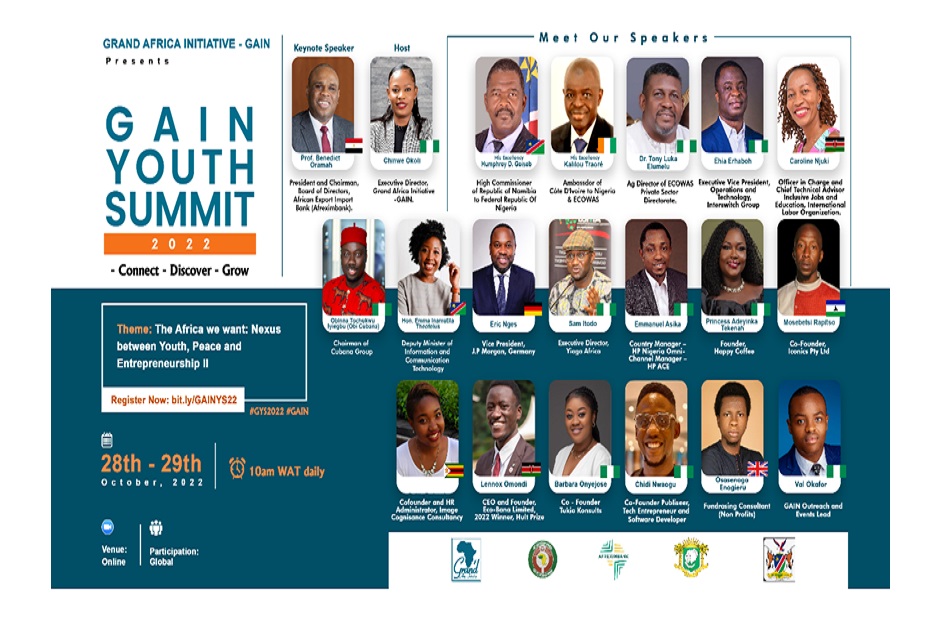
The President and Chairman of the Board of Directors of African Export Import Bank (AfreximBank) Professor Benedict O. Oramah; High Commissioner of Namibia to Nigeria, H.E Humphrey Geiseb; Ambassador of Cote D’Ivoire to Nigeria and ECOWAS, H.E Ambassador Kalilou TRAORE; Dr Tony Luka Elumelu, Ag. Director of Private Sector Development at the ECOWAS Commission, Nigeria as well as popular Nigerian business man, Mr Obinna Tochukwu Iyiegbu (Obi Cubana), Chairman, Cubana Group, Nigeria have been named the Keynote and Guest Speakers respectively at the 2022 edition of the Grand Africa Initiative – GAIN Youth Summit holding from 28th-29th October, 2022 at 10am WAT daily with the theme The Africa We Want: Nexus between the Youth, Peace and Entrepreneurship II.

The GAIN Youth Summit is an annual gathering of policy makers, diplomats, public and private sector leaders, development institutions, civil society groups and the youths from across the continent and the diaspora, focused on developing entrepreneurship, innovation, professional and employability capacities in young Africans in a way that helps tackle the menace of youth unemployment and conflict on the continent.
The Executive Director, Grand Africa Initiative (GAIN), Ms. Chinwe Okoli stated that this year’s summit will build on and further examine the key insights around the theme The Africa We Want: Nexus between the Youth, Peace and Entrepreneurship discussed at the 2021 summit which had the Vice President of the Federal Republic of Nigeria, professor Yemi Osinbajo, SAN as the Special Guest of Honour.
According to Ms. Okoli, “We are excited at the level of growth in impact that the GAIN Youth Summit is making through the years. This year, we are glad that organisations and institutions such as ECOWAS Commission, AfreximBank, Embassy of the Republic of Guinea to Nigeria, High Commission of Namibia to Nigeria and Embassy of Cote D’Ivoire to Nigeria are partnering with GAIN. We are especially grateful to ECOWAS through the Youth and Sports Development Centre(EYSDC) for their financial support. We are also grateful to all those who will be sharing their thoughts with over 2000 youths from across the world”.
According to Ms Okoli, “other confirmed speakers include; Ehia Erhaboh, Executive Vice President, Operations and Technology, Interswitch Group, Nigeria; Caroline Njuki, Officer in Charge and Chief Technical Advisor Inclusive Jobs and Education, International Labour Organisation, Kenya; Eric Nges: Vice President, J.P Morgan, Germany; Hon. Emma Inamutila Theofelus(MP); Deputy Minister for ICT, Namibia; Sam Itodo, Executive Director, YIAGA Africa, Nigeria; Emmanuel Asika; Country Manager- HP Nigeria; Omni Channel Manager-HP ACE; Lennox Omondi, CEO and Founder, Eco-Bana Limited, Kenya and 2022 Winner Hult Prize; Chidi Nwaogu, Co-Founder, Publiseer/ Tech Entrepreneur and Software Developer, Nigeria; Princess Adeyinka Tenekah; Founder/CEO, Happy Coffee, Nigeria; Rapitso Mosebetsi, Co-Founder & CEO Iconics Pty Ltd, Lesotho… among others”
Over the past three years, the GAIN Youth Summit has deepened the discourse and contributed to shaping policies around strategies to unleash the economic potentials of young Africans to build sustainable prosperity on the continent. We are delighted that previous editions of the summit attracted high profile leaders such as Professor Chukwuma Charles Soludo, Governor, Anambra State and former Governor of Central Bank of Nigeria; British High Commissioner to Nigeria, Catriona Laing; Ambassador of Angola to Nigeria, Dr Januario Eustaquio Quibato; The High Commissioner of South Africa to Nigeria, Mr Thami Mseleku; Nigeria’s Minister of Youth and sports, Hon Sunday Dare; Her Excellency, Mrs Teneng Mba Jaiteh, The Ambassador Plenipotentiary of The Gambia to Kingdom of Belgium and the European Union; H.E S. F Houmard, The President of in Global Office of the Global Union; H.E, Mr Georges R. P. Chikoti, The Secretary General of the Organisation of African, Caribbean and Pacific States (OACPS); Mr Tomi Davies ‘TD’, Collaborator-in-Chief, TVC Labs/President, African Business Angel Network (ABAN), Mr Modise J.Motloba, The Group CEO, Tysys Capital Group, South Africa; Professor Joseph Nnanna, Chief Economist, development bank of Nigeria; Professor Ndubuisi Ekekwe,Lead Faculty, Tekedia Institute; Mrs Fati N’zi-Hassane, Supervisor, Human Capital Division AUDA-NEPAD, African Union among others
Grand Africa Initiative (GAIN) is a youth-focused pan-African non-governmental organization which comprises young Africans between 15 and 35 years drawn from within and outside the continent, who are passionate about promoting entrepreneurship as a means to reduce conflict, promote peace and economic revival of the continent. GAIN programs include training, advocacy, mentorship, and youth events, designed to help achieve sustainable development by igniting the positive energy of the greater segment of Africa’s population – the youth.
Participation:
Register to attend the summit for free via the link: http://bit.ly/GAINYS22



Nigerians lost about N12.5 billion to telecom-related financial crimes from 2019 to January 2023, underscoring the scale and persistence of this threat to the telecommunications industry, PwC Nigeria has said, citing data from the Nigerian Communications Commission (NCC).

PwC, in its latest report, ‘AI’s Dual Role in Telecom Fraud: Why Artificial Intelligence is Both a Threat and a Shield for Telcos’, said the growing adoption of AI by fraudsters is amplifying the frequency and impact of fraud.
The report said fraud has long been a persistent challenge in the telecoms landscape, leading to substantial financial losses for customers and reputational damages for telecommunication companies (telcos).
PwC’s latest report, ‘AI’s dual role in telecom fraud’, highlights global trends in how AI is reshaping both the threats and defences in telecommunications.
The publication examined what these shifts mean for operators in the local market and how they can stay ahead by adopting proactive, AI driven fraud management strategies.
It offered insights into how AI is enabling more sophisticated fraud schemes, from deepfake social engineering to automated attacks; the emerging role of AI powered detection and monitoring tools in strengthening fraud prevention frameworks.
The report also gave practical steps for telecom operators to balance innovation, resilience, and customer trust in an AI driven fraud ecosystem.
PwC noted that the impact of fraud on telecommunications companies is far-reaching, resulting in financial losses, reputational damage, and compliance issues.
The report said for instance, that in 2023, global telecom fraud was estimated at $38.95 billion.
It, however, stated that in Nigeria, where telecom acts as a key gateway to financial services through Unstructured Supplementary Service Data (USSD) and some are moving into fintech, these evolving risks place added pressure on operators.
The report stated that while operators have developed systems and controls to manage these risks, the sector’s expansion into adjacent domains (such as mobile money and payment service banking) is blurring the traditional boundaries of telecom fraud.
“The result is a more complex and interconnected risk environment, where both the frequency and impact of fraud are escalating. Adding to this complexity is the rapid pace of technological advancement.
For instance, Russian cybersecurity firm F6 reported a rise in SIM swapping incidents, particularly related to the shift to eSIM technology. These fraudsters are hijacking phone numbers and bypassing security measures to access bank accounts,” the report said.
The report, authored by Udochi Muogilim, Partner and Technology, Media and Telecommunications Leader, PwC Nigeria, and Adeola Adekunle, associate director, Forensic Services, however, said as AI continues to mature, it is reshaping the fraud landscape—introducing heightened threats and powerful new tools.
“On one hand, AI can be exploited to scale and automate fraud schemes with unprecedented sophistication. On the other, it equips telcos with advanced capabilities for fraud detection, prevention, and response.
“This dual role—AI as both a tool and a target—underscores the urgent need for Nigerian telecom players to adopt AI thoughtfully and strategically.
“Navigating this evolving landscape requires more than just investment in technology; it demands a deep understanding of what’s happening today in the world of technological disruption, and what’s to come,” the experts stated.
The report reiterated that telecom fraud affects a wide range of stakeholders, from individual consumers facing unauthorised charges to large corporations suffering reputation damage.
“The combination of AI and various fraud types significantly increases the success rate of these schemes.
“Furthermore, the global nature of telecommunications networks allows fraud to swiftly cross borders, complicating efforts to investigate and prosecute offenders, thus presenting a pressing concern for telecom companies and their regulators,” PwC said.
The firm, however, emphasised that AI has the potential to revolutionise how telecom companies and regulators combat fraud while enhancing the quality of service, ultimately fostering greater trust among consumers.
To fully harness this potential, PwC said it is crucial for industry players to stay informed about evolving technology trends and anticipate future challenges.
This awareness, it added, will empower them to leverage AI’s capabilities for more effective fraud prevention and the proactive management of emerging fraud types, all while adhering to responsible AI principles.
“A well-coordinated combination of the right resources and strategic alliances will enable the industry to make a significant impact in the fight against telecom fraud and build a safer, more efficient telecommunications ecosystem,” PwC affirmed.
The firm even went a notch higher by offering to help industry players and stakeholders turn fraud-related friction into forward movement, powered by the right technology.
“We bring trust and transparency to the heart of your decision-making, helping you use AI, data and tech to reduce the risk of fraud, respond swiftly to breaches, and emerge stronger—so you can prepare your business for what’s next,” PwC offered.
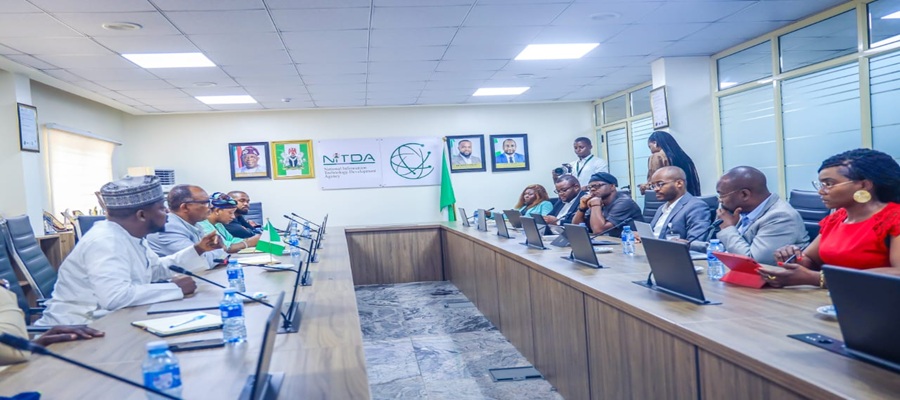
National Information Technology Development Agency (NITDA) has reaffirmed its commitment to building a coordinated and inclusive digital ecosystem in Nigeria, further strengthening its role as an ecosystem orchestrator.

NITDA
This was disclosed during a working visit centred on Nigeria’s startup ecosystem framework, where the Director General of NITDA, Kashifu Inuwa, was represented by the Director of Stakeholders Management and Partnerships, Dr Aristotle Onumo.
Speaking during the visit, the DG said NITDA was established to drive coordinated and sustainable information technology development in Nigeria, leveraging both its regulatory and developmental mandates, serving as an ecosystem orchestrator that fosters collaboration, innovation, and growth across the digital economy.
He stated that these reforms are aligned with the Federal Government’s Eight-Point Agenda and reflected in NITDA’s Strategic Roadmap and Action Plan (SRAP 2.0), which is built around eight strategic pillars designed to accelerate the growth of Nigeria’s digital economy.
According to him, a key objective of the roadmap is to position Nigeria as a technologically driven nation that promotes inclusive economic development through innovation. He highlighted digital literacy as a major priority, with NITDA targeting 70 percent digital literacy by 2027 under the National Digital Literacy Framework, with a long-term goal of achieving 95 percent by 2030.
Other priority areas, he said, include ecosystem development, IT talent advancement, expansion of digital infrastructure, policy implementation, and research-driven innovation.
The visiting delegation from Angola’s National Institute of Support for Micro, Small and Medium Enterprises (INAPEM), led by Chairman of the Board of Directors (PCA) and Chief Executive Officer, Bráulio Augusto, commended Nigeria’s progress in implementing the Nigeria Startup Act and described the country as a valuable model for shaping Angola’s own startup legislation.
Augusto disclosed that Angola’s Startup Law has received initial parliamentary approval and is now entering the implementation stage. He expressed interest in understanding how Nigeria transitioned from legal adoption to practical execution, particularly in areas such as startup labelling, incentive management, ecosystem mapping, investor registration, and the operation of the Nigeria Startup Portal.
According to him, Angola is currently developing the Startup Angola Programme under its Digital Entrepreneurship Support Programme, aimed at building a structured and integrated startup ecosystem rather than isolated interventions.
The programme will focus on institutional strengthening, startup funding, support for business development service providers, expansion of innovation hubs, and partnerships with international accelerators.
He added that Nigeria’s experience is especially relevant as Angola seeks solutions to challenges including informality, limited access to finance, youth unemployment, digital inclusion gaps, and restricted market access for small and medium-sized enterprises.
The INAPEM chief also requested further technical insights into Nigeria’s National Startup Council, its member selection process, and the governance structure of the Nigeria Startup Portal.
The visit highlights growing collaboration among African nations in digital policy development and further reinforces Nigeria’s position as a reference point in shaping startup ecosystem frameworks across the continent.

Kashifu Inuwa, National Information Technology Development Agency (NITDA), has reaffirmed the Agency’s commitment to deepening collaboration with the Federal Ministry of Communications, Innovation and Digital Economy (FMCIDE) to accelerate Nigeria’s digital transformation and strengthen policy alignment across the sector.

The Director General of the National Information Technology Development Agency (NITDA), Kashifu Inuwa, taking the Permanent Secretary of the Federal Ministry of Communications, Innovation and Digital Economy, Mr. Nadungu Gagare, on a tour of the newly commissioned Innovation Space during the Permanent Secretary’s working visit to the Agency’s corporate headquarters.
Speaking during a courtesy visit by the Permanent Secretary of the Ministry of Communications, Innovationand Digital Economy, Mr. Nadungu Gagare, to NITDA headquarters, Inuwa described the engagement as a significant demonstration of the Ministry’s support and leadership, noting that sustained collaboration between both institutions is essential to delivering Nigeria’s digital economy agenda.
The NITDA Director General recalled previous engagements with the Ministry, including a familiarisation visit during which the Agency shared its strategic roadmap and ongoing initiatives, noting that continuous dialogue has strengthened alignment between both institutions.
He highlighted key policy areas requiring continued collaboration, including the development of a national sovereign cloud infrastructure and a comprehensive cybersecurity policy framework.
“We are awaiting the Ministry’s guidance on how to move forward, particularly on the national cloud and cybersecurity policies,” he said, while emphasising the importance of clear institutional boundaries and mutual respect in enhancing operational effectiveness and inter-agency cooperation.
Inuwa also revealed that NITDA has been at the forefront of implementing the Performance Management System (PMS), having introduced the framework internally several years before its adoption across the Federal Civil Service.
“We started PMS about four years ago. What we have now at the national level actually originated from our internal reforms,” he disclosed, adding that initiatives such as Project NEXT have strengthened accountability, role clarity, and measurable outcomes across the Agency.
“If you perform well, you are rewarded. If not, there are consequences. Even promotions are tied to performance,” he added.
The Director General further highlighted NITDA’s transformation from a traditional regulatory institution into a dynamic ecosystem enabler focused on innovation, inclusion, and national development.
“We are building a high-velocity organisation—one that is agile, inclusive, and driven by innovation,” he said, explaining that the Agency is embracing a more flexible and entrepreneurial culture that empowers staff to contribute ideas and drive institutional growth.
In his remarks, the Permanent Secretary of the FMCIDE, Mr. Nadungu Gagare, reaffirmed the Ministry’s commitment to strengthening collaboration with its agencies, describing partnership as fundamental to achieving sustainable progress in Nigeria’s digital transformation journey.
“If there is no partnership, there is nothing that can be achieved. But with partnership and collaboration, a lot can be accomplished, and that is exactly what we are seeing now,” he stated.
Gagare explained that the visit forms part of the Ministry’s ongoing engagement with agencies under its supervision to strengthen policy coordination, assess progress, and address operational challenges requiring higher-level intervention.
He commended the management and staff of NITDA for their dedication to advancing Nigeria’s digital innovation ecosystem, acknowledging the Agency’s contributions to digital literacy, innovation, cybersecurity awareness, and the creation of opportunities for startups and young innovators.
“NITDA has continued to play a pivotal role in shaping Nigeria’s digital future through the promotion of information technology development, digital literacy, innovation, and regulatory standards,” he said.
The Permanent Secretary also stressed the importance of policy coherence among institutions within the Ministry, noting that agency mandates are interconnected and must be implemented seamlessly.
“Your mandates are inputs into one another. That is why we need tight collaboration so implementation can go smoothly,” he said, while assuring NITDA of the Ministry’s continued guidance and institutional support.
He further highlighted ongoing Federal Civil Service reforms, particularly the adoption of the Performance Management System, which promotes accountability, clear target-setting, and measurable performance outcomes.
“When everything needed for performance is made available and targets are not met, consequence management follows. Where targets are exceeded, there is reward. This is how we drive performance in the service,” he noted.
The visit showcases the shared commitment of both FMCIDE and NITDA to advancing Nigeria’s digital economy through stronger collaboration, innovation, and effective governance, with the strengthened partnership expected to play a critical role in delivering inclusive growth, improved service delivery, and sustainable national development.

World Bank Blocks Social Media Comments from Nigerians over Loan Backlash

Nigerians Lose N12.5bBn to Telecom-Related Financial Crimes – PwC

Jumia Nigeria Records Strong Q1 2026 Growth as Technology-Led Strategy Drives Market Expansion

Lagos Plans New Cybersecurity Centre

LG Electronics Strengthens Household Energy Efficiency in Nigeria with Advanced Inverter Refrigerator Solutions

MTN, VDT, Zoracom, Digital Realty Back 2026 Girls in ICT Campaign

Vitel Wireless Partners Fintechs to Expand Access to Services

Kaspersky Discovers Vulnerability in Qualcomm Snapdragon Chips that can Lead to Data Loss & Device Compromise

MTN Suspends Data, Airtime Borrowing Service over New FCCPC Lending Rules

Bank Customers to Pay N1,500 for ATM Card Issuance, Replacement – CBN




 Telecom3 days ago
NCC Says Telecom Industry on Course to Improve Quality of Service

 News3 days ago
Kaspersky Challenges IT Leaders with Next-generation Cyber Protection Simulations

 Telecom3 days ago
Africa to get AI Data Centres Through Three-way Partnership

 General News3 days ago
FG to Balance Innovation with National Security with Stronger Drone Regulations

 News3 days ago
FG, World Bank Launch $65m SPESSE Funding for 24,000 Nigerians

 Broadcasting3 days ago
FG to Launch Nationwide Free Digital TV Platform June 17

 Telecom3 days ago
Distinguished Industry Veteran Dr. Olusola Teniola to Chair NDSF 2026

 News2 days ago
The Nigeria Prize for Science & Innovation Records New Height as 2026 Edition Attracts 237 Entries