

Telecom
Bitget shares Merkle Tree Proof of Reserves to Enhance Transparency

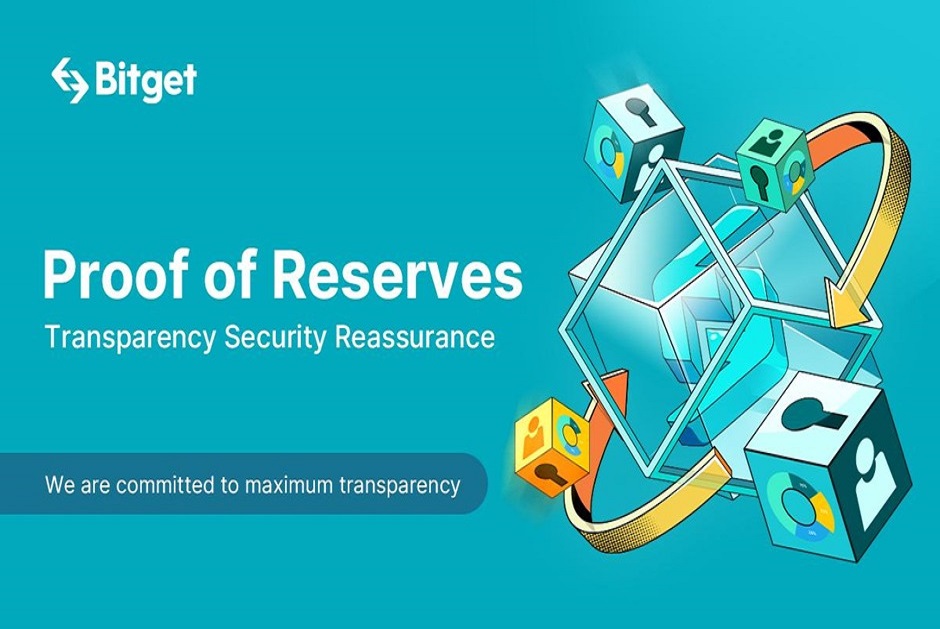
Bitget, leading global cryptocurrency exchange, announces that it is launching its Proof of Reserves Page, which will demonstrate to users that we are a full-reserve exchange, as supported by its Proof of Reserves (“PoR”), using the cryptographic-audited Merkle tree method, and that users’ assets stored on the platform are safeguarded.

The Proof of Reserves page provides users with a wealth of information on the topic, including several core elements such as “Merkle Validator”, the monthly snapshots presenting the balance of the reserve pools, user education on Proof of Reserves and the importance of being fully reserved, as well as how the Merkle tree supports and proves the authenticity and consistency of the data presented by Bitget.
Snapshots of reserve wallets on the platform and the user’s assets serve as reassuring evidence and demonstrate that their assets are held at least at a 1:1 ratio.
To further enhance transparency and ensure the accuracy of the information on the page, Bitget is also launching a new tool, “Merkle Validator”, for users to perform self-audit with their own accounts. The feature allows users to verify the security of their funds in a few simple steps. Users are able to verify the status of their assets’ “Merkle leaf” under the Merkle tree data structure. Bitget is also committed to carrying out regular audits of the PoRs to make sure the balances and the status of user assets within its reserves stay up to date.
Gracy Chen, Managing Director of Bitget, comments, “Bitget actively responds to the market concerns, and even before FTX filed for bankruptcy, on Nov 9th, we had already promised to publish our Merkle tree Proof-of-Reserves within a month’s time. Today, we are proud to fulfil our promise.
“The release of the Proof of Reserves and the Merkle tree data equips users with updated and informational insights on the financial status of Bitget and enhanced control on their assets stored on the platform, which is echoed in our commitment of maximum transparency and top-notch protection policies for users.”
“The crypto industry is under close scrutiny after the scandals and collapses of some giant crypto firms. The desire of users to invest and store assets on a secure platform has seen its high, as Bitget has witnessed an increase in users recently. With the rollout of the Proof of Reserves page, Bitget not only demonstrates well-rounded protection for users, but also will continue to advocate more initiatives aiming to offer safe adoption of cryptocurrency worldwide and a sustainable and trustworthy environment in the crypto universe,” adds Gracy.
Aside from the POR release, Bitget has launched various initiatives to help rebuild the market’s confidence, such as launching the USD 5 million Builders Fund for users affected by the FTX incident, increasing the Protection Fund to USD 300 million, and most recently, investing 20 million in a series of campaigns with Lionel Messi.
What is Proof of Reserves?
Proof of Reserves refers to an auditing procedure that is verifiable through cryptographic proofs, checks of public wallet ownership, and recurring audits to certify the holdings of an exchange. The custodian provides transparency and proof of the existence of on-chain reserves and that the total amounts of those coins held and effectively at the disposal of the platform exceeds or is equal to the sum of all users’ holdings of those coins.
To achieve this, Bitget stores the hash of each user’s account assets in a leaf node on the Merkle tree. Each user can verify that their funds are included in the Merkle tree by checking the total amount of users’ assets stored in the Merkle tree leaf nodes. The open-source code of the platform’s proof of its 100% solvency program has also been published to GitHub.


Association of Telecommunications Companies of Nigeria (ATCON), umbrella organization for all telecommunications and ICT companies operating in Nigeria, has warned that telecom networks in the country are under threat from infrastructure attacks and vandalism.

Tony Emoekpere, president, ATCON, who stated this during an interview with Channels Television, has called for stronger protection of communication infrastructure nationwide.
He also urged Nigerians to treat telecom assets as critical to national development.
Emoekpere said operators in the telecommunications sector are not indifferent to the quality of service delivered to consumers, noting that industry stakeholders are already working closely with regulators, including the Nigerian Communications Commission (NCC), to tackle persistent challenges affecting network performance.
Emoekpere stressed that many of these challenges are beyond the direct control of operators and require stronger public cooperation in protecting telecom infrastructure.
He added that infrastructure destruction remains one of the biggest threats to service quality and network stability in Nigeria.
According to him, telecom assets should be regarded as essential national infrastructure that must be safeguarded by all citizens.
He said, “We’re here complaining about poor service, but when we see people vandalising infrastructure, we don’t complain; when we see people cutting cables, we don’t report.”
He further urged Nigerians to be more proactive in reporting acts of vandalism to the appropriate authorities.
Emoekpere warned that continued damage to telecom facilities will only worsen the quality of service experienced by consumers across the country.
He called for stronger awareness campaigns to educate the public on the importance of protecting communication infrastructure.
He also emphasized that improving service delivery requires shared responsibility between operators, regulators, and citizens.
He appealed for collective action to safeguard telecom infrastructure, noting that its protection is key to improving connectivity and driving national development
National Identity Management Commission (NIMC) has introduced new digital customer support channels, including WhatsApp and live chat services, to improve accessibility and service delivery for Nigerians and legal residents seeking assistance with National Identification Number (NIN) related issues.

NIMC
NIMC disclosed this in a statement, saying the initiative forms part of its ongoing digital transformation and customer service reforms.
According to the commission, the new support channels include a live chat feature on its official website and an official WhatsApp platform designed to provide faster and more convenient access to customer support services.
Members of the public can now access support through the Live Chat feature on the NIMC website via www.nimc.gov.ng and the official WhatsApp support line: +234 701 566 6971.
The commission said the initiative aligns with efforts to improve public sector efficiency and enhance access to government services through technology-driven solutions.
NIMC noted that the new platforms would enable users to receive prompt responses to enquiries, real-time guidance, and improved customer interaction without necessarily visiting physical offices.
The commission said the move reflects its commitment to service innovation, citizen-centred engagement, and efficient identity management service delivery.
Under the leadership of Director-General and Chief Executive Officer, Engr. Abisoye Coker-Odusote, NIMC said it had continued implementing reforms and digital solutions aimed at expanding access, strengthening public trust, and improving service delivery.
The commission encouraged Nigerians and legal residents to utilise the official platforms for verified information, assistance, and updates on NIN services and related identity management matters.
It also advised members of the public to remain vigilant and engage only through official communication channels to avoid fraud, scams, and misinformation.
The statement was signed by Kayode Adegoke, Head of Corporate Communications Unit, NIMC.
As families across the world celebrate Mother’s Day, QNET, a global lifestyle and wellness-focused direct selling company, honours mothers as the everyday force behind healthier homes, stronger families, and more resilient communities. From managing households and supporting family wellbeing to balancing careers and personal responsibilities, mothers play a central role in sustaining daily life. Yet, amid these responsibilities, their own wellness is often overlooked.

In today’s fast-paced environment, the demands of modern living continue to take a toll on human energy and well-being. Alarmingly, recent surveys indicate that 75% of Nigerian employees experience work-related stress, with 60% reporting persistent feelings of overwhelm.
These pressures are often compounded by economic realities that require many individuals to juggle multiple responsibilities or income streams. For women, particularly mothers, this burden is even greater. Beyond professional demands, they often take on the primary role of managing household well-being, childcare, and daily routines.
This continuous cycle of responsibility leaves little time for rest, recovery, or intentional self-care, increasing the risk of long-term physical and mental strain.
At the same time, access to basic wellness essentials remains a challenge. According to data from the WHO and UNICEF Joint Monitoring Programme, 28% of Nigerians lack access to basic drinking water, approximately 75% lack basic sanitation, two-thirds do not live in premises with a handwashing facility that includes soap and water, while 20% practice open defecation.
In many homes, ensuring safe water and overall family health largely falls to mothers, further reinforcing their central role in household well-being. This reality highlights the importance of recognising and celebrating mothers who consistently take on this responsibility, often placing the needs of their families above their own.
Commenting on the significance of the global observance, Ayokunmi Solesi, General Manager for QNET Nigeria, said, “Mothers are the backbone of many households. They give their time, energy, and care so consistently that their own well-being can sometimes take a back seat. Mother’s Day is an important reminder that supporting mothers’ health and wellness is not just a personal priority, but a family and societal one.”
He added that this perspective aligns with QNET’s 2026 global campaign, “Energised, Every Day,” which focuses on practical solutions that support everyday living. “When mothers are well-supported and energised, it positively impacts the entire household. Wellness should be part of daily life.”
As conversations around health continue to evolve, there is a growing shift towards preventive and lifestyle-based wellness – simple, consistent actions that support long-term vitality. This includes prioritising proper nutrition, hydration, rest, and balance as part of everyday routines, particularly for individuals managing demanding schedules.
Supporting this approach, QNET offers a range of products designed to fit seamlessly into daily life. Its nutritional supplement, EDG3 Plus, provides essential nutrients that contribute to daily vitality and help individuals maintain energy levels throughout busy days.
Recognising the importance of safe hydration in overall health, the HomePure Nova helps improve the quality of drinking water at home, supporting healthier households and reducing exposure to common water impurities.
In many Nigerian homes, where women play a key role in managing family health, access to cleaner water remains an essential part of everyday wellbeing.
Complementing this is the Amezcua Bio Disc 3, part of QNET’s wellness range, designed to support overall wellbeing across different aspects of daily life. Its versatile use within the home – from supporting food preservation to enhancing water quality and contributing to a more balanced living environment – makes it a practical wellness companion for families, particularly mothers managing multiple household needs.
As Mother’s Day is observed this year, QNET encourages families and communities to not only celebrate mothers but also to actively support their wellbeing. By creating healthier homes and encouraging better daily habits, the company reinforces its belief that true wellness begins with everyday choices and with those who hold the family together.

ATCON Says Telecom Network Under Threat, Urges Stronger Efforts to Protect Infrastructure

CBN Warns Non-Interest Banks against Governance, Compliance Risks

FG Seeks Fresh $1.25Bn Loan from World Bank to Create Jobs, Others

National Assembly to Review National Data Protection Act

Firm Shares Insights into Ransomware Trends and Tactics @ International Anti-Ransomware Day-2026

Kaspersky Discovers Vulnerability in Qualcomm Snapdragon Chips that can Lead to Data Loss & Device Compromise

MTN Suspends Data, Airtime Borrowing Service over New FCCPC Lending Rules

Vitel Wireless Partners Fintechs to Expand Access to Services

MTN, VDT, Zoracom, Digital Realty Back 2026 Girls in ICT Campaign

Bank Customers to Pay N1,500 for ATM Card Issuance, Replacement – CBN




 E-Financial2 days ago
Transcorp Excites Shareholders with ₦20.3 Billion Dividend @20th AGM

 Telecom1 day ago
MTN, Airtel, Glo Under Pressure as FG Demands Better Service Delivery

 E-Financial2 days ago
Africa Prudential Launches Sabivest to Boost Digital Investment Access

 Telecom2 days ago
PAFON 3.0: Agency Banking Key to Reaching Millions of Unbanked Nigerians – AMMBAN

 E-Business1 day ago
Firm Warns of Phishing Attacks via Compromised Amazon Simple Email Service Accounts

 E-Financial1 day ago
Mastercard, BMONI Launch Multi-Currency Payment Cards in Nigeria

 General News2 days ago
PIN Records 3.07Bn Media Reach, Expands Digital Rights Impact Across Africa in 2025

 General News2 days ago
Interswitch Inducts 3rd Interns into Its Developer Academy