

News
Top Digital Marketing Personalities in Nigeria 2022


In the 1990s, the term “digital marketing” was coined, but it wasn’t until the early 2000s that traditional marketers began to recognise its impact.

However, digital media such as smartphones, laptops, and other smart devices have grown popular and powerful over the past two decades. This rapid advancement in technology quickly became an opportunity for many traditional marketers, who discovered new ways to reach and engage their audiences. People began developing new marketing strategies, and as Google improved and social media platforms emerged, digital marketing strategies and roles became hot topics in the industry.
Today’s digital marketers wear many hats. Brands that understand the roles of digital marketers are reaping the benefits of the wide range of skills and tools in order to stay on top of the ever-growing competitive business environment.
Digital marketers are at the heart of leveraging media channels to create, deploy, manage, and track campaigns.
The truth is that digital marketing has the potential to grow the business at the highest rate and data are there as proofs.

The pandemic made people stay at home and work remotely which eventually resulted in business owners inclined towards Digital Marketing. This eventually provided so many opportunities for business owners to target their audience online with digital marketing tactics.
Also, business owners are realizing that they have chances of higher returns by investing in Digital Marketing.
Image: 
https://www.incrementors.com/blog/wp-content/uploads/2022/05/digital-marketing.jpg
No wonder brands like; Sterling Bank Plc., United Bank for Africa Group (UBA), The Chartered Institution of Water and Environmental Management, MTN Nigeria, Kippa, DPTRAX, Wallify, The Redwolf, TOA Marketing, Freelancer, and Eskimi are doing great in the digital space.
Depending on the company, industry, and seniority of a role, a day in the life of a Digital Marketer would often include managing social media marketing campaigns, working on search engine optimization or search engine marketing efforts, running display or programmatic ads, overseeing email campaigns, and creating content for a company blog.
Few individuals distinguished themselves in the Digital Marketing space in Nigeria in 2022. In this Special Report, we present to you the Top Digital Marketing Personalities in Nigeria in 2022 in no respective order:
1. Oyekunle Damola
Oyekunle Damola helps business owners increase their revenue by attracting & converting prospect into sales using an auto relationship building system
Notable Achievements in 2022:
- Enrollment of over 3,000 students in an online academy, with numerous success stories with students crossing the 7 figure mark for themselves and their clients
- Successfully coordinated multiple product launches for a client, resulting in over N60m in revenue.
- Led the development and execution of a highly successful digital marketing campaign for a major Nigerian company, resulting in a 58% year-over-year increase in revenue.
- Earned a Certification of Appreciation for his role as a mentor at the annual Digclan conference in 2022.
2. Ore Afolayan
Ore Afolayan is a marketer and technology entrepreneur. His work focuses on helping Tech-enabled and Blockchain brands to drive sustainable development in Africa.
Ore is also Founder/Team Lead at TOA Marketing, a product marketing company that helps startups to scale with ease.
Leveraging his marketing skills, he currently works as Ambassador for Blockchain projects such as Inery Blockchain and StarCoin.
Notable Achievements in 2022:
- Winner, Web3, Crypto and Society Fellowship Pitch Competition (Network Capital), Startups Founders Hub (Microsoft),
- Top100 Brands in Oyo State (Global Arts Foundation) and LinkedIn Influencer to watch in 2022 (Jasper SME Hub.
- Hyperion Scholarship Winner (Quantic School of Business and Technology, USA) and Nominee, Marketing Experts Award (TechTrend Africa).
- Graduate, McKinsey & Company Forward Program.
- Ambassador of the Month (November), Inery Blockchain.
3. Ebube Okechukwu
Ebube Okechukwu is a Social Media and Digital Communication specialist with experience in managing global personal brands, Financial Services, Retail, Environmental Management, Real Estate and the Non-profit sectors.
Ebube’s experience has seen him work across several industries including the financial sector where he currently works leading and executing the digital marketing and social media strategy for one of Africa’s leading financial services provider – United Bank for Africa in 24 countries and as well manages the social media and digital brand for its Chairman – Tony O. Elumelu.
He previously worked with the Tony Elumelu Foundation (TEF), the largest Africa-based, African funded philanthropy focused on entrepreneurship. At the TEF, he was responsible for telling the story and solutions of over 100 entrepreneurs from across 40 countries in Africa.
He holds a bachelor’s degree from the University of Benin and a master’s degree from the University of Lagos. He is a Professional member of the Chartered Institute of Marketing UK and holds certifications in Digital Marketing, Marketing Communications, Strategic Communications and Business Writing from the Chartered Institute of Marketing UK and the Pan-Atlantic University, Lagos.
Notable Achievements in 2022:
- He grew the social media brand presence for Tony O. Elumelu and other key personal brands
- He was responsible for end-to-end delivery social media strategy for United Bank for Africa Group in 24 countries – 20 African key markets and 4 global financial centres.
- Achieved top 20 on the Financial Brand List of the Top 100 Banks and financial institutions using social media globally in 2022.
- Delivered a wholesome digital campaign for the United Bank for Africa launch in the UAE – Dubai in 2022
- Manage all social media communication and the launch on Instagram and Google Business of Africa’s first and leading financial services chatbot – Leo, driving adoption to 4 million users in 20 key markets in Africa in 2022
- Omokehinde Thomas
Omokehinde Omokehinde is a Digital Marketing Communications professional, who specializes in brand management, client servicing, business operations, strategy, and content creation.
She has a cross-industry experience of 12 years in sectors such as Pay TV, Telco, NGO and Government, FMCG, and the financial sector.
She has worked on various brands such as Airtel, Supakomando, Nokia Mobile, Maltina, GOtv, Maggi, and Payattitude, to mention a few
Currently the Deputy Business Director of The REDWOLF Company, which is the Digital Agency for Noah’s Ark Communications, she oversees brand/ business management and Strategy.
- Onyinyechi Nneji
Onyinyechi Nneji is a marketing professional with 4 years of experience facilitating the launch of technology products in Africa using key marketing tactics.
Her background in digital marketing with her certification from the DMI combined with years of experience in storytelling and marketing have been critical in scaling products in Fintech, Education, Finance and AI.
Notable Achievements in 2022:
- Launch and scaled Kippa Payment’s Feature to reach thousands of Nigerian Merchants
- Launch and scalKippa Start, a business registration product for Nigerian Businesses
- Train over 10 mentees on product marketing, using digital channels and getting good employment opportunities as marketing professionals.
- Built frameworks and assets that drove customer education on business management
6. Ayodeji Akintade
Deji Akintade is a dynamic marketing professional with an exceptional track record in digital strategy, brand development, and marketing communications for established brands and high growth startups. Deji is currently leading the marketing efforts of one of the tier-2 banks in Nigeria to build a borderless digital bank for global citizens.
He was previously the marketing lead at Avon HMO, where he played a crucial role in transforming the company into a dominant healthcare brand in the digital space in Nigeria.
Deji has over 8 years of extensive experience in a number of sectors, including online retail, advertising, real estate, sports betting, healthcare, and financial services.
He is one of the co-founders of the Digital Marketing Meetup Nigeria (DMM), a platform that brings together digital marketing enthusiasts and professionals to share industry insights, network, and discuss business and job opportunities. Deji was a key member of the team that hosted the first Digital Marketing Conference in Nigeria in 2017 and organised the first Digital Marketing Virtual Exhibition with the Association of Digital Marketing Professionals, the leading professional organisation for digital marketing practitioners in Nigeria.
He is a professional member of the Chartered Institute of Marketing, UK with certifications in Marketing Analytics and Strategic Communications from Lagos Business School and the Pan-Atlantic University, Lagos respectively.
Notable Achievements in 2022:
- He defined and delivered differentiated brand experiences that grew market share by 28% and built customer loyalty for a savings and investment platform.
- Led the marketing efforts of a financial tech startup that was recognized as the most outstanding tech startup of the year and the most promising tech startup of the year at the Nigeria Technology Awards Ceremony.
- He was appointed VP of finance for the Association of Digital Marketing Professionals in Nigeria (ADMARP).
- Facilitated numerous marketing training workshops for corporate organizations and mentored over 15 individuals on digital marketing and career development.
7. Olubukayo Ewuoso
Olubukayo Ewuoso is currently a Product Marketing Manager, Global, at Eskimi, a programmatic AdTech company, across multiple markets globally.
He previously was the Snr. Account Manager, West & Central Africa, where he created digital campaign strategy, built solid and trusting relationship between major key clients, retention, upsell processes and revenue growth in a SaaS B2B environment in different sector (Tech Startups, Telcos, Banking, FMCG,) with global brands like Coca-Cola company, Nestle, MTN, Kuda Bank, amongst a few.
With over six years experience in digital media, growth and tech sales, he led efforts at DigiClan Africa, a 6,000 community strong of digital marketing professionals, as Dean of academy in 2022, and had served as Director for Programmes, & Partnership, Assistant Director for Programme and other capacities in the past.
Notable Achievements in 2022:
- Co-planned the maiden edition of the DigiClan Conference (DigiConnect) in Lagos.
- Led DigiClan Academy as Dean in Bi-weekly masterclasses, organizing nine successful sessions and hosting top industry professionals.
- Was a speaker a numerous industry events, one of them being the Lagos Digital PR Summit organized by the Nigerian Institute of Public Relations
- With top performance at Eskimi, Bukayo starts a new role in Jan. 2023 as Global Product Marketing Manager.
- Spearheaded a new pricing algorithm update by Eskimi in Nigeria.
8. Joshua Esiebo
Joshua Esiebo, a digital strategist and certified member of the Chartered Institute of Marketing (CIM), has over a decade of experience in Digital Strategy, Product & Platforms Management, Multi-Channel advertising, Mobile Marketing, and Digital PR.
He has developed and delivered over 70 online marketing plans and campaigns across different verticals and sectors – including large corporates, small businesses and faith-based institutions
Joshua currently serves as the Manager, Messaging (Partnership & Platforms) at MTN Nigeria where oversees all aspects of the messaging (ayoba; Africa’s all-in-one super app for messaging, music, games, content) service value chain, ensuring that the messaging platform and partnership maintains sustainable, high performing, year on year growth in line with the strategic objectives of the organisation.
As a creed, he invests in people to empower learning and provides constant digital marketing advice on audience insight, quality contents and digital marketing topics to move marketers forward in this fast-changing digital marketing space/industry.
A founding member of DigiClan Africa; the largest community of digital media and marketing experts and enthusiasts in Africa.
Notable Achievements in 2022:
- Spearheaded the growth of ayoba in Nigeria, crossing 20 million monthly active users globally in early December.
- Facilitated the deployment of localized interventions and content on ayoba to boost user adoption.
- Mentored over 25 individuals for 6 months with digital-focused skills and leadership methodology during the 2022 Harvesters Financial Transformation Programme.
9. Oghenetega (Tega) Ajogun
Oghenetega Ajogun is a data-focused, performance marketing expert focused on creating performance-based marketing campaigns, delivering high-level business insights while leveraging new media to deliver substantial revenue growth and have a huge impact on her client’s bottom-line.
With a track record of expanding company revenue and market share through performance-based marketing campaigns, delivering high-level business insights. She is also very passionate about impacting people’s lives and teaching in the digital space.
She has worked in multiple agencies and start-ups in Nigeria like SO&U, Wildfusions, Qlick Digital, Ringier Nigeria & Mdundo.com where she was the Senior Marketing Manager and she is currently the Strategic Marketing Manager at CIWEM, an independent professional body and a registered charity in the UK.
She is a TFAA 2020 nominee, Prize for Intrepreneurship, listed as one of Brand Communicator’s 40 under 40 women in Marketing & Communications (2021) and also one of 9to5Chick’s Top 100 Career Women In Nigeria for 2021.”
Notable achievements in 2022:
- Helped improve the subscribers base by 40% for Mdundo.com across Africa, while improving the Top of Mind Awareness in Nigeria using 360 marketing tactics like Radio, Activation, Digital and Outdoor campaigns
- Organized a digital training for over 25 people looking to break into the digital space in Nigeria
- Oversaw the Eko Digital Initiatives (District 2) in Lagos and helped train over 20,000 secondary school students on computer education (2021/2022)
10. Oluwatobi (Tobi) Adekunle
Oluwatobi Adekunle is a growth-oriented and performance-driven marketing professional with over 10 years of experience across various industries from e-Commerce, Information Technology, Energy, Financial technology, and Advertising Technology.
He possesses specialized skills in developing digital marketing strategies that deliver business objectives; this is because he has worked in different marketing capacities from digital marketing to performance marketing, growth and product marketing.
He is the founder of one of the largest digital communities in Nigeria – Digital Marketing Meetup Nigeria (DMM). This platform brings together digital marketing enthusiasts, tech entrepreneurs and experts where they share industry insights network and discuss business & growth opportunities.
Tobi convened the first Digital Marketing Conference in Nigeria in 2017 and held the first Digital Marketing Virtual Exhibition with the Association he co-founded the Association of Digital Marketing Professionals (ADMARP), the foremost professional body for digital marketing practitioners in Nigeria.
Tobi is a renowned mentor and trainer within the digital marketing ecosystem. He lectures at one of Nigeria’s leading marketing colleges, where he teaches Digital Marketing Techniques, a module for the Chattered Institute of Marketing Professional Certification UK.
He also facilitates different modules of the Digital Marketing Institute (DMI) Ireland courses. He is an alumnus of prestigious institutions, such as The Chartered Institute of Marketing UK where he bagged a Post-Graduate Diploma in Professional Marketing, The Business School Netherlands where he holds an MBA and Lagos Business School where he had a Certificate in Strategic Marketing
Notable Achievements in 2022:
- Oluwatobi joined Sterling – Nigeria’s leading product-led bank in 2022 as the head of Growth and Product Marketing, where he oversees 5 key digital products across different industries from payment, lending, investment and SME. (products include OneBank, Specta, Doubble, Switch and Snapcash. At Sterling he grew products adoption and usage by impressive margins, grew the digital banking solution retention rate by over 50% he also launched a web application for the digital banking product that help improve product usage. He achieved a landmark transaction volume on the same product which was the highest ever. He exceeded the investment budget value on the investment solution by 23% which is the highest in 6 months.
- Prior to joining Sterling in Mid 2022 Oluwatobi worked with Eskimi, a global advertising technology company where he led marketing in the African region and expanded the company’s clientele portfolio across eastern and central Africa. Oluwatobi increased the adoption of Eskimi programmatic solutions amongst brands and agencies and improved retention through strategic marketing and partnerships.
- He was appointed as an executive member of the Association of Digital Marketing Professionals ADMARP team as the VP of operation and oversaw the relaunch of the association’s platform. He grew the membership of the Digital Marketing Community (DMMNigeria) by over 50%
- He became a Member of the Chartered Institute of Marketing UK after he bags a Post-graduate Diploma in Professional Marketing
- He Graduated top of his class with an MBA at the Business School of Netherlands
11. Olayinka Bolaji
Olayinka Bolaji is a Growth & Performance Marketing Expert with over 10 years’ experience in Digital Marketing & Analytics, Marketing Strategy, Product Management, SEO/Paid Advertising and Software development.
He has worked with various brands in different industries ranging from Retail, Gaming & Lottery, Telecom, Insurance, Fintech, Real Estate and many more in various capacities such as Growth/Digital Marketing, Product Management and Software development.
Notable Achievements in 2022:
- Served as the Growth marketing lead at Zedcrest Investment Limited (Ranked second fastest growing company in Nigeria & fifth Fastest Growing Company in Africa 2022) where he was directly responsible for Increasing app usage by 70%, Increased revenue as high as 245% in Q4 2021.
- Led the creation of a holistic CRM tool that cut across various touch points for the Brand FundQuest Financial Services – While developing Digital marketing campaigns that boosted the Loan request & verification process and reduced turnaround time.
- He also led awareness & acquisition campaigns for brands such as ZirooPay, Baines Credit Microfinance Bank, Nigeria Internet Registration Association (NIRA) and many more through Pandora Agency where he currently lead the growth and digital marketing team.
- He Launched a SaaS Product that supercharges performance & increase daily agency performance for sport betting businesses leading to 30% increase in game plays MoM.
- Towards the end of 2022, he was also charged with the responsibility of improving App install & Customer acquisition for Dukka brand via Google Ads where he increased the app installs via Google AdWords by 70% within 2 months while reducing Ad budget costs, maintaining relatively low CPC and increasing CVR from 1.5%~ to 3%~.
12. Hamdalah Hanafi
Hamdalah Hanafi is a Product marketer with a background in Digital Marketing and business growth, focusing on analytics, social media marketing, and content marketing and she uses her understanding of consumer behaviour to develop effective marketing strategies for businesses.
She has gained valuable experience in sales enablement, Go-to-Market strategies, product messaging, positioning, and competitive analysis.
These skills have helped her to successfully differentiate products in competitive markets.


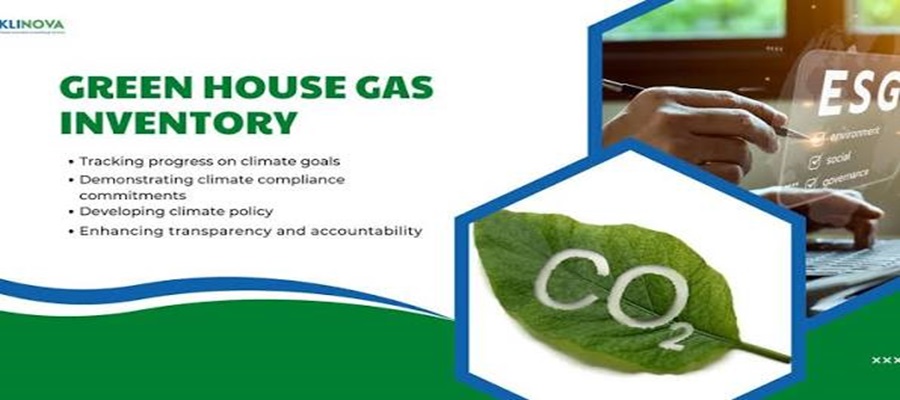
Lagos State has become the first sub-national government in Nigeria to establish a comprehensive Greenhouse Gas Registry, a move aimed at strengthening climate governance, improving emissions accountability and accelerating the state’s transition to a low-carbon economy.

The Lagos State Greenhouse Gas Registry (LGHGR) was unveiled at the Central Business District, Alausa, Ikeja, at a ceremony attended by Prof. Akin Abayomi, commissioner for Health, members of the State Executive Council, representatives of the Federal Ministry of Environment, development partners, TPHG Technologies, the diplomatic and business communities, academics, civil society organisations and the media.
Describing the initiative as a landmark achievement in the state’s environmental sustainability drive, Dr. Babatunde Ajayi, general manager of the Lagos State Environmental Protection Agency (LASEPA), said the Registry marks a defining moment in Lagos’ climate action journey and reflects Governor Babajide Sanwo-Olu’s commitment to building a resilient, climate-smart and environmentally sustainable economy.
According to Ajayi, the digital platform will enable the state to accurately measure, monitor, report and verify greenhouse gas emissions across key sectors, providing credible data to guide environmental policies and climate interventions.
He said the Registry would strengthen evidence-based decision-making, improve transparency and accountability, support national and international climate reporting obligations, unlock carbon market opportunities and boost investor confidence in Lagos’ environmental initiatives.
Ajayi also commended TPHG Technologies for providing the technical expertise that made the pioneering project possible.
Delivering the keynote address, Prof. Abayomi described the Registry as a major milestone that positions Lagos at the forefront of climate governance and emissions accountability in both Nigeria and Africa.
He noted that climate change has evolved into a significant public health and governance challenge, stressing that access to reliable emissions data would enable the state to formulate evidence-based policies, attract climate financing, strengthen resilience and accelerate its transition to a low-carbon economy.
Providing insights into the technical framework of the project, Dr. Mofoluso Fagbeja, lead consultant and chief executive officer, TPHG Technologies, explained that the Registry was developed from the greenhouse gas inventory jointly undertaken by LASEPA and TPHG Technologies in 2022, using 2019 as the baseline year for emissions assessment.
He said the platform is designed to close critical emissions data gaps, particularly within the industrial sector, while supporting effective climate policy implementation, emissions management and sustainable development.
Fagbeja also disclosed that the greenhouse gas inventory estimated that poor air quality contributes to about 35,000 premature deaths annually in Lagos, underscoring the urgent need for stronger emissions control measures and cleaner environmental practices.
In a goodwill message, Balarabe Abbas Lawal, minister of Environment, represented by Mrs. Adenaike Olunimpe Oludunni, federal controller of Environment in Lagos, commended Lagos State for pioneering the initiative, describing it as a significant contribution to Nigeria’s climate commitments.
He said the Registry aligns with the country’s Nationally Determined Contributions (NDCs) under the Paris Agreement and supports the Federal Government’s Energy Transition Plan, while reaffirming the ministry’s commitment to deeper collaboration with Lagos State on climate governance and environmental sustainability.
A recently released Henley Passport Index 2026, showed that Nigerian citizens can travel to at least 20 destinations outside the African continent where entry is allowed either visa-free, with a visa on arrival (VOA) at no extra cost, or via an e-visa.

This expanded access opens doors for Nigerian travellers to experience countries in the Caribbean, Asia, and beyond with greater ease.
Below is a comprehensive guide to countries outside Africa which Nigerian passport holders can visit without a traditional visa.
Visa-Free Countries outside Africa for Nigerian Passport Holders:
Barbados
Cambodia – Visa on arrival
Comoros Islands – Visa on arrival
Cook Islands
Dominica
Fiji
Haiti
Iran – Visa on arrival
Kiribati
Lebanon
Maldives – Visa on arrival
Micronesia
Montserrat
Niue – Visa on arrival
Palau Islands – Visa on arrival
Samoa – Visa on arrival
St. Kitts and Nevis
Timor-Leste – Visa on arrival
Tuvalu
Vanuatuul


Nigeria and Israel yesterday reaffirmed their commitment to deepening bilateral cooperation in research, technology and innovation as both countries pledged to expand partnerships that will drive entrepreneurship, commercialise research and accelerate economic development.

The commitment was made at the closing ceremony and innovation showcase of the I-FAIR Cohort of the Israel-Nigeria Innovation Fellowship for Aspiring Inventors and Researchers (I-FAIR) in Abuja, where the Ambassador of Israel to Nigeria, Michael Freeman, announced that funding had been secured for the fifth edition of the programme, scheduled to begin in October 2026.
Freeman described I-FAIR as a practical demonstration of the growing partnership between both countries, saying it had enabled Nigerian innovators to develop local solutions to national challenges through Israeli mentorship and expertise.
He said, “This programme has never been about bringing Israeli solutions to Nigeria. It’s been about helping brilliant Nigerian innovators develop Nigerian solutions to Nigerian challenges supported by Israeli experience, mentorship and innovation.”
The envoy noted that the initiative had brought together government, academia, investors, engineers and entrepreneurs to transform innovative ideas into businesses capable of creating jobs and stimulating economic growth.
Announcing the continuation of the programme, he said, “I am so proud to stand here today and announce that we have secured with our partners funding for I-FAIR 5 and I-FAIR 5 will be launching in October 2026.”
Freeman said the relationship between Nigeria and Israel had grown significantly over the past four and a half years through cooperation in innovation, agriculture, healthcare, education, water management and technology.
He expressed confidence that stronger collaboration between both countries would unlock greater opportunities for startups, research institutions and businesses.
According to him, “Israel brings experience and innovation, technology, agriculture, healthcare, cyber security, security and water management. Nigeria brings extraordinary talent, creativity, entrepreneurship and one of the most dynamic young populations anywhere in the world.”
He added, “I have no doubt that the best chapters of the relationship between Israel and Nigeria are still ahead of us.”
The Executive Secretary of the Tertiary Education Trust Fund, Architect Sonny Echono, also reaffirmed TETFund’s commitment to strengthening research and innovation through strategic partnerships with Israel and other stakeholders.
He said the I-FAIR programme aligned with Nigeria’s priorities in food security, agriculture, medicine, technology, clean energy and the circular economy, adding that TETFund would continue supporting initiatives that promote research commercialisation.
Echono stressed that collaboration between government, academia and industry remained critical to translating research findings into products and services.
He said, “It is this critical linkage, especially between science, engineering, technology and innovation, and the productive sector that is critical for translating R&D results and inventions into finished products for socio-economic benefits of our people.”
He disclosed that TETFund was working with partners to establish innovation facilities in about 60 tertiary institutions and had created a student innovation fund that would provide up to ₦50 million to students with commercially viable ideas.
The TETFund boss also announced plans for a National Research Fair later this year, where innovators would showcase products before policymakers, financial institutions and investors to attract funding and commercial partnerships.
Paying tribute to the outgoing Israeli ambassador, Echono described Freeman as a strong bridge between Nigeria and Israel.
He said, “Nigeria is grateful for your service. You have been a strong bridge between our two countries.”
Earlier, Head of Programmes at Innov8 Hub, Tolulope Aina, said sustainable economic development depended on building an innovation ecosystem that transforms ideas into successful businesses.
She noted that Innov8 Hub had supported more than 3,000 innovators, researchers and entrepreneurs, helping them convert research into products, startups and investment-ready ventures.
Aina said, “Nigeria does not suffer from a shortage of brilliant minds, what we need are stronger pathways that help those ideas become products, businesses, and opportunities that improve life.”
She thanked the Embassy of Israel and TETFund for their continued support in strengthening Nigeria’s innovation ecosystem.
According to her, “Building an innovation-driven economy requires collaboration, long-term commitment and shared purpose.”

History as Lagos Becomes First Nigerian State to Launch Greenhouse Gas Registry

AMCON Puts ntel Up for Sale, Seeks Investors

Nigeria Atomic Energy Commission Seeks Collaboration on Power Plants

AI Investment Gap Threatens Africa’s Future Growth

UNN to Partner Firm on AI, Smart Mobility Innovation Centre

NRC, Ponzi Scheme Collapses Resulting Loss of Billions of Naira

EFCC Busts NIS Visa Overstay Racket, Uncovers N700m in an Account

Tokenization, Blockchain Technology will Transform Financial Institutions – IMF

From Scarcity to Scale: What Africa Can Learn from India’s Agricultural Transformation

Spotify partners Afro Nation Portugal to expand African music experience




 E-Business2 days ago
Report Says Cybercriminals Deploy Malware to Hijack Crypto Wallets, Monitor Browsers Telegram

 Telecom2 days ago
Subscribers, Telcos Warn FCCPC over Airtime Lending Enforcement

 Telecom2 days ago
NCC, REA Partner to Cut Telecom Costs with Renewable Energy

 News1 day ago
See Verified 20 Countries Nigerian Passport Holders Can Travel Visa-Free

 General News2 days ago
AfDB, Nigeria Urge African Control of Mineral Resources

 E-Business2 days ago
NPC Opens 131 Births, Deaths Registration Centres in Anambra

 General News2 days ago
Lagos Chamber Opposes 21 Percent Pension Contribution, Warns of Job Losses

 Telecom2 days ago
Nigeria Pushes for United African Front Ahead of Global Telecoms Elections