

Broadcasting
UK Government Launches Climate Finance Accelerator Nigeria, Calls for Proposals

UK Government-funded CFA Nigeria has today, opened a call for proposals for the Climate Finance Accelerator (CFA) Nigeria programme. CFA Nigeria is a climate finance country platform designed to directly respond to the urgency and scale of the climate crisis in Nigeria, by mobilising finance for the country’s just transition to a resilient, low-carbon economy.

Project developers in Nigeria helping to tackle the climate crisis are invited to apply by completing the online application on or before the 17 February 2023. Interested project developers must be in pre-feasibility stage and should be seeking investment of at least USD$1 million with no upper limit.
Crowding in private finance at scale is essential to implementing Nigeria’s ambitious climate commitments articulated through Energy Transition Plan and Nationally Determined Contribution. A fraction of the funding necessary for the transition is considered to be available in the market, demonstrating the scale of the challenge and the immense opportunity.
British Deputy High Commissioner in Lagos, Ben Llewellyn Jones, said: “I’m delighted that the Climate Finance Accelerator Nigeria is now open for applications from low-carbon projects. The private sector has the potential to play a large part in helping to meet Nigeria’s climate change commitments and I’m excited to see what innovative projects apply.
“The CFA has already seen great success globally and in Nigeria and it is fantastic that Nigerian projects will continue to receive bespoke support from technical and financial experts to help increase their chances of securing investment.

“The CFA builds on the UK’s climate leadership, as host of COP26 in Glasgow and is part of the UK’s commitment to supporting Nigeria’s transition to a prosperous low carbon future.”
CFA Nigeria is a build-out of the pilot CFA launched in 2017 and was successfully established as an independent legal platform in 2022. As a catalytic public-private initiative, CFA Nigeria offers substantial value to project developers, financial institutions and the Federal Government of Nigeria. It creates common ground for project developers and financial institutions to deploy blended finance, de-risk and fund low-carbon, resilient opportunities. It acts to improve the bankability of projects and public-private partnerships and to connect projects with financial institutions. It also identifies policy, regulatory and fiscal interventions to enable greater flows of finance and builds understanding and awareness of the climate finance supply chain between finance, business, and government.
In 2021-22 CFA Nigeria amassed a pipeline worth USD445 million and worked directly with innovative projects to engage Nigerian and global financiers. This year CFA Nigeria intends to expand its pipeline with two further calls for proposals. It engages extensively with Nigerian financial institutions and members of the Glasgow Finance Alliance for Net Zero Citibank and Standard Chartered to identify avenues by which finance can be made available to viable proponents.
The projects are expected to be selected from the country’s priority sectors according to Nigeria’s Nationally Determined Contribution: renewable power, transport, energy efficiency, residential, oil and gas, agriculture, forestry and land use, waste and the circular economy, water, and industrial processes. Successful projects will receive one-to-one advice and support from technical, financial and gender equality and social inclusion experts to help them move closer to investment. The support will culminate in an event in June 2023 to bring project developers together with potential investors.
Dr. Uzo Egbuche, Team Leader of CFA Nigeria, said: “CFA Nigeria is recognised as a country platform capable of deploying blended finance and leveraging private finance at scale. We are proud to have established ourselves as an independent legal entity in 2022 able to serve our core clients of financiers, developers and of course the Federal Government
“We invite all developers in the climate economy seeking finance to join the pipeline as we begin this next chapter in 2023.”
In addition to Nigeria, the CFA programme is also operational in Colombia, Egypt, Viet Nam, Mexico, Pakistan, Peru, South Africa and Turkiye and is being delivered by PwC and Ricardo Energy & Environment. It is funded by the UK Government’s Department of Business, Energy and Industrial Strategy (BEIS) and is implemented in Nigeria with Adam Smith International as the in-country partner.


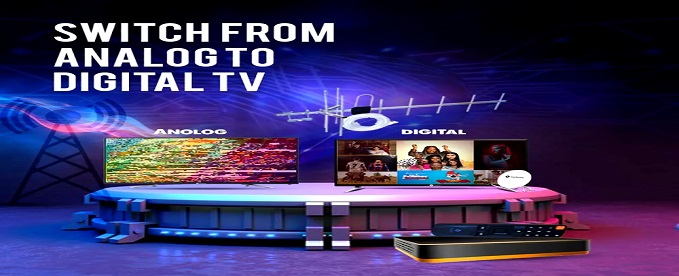
National Broadcasting Commission (NBC) has said that Nigerians will no longer pay annual Digital Access Fees under the renewed Digital Switch Over (DSO) project.

Charles Ebuebu, director-general, NBC, disclosed this in an exclusive interview with the News Agency of Nigeria (NAN) on Wednesday in Abuja,
Ebuebu said viewers only need to purchase an approved decoder and satellite dish which cost below N20,000 to enjoy free television permanently.
“Previously, users paid an annual digital access fee of about N1,500, described as an administrative charge.
“The new system removes that annual fee. It provides free access to free-to-air television channels without any payment.
“Premium channels will be introduced later. Viewers who want those additional channels will be able to access them through paid services.
“Nigerian content on free-to-air channels remains free to watch. Unlike Pay TV, this platform does not require monthly subscriptions for its basic service,” he said
Ebuebu said approved decoders for the FreeTV will cost less than N20,000 and authorised sales outlets will soon be announced.
He urged Nigerians to wait for official information on approved dealers for the DSO decoders, warning that unauthorised sellers are exploiting growing public demand.
He reiterated that people only need a free-to-air decoder, along with a satellite dish instead of the old antenna system to receive the DSO signal.
“Once the equipment is installed, viewers can access all available channels across the country without paying any subscription fees,” he stressed
The DG dismissed claims by some retailers that there are different categories of decoders sold at varying prices, stressing that such sellers are not authorised by the commission.
According to him, the NBC will soon publish the list of approved dealers, official prices, and locations where genuine decoder boxes and accessories can be purchased.
The NBC boss said the DSO project is designed not only to improve television broadcasting but also to stimulate economic growth by creating jobs, attracting investment, and opening up opportunities for businesses that support the broadcasting industry.
Ebuebu noted that content producers and broadcasters stand to benefit significantly from the nationwide reach of the DSO platform.
Unlike the previous system, where many stations had limited regional audiences, he said the new platform will make their channels available to viewers across Nigeria.
He added that the introduction of audience measurement technology will provide scientific and reliable data on television viewership.
Ebuebu added that audience measurement technology will give advertisers greater confidence in placing adverts and enable broadcasters to demonstrate the true size and reach of their audiences nationwide.
Uchenna Mbunabo, Nigerian filmmaker, has raised concerns over the alleged unauthorised broadcast of Nollywood films by some Ghanaian television stations, calling on Ghana’s National Film Authority (NFA) to strengthen the enforcement of copyright laws.

Uchenna Mbunabo, Nigerian filmmaker
Mbunabo made the remarks during a conversation with James Gardiner, deputy CEO of the National Film Authority (NFA) of Ghana.
He questioned whether it was permissible for television stations in Ghana to download Nigerian movies from YouTube and air them without obtaining permission from the producers.
“I noticed that Ghanaian TV stations, the way they are stealing our films and showing them for free with impunity. Is it legalised in your country for TV stations to go on YouTube, download people’s sweat and show it for free?”
According to Mbunabo, some Ghanaian television stations have been downloading newly released Nollywood films from YouTube and broadcasting them without authorisation, depriving producers of revenue generated through the platform.
He also stated that he had not witnessed Nigerian television stations engaging in similar practices and questioned what measures Ghana was taking to protect filmmakers’ intellectual property.
Responding to the concerns, Gardiner acknowledged that the issue exists and said the National Film Authority had begun engaging relevant stakeholders to address it.
He disclosed that the NFA has held discussions with the Ministry of Communications, the National Communications Authority (NCA) and the National Media Commission (NMC) on improving copyright enforcement.
Gardiner explained that while Ghana has copyright laws, enforcement remains challenging because many television stations now operate digitally and may not have physical offices within the country.
“There are copyright laws, but they are not effective because a lot of the TV stations don’t have offices. Most of them are now digital, so they operate from anywhere. They can even have a Ghanaian TV station but be operating from Austria simply because it is digital.”
He added that authorities are considering a new licensing framework that would require broadcasters to undergo a fresh licensing process to improve monitoring and enforcement.
According to Gardiner, television stations found guilty of illegally broadcasting copyrighted content would be required to compensate affected producers through fines.
He added that repeat offenders could face suspension of their broadcasting licences, while a third violation could result in the revocation of their licences.
Although he did not provide a specific timeline, Gardiner said the reforms were already underway and expressed hope that significant progress would be seen next year.
Mbunabo welcomed the proposed measures but urged the National Film Authority to expedite the process, stating that unauthorised broadcasts continue to affect filmmakers’ ability to recover production costs through legitimate distribution channels such as YouTube.
He also stressed that his comments were not directed at Ghana’s film industry, noting that he has worked with several Ghanaian actors over the years and supports collaborations between Nollywood and Ghallywood.


NBC Scraps Annual Digital Access Fee on DSO

Surge in Fibre Cuts Hobbles Service Provisioning

Why Bandits, Kidnappers are Hard to Trace despite NIN-SIM Linkage – FG

First Securities Brokers Empowers Nigerians to Trade in the Stock Market with the Launch of FirstInvest App

Quest Merchant Bank Hosts Great Place to Work® Nigeria Study Mission

NRC, Ponzi Scheme Collapses Resulting Loss of Billions of Naira
Nigeria Launches FreeTV Nationwide

NASENI Moves to Digitize CCB’s 5m Assets Declaration and Operations

Lebara Nigeria Launches Lebara Play, Africa’s First Telecom-Owned Micro-Drama Platform

CANAL+ Partners Samsung to Pre-Load DStv Stream on New Samsung TVs In Nigeria, Other African Countries




 Telecom2 days ago
MTN Nigeria Slashes Cost of Broadband Internet Router, Unwraps New Data Bundles for Low-Budget Users

 E-Financial2 days ago
Nigerians Accumulate $59Bn in Cryptocurrency Assets —FDC

 E-Financial2 days ago
Flutterwave Partners Xoom on Transfers into Nigeria

 General News2 days ago
Nearpays, Nigerian Fintech Becomes First African Startup to Win UN’s AI for Good Innovation Factory

 News2 days ago
DataPro Upgrades Dangote Cement’s Credit Rating to AA+

 Telecom2 days ago
Nokia’s 14 Years of Mobile-Phone Supremacy Ended in an Afternoon

 E-Business2 days ago
Tinubu Orders NIMC to Enrol Every Nigerian by End of this Year – DG

 General News2 days ago
Fintech Brands Should Communicate Right in a VUCA Economy