

News
HP, New Guards Group Reveal Reebok x Botter Concept Sneaker Innovation


Coming out of Paris Fashion Week, Reebok, HP and the New Guards Group revealed a new concept sneaker with luxury brand, Botter that debuted on the runway at its FW23 presentation.

Fusing the ethos of both brands, the Reebok x Botter concept sneaker combines Botter’s love and commitment to the ocean through the unique look of a Murex seashell, an object that in legend, was used by the Greek Goddess Venus to comb her hair, with an iconic vintage Reebok football silhouette, a style that Botter is famed for reinventing with its Botter “Banker” that debuted in 2017.
The unusual and unique new form encapsulating the core shoe has been created and engineered with the HP 3D Printing team based in Barcelona using a technology called HP Multi Jet Fusion. Once printed, the gray sneakers were then hand-painted to complement the Caribbean Sea tones featured throughout Botter’s FW23 collection.
The end result is not just an innovative luxury piece, but a sustainable alternative to traditional sneaker production. The HP Multi Jet Fusion is a function created to reinvent design and manufacturing by unlocking the full potential of 3D printing and exploring techniques that are more energy efficient and sustainable.
The process revolves around having no waste, uses a material called TPU that is highly-reusable once recycled, and is nimble enough to make products post-sale that can solve excessive production.

“HP has built a team of footwear industry specialists, under the lead of Don Albert, a 25-year footwear veteran. This team has developed an end-to-end solution to help large and small footwear companies in fashion and performance to reach their goals using HP Multi Jet Fusion Technology,” shared François Minec, Global Head of Polymers at HP Personalization & 3D Printing.
“We enable new levels of design freedom, fast and agile product development, and a more sustainable local manufacturing process. This collaboration with Reebok and Botter is a perfect introduction of the HP solution to the footwear world.
Speaking to the multi-brand collaboration, Nathan Jobe, Head of Footwear at NGG++ commented, “NGG and Reebok have a rich history in Street and Fashion culture. It is important to find like-minded souls in the world to partner with. Botter is very much part of our community.
“We were happy to be able to support their show and showcase the incredible technology of HP while doing it. This partnership really outlines a journey that thrives through design and celebrates culture and heritage to envision the future. We can’t wait to build more with them.”
“We are very excited to join forces with Reebok and envision a new future of footwear and apparel together. We aim to push the boundaries of technology and sustainability while embracing the legacy of Reebok,” added Rushemy Botter and Lisi Herrebrugh, Botter.
The Reebok x Botter Concept Sneaker Engineered by HP is a project that represents the first leap into innovation, sustainability, and fashion Reebok is taking with the New Guards Group since the company’s acquisition by the Authentic Brands Group (Authentic). This debut at PFW serves as an exciting sign of things to come.
“François Minec, Global Head of Polymers, HP Personalization & 3D Printing said that “This team has developed an innovative and sustainable end-to-end solution to help sports and fashion industries to reach their goals using HP Multi Jet Fusion Technology, a truly industrial technology that provides the highest levels of manufacturing predictability, efficiency, repeatability, and quality”.
“We knew partnering with New Guards Group would allow us to push the needle, bringing consumers fresh new concepts and unexpected collaborations,” said Todd Krinsky, CEO & President of Reebok. “I’m incredibly energized by what we’ve been able to accomplish in such a short amount of time and this latest release with Botter and HP gives a small taste of what’s to come in this long-term partnership.”


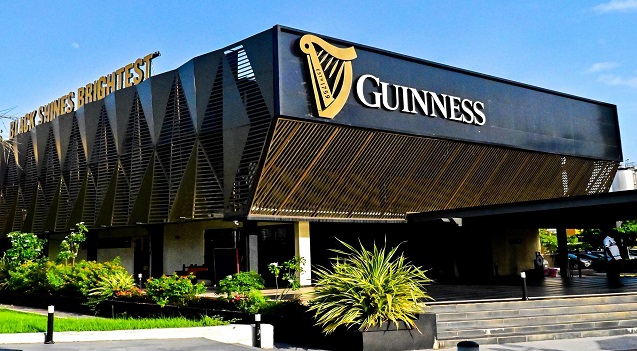
Guinness Nigeria has launched a nationwide National Consumer Promotion (NCP) tagged ‘Open For More’. This is a consumer rewards initiative that will see more than ₦400 million in cash and prizes won by consumers across the country.

The promotion, which runs nationwide, offers consumers the opportunity to win ₦1 million every day, ₦100,000 cash rewards for 1,000 winners, and a brand-new Toyota Land Cruiser Prado as the grand prize. The campaign is designed to reward loyal consumers while creating more opportunities for everyday Nigerians to celebrate life’s meaningful moments.
To participate, consumers are required to purchase specially marked bottles of Guinness Foreign Extra Stout or Guinness Smooth, check for the unique code beneath the crown cork, and enter the code at www.guinnessng.com/1759 for a chance to win.
Speaking on the launch, Ramanathan Solayappan, Marketing and Innovations Director, Guinness Nigeria, said the promotion reflects the brand’s longstanding relationship with consumers and its commitment to creating memorable experiences beyond the product itself.
“Nigerians have made Guinness part of their celebrations, milestones, and everyday moments for over seven decades. The ‘Open For More’ promotion is our way of rewarding that loyalty by giving consumers genuine opportunities to win prizes that can make a meaningful difference in their lives.”
Solayappan added that the promotion was deliberately designed to make participation simple and accessible to consumers across the country.
“We believe, at Guinness, that there is always room for more possibilities, more progress, and more reasons to celebrate. Through this campaign, we are inviting consumers and beloved Nigerians over the age of 18 years to take part in an experience that goes beyond enjoying a Guinness. Every eligible purchase could open the door to something more.”
Beyond rewarding consumers, the promotion comes at a time when many Nigerians are placing greater value on opportunities that offer tangible returns. By putting more than ₦400 million in cash and prizes directly into the hands of consumers, Guinness Nigeria is creating a campaign that celebrates loyalty and delivers meaningful rewards that can support personal aspirations, family needs, and everyday goals.
As part of the campaign, winners will emerge weekly throughout the promotion period, with regular winner announcements and prize presentations aimed at ensuring transparency and public confidence in the process.
The Open For More National Consumer Promotion strengthens Guinness Nigeria’s commitment to rewarding consumers while creating excitement around the brand through meaningful and impactful experiences. Consumers are encouraged to look out for specially marked promotional packs and follow Guinness Nigeria’s official communication channels for updates, winner announcements, and further information on participation mechanics.


Bashir Adeniyi, Comptroller-General of the Nigeria Customs Service (NCS), has disclosed that the value of Import Duty Exemption Certificate (IDEC) approvals granted by the Federal Government rose to about N34 trillion in 2025.

Adeniyi made the disclosure on Monday during an investigative hearing of the Senate Committee on Finance in Abuja.
He said the import duty exemptions had significantly affected the service’s revenue generation, although many of the waivers were introduced to support critical national priorities.
According to him, about 60 per cent of the approved waivers were granted for the importation of military hardware in response to the country’s security challenges.
He said other beneficiaries included importers of compressed natural gas (CNG), electric and hybrid vehicles, healthcare equipment and medical supplies, industrial machinery, manufacturing inputs and food intervention programmes.
“IDEC approvals reached about N34 trillion in 2025, about 60 per cent of which was rightly granted for military hardware procurements due to Nigeria’s prevailing security challenges,” Adeniyi said.
The Comptroller-General noted that the introduction of the IDEC scheme in March 2020 had remained one of the major fiscal policies affecting Customs revenue.
He said the service would have generated significantly higher revenue over the years if not for government fiscal measures and other external factors that reduced its revenue base.
Adeniyi, however, maintained that fiscal policy should not be evaluated solely on the basis of revenue generation.
He said government interventions through duty waivers were intended to stimulate economic growth, improve healthcare delivery, encourage industrial production and address national security concerns.
He urged the Federal Government to strengthen monitoring mechanisms to ensure that beneficiaries of import duty waivers achieved the intended objectives, including reducing prices, increasing production and improving access to essential goods and services.
The Customs boss also disclosed that the service generated N7.28 trillion in revenue in 2025.
He added that out of the N11.04 trillion revenue target for 2026, the service had realised N4.5 trillion as of June 30.
Adeniyi expressed optimism that the service would continue implementing measures aimed at improving revenue collection while supporting government fiscal policies.

DataPro Rating Agency has upgraded the long-term credit rating of Dangote Cement Plc to AA+ from AA, citing the company’s strong financial performance, market leadership and ability to meet its financial obligations despite Nigeria’s challenging economic environment.

In its latest rating report, the technology-driven credit rating agency also affirmed Dangote Cement’s short-term rating at A1, with a Stable Outlook. The ratings are valid until June 16, 2027.
DataPro said the upgrade reflects the cement maker’s sustained financial strength, resilient operating performance and dominant position in Nigeria and across Africa.
According to the agency, the assessment followed a comprehensive review of the company’s capital base, earnings, liquidity, corporate governance, regulatory compliance and the sustainability of its financial performance over the medium to long term.
It noted that Dangote Cement’s strong brand, leading market share, solid earnings, robust asset base and experienced management continue to strengthen its ability to meet financial commitments on time.
The agency also highlighted the company’s outstanding financial performance in 2025.
According to the report, Dangote Cement posted N4.31 trillion in revenue during the year, representing a 20 per cent increase from the previous year. Profit before tax more than doubled, rising 109 per cent to N1.53 trillion, driven by higher sales, improved operating efficiency, lower finance costs and a stronger capital structure.
DataPro said the AA+ long-term rating indicates low credit risk and reflects excellent financial strength, business profile and operating performance relative to its rating benchmarks.
It added that the A1 short-term rating signifies good credit quality and shows that the company has a strong capacity to meet its short-term financial obligations as they fall due.
The rating agency, however, noted that the credit rating has a maximum shelf life of 12 calendar months in line with international best practice and should be used only as a reference, not as an offer to trade in securities or as a substitute for investors’ independent judgement.

Next Currency Crisis May Turn $300Bn in Stablecoins into National Currencies

NIHSA Warns States of Possible Flood within Seven Days

FG to Raise N1.2 Trillion via Fresh Bond Offer – DMO

Gigbanc Nigerian Fintech Startup Closes Shop after 3 Years

Mbunabo, Nigerian Filmmaker Accuses Ghana TV Stations of Pirating Nollywood Films

NRC, Ponzi Scheme Collapses Resulting Loss of Billions of Naira

Nigeria Launches FreeTV Nationwide

NASENI Moves to Digitize CCB’s 5m Assets Declaration and Operations

Lebara Nigeria Launches Lebara Play, Africa’s First Telecom-Owned Micro-Drama Platform

CANAL+ Partners Samsung to Pre-Load DStv Stream on New Samsung TVs In Nigeria, Other African Countries




 News2 days ago
Xora Finance, Fintech Firm Refuses to Hire Nigerians over Alleged Dishonesty

 Telecom2 days ago
NCC Advances Dig Once Policy, Engages Stakeholders on Cost-Based Framework for Duct Sharing

 Telecom2 days ago
NCC to Keynote Telecom Sector Sustainability Forum 7.0

 General News2 days ago
FG Secures Fresh $208.3m World Bank Loan for Cash Transfer
 News2 days ago
How Ponzi Scheme Victims can Seek Legal Remedies — Lawyers

 News2 days ago
PalmPay Nigeria Appoints Samuel Oluyemi as Chief Operating Officer

 Telecom1 day ago
MTN Nigeria Slashes Cost of Broadband Internet Router, Unwraps New Data Bundles for Low-Budget Users

 General News2 days ago
SERAP Sues INEC over Alleged N800Bn 2027 Tinubu Campaign Fund