

/home/kenneth/web/nigeriacommunicationsweek.com.ng/public_html/wp-content/themes/zox-news/parts/post-single.php on line 153
">
Warning: Undefined array key 0 in /home/kenneth/web/nigeriacommunicationsweek.com.ng/public_html/wp-content/themes/zox-news/parts/post-single.php on line 153
Warning: Attempt to read property "cat_name" on null in /home/kenneth/web/nigeriacommunicationsweek.com.ng/public_html/wp-content/themes/zox-news/parts/post-single.php on line 153
Forget Nipost Sale

There are feelings in some quarters that the Nigerian Postal Service should be sold to private investors. One thing is common with the sale of government companies that are perceived not to be doing well. It is often argued that government has no business being in business. But going by the way Nitel was bundled, nothing meaningful can be said to have been achieved from the sale rather than leaving the once vibrant organization in comatose. The clamour for Nipost sale is another bid to ridicule Nipost. A few individuals and their cronies in government want to buy over the assets of the organization and no one is interested what happens to services rendered by the national carrier.
Nipost as our national carrier in postal system promotes and ensures the implementation of the Universal Service Obligation of the government as recommended by the Universal Postal Union (UPU). The Universal Service Provision involves the provision of mail access to all citizens at a uniform price and uniform .this obligation is imposed on postal organization by the various governments in an attempt to provide postal facilities as a social service, and to meet international conventions on minimum standards. National postal carriers in this respect are allowed to enjoy exclusive rights to be able to build economies of scale which would be able to guarantee Universal Service Provision. Even in most advanced countries, governments still operate postal systems to make sure that their citizens have access to mail services, Nigeria as a member of the Universal Postal Union should not be an exception.
Over the years, Nipost had been able to ensure that people in the rural areas were not left out in mail deliveries at the most cost efficient rate to citizens. No private operator will be able to match with Nipost in this area. The main focus of private courier companies is to make profit and deliver quality service but they don’t have the capacity to connect all the local governments and villages in Nigeria like the Nipost that has presence in one thousand five hundred across the length and breadth of the country.
If Nipost is sold as some people want it, people in the rural areas no doubt will no longer have access to postal services as the cost of doing so will be burdensome. Compare the cost of sending a letter from Lagos to Maidugiri for instance which is just fifty naira on surface mail but some people still find it difficult to afford than when the cost is hiked up to probably a thousand naira .
The issue that will be bothering Nigerians should be how to make Nipost work to meet up with its universal service obligation instead of its outright sale. Nipost should be made to be working and be capable of sustaining itself. There are so many areas where revenue can be generated from the reserved area by Nipost. Using its branch networks, Nipost can rake in huge amount of money from its collaboration with Galaxy Backbone in providing ICT parks in all the Nipost branches throughout the federation especially in the rural areas that are yearning for ICT services.
The Nigerian Postal Service was created from the Postal Division of P&T under Decree 18 of 1987. It consequently became an extra-ministerial department under the Ministry of Communications. In order to give Nipost some autonomy; the federal government promulgated Decree 41 of 1992 to give Nipost a status of parastatal from the status of extra-ministerial department. In addition to its existing powers, Nipost was granted additional authority which included exploring additional services to boost its revenue base, to provide and establish non-postal or similar services and to register and supervise courier services. In the reform going on in the organization, Nipost should explore all the opportunities and advantages it has over private courier services to be able to convince Nigerians especially those calling for its sale.


Warning: Undefined array key 0 in /home/kenneth/web/nigeriacommunicationsweek.com.ng/public_html/wp-content/themes/zox-news/parts/post-single.php on line 493
Warning: Attempt to read property "cat_ID" on null in /home/kenneth/web/nigeriacommunicationsweek.com.ng/public_html/wp-content/themes/zox-news/parts/post-single.php on line 493


Federal High Court in Abuja has adjourned the Federal Government’s alleged tax evasion case against Binance Holdings Ltd. cryptocurrency exchange, until September 24, 2026, to allow both parties more time to pursue an out-of-court settlement.

Justice Emeka Nwite fixed the new date on Thursday after Moses Ideho, counsel to the Federal Government, informed the court that discussions aimed at resolving the dispute amicably were still ongoing.
Ideho, a deputy director of Legal and Prosecution at the Nigeria Revenue Service (formerly the Federal Inland Revenue Service), told the court that the matter, which had been scheduled for a report on settlement or continuation of trial, could not proceed.
According to him, one reason for the delay was the reported elevation of Justice Nwite to the Court of Appeal, while the second was the continued reconciliation efforts between the parties.
“The parties are still exploring settlement in the charge that led to this case,” Ideho told the court.

Sunday Agaji, counsel to Binance, did not oppose the application for adjournment, following which Justice Nwite postponed proceedings until September 24 for either a report on the settlement discussions or continuation of trial.
The case was previously adjourned on May 12 after both the Federal Government and Binance informed the court that negotiations were underway to settle the matter outside the courtroom.
Binance had first indicated its willingness to pursue an amicable resolution on March 24.
The cryptocurrency company was re-arraigned on July 12, 2024, on a four-count charge bordering on alleged tax evasion.
Ayodele Omotilewa, Nigerian representative, pleaded not guilty on behalf of the company.
The re-arraignment followed the removal of Binance executive Tigran Gambaryan and his colleague, Nadeem Anjarwalla, from the charge after the Federal Government amended the case to make Binance Holdings Ltd the sole defendant.
Justice Nwite had, on June 14, 2024, discharged and struck out the names of Gambaryan and Anjarwalla after the prosecution filed the amended charge.
Binance is also facing a separate criminal prosecution by the Economic and Financial Crimes Commission (EFCC), which accuses the company of laundering about $35.4m.
In addition, the Nigeria Revenue Service is pursuing a separate civil suit against Binance before another judge of the Federal High Court, seeking approximately $79.5bn in alleged economic losses linked to the company’s operations in Nigeria.
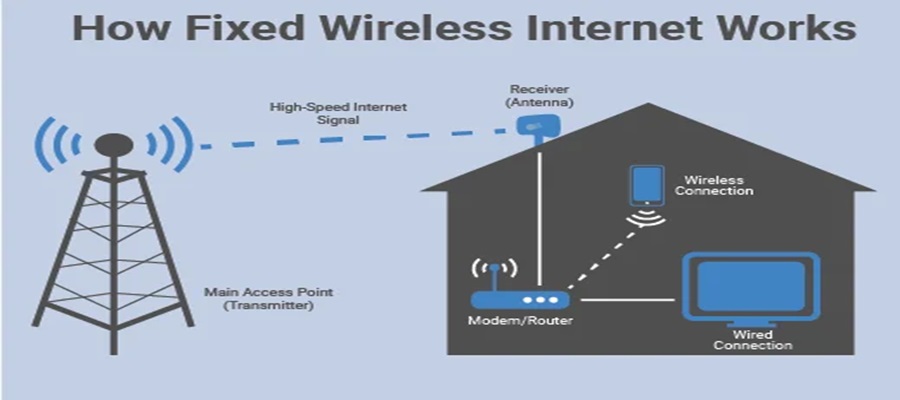
Nigeria has exactly 156,662 active fixed wired internet subscriptions as of mid-2026.

This is a tiny fraction compared to mobile GSM networks, which dominate the market with over 154 million subscribers.
The fixed wired market primarily consists of homes and offices using direct physical cables like fiber optics.
Fixed wired services use physical cables, like glass fiber or copper wire, to bring internet directly into a building.
It is like a dedicated, private water pipe for your home. It provides very fast speeds, unlimited data, and is reliable.
In contrast, mobile GSM uses radio waves transmitted from tall towers to phones, acting more like a sprinkler that sprays a signal across an entire neighborhood.
Because laying physical cables across cities is expensive and hard to do, these subscriptions are very rare.
However, the market has seen recent growth, driven largely by Fiber-to-the-Home (FTTH) services.
The top players are: MTN FibreX with 110,564 subscribers, which is roughly 88.7 per cent of the entire market.
SWIFTNG accounts for about 13,945 connections.
The others are ipNX and 21st Century Technologies which make up the number.
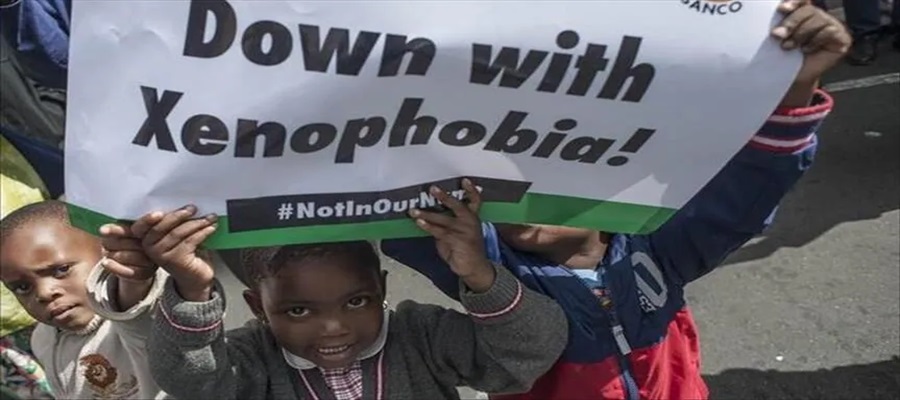
Oodua Youth Coalition (OYC), a Yoruba socio-cultural group, has issued a notice to stage peaceful picketing at MTN Nigeria offices nationwide.

This action stems from the company’s alleged failure to publicly condemn recent xenophobic attacks against Nigerians in South Africa.
This is coming despite statement by Karl Toriola, chief executive officer, MTN Nigeria, who recently said that MTN may have originated from South Africa, he explained, but MTN Nigeria is a Nigerian publicly quoted company, managed by Nigerians and with a Nigerian board.
However, in a statement jointly signed Olatunji Adejuwon and Olaoye Abolaji,vice president and national secretary respectively of OYC, described MTN Nigeria’s silence as unacceptable, given the company’s South African roots and the patronage it enjoys from Nigerians
The coalition said it would proceed with a peaceful protest if the telecommunications company continued to ignore its demands, stressing that the action was intended to draw attention to the need for corporate responsibility and moral leadership in condemning xenophobic attacks against fellow Africans.
“Consequently, the Oodua Youth Coalition hereby gives notice that we shall, without hesitation, commence a peaceful picketing of MTN Nigeria’s offices if the company continues to ignore our legitimate demands.
“Our action is intended to draw attention to the need for corporate responsibility and moral leadership in condemning acts of xenophobia against fellow Africans,” the statement said.
The group renewed its call on MTN Nigeria to immediately convene a press conference, with representatives of the coalition in attendance, to unequivocally condemn the xenophobic attacks and reaffirm its commitment to the safety, dignity and unity of all Africans.
It maintained that the proposed protest would be peaceful, orderly and in accordance with the laws of the Federal Republic of Nigeria.
According to the coalition, relevant security agencies have been notified of the planned action, while appropriate communications have also been sent to the South African diplomatic mission in Nigeria.
“We once again call on MTN Nigeria to immediately convene a press conference, with representatives of the Oodua Youth Coalition in attendance, to unequivocally condemn the xenophobic attacks and reaffirm its commitment to the safety, dignity and unity of all Africans.
“We emphasise that our proposed action shall remain peaceful, orderly and in accordance with the laws of the Federal Republic of Nigeria. Relevant security agencies have been duly notified, and appropriate communications have also been sent to the South African diplomatic mission in Nigeria.”
Reaffirming its commitment to defending the rights and dignity of Nigerians, the coalition vowed not to relent until its concerns received the desired attention.
“The Oodua Youth Coalition remains committed to defending the dignity of Nigerians and promoting African solidarity. We will not relent until our concerns receive the attention they deserve,” the statement added.
Responding to the controversy, Toriola further condemned all forms of xenophobia and violence against Africans living in South Africa, insisting that MTN Nigeria is a Nigerian company with substantial local ownership.
“We unequivocally condemn any form of xenophobia, violence or attacks against any community in the world. We’re a Nigerian company, through and through. We’re listed on the stock exchange with over 201,000 retail investors, and 11 million people hold shares through their pension funds in MTN Nigeria.
“We provide the digital backbone of the economy, and we have a completely Nigerian entity.
“Yes, MTN was founded in South Africa, and the parent company that is the majority shareholder is South African. But let’s also look at it objectively. The shareholding of MTN Holding South Africa is only 50 per cent African.
“The remaining 50 per cent is from across the world — 27 per cent from the United States, with the rest from the United Kingdom, Europe, the Middle East and the Asia-Pacific region,” Toriola said.

Court Adjourns Alleged Binance Tax Evasion Case over Settlement Talks

Fixed Wired Internet Market Lags as Mobile Gains Ground

Xenophobic Attacks: OYC Threatens to Picket MTN Nigeria Offices

New NIMC Act Strengthens Data Protection, Privacy – Director

BON Establishes Six Ad Hoc Committees to Modernize Broadcasting

NASENI Moves to Digitize CCB’s 5m Assets Declaration and Operations

Mobile Internet Gender Gap Widest in Africa – GSMA

Nigeria Launches FreeTV Nationwide

CANAL+ Partners Samsung to Pre-Load DStv Stream on New Samsung TVs In Nigeria, Other African Countries

Lebara Nigeria Launches Lebara Play, Africa’s First Telecom-Owned Micro-Drama Platform




 News3 days ago
NRC, Ponzi Scheme Collapses Resulting Loss of Billions of Naira

 News3 days ago
NSITF Partners South African Insurer on Digital Transformation

 E-Financial3 days ago
FCT-IRS Unveils New Digital Platform, Taxporta

 General News3 days ago
KPMG Urges Africa’s Most Innovative Tech Entrepreneurs to Enter the Global Tech Innovator 2026 Competition

 E-Business3 days ago
FG Suspends New Internet Regulations to Prevent Overlapping Rules
 E-Business3 days ago
NIN Enrollment Hits over 136m as New ID Law Takes Effect

 E-Business3 days ago
Plateau PCC Collects Nigerians’ Data without Privacy Policy – FIJ

 Telecom2 days ago
NCC Seeks Cost-Based Pricing Framework for Ducts