

News
NCDMB Espouses Benefits of Insurance Industry Collaboration

The Nigeria Content Development Monitoring Board, NCDMB, has craved the understanding and support of the insurance sector to strengthen the Boards desire towards the implementation of the Nigerian Oil and Gas Industry Content Act, NOGICD, in the sector.

Simbi Wabote, the Executive Secretary, ES, of the Board, who made the call at the 2023 Oriental News Nigeria conference in Lagos, with the theme, “Building Local Content Synergy between the Oil and Gas and the Insurance Sector in Nigeria” said over the years, the Board has taken deliberate steps to forge collaboration with various critical stakeholders to support the attainment of its strategic goals and mandate.
Wabote, who was represented by Mr. Daziba Patrick Obah. Director, Corporate Services of NCDMB, said that stakeholders’ engagement and collaboration is one of the key enablers to the Board’s ten-year strategic road map designed to achieve 70 per cent Nigerian content performance by the year 2027.
This he said is the reason for various engagement and collaboration between NCDMB and several MDAs, including the National Insurance Commission, NAICOM which crystalized in the joint issuance of the Insurance Guideline in 2022 to support the implementation of the insurance requirements contained in Sections 49 and 50 of the NOGICD Act 2010.
The main benefit of the guidelines according to Wabote, is the creation of a database of all insurance programs procured by the operators, project promoters, alliance partners, and Nigerian indigenous companies, to enable the Board monitor utilization of in-country insurance capacity thereby enhancing in-country value retention.

“It is worthy to emphasize that collaboration between government agencies is crucial for effective public service delivery through alignments of areas of strength, better decision-making, sharing of resources, optimization of opportunities and better understanding of issues and challenges with policy implementation.
“This ultimately, create huge benefits for both country and citizens, as it enables collaborating agencies to understand and respond to the needs and expectations of Nigerians. In NCDMB, we recognize the importance of collaboration and synergy amongst government organizations and other stakeholders to the fulfilment of our statutory mandate.
The Executive Secretary described the theme of the conference as apt and timely as it underscores the imperative of fostering the much-needed collaboration and synergy amongst MDAs and critical stakeholders; in this case between two critical regulators in the Oil and Gas Industry and the Insurance Industry.
“There is no doubt that Nigeria has not extracted sufficient value across the Nigerian oil and gas industry value chain since the commencement of hydrocarbon mining in Nigeria. It is this very low indigenous participation in the hydrocarbon value-chain in Nigeria that necessitated the enactment of the NOGICD Act in 2010 with the sole aim of deepening local content in the nations’ economy.
“Similarly, the performance of the insurance sector, particularly in relation to oil and gas businesses, is also sub-optimal due to various reasons.” Wabote observed.
Speaking further he said that building synergy between these two critical sectors of our economy holds huge potentials for growth and development of the Nigerian economy, adding, “The summit, therefore, presents a great opportunity for key stakeholders to brainstorm on the benefits and challenges impeding optimal performance in these two critical sectors.
“Furthermore, this summit offers us a strong veritable platform for the Insurance Industry, the Oil and Gas Industries, and other stakeholders to articulate processes, procedures, and practices to forge sustainable collaboration in optimizing opportunities and harnessing benefits for themselves as Nigerians.”
Dwelling more on the legislation, he said that, “In addition to various provisions of the NOGIC Act and the Insurance Act, Sections 49 and 50 of the NOGICD Act specifically provide concrete basis for NCDMB and NAICOM to work together to extract maximal value from both the Insurance and the Oil and Gas Industry for the Nigerian economy.
The Section 49(1) states: “All operators, project promoters, alliance partners and Nigerian indigenous companies engaged in any form of business, operations or contract in the Nigerian oil and gas industry, shall insure all insurable risks related to its oil and gas business, operations or contracts with an insurance company, through an insurance broker registered in Nigeria under the provisions of the Insurance Act as amended”
Also, Section 49(2) states: Each operator in subsection (1) of this section shall submit to the Board, a list of all insurance companies and insurance brokers through which insurance covers were obtained in the past six months, the class of insurance cover obtained, and the expenditures made by the operator while Section 50 states, No insurance risk in the Nigerian oil and gas industry shall be placed offshore without the written approval of the National Insurance Commission which shall ensure that Nigerian local capacity has been fully exhausted.”
Wabote further noted that Section 49 makes it mandatory for operators, project promoters and other entities in the oil and gas industry to obtain insurance coverage for all insurable risks with insurance companies and brokers that are registered in Nigeria in line with the Insurance Act (as amended).
“It is important to note that Section 50 forbids entities in the oil and gas industry from offshore placement of any insurable risks except with the written approval of NAICOM. The essence of these two provisions of the NOGIC Act is to ensure full utilization of available in-country capacity in the insurance sector by oil and gas industry players. The goal ultimately is to promote more capital retention in country and to boost the capacity of Nigerian insurance companies and brokers to support the Nigerian oil and gas industry.
“To give life to these sections of the NOGIC Act, NCDMB and NAICOM set up a Technical Committee which developed the structures and strategies to promote and ease interface between both regulatory institutions.
“One of the tools to ease the interface between the two bodies involved the development of the NOGIC JQS Statutory Reporting Module which makes submission of insurance performance report by oil and gas companies to NCDMB automatically accessible to NAICOM for prompt review and feedback to NCDMB.
“The benefit of this virtual interface is to reduce the turnaround time and to promote the ease of doing business. NCDMB and NAICOM are still fine-tuning the Application Programming Interface to enhance its functionality and efficiency.” he said.
Speaking on seeming, challenges, the ES, said, “Despite the commitment of both agencies to optimize the benefit of the NOGICD Act and the Insurance Act, there are still some obstacles in the way of full implementation.
“One of the challenges of utilizing Nigerian loss adjusters or brokerage firms is the low capital base of the insurance industry. Closely related to it is the capacity of local insurance firms to underwrite the huge loss associated with a typical upstream petroleum project.”
He said, however that in response, NAICOM has made remarkable efforts to mitigate some of these limitations, but a lot still needs to be done.
He added that in the spirit of collaboration, NCDMB is poised to work with NAICOM as a credible partner every inch of the way to get around some of these obstacles particularly within the boundaries of our statutory mandate.
On the way forward he said the Board will not only look at the challenges of building sustainable synergies but will also come up with feasible proposals to encourage collaboration to surmount impediments.
“To address the issue of low capital base of the industry, for example, we call on all stakeholders to support NAICOM to push for an increase in the minimum capital base of insurance companies.
“Secondly, NAICOM and other stakeholders need to also work assiduously to forge and promote mergers of insurance companies to enhance their efficiencies and improve their market share as part of their collective benefits.
“I am aware that some steps have been taken in this direction, but these efforts need to crystallize into reality.” he added.


Chief Judges drawn from countries across the African continent have resolved to collaborate and support measures aimed at ensuring the success of the Africa Continental Free Trade Area (AfCFTA) through an efficient, reliable and predictable dispute resolution system.

They agreed to explore ways to harmonize disputes resolution mechanisms in the continent with a view to making it easier and faster to resolve commercial disputes.
The resolutions formed part of the decisions taken at the third Africa Chief Justices’ Alternative Dispute Resolution (ADR) Summit held in Nairobi, Kenya between June 18 and 19.
According to a statement by the Special Assistant on Media to the Chief Justice of Nigeria (CJN), Justice Kudirat Kekere-Ekun, Mr. Tobi Soniyi, the African judicial leaders were of the view that commercial confidence depends largely on legal certainty.
They emphasised how structured Alternative Disputes Resolution could enhance commercial justice, protect the business environment and support the AfCFTA.
In her contribution, the Chief Justice of Nigeria (CJN), Justice Kudirat Kekere-Ekun urged called on African judiciaries to proactively prepare for emerging challenges to disputes resolution in the continent.
Justice Kekere-Ekun, who served as Co-Chair of the session on “Financial sector disputes, tax certainty and ADR: Building commercial confidence in Africa, noted that AfCFTA represents one of the most ambitious economic integration projects in modern history.
The CJN, who stressed the importance of a proactive Judiciary to the success of AfCFTA, warned that its success would depend, not only on trade protocols, tariff reductions and economic policies, but also on the strength and reliability of the institutions that support commerce.
Justice Kekere-Ekun urged her colleagues to examine how judiciaries in the continent, central banks, tax administrations and ADR institutions could work together to reduce uncertainty, prevent disputes, strengthen investor confidence and support the realization of AfCFTA’s objectives.
She envisaged the growth of intra-African trade to inevitably generate cross-border tax disputes; foreign exchange disputes; banking and payment system disputes; digital commerce disputes; enforcement of arbitral awards; recognition of foreign judgments; and disputes arising from regional supply chains.
The CJN, who said “African Judiciaries must proactively prepare for these emerging realities,” challenged African judicial leaders on the importance of disputes prevention mechanism.
She stated that modern commercial justice must move beyond the traditional focus on disputes resolution after conflicts arise.
“The most successful commercial systems are not those that generate the highest volumes of litigation but those that reduce the need for litigation,” she added.
Justice Kekere-Ekun, who stressed the importance of ADR, cautioned against seeing ADR as merely an alternative procedure.
She said ADR should rather be considered as a strategic tool for reducing transaction costs, preserving commercial relationships, enhancing investor confidence, reducing court congestion, improving ease of doing business and strengthening commercial certainty.
Sharing the Nigerian experiences, Justice Kekere-Ekun cited the recent decision by the Nigerian Supreme Court in the case of EMTS v. AFDIN Ventures Ltd. & Ors. (2026), which reaffirmed important principles of commercial certainty, including respect for arbitration agreements; recognition that consent may be inferred from conduct; judicial restraint from re-litigating arbitral disputes on the merits; and the importance of finality in arbitral awards.
According to her, the decision reinforced Nigeria’s position as an arbitration-supportive jurisdiction.
She identified timely resolution of tax disputes as an important factor in ensuring certainty and recommended Nigerian tax disputes resolution mechanism which she said “offers useful example of institutional reforms that support commercial certainty.”
Justice Kekere-Ekun recommended the Nigeria’s Tax Appeal Tribunal model, which she described as one of Nigeria’s most significant innovations.
According to Mr. Soniyi, Justice Kekere-Ekun’s message to his brother justices is clear: building an African commercial environment in which investors, businesses, regulators and citizens can transact across borders with confidence, secure in the knowledge that their rights will be protected and their obligations fairly enforced.
The summit advanced the goals of the African Chief Justices Alternative Dispute Resolution Forum (ACJADRF) to harmonize jurisprudence and establish common enforcement standards across the continent.
The CJN was, on the last day of the summit, nominated by the Chief Justice of Kenya as the Vice Chairperson of the Africa Chief Justice ADR Forum with effect from August 1, 2026. The nomination was ratified by the forum.

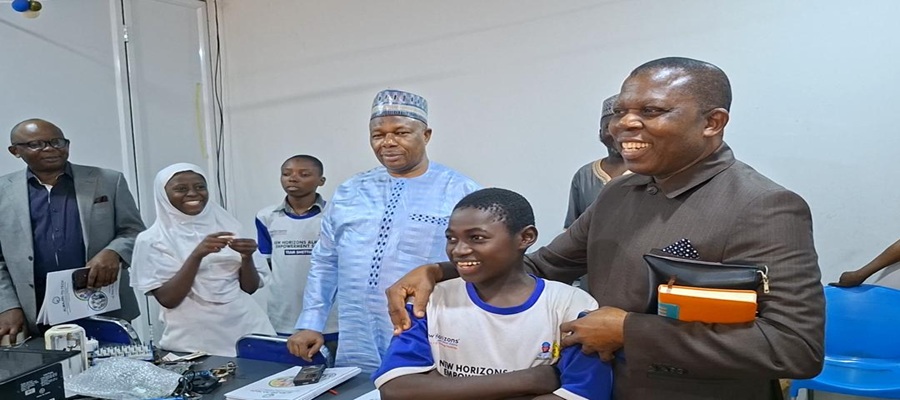
Twenty-one former Almajiri learners and street children are set to graduate as certified technology technicians under the Almajiri-to-Tech Initiative, a programme designed to equip vulnerable children with digital and entrepreneurial skills while addressing youth unemployment, poverty and insecurity.

The pioneer graduation ceremony is scheduled to hold on July 29 in Abuja, where the graduates will demonstrate practical skills, including assembling computers and drones, before government officials, development partners, members of the diplomatic community and the media.
The initiative was founded by technology education advocate, Mr Tim Akano, in partnership with New Horizons Nigeria, an Information and Communication Technology (ICT) training organisation.
According to the organisers, the programme seeks to provide practical solutions to the growing challenge of out-of-school children by combining technology education, entrepreneurship, mentorship and character development.
The organisers said the initiative had transformed children who previously had little or no exposure to technology into technicians capable of repairing laptops, desktop computers, mobile phones, power banks, electric fans, microwave ovens and other electronic devices.
They explained that the participants also received entrepreneurship training, mentorship, transportation support, daily meals, learning materials and professional work tools during the programme.
The organisers added that religious instructors from the participants’ respective faiths regularly visited the trainees to provide moral guidance, describing character development as a critical component of the initiative.
Unlike many vocational interventions that end with the presentation of certificates, the organisers said graduates of the programme would receive start-up support, while outstanding participants would be provided with professional work tools to establish their own businesses.
They also disclosed plans to launch a business directory and customer contact platform that would enable individuals, businesses and organisations to engage the services of the graduates.
Speaking on the initiative, Akano, who is also the Managing Director and Chief Executive Officer of New Horizons System Solutions Ltd., said the programme was conceived as a practical response to the challenges of youth unemployment, insecurity, poverty and irregular migration.
“You do not end migration by building higher walls. You do not defeat insecurity by relying only on military force, and you do not end poverty by preaching patriotism.
“You solve these challenges by building hope where hopelessness exists, equipping young people with practical skills, and creating opportunities where they live,” he said.
According to him, the pilot programme has demonstrated that children who have experienced neglect and exclusion can become innovators, entrepreneurs and contributors to national development when provided with quality education and opportunities.
He said one of the trainees, Mohammed, who arrived from the Niger Republic without speaking English, had acquired sufficient language proficiency within months to communicate confidently with customers while carrying out computer and electronics repairs.
Another participant, Fatima, discovered her interest in poetry during the programme and produced a poem celebrating New Horizons Nigeria, reflecting the broader personal development fostered by the initiative.
The organisers said the programme was inspired by concerns over the growing number of out-of-school children in Nigeria, estimated at about 30 million, and the broader global challenge of millions of children without access to education.
They argued that investing in digital skills, entrepreneurship and mentorship for vulnerable children offers a sustainable approach to addressing poverty, insecurity, youth unemployment and violent extremism.
As part of efforts to sustain the programme, the foundation said it had established a fully equipped workshop known as “The Almajiri Republic Workshop” in Wuse II, Abuja.
The workshop, according to the organisers, will serve as a commercial repair centre where graduates can provide computer and electronics repair services while continuing to strengthen their technical expertise.
The foundation called on the Presidency, federal and state governments, Ministries, Departments and Agencies (MDAs), members of the National Assembly, development partners, donor agencies, corporate organisations, civil society groups, religious institutions and other stakeholders to support the expansion of the initiative across Nigeria.
It maintained that scaling up the programme could transform millions of vulnerable children into skilled professionals capable of contributing to economic growth while reducing poverty, unemployment and insecurity.
The organisers said local and international media organisations, including CNN, BBC, Al Jazeera and ARISE News, had been invited to witness the graduation ceremony and the practical demonstrations by the pioneer graduates.

Accelerating artificial intelligence (AI) adoption could increase Africa’s GDP by up to 4% over the next decade, according to the International Monetary Fund (IMF).

In a report released on Tuesday, titled Africa Can Grow Faster With AI—If It Moves Now, economists from the IMF’s Africa Department say current levels of AI adoption and utilisation are expected to contribute just 0.2% to the region’s GDP over the next 10 years.
However, the report says stronger adoption, supported by the right infrastructure and policies, could raise the economic impact to about 4% by extending AI beyond today’s digitally connected firms.
Martin Schindler and other IMF economists say: “AI adoption in sub-Saharan Africa currently lags well behind every other region. If richer economies race ahead while African firms and governments lag, the productivity gap between the region and the rest of the world will only widen.”
Early signs of AI adoption are emerging across Africa, with countries including Zimbabwe, Kenya, Egypt and Nigeria developing AI strategies.
Telecommunications operators, including Vodacom, Econet, Africell and MTN, are also integrating AI into their operations and networks.
Other examples include chatbots supporting teaching and learning in Nigeria and the South African Revenue Service’s use of data analytics for targeted tax audits.
However, the IMF says AI adoption must extend beyond these early use cases to deliver meaningful economic benefits.
“For the region, AI’s main promise is not about replacing office workers, but boosting productivity across the economy—helping informal firms manage inventory, enabling farmers to increase yields, and supporting mid-sized firms to transition to formality and export readiness,” the report reads.
The IMF is urging governments to prioritise investment in reliable electricity, affordable broadband, data infrastructure and digital skills to support wider AI adoption.
Many African countries, including Zimbabwe, Kenya, Ghana, Nigeria and Cameroon, continue to face electricity shortages, while broadband services remain costly and coverage is uneven.
The Fund believes stronger investment in power, connectivity, regional data infrastructure and digital skills would help unlock AI’s economic potential.

Nigeria Leads Africa in Online Gambling Regulation – GCI

CBN Has Not Published Annual Financial Statements Since 2022 despite Legal Requirement

ChatPay Unveils Public Waitlist for WhatsApp-Based Banking Platform

GSMA Says High Smartphone Costs Threatens Africa’s AI Future

Dangote Refinery Completes Landmark $2.5bn Private Equity Placement

NRC, Ponzi Scheme Collapses Resulting Loss of Billions of Naira

NASENI Moves to Digitize CCB’s 5m Assets Declaration and Operations

Lebara Nigeria Launches Lebara Play, Africa’s First Telecom-Owned Micro-Drama Platform

Tokenization, Blockchain Technology will Transform Financial Institutions – IMF

EFCC Busts NIS Visa Overstay Racket, Uncovers N700m in an Account




 General News2 days ago
FG Launches C.L.I.C.K.D., Consumer Credit Scheme for Tech Devices

 Telecom2 days ago
Airtel Nigeria Expands Retail Footprint to Strengthen Customer Access Nationwide

 Telecom2 days ago
MTN Nigeria Opens Applications for Next Afrobeats Star Season 2 with Bigger Prizes

 News2 days ago
NPC Opens Nationwide Digital Birth, Death Registration Platform

 Telecom2 days ago
Kaspersky Survey Highlights the Need for Smartphone Security

 E-Business2 days ago
Ovaloop Technologies Unveils Digital Tools to Formalize SMEs Operations Across Africa

 E-Financial2 days ago
CBN Retains Interest Rate at 26.5% as Cardoso Cites Global Uncertainty Despite Inflation Drop

 Telecom2 days ago
Why Africa’s Top ICT Ministers Are Gathering in Abuja This Week