

E-Financial
AITEC Offers Free VIP Delegate Spaces to Financial Institutions Chiefs

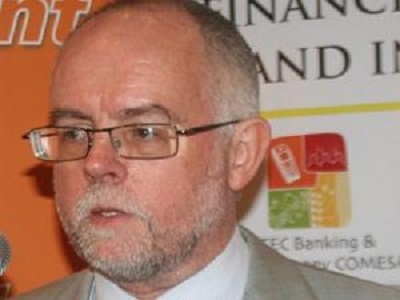
AITEC Africa said it has thrown her door s open to banks and other financial institutions to attend the Banking & Mobile Money West Africa Conference at Eko Hotel from 12-13 March for free.
The organizers that the VIP delegate passes provide access to the full conference and exhibition over both days, including lunches and refreshments.
“We are offering professionals in West Africa’s financial services sector FREE delegate spaces at this year’s AITEC Banking & Mobile Money West Africa Conference at Eko Hotel, Lagos over 12-13 March. Below are some of the stimulating topics our line-up of industry experts will be sharing with delegates,” the message reads.
Part of the conference programme and topics include: “Future-proofing your technology landscape through outsourcing” by Derrydean Dadzie, chief doer, DreamOval, Ghana; “Social media and banking: crowdsourcing customers and managing relationships” to be delivered by Gbenga Sesan, Paradigm Initiative Nigeria (PIN); “The mPos journey” by Quintin Stephen, sales director, iVeri, South Africa and “Building an open mobile acceptance platform in Africa” by Matt Putman, managing director, Emerge Mobile, South Africa.
Others are: “Promoting financial inclusion through the use of cardless transactions” by Titilola Shogaolu, chief payment & vas officer, Interswitch, Nigeria; “What do Nigerian Agents and SMEs really want?” by Simon Aderinlola, COO, BeyondBranches International, Nigeria; “Outline outsourcing: Converting fixed cost into variable cost by Samuel Adasoga, CEO, Thoughtstudios, Nigeria; “Platform-as-a-Service (PAAS)- The future of Financial Services IT on the Cloud” by Obi Emetarom, MD/CEO, AppZone Limited; Innovative disruption in Nigerian digital payments through micro & mobile merchant acquiring” by Mosh Adetoro, CEO, Qrios, Nigeria and “Practical scale-driven mobile-based growth strategies for financial institutions” by Chibuzo Ene, ceo of Edge Financial Systems Group, Kenya.
The workshops will dwell on issues like The role of banks in achieving traceability for West Africa’s agricultural exports to be handled by Judson Welsh, chairman and founder, African Investors Management Services, Ghana; Quality, Software Testing & Mobility – A Case for performance testing Scriptless test automation by Roland Oladeji Omoresemi, CEO & Founder, Tezza Business Solutions Ltd, USA, Nigeria, Kenya and Dan Gannon, President and CEO, Turnkey Solutions, USA.
AITEC Africa’s core business since 1987 has been focused on ICT event management, professional development and training in Africa. It has been a market-leading pioneer in terms of spreading knowledge on the Internet, computing and telecommunications in sub-Saharan Africa.



Justice Deinde Dipeolu of the Federal High Court in Lagos has urged all parties in the N98.5 billion patent infringement lawsuit involving the Central Bank of Nigeria (CBN) and Nigeria Inter-Bank Settlement System (NIBSS) to pursue an amicable settlement before trial begins.

The judge issued the directive on Tuesday after noting that CBN, Avanage Nigeria Limited, and the Registrar of Patents and Designs had no legal representation in court.
Justice Dipeolu declined to start the hearing and ordered that hearing notices be served on the absent defendants.
The suit was filed by Enterprise Logistics Speciale Limited and Samuel Kolajo, its managing director.
They are claiming N98.5 billion in damages for alleged infringement of patented cash management technology, breach of a Non-Disclosure Agreement (NDA), and financial losses from the non-deployment of their PillarSalt solution on Nigeria’s national payment infrastructure.
At the hearing, Tayo Oyetibo, SAN, appeared for the plaintiffs, while Olaoluwa Ale-Daniel represented NIBSS.
The CBN was not represented.
Oyetibo told the court the plaintiffs’ witness was ready to testify, but Justice Dipeolu held that the trial could not commence without all parties present.
The judge cited the Federal High Court Act, which encourages alternative dispute resolution, and directed both sides to engage in meaningful settlement talks.
NIBSS counsel argued that the company operates under CBN’s regulatory oversight and cannot act unilaterally. He also said NIBSS opposes creating a monopoly, which he claimed is central to the dispute.
Oyetibo countered that the plaintiffs invested heavily in developing patented innovations now allegedly being infringed. He said the PillarSalt Cash Management Solution would improve Nigeria’s cash handling system and boost the economy if deployed.
He blamed what he termed the selfish interests of some officials for blocking the technology but confirmed the plaintiffs are open to negotiation.
The case was adjourned to October 15 and 16, 2026, for trial if settlement talks fail.
In its claim before the court, Enterprise Logistics Speciale revealed that it developed several cash management technologies from 2011, including Mobile Smart Deposit, Mobile Cash Sorting and Processing Device, PillarSalt Cash Supply Chain, and Terminal Management System.
The firm stated that the innovations are covered by three patent certificates under the Patents and Designs Act.
The plaintiffs alleged that after sharing details with the defendants, the CBN issued Guidelines for Bank Neutral Cash Hubs (BNCH) that replicate their patented processes without consent.
They also accused the CBN of commercialising their inventions and failing to protect their rights as a regulator.
Accordingly, the plaintiffs are asking the judge to declare them exclusive owners of the patented technologies, restrain the defendants from using the inventions without written consent, compel NIBSS to activate PillarSalt on the Nigeria Central Switch within 30 days, nullify CBN’s BNCH Guidelines, and award N500 million for patent infringement, N200 million for breach of NDA, and N97.8 billion for losses since 2016.
In its amended defence, NIBSS denied liability. It said it did not infringe any patent or breach the NDA, and did not refuse to integrate the solution.
NIBSS argued that the plaintiffs seek exclusive rights that would create a monopoly and block other operators from the national payment infrastructure.
It added that integration decisions require regulatory and board approval.

The World Bank has approved a $1.25 billion Development Policy Financing loan for Nigeria despite widespread public criticism over the country’s rising debt profile, as it unveiled a new six-year partnership strategy aimed at accelerating private sector-led growth and job creation.

The lender announced on Wednesday that its Board had approved the Nigeria Actions for Investment and Jobs Acceleration Development Policy Financing operation as part of a broader Country Partnership Framework covering 2026 to 2032.
The approval comes days after a number of Nigerians criticised the proposed facility on social media, questioning the country’s growing reliance on external borrowing and demanding greater accountability over previous World Bank loans.
The statement read, “The World Bank Group has endorsed a new Country Partnership Framework (CPF) for Nigeria spanning 2026–2032, setting out a strategy to create more and better jobs at scale by unlocking private sector–led growth. As part of this broader support, the World Bank has also approved the Nigeria Actions for Investment and Jobs Acceleration (NAIJA) Development Policy Financing (DPF) operation, which supports Nigeria’s transition toward a more inclusive growth model that spurs growth and create jobs.”
According to the World Bank, the $1.25 billion facility will support reforms designed to strengthen the foundations for economic growth, improve competitiveness and stimulate private sector investment.
The statement noted, “The NAIJA DPF operation, which amounts to $1.25 billion, supports a set of Government reforms to strengthen the foundations for growth and competitiveness.”
The lender said the operation would back reforms to deepen Nigeria’s capital markets, modernise regulations for the digital economy and e-governance, advance power sector reforms, reduce trade barriers under the country’s commitments to the Economic Community of West African States and the African Continental Free Trade Area, improve access to quality agricultural seeds and strengthen domestic revenue mobilisation.
The financing forms part of the World Bank Group’s wider support package for Nigeria, combining policy-based lending with investments in energy, digital infrastructure, agriculture, private sector development and social protection.
The bank said the package is intended to help create jobs, strengthen economic resilience and reduce poverty by encouraging greater private sector participation in the economy.

Nigerian banks are expected to contend with elevated loan losses through 2026 as high interest rates, persistent inflation and the withdrawal of regulatory forbearance continue to weigh on the quality of their loan books, S&P Global Ratings has said.

The outlook reflected a broader trend across Africa’s largest banking markets, with lenders in Nigeria, South Africa and Egypt forecast to face rising credit losses as geopolitical tensions, tighter global financial conditions and stubborn inflation increase pressure on businesses and households.
The projections are contained in S&P Global Ratings’ ‘Global Banking Outlook 2026 Midyear Update: Emerging Europe, Middle East and Africa (EMEA),’ release.
The ratings agency said banking systems across emerging Europe, the Middle East and Africa remain broadly resilient, but warned that operating conditions are becoming more challenging.
“We expect many banking sectors in emerging EMEA, despite general resilience, will face increasing credit losses, as rising inflation weighs on household disposable income and corporate profitability,” the report stated.
S&P said a prolonged conflict in the Middle East could further worsen banks’ asset quality across the region.
“If the instability in the Middle East continues for a prolonged period, asset quality deterioration and the related increase in credit losses could be significant,” it said.
The report also identified uncertainty over the United States Federal Reserve’s interest-rate path and weaker investor confidence in emerging markets as additional risks that could tighten financing conditions across emerging Europe, the Middle East and Africa.
For Nigeria, however, S&P said the country is less vulnerable to the direct spillover effects of the Middle East conflict because it is a net oil exporter and an emerging producer of refined fuels.
“As a net oil exporter and an emerging producer of refined fuels, Nigeria is less exposed to the spillover effects from the Middle East war,” the report noted.
Even so, S&P expects domestic economic conditions to remain a challenge for the banking sector, with inflation, unemployment and poverty projected to stay elevated. It added that high interest rates and the removal of regulatory forbearance would continue to put pressure on banks’ asset quality.
“Additionally, the removal of regulatory forbearance and high interest rates will continue to weigh on banks’ asset quality,” the report said.
Against that backdrop, S&P expects Nigeria’s non-performing loan ratio to stabilise at between six and seven per cent in 2026, while credit losses remain elevated at between two and 2.5 per cent.
Despite those pressures, the agency said Nigerian banks are expected to generate sufficient earnings to absorb higher provisioning costs.
“We expect most banks will be able to absorb the incremental provisioning requirements thanks to their strong profitability, even as average return on equity normalises at about 20 per cent to 23 per cent in 2026, compared with an estimated 25 per cent in 2025,” it stated.
In Egypt, S&P said banks’ creditworthiness remains closely tied to that of the sovereign because exposure to the public sector accounted for about 61 per cent of total banking assets as of December 31, 2025.
It expects the Middle East conflict to slow economic growth and weaken private sector credit demand in the country. Combined with tighter monetary policy, average credit losses are projected to increase to about 150 basis points in 2026 and 2027 from about 130 basis points in 2025.

Court Asks CBN, NIBSS to Seek Settlement in N98.5Bn Patent Suit

World Bank Approves Fresh $1.25Bn Loan for Nigeria

WhatsApp Usernames Spark Privacy Fears

Report Reveals More than Half of Users Encountered Fraud or Scams Online

Airtel Nigeria CEO Urges Adoption of Intelligent Technology Platforms to Accelerate National Growth

Mobile Internet Gender Gap Widest in Africa – GSMA

London Strengthens Global Investment Ties with Africa @ First Ever London-Africa Business Summit

FG Targets Alleged N3tn Capital Flight, Opens Airtime Credit Market to Nigerian Fintechs

Japan, UNESCO Boost Digital Learning in 15 CoEs with Donation of ICT Equipment

African Electric Vehicle Platform Raises $215m to Scale Electric Mobility in Nigeria, Others




 E-Financial3 days ago
Wema Bank Suspends Telegram Operations over Scams

 E-Financial3 days ago
NDIC Says 281m Depositors Protected against Bank Failure

 E-Financial3 days ago
NAICOM Moves to Deepen Penetration Through Licensing of a New Insurtech

 Telecom3 days ago
NCC Ranked Among Nigeria’s Top 3 Best-Performing Federal Agencies

 E-Business3 days ago
Kaspersky Reveals Malware Attacks on SMBs Disguised as AI Services Surged by Five Times in 2026

 General News3 days ago
EVC NCC, Aminu Maida, to Lead Speakers @ Business Journal Fintech & Financial Inclusion Roundtable 2026

 News3 days ago
FG Captures 32m Students DNEMIS ahead July 1 Rollout

 Telecom3 days ago
Womenovate, MTN Foundation Lead Charge for Inclusive Tech at Women in Technology and Engineering Summit