

News
SERAP Drags Akpabio, 9 Other Ex-Govs to Court Over Collection of Salaries, Pensions

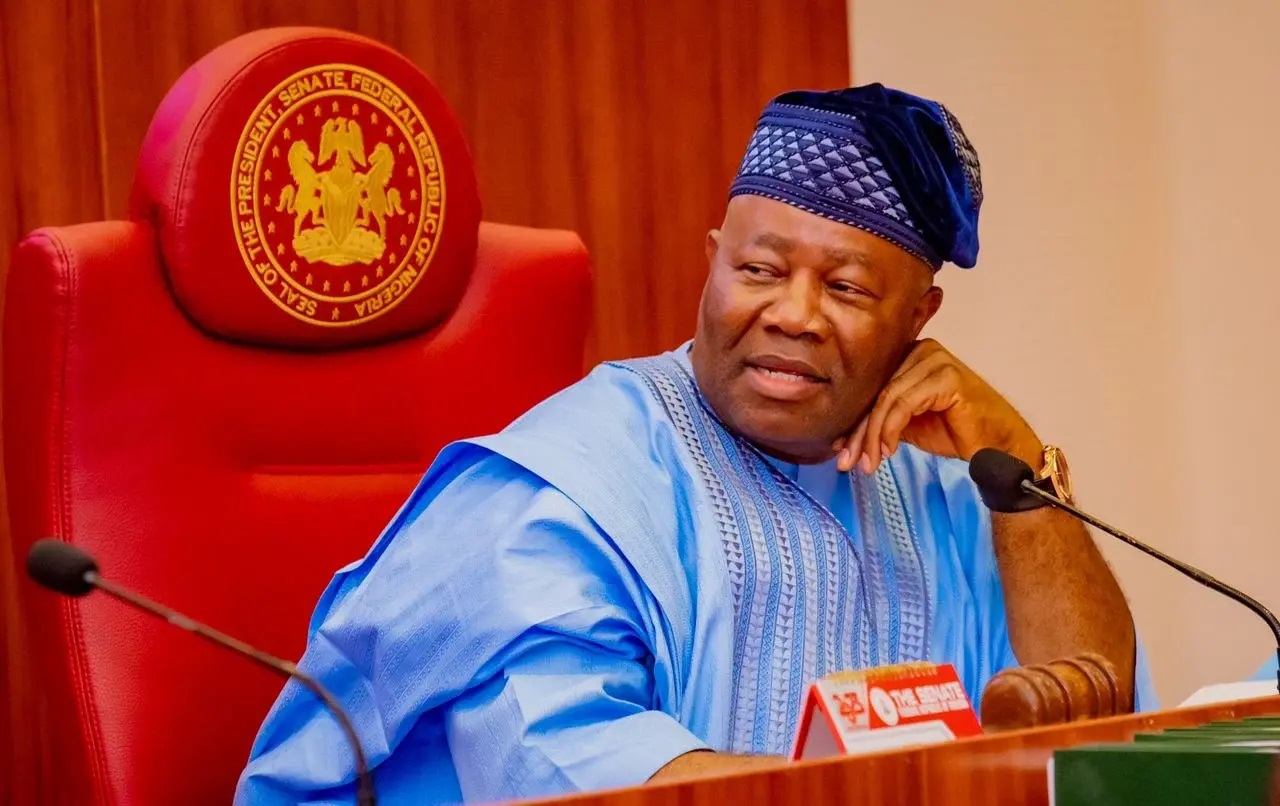
Socio-Economic Rights and Accountability Project (SERAP) has filed a lawsuit against the Senate President, Godswill Akpabio and nine other former governors in the 10th Senate over their collection of both salaries and pensions as senators.”

Joined in the suit as Respondents are the following senators and minister: Abdulaziz Yari; Aminu Tambuwal; Adamu Aliero; Adams Oshiomole; Ibrahim Gaidam; Seriake Dickson; Ibrahim Dankwambo; Aliyu Wammako; Gbenga Daniel, and Dave Umahi.
In the suit number FHC/ABJ/CS/1360/2023 filed last Friday at the Federal High Court in Abuja, SERAP is seeking: “an order of mandamus to direct and compel Mr Akpabio, nine other senators and Mr Umahi to stop collecting both salaries and pensions, and to return any pensions collected to their respective state treasuries.”
SERAP is seeking: “an order of mandamus to direct and compel Mr Akpabio, nine other senators and Mr Umahi to clarify and disclose if they have collected and/or currently collecting both salaries and pensions as former governors.”
SERAP is also seeking: “an order of mandamus to direct and compel Mr Akpabio, nine other senators and Mr Umahi to disclose the details and amounts of the pensions so far received by them.”

In the suit, SERAP is arguing that: “The Seventh Schedule to the Nigerian Constitution 1999 (as amended) requires the former governors to stop collecting both salaries and pensions and to return any pensions collected.”
SERAP is arguing that, “Unless the reliefs sought are granted, the former governors would continue to both enjoy life pension packages, and collect salaries as serving public officers, and the travesty and private self-interest would continue.”
SERAP is also arguing that, “It a fundamental breach of their fiduciary duties for former governors to collect both salaries and pensions. The alleged collection by former governors of double emoluments is detrimental to the public interest.”
According to SERAP, “Collecting pensions as former governors and salaries while serving as public officers is a flagrant violation of the letter and spirit of the Nigerian Constitution and the public trust.”
SERAP is also arguing that, “It is a travesty for former governors to be looking after themselves while over 137 million Nigerians are living in extreme poverty exacerbated by the removal of fuel subsidy.”
The suit filed on behalf of SERAP by its lawyers, Kolawole Oluwadare and Ms Valentina Adegoke, read in part: “The UN Convention against Corruption requires public officials to discharge a public duty truthfully and faithfully.”
“The UN Convention also implicitly prohibits large severance benefits for public officials. The convention specifically in article 8 requires public officers to promote integrity and responsibility in the management of public resources.”
“Paragraph 2 (a) of the Code of Conduct for Public Officers in the Fifth Schedule, Part 1 of the Nigerian Constitution provides in part: ‘a public officer shall not receive or be paid the emoluments of any public office at the same time as he receives or is paid the emoluments of any other public office.’”
“Justice Oluremi Oguntoyinbo in a landmark judgment dated 26 November 2019 also indicated that double emoluments for former governors are unacceptable, unconstitutional and illegal.”
“Constitutional oath of office requires public officials including former governors in the Senate and serving as ministers to abstain from all improper acts, including collecting life pensions. A false oath lacks truth and justice. The oath statements require the oath takers to commit to uphold and defend the Constitution.”
“According to reports, there are fourteen former governors in the Senate and as ministers who may be collecting pensions running into billions of naira from their states. The former governors include: Godswill Akpabio (Akwa-Ibom State); Adams Oshiomhole (Edo State); Adamu Aliero (Kebbi State); Dave Umahi (Ebonyi State); Aminu Tambuwal (Sokoto State); and Abubakar Sani Bello (Niger State).”
“Others are: Ibrahim Danwkambo (Gombe State); Danjuma Goje (Gombe State); Abdulaziz Yari (Zamfara State); Gbenga Daniel (Ogun State); Aliyu Wammako (Sokoto State); Orji Kalu (Abia State); Ibrahim Gaidam (Yobe State); and Seriake Dickson (Bayelsa State). Also, there are at least seven former governors in President Bola Tinubu’s cabinet who are reportedly collecting both salaries and pensions.”
“The states currently implementing life pensions for former governors reportedly include Akwa-Ibom, Abia, Edo, Jigawa, Niger, Kebbi, Kano, Ogun, Sokoto, Jigawa, Cross River, Ebonyi, Enugu, Benue, Gombe, Yobe, Taraba, Kaduna, Plateau, Katsina, Rivers, and Delta.”
“Under Akwa Ibom Life Pension law [as amended] a former governor is entitled to an annual pay of N200 million, two official vehicles with chauffeurs, furniture allowance of 300 per cent of basic salary replaceable every four years, an aide, a cook, and lifetime security guards worth N5 million monthly, and N2.5 million for their deputies.”
“There is also state-sponsored annual medical service of about N100 million for ex-governors and their spouses and N50 million for the ex-deputy governors, five-bedroom mansions in Abuja and Akwa Ibom.”
“Other benefits include: 300% annual basic salary as ‘severance gratuity’, 300% of annual basic salary for ‘car maintenance’; 100% of annual basic salary for ‘entertainment’; and 100% of annual basic salary for ‘utility.’”
“In Abia State, a former governor is entitled to 100 per cent of the salary of the incumbent. Benefits for former governors include an official car, a police orderly, two operatives of two police men for the security of his house and allowances for cooks, stewards, driver and gardener.”
“In Gombe State, there is N300 million executive pension benefits for the ex-governors. Ex-governor and deputy governor are also entitled to a 30-day paid travel expenses annually to any country of their choice alongside their wives.”
“A former governor is also entitled to two utility cars, while his deputy is entitled to one car to be replaced periodically. Both the governor, deputy governor and their wives are entitled to paid medical treatment at home or abroad.”
“In Sokoto State, former governors and deputy governors are to receive N200m and N180m respectively being monetization for other entitlements which include domestic aides, accommodation and vehicles replaceable every four years.”
“According to the 2013 life pension law, the pension should be charged upon the consolidated revenue fund of the state. Former governors and their deputies are also entitled to other privileges, such as free medical treatment anywhere for themselves, their spouses and biological children, and the payment of all their utilities.”
“Under the life pension law in Jigawa, former governors are entitled to the same salary as the incumbent, two vehicles replaceable every four years, a six-bedroom apartment, furnished office, two personal assistants, and two drivers.”
“In Edo State, former governors and their deputies are entitled to a house in any location of their choice, pension for life at 100 per cent of their last salary, three brand new cars after five years, drivers, domestic members of staff, medical bills for them and their immediate families, amongst many other benefits.”
No date has been fixed for the hearing of the suit.



Glovo, a multi-category tech company, has announced its integration into the generative AI ecosystem with the launch of its “Shopping Assistant” for ChatGPT and Claude. Users can now discover retail products, compare prices, and seamlessly order any item using natural conversational language with the AI systems.

The Glovo experience inside such platforms introduces a conversational commerce model that shifts from a search-based web to an intent-based web. Rather than navigating traditional app menus and filters, users can express needs, such as asking for a “last-minute gift for a coffee lover under ₦50,000”, and the assistant handles semantic search, location validation, and product curation.
A Seamless, Concierge-Like Experience
Once both platforms have been connected through either ChatGPT or Claude apps, the user will be able to have a multi-turn dialogue where the assistant remembers context and constraints, such as budget caps. Users receive a visual carousel of up to five highly customised product options available at local stores. Each product displays its image, name, store details and ratings, and price. While the search and discovery experience takes place directly on the Generative AI platforms, selecting a product via the “view on Glovo” button takes the user to the Glovo mobile or web app, where the payment and final purchase are exclusively completed.
Strategic Focus on Retail and Growth
Glovo is prioritising the retail and grocery sectors for this initial launch, capturing the established habit of using AI for product research. Generative AI has driven a significant jump in retail traffic globally, so this first-mover advantage aims to meet customers where they are meeting Gen AI daily, and ensure it captures high-intent organic traffic as search behaviours evolve.
“We’re always looking for ways to meet our customers where they already are. Being available on Claude and ChatGPT means people can discover what Glovo has to offer as part of a natural conversation, with no friction. Glovo has always been about being the everyday app that provides choice and convenience, and this is another step in that direction”, said Shiro Theuri, Chief Technology Officer at Glovo.
How to look for products in the Glovo app through ChatGPT or Claude
- The user must sync ChatGPT or Claude with the Glovo app with the plug-in.
- Once synced, the user must type in @glovo followed by their request.
- The AI platform displays a carousel with 5 available options for the user.
- If the user wants to purchase any of the products or continue searching within the Glovo app, they must click “View on Glovo”, which will redirect the user to the Glovo app or website.
- After the order is confirmed, the store will prepare the item(s) and the courier will head up to the pick-up location. The user will receive the order in minutes.


Southeast Asia cybercrime networks are expanding operations into Africa as crackdowns intensify in the subregion, according to a recent report from the United Nations Office on Drugs and Crime (UNODC).

The massive, unintended geographic shift triggered by intense pressure from international task forces in Myanmar and Cambodia,have seen highly sophisticated criminal networks now establishing footholds in major tech hubs across Kenya and Nigeria, transforming local technical talent into accomplices for industrial-scale digital theft as reported by https://streamlinefeed.co.ke/
This strategic migration represents a critical evolution in the $17 billion crypto scam economy.
Transnational scam syndicates are organized criminal networks that run industrial-scale online fraud using trapped or trafficked labor.
The UNODC has documented this diversification, noting that African nations are increasingly targeted as operational bases due to robust internet infrastructure and a surplus of unemployed tech workers.
In response, local authorities are engaged in a frantic game of catch-up against well-funded foreign cartels.
Recall that in 2025, UNODC, described the shift as part of a broader trend in which crime “spreads like a cancer,” into regions with weaker enforcement and limited digital safeguards.
The report pointed to the rapid proliferation of online fraud operations, including cryptocurrency scams and phishing schemes, moving from countries like Myanmar and Cambodia into new footholds in Africa—particularly Nigeria.
A recent case publicized June 12, 2025 by the WeChat public account West Africa Chinese Voice illustrates the trend: Nigeria’s Economic and Financial Crimes Commission (EFCC) arrested 177 Chinese nationals in Lagos and Abuja between December 2024 and January 2025.
The suspects were allegedly running scam centers under the guise of corporate offices, where local Nigerians were trained to carry out online investment frauds—many following the “pig-butchering” model, which builds trust with victims before luring them into fraudulent crypto investments.
Authorities seized hundreds of SIM cards, high-performance computers, and prewritten scam scripts during the raids

Ugochukwu Eze, a 47 year-old man, was on Thursday arraigned before a Federal High Court in Lagos for allegedly hacking into the server of SunTrust Bank to steal a total of N800m.

Ugochukwu also known as Amazon, was arraigned before the court by the operatives of the Department of State Security (DSS).
DSS accused Ugochukwu of fraudulently hacking into the server of SunTrust Bank to remove and divert the sum of N800 million into several accounts in other financial institutions.
M. Bajela,prosecuting counsel, DSS, in the charges filed before the court alleged that the defendant and others now at large, between 2023 and 2026, conspired among themselves and unlawfully and seriously hindered the function of Suntrust Bank Plc’s computer system server and in the process fraudulently diverted over N800 million belonging to the bank.
Ugochukwu was also accused of concealing and transferring various sums of money traced to the unlawful cyber-attacks to some account in some financial institutions.
The offences alleged to have been committed by the defendant according to the prosecutor contravened sections 5; 6(1) and 8 of Cybercrimes (Prohibition, Prevention etc) Act, 2024. And Sections 10, 20 and 18(2)(D) of the Money Laundering (Prevention and Prohibition) Act, 2022.
The defendant pleaded not guilty to the allegations.
Based on his plea of not guilty, the prosecutor asked the court for a trial date, and prayed the court to remand the defendant in the facility of the correctional services pending the time trial will commence.
However, E. Afrogha, defendant’s lawyer, told the court that she has filed her client’s bail application. adding that her client has been in the DSS custody for over a month.
But the prosecution counsel told the court that he has not been served with the bail application, not withstanding that his witnesses are available.
Based on the counsels’ submissions, Justice Friday Ogazi, presiding judge, adjourned the matter to August 24,2026 for hearing of the bail application.
The judge also ordered that the defendant be remanded in the custody of the Nigerian Correctional Services (NCS) pending the hearing of the bail application.
One of the counts against the defendant reads: “That you UGOCHUKWU EZE (AKA AMAZON) (M) (47 YEARS) sometime between 2023 and 2026 in Lagos, and other places within the jurisdiction of this honourable court, unlawfully seriously hindered the function of SunTrust Bank Plc’s computer system, and in the process fraudulently diverted over N800, 000,000.00 (Eight Hundred Million Naira) belonging to the said SunTrust Bank thereby committed an offence contrary to and punishable under Section 8 of the cybercrime (prohibition, prevention etc.) Act, 2024.”

Glovo Pioneers AI Quick-Commerce

Fleeing Southeast Asia Scam Syndicates Find New Homes in Nigeria, Kenya- Report

DSS Arraigns Eze for Allegedly Hacking, Stealing N800m from SunTrust Bank

SEC Unveils Probate/Unclaimed Monies Clinic to Help Families Recover Inherited Investments

We have Multiple Layers of Protection for 281m Accounts in Nigeria – NDIC

From Scarcity to Scale: What Africa Can Learn from India’s Agricultural Transformation

EFCC Busts NIS Visa Overstay Racket, Uncovers N700m in an Account

BON Establishes Six Ad Hoc Committees to Modernize Broadcasting

How EFCC Turned Recovered Loot Into School Supplies for Thousands of Nigerian Students

BVN Enrollments Hit 69.55m- NIBSS




 E-Business3 days ago
Kaspersky Reveals a New Malicious Framework Targeting Cryptocurrency Users with the Use of OkoSpyware

 E-Business3 days ago
CMS T&M Launches TMO Rides to Enable a Faster & Cashless Transport Experience for CMS – Ajah Passengers

 E-Business3 days ago
Nigeria Tightens Data Privacy Compliance as FG Issues Directive to MDAs

 E-Business3 days ago
Firm to recruit over 100 professionals to boost NRS e-Invoicing compliance

 Telecom3 days ago
FG Commences 90,000km Fibre Optic Rollout within Weeks

 E-Financial2 days ago
Access Holdings Deepens Sustainable Finance Impact, Expanding Green Assets to ₦92.14 Billion

 Telecom3 days ago
Dimension Data to Channel Funds to Support Nigerian Fibre Expansion

 E-Financial3 days ago
Zenith Bank Confirms Cyberattack, Says Hackers Accessed Limited Customer Data