

Telecom
GSMA Report Reveals Smartphone Owners Now the Global Majority


Over half (54%) of the global population – some 4.3 billion people – now owns a smartphone, according to the GSMA’s annual State of Mobile Internet Connectivity Report 2023 (SOMIC) published this week.

Smartphone owners are much more likely to be aware of, and adopt, mobile internet services, as well as use it more frequently and for a wider variety of tasks.
For example, of the 4.6 billion people now using mobile internet, almost 4 billion do so using a smartphone, representing just under half (49%) of the world’s population. Meanwhile, 600 million people – 8% of the global population – are accessing the internet using a feature phone.
For the first time, the SOMIC 2023 report, breaks down mobile internet connections by device type, revealing significant regional variations. The global expansion of 4G and 5G networks has paved the way for over two-thirds (69%) of smartphone owners accessing mobile broadband to be doing so on a 4G-enabled device, while 17% are doing so on a 5G-enabled device – driven largely by mature markets such as North America and East Asia & Pacific.
Meanwhile, 69% of smartphones used to access mobile internet in Sub-Saharan Africa, and 33% in the Middle East and North Africa, are still only 3G-capable, meaning 2G and 3G networks remain an important source of coverage for millions of users in low- and middle-income countries (LMICs).
The GSMA’s sixth annual SOMIC report, published ahead of MWC Kigali 2023, analyses the latest trends in global connectivity since 2015, provides insights into mobile internet usage and barriers to adoption in LMICs, and outlines the key challenges that must be addressed to ensure everyone can connect to the internet.
Spotlight on the usage gap and the digital divide
While more people are using mobile internet than ever before – 57% of the global population – 3.4 billion people remain unconnected. The majority of those who are not using mobile internet live in areas covered by a mobile broadband network – the usage gap.
This usage gap has fallen slightly from 40% of the global population in 2021 to 38% in 2022 – representing 3 billion people – but remains substantial. By comparison only 5% of those not using mobile internet live in areas without mobile broadband coverage – the coverage gap.
Regional discrepancies and a digital divide persist; for example, Sub-Saharan Africa and South Asia represent the regions with the least connected populations and where the usage gaps are 59% and 52% respectively.
In LMICs, adults in rural areas are still 29% less likely to use mobile internet than those in urban areas, while women are 19% less likely to use mobile internet than men.
In addition, the report reveals that two-thirds of the individuals who live within areas covered by a mobile broadband network but who are not using mobile internet do not own a mobile phone, highlighting the importance of tackling issues such as handset affordability.
However, even where people do own smartphones, many are still unable to use them due to barriers such as digital skills and literacy, safety and security concerns, accessibility of enablers or services, and the availability of relevant content in local languages.
The remaining third of the usage gap, representing 950 million people, consists of users who own or have access to a smartphone (350 million) or basic or feature phone (600 million), but are only using basic services like voice or SMS. Smartphone owners should, in theory, face fewer barriers to accessing the internet, given they already have a device, is often a primary barrier to using the internet.
Other key findings
- While 200 million people began using mobile internet in 2022, the growth rate at which people are adopting it has slowed in the last year, falling from 300 million in 2021 and 2020.
- Only 25% of the population in the world’s least developed countries use mobile internet, compared to 52% across LMICs and 85% across high-income countries.
- Mobile broadband coverage has remained relatively unchanged, with 95% of the global population living within the footprint of a mobile broadband network.
- 5% of the world’s population is still not covered by mobile broadband, representing almost 400 million people.
- Connectivity varies significantly between and within regions and countries, with 95% of the unconnected living in LMICs.
- For the first time, all regions now have average download speeds of at least 10Mbps, while the global average download speed increased from 27Mbps to 34Mbps.
Breaking barriers to ensure no one is left unconnected
Mobile internet connectivity delivers significant social and economic benefits to both individuals and society, helping to improve wellbeing, increase household consumption and positively impact GDP.
In recent years, efforts have been made to break down the barriers to the usage gap, while striving for digital inclusion, recognising its transformative potential for societies. While there have been notable achievements and mobile internet adoption continues to grow, the SOMIC report shows progress is slowing and that increased action is required to ensure everybody can access mobile internet.
To this end, the GSMA is calling for a greater collaborative effort from all stakeholders, including government, policymakers and the mobile ecosystem, to break the barriers to the digital divide, provide coverage for those living in areas without mobile broadband and overcome barriers to usage. Actions must be informed by an understanding of the usage gap, the needs of individuals not yet using mobile internet, the barriers they face, and the opportunities to address them.
Mats Granryd, Director General of the GSMA, said: “Mobile is the primary – and, in most cases, only – way that most people in low- and middle-income countries access the internet. The fact that the growth rate at which people are adopting mobile internet has slowed is worrying.
“Lack of connectivity will deprive billions of people of access to vital services and revenue-generating opportunities – likely impacting poorer, less educated, rural and female users disproportionately.
“As the ongoing cost-of-living crisis and rise in climate-related emergencies affects these groups further, there is an urgent need to accelerate digital inclusion and break down the barriers to stop the digital divide from widening further.”


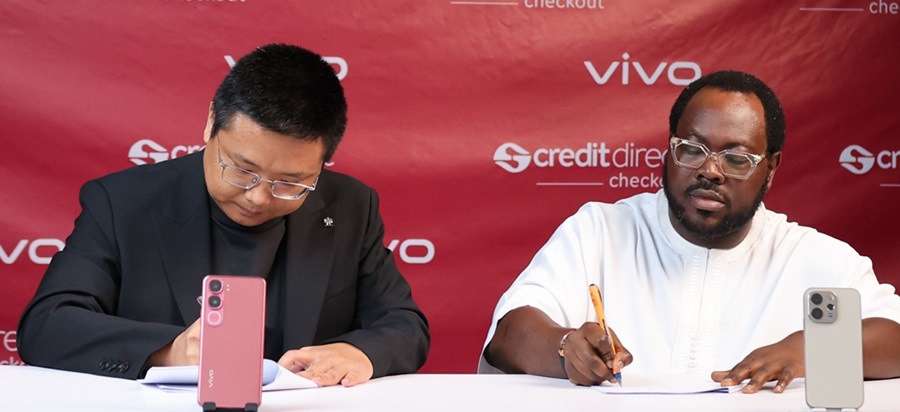
Vivo, Chinese smartphone maker has signed a memorandum of understanding (MoU) with Credit Direct, Nigerian consumer finance company to launch a device financing programme in the country.

L-R: Toni Liu, CEO, vivo Nigeria, and Chukwuma Nwanze, MD/CEO, Credit Direct, at the MoU signing in Lagos
This initiative aims to remove barriers to smartphone ownership while supporting Vivo’s expansion strategy in Nigeria.
Under the terms of the agreement, customers can purchase a Vivo smartphone by paying 20% upfront and spreading the remaining balance over six months.
Credit Direct will provide the financing.
Both companies target sales of more than 200,000 devices in the first year.
“People who need smartphones but cannot pay upfront can now do so through a payment plan that does not strain their monthly income. Our mission has always been to make financial solutions a universal opportunity, and this is exactly what this represents in practice. I am truly excited about what we can achieve together,” said Chukwuma Nwanze, chief executive officer of Credit Direct.
This initiative comes as smartphone financing programs gain momentum across Africa, where device affordability remains a key barrier to mobile internet adoption.
According to the GSMA, the median cost of an entry-level smartphone in Nigeria fell from $84 in 2018 to $18 in 2024, reducing its share of average monthly income to 26%.
However, currency depreciation and rising living costs have offset much of this progress.
For the poorest 40% of Nigerians, an entry-level smartphone still represents 56% of monthly income, while it accounts for 73% for the poorest 20%, highlighting persistent affordability constraints among vulnerable households.
Despite these challenges, smartphone ownership reached only 27% in Nigeria in 2024, according to the GSMA, leaving significant room for growth.
Data from StatCounter shows that Vivo held a 1.18% market share at the end of March 2026.
The company remains far behind market leader Tecno with 18.72%, followed by Infinix at 16.28%, Samsung at 15.4%, Apple at 14.15%, and Xiaomi at 8.17%.
Other players such as Oppo, Itel, and Huawei also operate in the market.

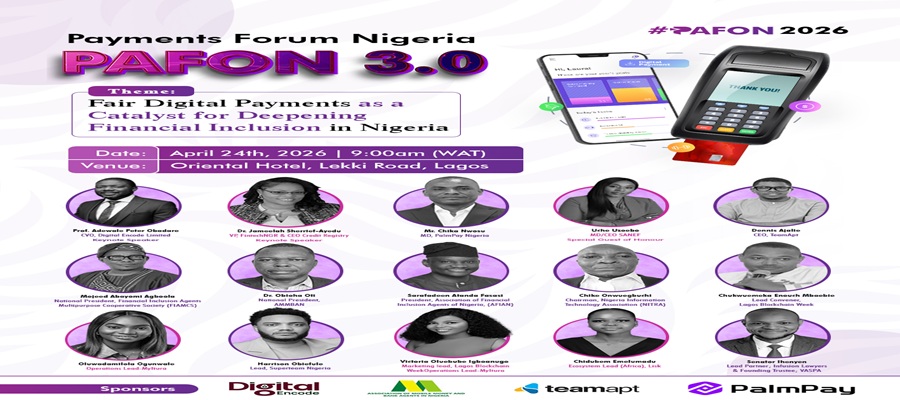
Nigeria’s foremost payments and financial inclusion dialogue platform, Payments Forum Nigeria (PAFON 3.0), will hold this Friday, April 24, 2026, at the prestigious Lagos Oriental Hotel, Lekki Road, bringing together regulators, fintech leaders, banks, policymakers, agent networks, cybersecurity experts, innovators, and ecosystem stakeholders to shape the future of digital payments in Nigeria.

Payments Forum Nigeria (PAFON 3.0
With the theme: “Fair Digital Payments as a Catalyst for Deepening Financial Inclusion in Nigeria,” PAFON 3.0 comes at a defining moment for the country’s digital economy as stakeholders seek practical pathways to close the inclusion gap, strengthen trust in payment systems, and accelerate access for underserved populations.
Why PAFON 3.0 is Different
“Unlike routine conferences, PAFON is a solutions-driven forum designed to bridge policy conversations with market realities.
“The event uniquely convenes fintech operators, agent banking networks, cooperatives, payment innovators, cybersecurity professionals, and thought leaders under one roof to tackle real challenges affecting Nigerians at the grassroots”, said Peter Oluka, co-convener of Payments Forum Nigeria.
“From digital trust and cybersecurity to agency banking, embedded finance, stablecoins, eNaira, SME growth, and healthcare financing, PAFON 3.0 is positioned as one of the most strategic gatherings in Nigeria’s payments ecosystem this year”, Oluka added.
High-Profile Keynote Speakers Confirmed
This year’s edition will feature a distinguished lineup of keynote speakers and industry leaders, including Prof. Adewale Peter Obadare, chief visionary officer, Digital Encode, and Dr. Jameelah Sherrief-Ayedu, vice president, FintechNGR & CEO, Credit Registry
Other confirmed speakers include, Dennis Ajalie, managing director, TeamApt Ltd.; Mr. Chika Nwosu, managing director, PalmPay Nigeria; Uche Uzoebo, MD/CEO, Shared Agent Network Expansion Facilities (SANEF Limited): Special Guest of Honour; Chike Onwuegbuchi, Chairman, Nigeria Information Technology Reporters Association of Nigeria (NITRA); Mojeed Abayomi Agboola, national president, Financial Inclusion Agents Multipurpose Cooperative Society (FIAMCS); Ibirogba Oluwagunwa, chairman Lagos Chapter, Association of Mobile Money and Bank Agents in Nigeria (AMMBAN); Sarafadeen Atanda Fasasi, and president, Association of Financial Inclusion Agents of Nigeria (AFIAN).
Fireside Chat on Africa’s Next Innovators
Another standout session will explore the future of digital currencies and regional interoperability: Stablecoins vs. eNaira: Orchestrating a Unified Digital Payment Rail for West Africa
This special fireside chat, hosted in collaboration with Lagos Blockchain Week, promises fresh perspectives on the next phase of Africa’s payment innovation journey.
Chuwuemeka Enoch Mbaebie, Lead convener of LBW will host the session alongside Senator Ihenyen, Lead Partner of Infusion Lawyers and Founding Trustee of the Virtual Asset Service Providers Association (VASPA); Victoria Oluebube Igboanugo, marketing lead, Lagos Blockchain Week; Chidubem Emelumadu, ecosystem lead (Africa), Lisk, and Harrison Obiefule, Nigerian lead for Superteam.
More Activities Lined Up
Attendees will also experience product demo of Myitura Healthcare Financing Solution;
Townhall Meeting on The State of Agency Banking in Nigeria led by AMMBAN; Goodwill messages from leading institutions and industry associations, and strategic networking with decision-makers across banking, fintech, regulation, media, and innovation ecosystems
PAFON 3.0 is expected to attract C-suite executives, startup founders, regulators, investors, digital payment operators, development institutions, policymakers, and professionals seeking to understand where Nigeria’s payment future is heading.
Participation
Participation is free.

The application deadline for the fifth edition of the MTN Media Innovation Programme (MIP) has been extended to April 25, 2026, organisers have announced.

MTN Nigeria Media Innovation Programme
The extension offers additional time for qualified media professionals and digital content creators across Nigeria to apply for the fully funded programme aimed at advancing storytelling and media innovation.
The initiative is sponsored by MTN Nigeria in partnership with the School of Media and Communication, Pan-Atlantic University (PAU).
Organisers said the 2026 cohort would admit 25 fellows, an increase from the previous 20, in line with MTN Nigeria’s 25th anniversary and its continued commitment to strengthening the country’s media ecosystem.
Launched in 2022, the six-month certificate programme provides participants with training in media innovation, leadership and digital transformation.
It features academic sessions at PAU, industry engagements and an international study visit, including sessions at the University of Johannesburg.
According to the organisers, the programme has produced a growing network of alumni contributing to Nigeria’s media landscape through leadership roles, new media ventures and impactful storytelling.
The programme is open to practitioners across print, broadcast, digital and social media, with applicants expected to demonstrate a strong commitment to innovation and professional development.
Interested applicants can submit their entries through the School of Media and Communication website.
Shortlisted candidates will undergo a rigorous selection process, with successful applicants expected to commence the programme in May 2026.
Nigeria CommunicationsWeek reports that the initiative is part of broader efforts to equip media professionals with the skills needed to adapt to the evolving digital economy.

Ecobank in Talks with Bank of China for Direct Yuan Settlement

Cross River State Isolates 10 More Persons with COVID Symptoms

Vivo, Credit Direct Ink Agreement on Smartphone Credit Purchase

Government, Industrial Sectors became the Primary Targets for Cybercriminals in 2025 – Report

The Visibility Trap

NBC Boss Urges Content Ceators to Participate in DSO

NITDA Takes Over National Digital Architecture System

FG Shifting Focus to “Meaningful Connectivity” to Drive Inclusion – Minister

Jury Finds Meta, Google Liable for Woman’s Social Media Addiction

Microsoft Revamps Copilot in Workplace AI Push




 E-Business3 days ago
CIBN Allegedly Hit by 250GB Data Breach

 E-Financial3 days ago
Flutterwave Dismisses Reported $75m Investment by FG

 E-Business3 days ago
Nigeria @ Risks Losing Digital Control- NiRA

 Telecom3 days ago
Nigeria Moves to Curb Fraud as NCC, CBN Seal Consumer Protection Pact

 Telecom3 days ago
FCCPC Denies Banning Airtime, Data Borrowing Services in Nigeria

 E-Business3 days ago
Kaspersky MDR Introduces Major Updates, Strengthening Detection and Investigation Capabilities

 News3 days ago
BOI, RMRDC Seal MoU to Address Agric Value Chain Challenges, Boost Nigeria’s GDP

 Broadcasting3 days ago
NUJ Accuses NBC of Attempting to Gag Media, Demands Dialogue