

Broadcasting
The Structures, Roles of Operators in the Nigerian Telecoms Sector

By Olajide Adisa
Since Independence in 1960, the telecoms sector has impacted on the Nigerian economy in several positive ways, creating jobs and contributing to the Gross Domestic Product (GDP) of the Nigerian economy.

Before Nigeria gained independence in 1960, communication was mainly through the telegraphic wire, initiated by the colonial masters, but after independence in 1960, the Nigeria Telecommunications Limited (NITEL), was established in 1985, following the separation of postal services from telecommunications services. At that time, telecommunication was the exclusive right of the affluent in the society as only few people had access to telephony. People had to queue for hours and days, just to make international calls and sometimes local calls with the 090 NITEL line.
During that period, the existing Telecom operators were NITEL and a few other Code Division Multiple Access (CDMA) operators. However, the advent of GSM in 2001 eventually demystified telecommunications, and gave every Nigerian the access and right to communicate. The introduction of GSM in 2001, increased the number of registered lines from less than 400,000 in 41 years of independence, to over one million lines in less than one year after the introduction of GSM.
After 2001, more and more Nigerians could sit at the comfort of their homes and offices to make instant calls within and outside Nigeria, through their personal hand-held devices called the mobile phones. Banking activities are now transacted on the mobile phones, without the bank customer visiting the banks. The most eventful period was between 2001 and 2015, when the telecoms sector was deregulated.
The Structures
In preparation for the proper regulation of the telecoms sector, the Nigerian Communications Commission (NCC), the telecoms industry regulator was established by an Act of law in 2000, and in 2003, the Nigeria Telecommunications Act was enacted, which defined the structures of the Nigerian telecoms sector.
In 2001, the first set of GSM operators were licensed by NCC. They included Econet Wireless (now Airtel), MTN and NITEL. In 2003, Globacom was licensed and in 2008, Etisalat, now 9mobile, was licensed, while NTEL, the mobile arm of NITEL was licensed in 2014, but rolled out services in 2016, after the successful privatisation process, through a guided liquidation exercise.
However, following the inability of NITEL to cope with competition from GSM operators, it folded up its operations and was eventually sold to NATCOM in 2014, and later re-sold to private investor after it was unbundled and it currently trades as Ntel, under a private ownership and with the Asset Management Corporation of Nigeria as a majority shareholder.
Core Telcos
The core telecom operators (Telcos), such as MTN, Airtel, Globacom and 9mobile were initially licensed by NCC to provide mobile voice services. The NCC however licensed Globacom as a Second National Operator (SNO) to offer fixed (landline), in addition to wired and wireless (mobile) services that other core operators were offering. NCC also licensed Internet Service Providers (ISPs) to offer internet data services, but in 2005, NCC deregulated the telecoms sector and granted a five year exclusivity period to GSM operators and also extended their license to cover data service offering.
The core telecoms operators had to roll out their own telecoms infrastructure to aid network expansion across the country.
Chairman, Association of Licensed Telecoms Operators of Nigeria (ALTON), Engineer Gbenga Adebayo, said the core telcos had to reinvest their profits into telecoms infrastructure rollout because the federal government could not deploy the $285 million licence fee paid by each core operators for telecoms infrastructure rollout as early promised.
“To achieve effective network coverage, the core telcos were in building Base Transceiver Station (BTS) and connecting radio links, while at the same time, laying fibre optic cables and connecting them to BTS for effective coverage, which come at a huge cost and burden to telecoms operators. Again, the cost of maintaining BTS was on the high side, because each BTS runs on two generating sets on a 24 hours basis and the cost of diesel has continued to increase, even more so with the recent removal of fuel subsidy by the federal government, Adebayo said. He however said at a point, the core telcos had to outsource the building of telecoms masts (BTS) and the maintenance and operations to core infrastructure companies like IHS, to enable the core telecoms operators to focus on their core area of telecoms service delivery to telecoms subscribers.
Infrastructure Companies (InfraCos)
Infrastructure Companies like IHS, MainOne, Pan African Towers, SWAP Technologies, Zinox Technologies, Broadbased Communications, Brinks Integrated Solutions, O’dua Infraco Resources among others, were initially licensed as InfraCos to provide telecoms infrastructure across the six geo-political zones in the country, but the arrangement failed years later because of the difficulties most of the licensed faced in deploying telecoms infrastructure across the various regions.
The InfraCos were supposed to provide BTS also known as Base Stations, as well as fibre optic cables and radio links for the transmission of voice and data services, but they were resisted by agencies of state governments and social miscreants who demanded and to a large extent continue to demand outrageous amounts of money from them as condition for rollout of telecoms infrastructure in the various regions. Some agencies of state governments either refused to grant Right of way (RoW) permit for infrastructure rollout, or arbitrarily hiked the charges for RoW in their states, thus making it difficult for InfraCos to roll out telecoms infrastructure in most states. The situation forced some InfraCos like IHS and MainOne to return their InfraCo licence to the NCC, after paying N2.5 million for a ten-year InfraCo licence.
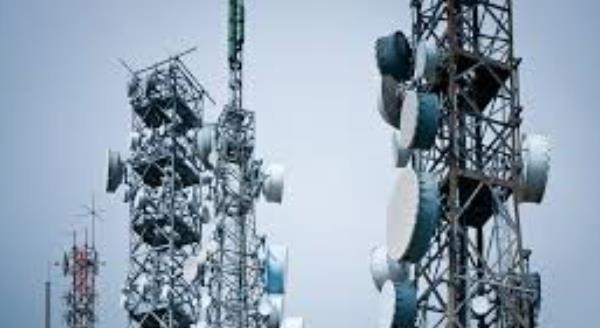
Some operators were licensed to deploy telecoms masts across the country, maintain the operations of telecoms masts and allow telecoms operators to collocate by fixing their radio links and antennae on the installed telecoms masts. Operators involved in providing telecoms masts include: IHS, American Towers Company (ATC), Pan African Towers, Coloplus Limited, among others.
Telecom mast providers are faced with a myriad of challenges in deploying telecoms masts across the country, a development that affects the quality of telecoms service delivery across networks. Multiple taxation, foreign exchange rate volatility and availability, vandalism, insecurity, asset theft, intra-industry indebtedness, non-designation of telecommunications infrastructure as Critical National Infrastructure and power solutions are some of the problems facing the industry sub-sector.
All these issues culminate in having an adverse impact on communications because the quality of service is ultimately affected. With a gap of approximately 40,000 towers needed (without 5G) to cover the country as has repeatedly been said by NCC, these issues need to be addressed not only to improve the quality of current service delivery but also to provide network coverage for the rest of the country.
The building of towers in close proximity to already existing towers must also be addressed if national coverage is to be achieved within a reasonable time. The network must expand to currently unserved parts of the country.
CEO of Coloplus Limited, Mr. Mike Ofili, admitted to the huge challenges faced in deploying telecom masts across the country.
According to Ofili, the telecoms mast providers must have the buying and consent of telecoms operators, before investing in a single telecoms mast (Tower), which he said, cost between N35 million to N40 million, depending on the location.
Speaking on some of the challenges in deploying telecoms masts, Ofili said: “Nigeria imports virtually everything that has to do with telecoms’ tower equipment and installation. We import the towers, generating sets, batteries, rectifiers, including iron/rod used for reinforcement. The rising cost of dollar and the weak value of the naira against the dollar, coupled with the inability to access Forex, have affected importation of equipment, thus slowed down network expansion, leading to poor telecoms’ service delivery. The issue of multiple regulation and multiple taxes imposed on telecoms’ operators by agents of governments, are also affecting the deployment of telecoms masts, which telecoms operators rely on to provide quality service to subscribers,” Ofili said.
According to him, with multiple regulations from state agencies, telcos are forced to pay for Environmental Impact Assessment fee, Right of Way (RoW) charges, mast installation charges, radioactive emission charges, among other charges that amount to multiple taxes.
“Cost of maintaining BTS is also very expensive. Nigeria has about 30,000 BTS installed across the country, with some decommissioned while about 30,000 BTS are still active, with high cost of maintenance. The cost of diesel to power a BTS is on the increase and the financial demand from non-state actors who parade themselves as social miscreants, is becoming rampant and impacting negatively on the running cost of a BTS. Network operators had tried severally to increase cost of telecoms services delivery in line with the rising cost of providing telecoms services, but the regulator, the NCC, will not agree, and the situation is adversely affecting telecoms operations across networks,” Ofili said. Other sources online put the number of installed towers in Nigeria at over 40,000 as at 2021.
The development slowed down network expansion of telecoms operators and invariably, quality of telecoms service delivery has been adversely affected.
Following the collapse of the InfraCo arrangement, telecoms infrastructure providers started making personal negotiations to roll out telecoms infrastructure, but at a very slow pace that is negatively affecting telecoms service delivery, because the telecoms operators largely depend on the telecoms infrastructure companies to deliver telecoms services to the subscribers.
Speaking on some other challenges faced by telecoms operators, the Chairman of the Association of Licensed Telecoms Operators of Nigeria (ALTON), Engr. Gbenga Adebayo, said maintenance of BTS was becoming a major challenge as cost of diesel continued to rise since the removal of fuel subsidy by the federal government. According to Adebayo, the operators have called for an increase in telecoms tariff, but the move has always been resisted by the NCC and the telecoms subscribers. According to Adebayo, all other sectors of the Nigerian economy have had reasons to increase cost of service delivery to the people because of the prevailing circumstances in the country occasioned by fuel subsidy removal, but there had always been resistance each time the telcos talk about price increase.
Value Added Service (VAS) Operators
VAS operators are another set of operators that the telecoms operators rely on in providing quality telecoms services to telecoms subscribers.
VAS operators are licensed by the NCC to provide value added services that will enable telecom operators to serve telecom subscribers in a most effective way. Although they do not have telecoms infrastructure, they ride on existing telecoms infrastructure to offer telecom services that are regarded as value added services to telecom operators.
Their services are essential because they determine the quality of service that telcos offer to their subscribers. Some of the services include: Call waiting, Call forwarding, multi-party conferencing, Short Message Service (SMS), and special ringtones. The major challenge faced by VAS operators is in the area of pricing of the solutions developed and offered by VAS operators.
National Chairman of VAS operators, Mr. Chijioke Eze, who confirmed the issue of pricing, said the issue still persists, because the sharing ratio between VAS operators and telecoms operators are never favorable to VAS operators. According to him, the telecoms operators will want to take the lion share from the proceeds of any VAS solution offered by telecoms operators, just because the telecoms operators own the telecoms infrastructure on which the VAS solution rides on.
Mobile Virtual Network Operators (MVNO)
In addition to the services that Value Added Service (VAS) operators are offering in the telecoms sector, the Nigerian Communications Commission (NCC), recently licensed 25 Mobile Virtual Network Operators (MVNO) that will also ride on the existing telecoms infrastructure to provide telecoms services that will enhance telecoms subscribers’ experience.
Although many industry analysts have blamed the licensing of 25 MVNOs, insisting it would lead to duplication of solutions and harsh competition between VAS operators and MVNOs. National Chairman of VAS operators, Mr. Chijioke Eze, however said both VAS and MVNOs could collaborate and offer quality services without any form of friction.
Internet Service Providers (ISPs)
The Internet Service Providers (ISPs) are another set of operators licensed by NCC to provide internet connectivity for data services.
Their role is interwoven with telecom operators that also offer data services, alongside voice services.
The interwoven nature of the role of both operators is causing great concern to ISPs that are smaller in size and capacity. Because the telcos have the numbers, with a subscriber base of over 220 million across networks, they appear to run out the smaller ISPs that have less subscriber base.
Commenting on the situation, the CEO of Swift Networks, Mr. Charles Anudo, who is an ISP, said most ISPs are being suffocated by Telecom operators that provide the same data service with ISP.
According to him, ISPs were originally licensed to provide data services, while telcos were originally licensed to provide voice services. He however said the deregulation of the telecoms sector, provided opportunity for telcos to offer data services, a development, he said, was already affecting ISPs. He called on the regulator to ensure protection of ISPs, especially the smaller ISPs, in order to save them from going into extinction.
From the analysis above, it is evident that the challenges in the telecoms sector is not only embedded with telecoms operators, as it cuts across several sub-sectors like VAS, InfraCos, MVNOs, and ISPs, making it a web of challenges that has to be addressed by all the players in the industry, including the regulator, the NCC.
Olajide Adisa, is a Telecoms/ICT Analysts & Commentator writes from Abuja


Association of Licensed Set-Top Box Manufacturers of Nigeria (STBMAN) has warned that the unilateral implementation transition from analogue to digital broadcasting, could trigger confusion, legal disputes, and disruptions capable of undermining the credibility of the 2027 general election.

STBMAN urged President Bola Ahmed Tinubu to urgently intervene and halt what it described as a unilateral implementation process, pending wider consultations with stakeholders in the broadcasting industry.
Sir Godfrey Ohuabunwa, chairman of the association in statement in Abuja, faulted the current implementation process by the National Broadcasting Commission’s (NBC).
STBMAN said that although it supports Nigeria’s digital migration programme, the approach currently being pursued by the NBC appeared rushed and inconsistent with the 2012 Digital Switchover (DSO) White Paper approved by the Federal Executive Council.
The association argued that the arrangement being presented as a Digital Switchover was merely the aggregation of channels on NigComSat platforms rather than a fully Digital Terrestrial Television (DTT) migration as originally envisioned under the national DSO framework.
According to the group, failure to carry critical stakeholders along could erode public confidence, weaken access to information, and create avoidable disruptions in the broadcasting sector at a politically sensitive period ahead of the 2027 elections.
It noted that millions of Nigerians still depend on free-to-air broadcasting for information dissemination, civic education, election coverage,e and public enlightenment.
The group stressed that any poorly coordinated migration process could result in signal disruptions, public confusion, and unequal access to information during the election season.
STBMAN also expressed concern that the NBC risked creating a conflict of interest by acting simultaneously as regulator and content aggregator, contrary to the spirit of the 2012 White Paper and global best practices guiding digital broadcasting migration.
The association, therefore, called for an urgent national stakeholders’ roundtable, an independent legal and technical review of the DSO process, review and update of the 2012 DSO White Paper, nationwide public sensitisation on the implications of digital migration, and measures to protect local broadcasting and public interest.
It maintained that it was not opposed to digital migration but insisted that the process must be transparent, inclusive, lawful, and technically sound.
The group warned that failure to properly manage the transition could weaken democratic communication structures, waste public resources, and negatively affect national cohesion and the credibility of the 2027 elections.
“Mr. President, Nigeria cannot afford confusion in its broadcasting system at a time the nation is preparing for another critical democratic transition. The time to act is now,” the statement added.
Association of Licensed Set-Top Box Manufacturers of Nigeria, represents domestic electronics manufacturers responsible for producing the decoder boxes needed for the country’s transition from analogue to digital broadcasting.
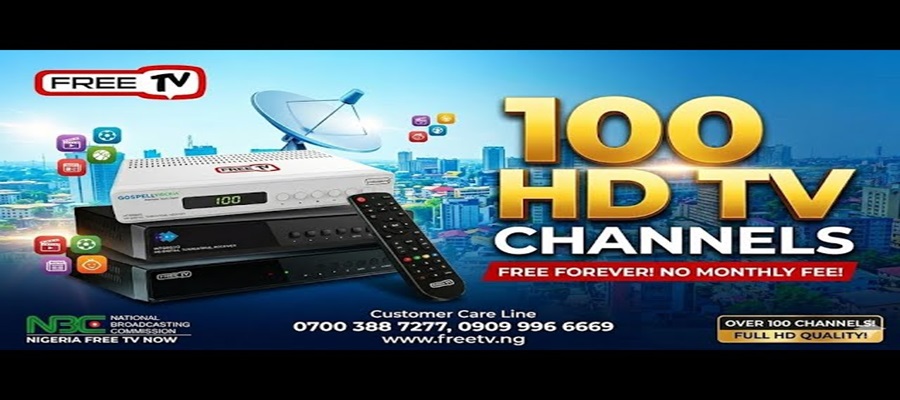
Federal government, yesterday, said that it will now launch the so-called FreeTV, with over 100 channels for news, sports, education, entertainment and children’s programming in multiple Nigerian languages on June 17.

National Broadcasting Commission (NBC) had initially scheduled for May 15 for the launch.
But the new date was announced by Mohammed Idris, minister of Information and National Orientation, on Wednesday during a facility tour of NIGCOMSAT, alongside Dr Charles Ebuebu, director general of the National Broadcasting Commission (NBC) and other stakeholders.
Idris said the long-awaited migration from analogue to digital broadcasting had finally become a reality after years of failed attempts and delays, describing the project as a major breakthrough for Nigeria’s broadcasting industry.
“I have been grappling with this idea of the DSO for many years. Moving our transmissions from analogue to digital has now happened and is ready to be commissioned by June 17,” the minister said.
He revealed that several channels had already been bundled onto the platform, adding that the digital transition would transform broadcasting, advertising and television consumption across Nigeria and Sub-Saharan Africa.
According to him, the new platform introduces scientific audience measurement tools capable of tracking viewership patterns in real time, thereby giving advertisers reliable data for targeted campaigns.
“Now science is at play. If you are viewing a station, we know who is watching what and how many people are watching. Advertisers can now take informed decisions about the kind of programming Nigerians want to watch across all demographics,” Idris stated.
The minister said the collaboration between NIGCOMSAT, NBC, the Ministry of Communications and the Ministry of Information had made the digital transition possible, while commending President Bola Tinubu for providing the necessary support and resources.
He described previous DSO efforts as limited and expensive due to encrypted set-top boxes but noted that the new system would be free and accessible to millions of Nigerians.
“In the past, the boxes were encrypted and costly. Now this is free. Government has taken off some of those costs on behalf of Nigerians,” he said.
Idris stressed that unlike earlier pilot phases restricted to a few cities, the new digital platform would have nationwide and regional reach through NIGCOMSAT’s satellite infrastructure.
“Everybody can now watch whatever he wants in real time and painlessly. Free TV everywhere for everybody”, he declared.
The minister also hinted that the platform would challenge the dominance of existing pay-TV operators by offering Nigerians wider viewing options at no cost.
“I don’t want to always use the word ‘substitute’, but this offers opportunities you didn’t get before. You no longer have that monopoly again. Competition is going to set in. Content will grow and viewership will grow,” he said.
He added that the platform would initially launch in standard definition, SD, before quickly transitioning to high definition, HD, bringing Nigerian broadcasting in line with global standards.
“Soon after the launch, we are moving to HD. Nigeria will now compete globally. What you watch here is what you get anywhere,” Idris said.
The minister further disclosed that the service was already available via mobile application and had successfully undergone testing ahead of the official unveiling.
Also speaking during the tour, managing director and chief executive officer of NIGCOMSAT, described the collaboration between NIGCOMSAT and NBC as a strategic partnership that has strengthened service delivery and raised operational standards within Nigeria’s digital broadcasting ecosystem.
According to her, ongoing investments and satellite expansion plans under the current administration will guarantee reliable and continuous service delivery.
“The work has only just started. The work has only just begun,” she said.
Among those who accompanied the Honourable Minister on the tour were Salihu Abdullahi Dembos, director-general, Nigerian Television Authority (NTA); Jibrin Baba Ndace, director-general, Voice of Nigeria (VON); Mohammed Bulama, director-general, Federal Radio Corporation of Nigeria (FRCN); and Lanre Issa-Onilu, director-general, National Orientation Agency (NOA), alongside other senior government officials and dignitaries.
Metro Digital Limited, a licenced Indigenous broadcasting organisation, has accused Multichoice, pay television company, of refusing to obey judgements emanating from Courts in Nigeria.

It said the latest of such judgements is the one that was delivered by Justice Chinelo Odili of Rivers State High Court on May 4, 2026 in Suit No. PHC/3943/FHR/2025.
Dr. Paul Osuji, operations manager of Metro Digital, at a press conference in Port Harcourt, Rivers State,
said the suit was filed by the organisation and two others against Multichoice and the Economic and Financial Crimes Commission (EFCC).
Osuji stated that Justice Odili has in the judgement described the arrest of a staff member of the company and the carting away of it’s properties and disruption of it’s broadcasting business by the EFCC over a civil dispute of copyrighy as unlawful and violations of the applicants’ rights.
The manager recalled that in October 2025, Multichoice instigated the EFCC to read their office in Port Harcourt, arrested a staff of the company and staff of another company, while the suit was still pending.
“On October 16, 2025, the premises of Metro Digital Limited, a licenced indigenous broadcasting organisation was raided by the Nigerian anti-graft agency, EFCC, instigated by Multichoice Nigeria, purportedly acting on a preservation order made by the Federal High Court sitting in Port Harcourt over the sub licensing of broadcasting content right.
“The preservation order came from a civil dispute already adjudicated by the Court of Appeal No. CA/CS/188/2021 – Multichoice Vs Metro Digital Limited and 20 others, which is a subject of a pending appeal -No. SC/CV/1248/2022 -Multichoice and 20 others before the Supreme Court.
“Instructively, while suit No. PHC/ 3943/ FHR/2025 was still pending, Metro Digital Limited filed an application to set aside the said preservation orders of the Federal High Court sitting in Port Harcourt and presided over by Hon. Justice A.T Mohammed.
“In his ruling delivered on December 10, 2025, set aside the preservation orders and it’s legal execution on Metro Digital Limited. The court also ordered EFCC to return unconditionally all the properties and records of Metro Digital Limited, illegally and unlawfully carted away during the raid but the agency has till today not obeyed those orders of the Court,” he said.
Metro Digital Limited is known for operating SLTV, a direct-to-home satellite television service launched to provide affordable, locally-owned alternatives to international pay TV

Court Orders FG to Reveal Identity of Local Contractors in $460m Abuja CCTV Project

NCAA Suspends Services to Air Peace, Others over Debts

Legend Internet Repays N10Bn Commercial Paper

FG Classifies Ebola Importation into Nigeria as High Risk

Transfers Fail as Banks Suffer USSD Glitches

MTN, VDT, Zoracom, Digital Realty Back 2026 Girls in ICT Campaign

Vitel Wireless Partners Fintechs to Expand Access to Services

FG Okays 112 as Toll-Free National Emergency Response Number

Opay Plans IPO in US, Targets $4Bn in Valuation

Elon Musk Launches XChat with Video Calling to Take on WhatsApp, Messenger




 Telecom3 days ago
NCC Drafts New Rules for Virtual Mobile Operators

 Telecom3 days ago
Airtel Africa Launches $110m Share Buyback Programme for Capital Efficiency
 General News3 days ago
WHO Says Ebola Risk Now at Highest Level

 E-Business3 days ago
LG Electronics Showcases Advanced HVAC Solutions at Mega Clima Nigeria 2026

 Telecom3 days ago
MTN Nigeria Tops Gender Equality Rankings After Major Workplace Transformation, IFC Report Reveals

 News3 days ago
FG Unveils AI Public Services Platform

 Telecom3 days ago
Microsoft, Partners Launch ‘LINGUA Initiative’ to Save African Languages From Digital Extinction

 Telecom3 days ago
Australian Court Upholds Fine Against X Over Child Safety Compliance Failures