

Telecom
DG NITDA Unveils Nija Chat App, Describes It As Economy Booster


Kashifu Inuwa Abdullahi, director-deneral of the National Information Technology Development Agency (NITDA) has unveiled the NIJA Chat, a messaging, gaming and lifestyle app which he said will help build public digital infrastructure and boost the Nation’s economy.

This is in line with Federal Government of Nigeria continued drive to support and challenge its teeming youthful population to innovate indigenous solutions that have global impact.
Inuwa who made this known after unveiling the Nija Chat Application by iCELL in Abuja, said it is a clarion call to all Nigerians both home and the diaspora to embrace the tech to encourage more of such innovative ideas to emerge from the country.
According to the Director-General, the journey which started six months ago when the iCELL team solicited NITDA’s support to build the application was one that the Agency was pleased to be a part of.
“NITDA worked hand-in-hand with them to refine and accelerate the thoughts, as well as offered technical support to build this app”,Inuwa noted.
While describing the application as a super frontier app, Inuwa stressed that the application is more like a lifestyle app where one can find everything in one place.
“This is a futuristic app because frontier applications are increasingly being promoted in the world today”.
“So, you can personalise your experience and have everything done in this particular app, rather than hop from one app to another just to do the same thing”, the DG affirmed.
The NITDA Boss joined the team to test the workabilities of the app by making some local/international audio and video calls on the messaging app, and afterwards averred that it was indeed a fantastic experience.
Attributing the feat to Nigeria’s young and talented population, Inuwa said with the right environment, which the government is constantly working on to harness the amazing potential of the Nation’s digitally natives, the ‘Digital Nigeria’ quest would be attained sooner than later.
“President Bola Ahmed Tinubu has mandated our Ministry to accelerate Nigeria’s economic diversification by enhancing productivity in critical sectors, and with apps like this one, it will pretty much help in that direction”.
“Our SMEs can use this application to promote their products and services, communicate with customers and suppliers”, Inuwa said.
Whereas the official launch of the app is billed for 1st January 2024, the DG offered some observations regarding the app that need to be worked upon as he also expressed the hope that the next stage should be to build a payment wallet on it.
“When the payment wallet is brought onboard, anyone can receive and send money easily and this will help promote the cashless transactions which is ultimately, the future we are building”.
“We will continue to urge our startups to take up on innovative ventures like this, in order to enhance the quality of life for our citizens and make connections seamless”, Inuwa assured.
Inuwa commended the team for coming up with the project and bringing it to impact level, adding that the Tinubu’s administration will not relent in its efforts toward encouraging and supporting indigenous solutions.
Earlier while welcoming guests, the Chief Technical Officer, iCELL, Abbey Abbey gave a brief of the Nija Chat, noting that platform will redefine the way Nigerians and the world connect, live and play around in the digital space, emphasising that the Nija Chat is not just a messaging, gaming and lifestyle app but a testament to the future of cutting-edge technology and the limitless possibilities of human connections.
In a world where connection is key, Abbey noted that NIJA Chat has taken it a notch higher by seamlessly integrating the messaging and gaming experience that transcend the norm.
“This is not just about lifestyle, it also aligns with the dynamic spirits of our users, bringing you an experience like no other, especially as the platform offers a secure, vast, and intuitive interphase, ensuring that your connections are as vibrant as possible”, Abbey espoused.
Abbey went further to illustrate that beyond messaging and gaming, Nija Chat platform is also a companion in lifestyle which avails its users exclusive content and personalised experiences that have been curated in the app, covering all facets of life.
“Today, we are not just unveiling an app, we are actually unleashing a new revolution as it is not just connecting people but creating a digital ecosystem that adapts to your business, evolves with your preferences and also grows with your aspirations”, Abbey maintained.
He appreciated his team for their brilliant minds which brought about the development of the app and lauded other stakeholders, especially NITDA, for partnering and supporting the course.
Other stakeholders who were present to herald the era of the latest app in town added their voices to applaud the innovation and beckoned on Nigerians to download, install and use it, in order to enhance local content and bolster the Nation’s digital economy.



Nigeria’s fast-rising youth culture and innovation community, The Gathering on 100, is heading to Enugu, with registration now open for gamers, performers, DJs, creatives, and culture enthusiasts.

MTN
The Enugu edition will take place on June 19, 2026, at ICC Hall, Okpara Square, and will bring together a new audience for the platform’s signature blend of music, gaming, live performance, community engagement, and youth-driven entertainment.
The Gathering on 100 first gained national attention in Lagos, where it transformed the National Stadium, Surulere, into a continuous 100-hour ecosystem of activity from April 22–26, 2026.
The event combined culture, commerce, entrepreneurship, gaming, fashion, and live entertainment, attracting thousands of young participants and creating opportunities for emerging talent and businesses.
The movement most recently arrived in Aba, where thousands of young people gathered for a weekend of culture, commerce and entrepreneurship, reinforcing the platform’s growing appeal across different communities and audiences.
The move to Enugu is being framed by organisers as a deliberate expansion into one of Nigeria’s largest student and youth populations. Home to major institutions including the University of Nigeria, Nsukka (UNN), Enugu State University of Science and Technology (ESUT), the Institute of Management and Technology (IMT), Godfrey Okoye University and Coal City University, Enugu attracts thousands of young people from across the country each year, creating a vibrant community shaped by education, creativity, entertainment and entrepreneurship.
This concentration of young talent has helped fuel a growing ecosystem of creators, performers, gamers, digital entrepreneurs and small business owners.
In recent years, the city has hosted an increasing number of technology, entertainment and youth-focused events, reflecting the growing demand for platforms that bring together creativity, opportunity and community.
These dynamics make Enugu a natural next stop for The Gathering on 100, a platform built around showcasing talent, fostering connections and creating opportunities for young Nigerians.
Registration for the Enugu edition is now open through The Gathering’s official website, with participation available across multiple categories including gaming, rap battles, DJ competitions, dance, live performances and entrepreneurship.
A key highlight of the event will be the Pitchathon, where emerging founders and business owners will have the opportunity to present their ideas before a panel of judges for a chance to secure grant funding and support for business growth.
The gaming segment will feature competitive tournaments and interactive experiences designed for both casual and serious players, while rap battles and DJ showdowns will spotlight rising talent from Enugu and neighbouring states.
Attendees can also expect a large scale rave experience, live entertainment and community driven activities designed to bring together different corners of the region’s youth culture under one roof.
Beyond the entertainment, organisers say The Gathering on 100 is designed to create real opportunities for young people to connect, collaborate and gain visibility for their talents, ideas and businesses.
As the movement continues its expansion across Nigeria, the Enugu edition is expected to showcase the city’s unique blend of creativity, ambition and cultural influence while providing a platform for the next generation of innovators, performers and entrepreneurs.
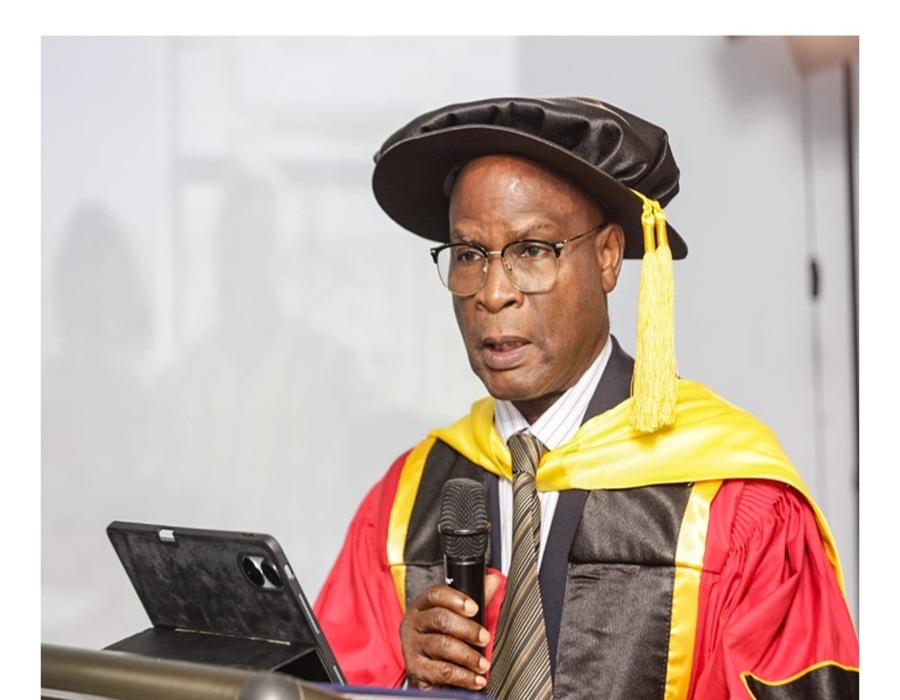
Professor Clement K. Dzidonu, President of Accra Institute of Technology (AIT), has said that the rapidly evolving world of artificial intelligence, automation, and digital transformation demands graduates who are capable of independent thinking, continuous learning, innovation, and responsible leadership.

Professor Clement K. Dzidonu, President of Accra Institute of Technology (AIT).
Professor Dzidonu noted that universities exist not merely to award degrees but to develop capable human beings who can think critically, solve problems creatively, adapt to changing circumstances, and contribute meaningfully to society.
He reiterated AIT’s commitment to producing graduates who are technically competent, ethically grounded, intellectually curious, and globally competitive.
The Accra Institute of Technology (AIT) has officially welcomed newly admitted students into its academic community at a colourful matriculation ceremony held on Saturday, June 13, 2026, at the university’s Knowledge City Campus-Kokomlemle in Accra.
Speaking on the theme, “Preparing the Sovereign Learner for a World of Opportunity, Possibility and Difference,” the President encouraged students to adopt the Opportunity–Possibility–Difference (OPD) Perspective by recognizing opportunities, exploring possibilities, and creating meaningful differences in their lives and communities. He urged them to see beyond examinations and certificates and focus on building capability, character, and courage.
The ceremony marked a significant milestone in the lives of the new students as they formally became members of the AIT scholarly community, joining a university renowned for excellence in technology-driven education, innovation, research, and professional development.
The matriculating class comprises students pursuing programmes in Engineering, Information Technology, Computer Science, Business Administration, Occupational Health and Safety Management, Project Management, and doctoral studies.
Addressing the matriculating class, the President of AIT, Professor Clement K. Dzidonu, congratulated the students on their admission and challenged them to embrace what he termed “The Age of the Sovereign Learner.” He emphasized that the rapidly evolving world of artificial intelligence, automation, and digital transformation demands graduates who are capable of independent thinking, continuous learning, innovation, and responsible leadership.
Professor Dzidonu further challenged the students to make the most of the opportunities available to them at AIT by attending lectures consistently, acting ethically, managing their time wisely, and committing themselves to lifelong learning.
He reminded them that success at the university would depend not only on the resources and support systems provided by AIT but also on their personal commitment to excellence and self-development.
On behalf of the newly admitted students, Mr. Samuel Peace Kamara delivered the matriculants’ acceptance speech, expressing gratitude to the university’s leadership, faculty, and staff for the warm reception extended to the new students.
He pledged, on behalf of his colleagues, that they would uphold the values of the university, work diligently in their studies, and strive to become responsible professionals capable of making meaningful contributions to society.
The ceremony concluded with a formal declaration admitting the students into membership of the university community and a call on them to embrace the opportunities before them, pursue excellence, and contribute positively to national and global development.

Federal government has dismissed reports suggesting it plans to introduce new taxes on telecommunications services and petroleum products, describing the claims as false and misleading.

The clarification was contained in a statement issued on Wednesday by the Federal Ministry of Finance and signed by Mrs Maryann Duke, Senior Special Assistant on Communications and Press Secretary to the Minister of Finance and Coordinating Minister of the Economy.
According to the ministry, reports linking the alleged taxes to recommendations contained in the International Monetary Fund (IMF) Article IV Consultation on Nigeria do not reflect the position of the government.
It explained that recommendations contained in IMF consultation reports are advisory in nature and do not constitute policy decisions or binding obligations on the Federal Government.
“The Federal Government is not considering the introduction of any new taxes on telecommunications services or petroleum products,” the statement said.
The ministry also clarified that existing tax arrangements relating to petroleum products remain unchanged.
It stated that the Value Added Tax (VAT) waiver on fuel remains in force and has not been removed.
According to the statement, any fuel surcharge can only be introduced through a ministerial order published in the Official Gazette, noting that no such action is currently under consideration.
The ministry added that the current policy framework has helped cushion the impact of fluctuations in global fuel prices on households and businesses across the country.
On telecommunications services, the government said the excise duty introduced before 2023 had already been repealed under the country’s new tax laws.
It stressed that the duty is no longer in effect.
The ministry urged Nigerians, businesses and media organisations to disregard reports suggesting that new taxes would be imposed on telecommunications services and petroleum products.
It reiterated that Nigeria’s tax reform agenda remains focused on improving revenue administration, promoting economic growth and attracting investments rather than increasing the tax burden on citizens.
The ministry further assured that any future tax policy changes would be communicated through official channels and implemented in accordance with due process and existing legal provisions.
It reaffirmed the government’s commitment to transparency and responsible economic management aimed at supporting sustainable growth and protecting the welfare of Nigerians.

Nigeria Launches FreeTV Nationwide

NIPOST Plans Digital Postcodes for Every Building in Nigeria

Enugu to Host The Gathering on 100 as MTN-Backed Youth Movement Expands Across Nigeria

Prof. Dzidonu Urges Universities to Produce Deep Thinkers for AI Age

FG Debunks Claims of Plans to Introduce Telecoms, Fuel Taxes

CBN Extends PoS Geo-Fencing Enforcement Deadline to August 2026

NCC Drafts New Rules for Virtual Mobile Operators

London Strengthens Global Investment Ties with Africa @ First Ever London-Africa Business Summit

FG Targets Alleged N3tn Capital Flight, Opens Airtime Credit Market to Nigerian Fintechs

Easybuy Partners WAWUAfrica to Upskill 10 Million Youths and Women, Boosting Nigeria’s Economic and Financial Inclusion




 E-Business2 days ago
Galaxy Backbone @ 20, Pledges Nationwide Connectivity, Data Sovereignty

 E-Financial2 days ago
CBN Orders Banks, Fintechs to Host Payment Data Locally

 E-Financial2 days ago
Analysts Warn of Growing “Crowded Trade” in Foreign Exchange Markets

 Telecom1 day ago
MTN Foundation Commits N32Bn in Projects across Nigeria

 Telecom2 days ago
Nigeria Innovation Summit 2026 Set to Convene West Africa’s Brightest Minds to Shape the Future of Innovation

 Telecom2 days ago
UK Bans TikTok, Instagram, Facebook for Under-16s in Landmark Crackdown

 News2 days ago
PalmPay Joins Industry Leaders @ Digital Pay Expo 2026

 E-Financial2 days ago
ACAMB Kicks-off 30th Anniversary Celebration With Tree Planting Initiative